






Send front and back opening information
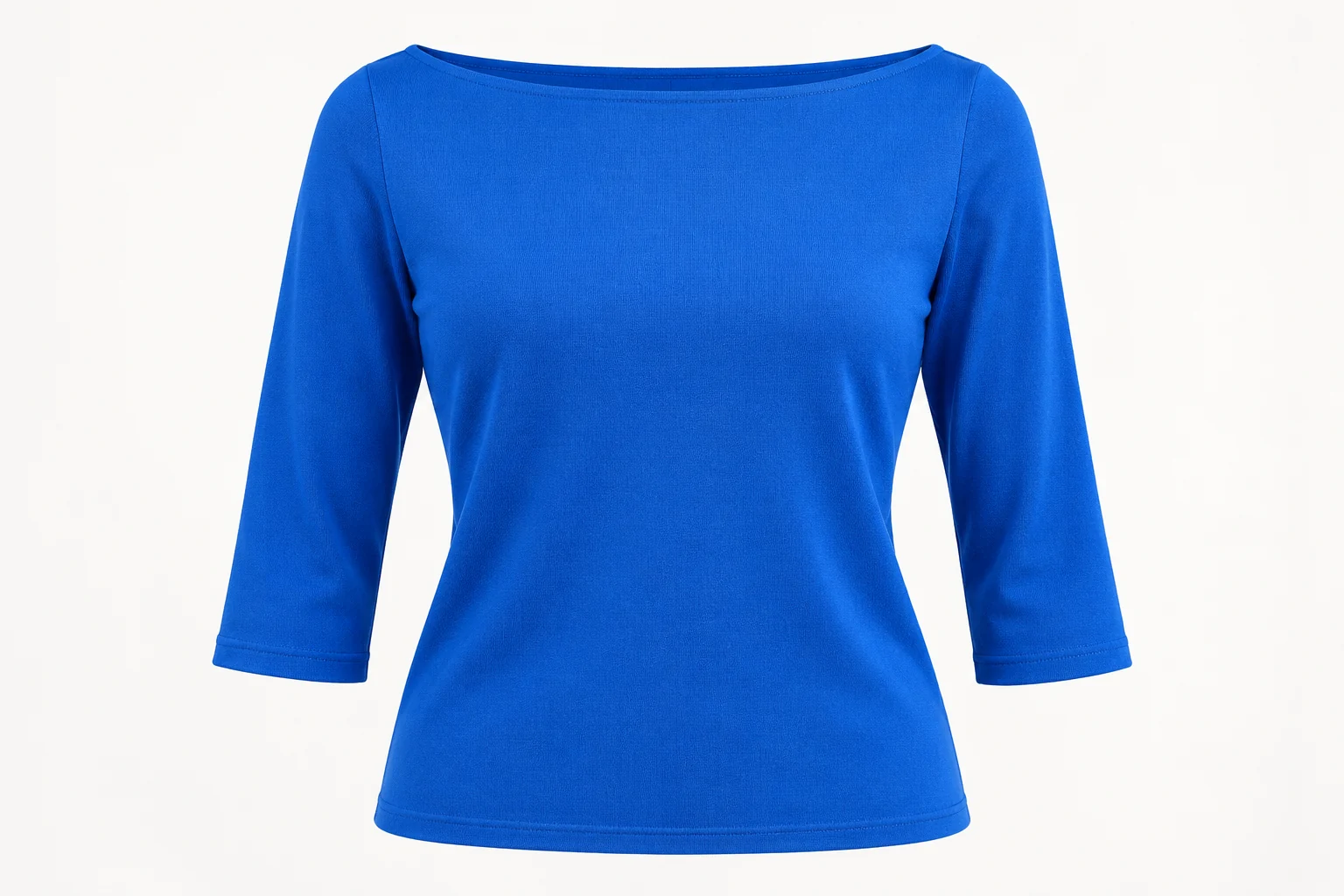
A boat-neck enquiry should include more than a wide-neck reference photograph. Provide front and back technical drawings with the intended opening width, depths, shoulder coverage and sleeve arrangement where specified. Show the neutral worn position and identify any separate underlayer expected in the styling. Tell the fabric supplier which aesthetic direction is desired, and give the garment maker the dimensions it needs to interpret the shape. Mark unresolved geometry as provisional so the first quotation is not mistaken for a frozen pattern. This keeps material discussion attached to a specific neckline rather than a broad fashion label.
Define who develops the edge and shoulder anchors
State whether the proposed finish is a binding, facing, turned edge or an option still being compared. Ask the garment maker to identify the edge material, cut dimensions, seam arrangement and any support it proposes. Clarify who supplies those additional materials and who checks the endpoints at the shoulders. A body-fabric quotation does not automatically include finishing components or sewn-top development. If the supplier suggests an alternative edge route, record it as another sample proposal with responsibilities assigned, rather than allowing it to become an unexplained substitution in the production specification.
Catalogue starting points
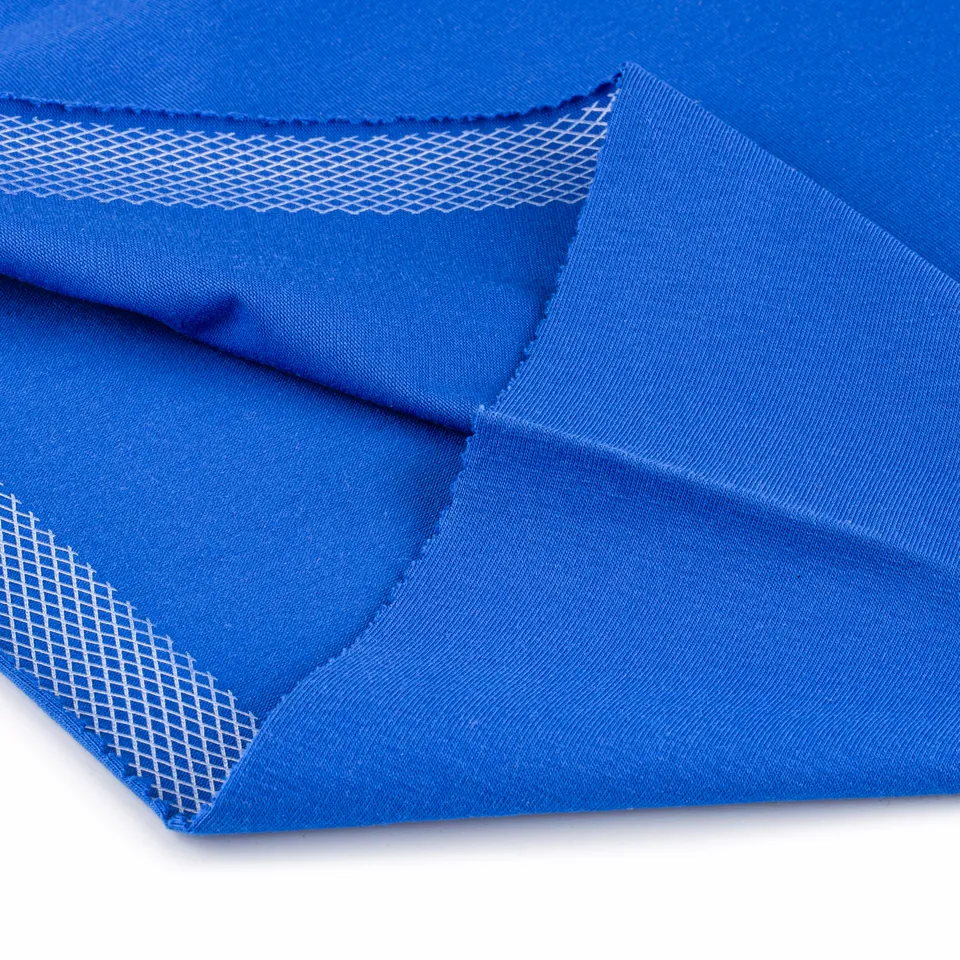
The initial body options are SJ-102, 95% cotton 5% elastane at 170, 180, 190, 200, 210 g/m² with Enzyme + compacted finishing, and IN-202, 92% cotton 8% elastane at 220, 235, 250, 265, 280 g/m² with Compacted + silicone finishing. Ask for the precise current offered option, usable width and supply format. Their different weights and compositions mean the comparison is not an isolated elastane experiment. Neither entry confirms availability or a completed boat-neck performance assessment. Keep any offered alternative distinct from the requested code and sampled finish.
Connect quantities to the selected edge route
Give estimated quantities by body colour or print, unit and size ratio, along with the current pattern reference. Ask the cutting team to identify additional strip or facing needs before converting garment forecasts into a fabric request. If those parts use a separate substrate, provide its colour and quantity assumptions independently. Request the applicable minimums, sampling costs and timing for each supply rather than inferring trim terms from the body offer. A style with a contrast neckline can involve another commercial item even when the amount visible on the garment looks small.
Make the first sewn trial answer a shoulder question
A useful request might compare two body routes using the same documented opening, then evaluate how their finished edges meet the shoulders. Agree who produces that sample and which materials it contains. CottonWorks places intended function and appearance among the starting questions for knit development; for this design, the functional question is the relationship between the broad edge and covered shoulder. If the unresolved problem is rear-edge rolling, ask for that view and construction detail rather than requesting an undefined improvement in quality. A more focused trial can support a clearer next purchasing decision.
CottonWorks: Designing Knit Textiles — Knit development begins with intended function, end use and appearance questions. The proposed shoulder-junction trial is editorial application, not an existing mill test or service guarantee.
Request relevant evidence without inventing a promise
List the care, material-description and other requirements defined by the buyer's responsible team, then ask what evidence applies to the actual proposed supply. If neckline growth or garment dimensional behaviour matters, ask the quality specialist to define the procedure and acceptance criteria for this product. Do not treat a compacted finish name as a numerical shrinkage guarantee or a higher elastane percentage as proof of shoulder stability. Keep unverified claims out of the product description, including assertions that the opening will remain perfectly positioned for every wearer or across every untested size.
Return an offer with the unresolved decisions attached
Finish the enquiry with destination, requested timing, expected purchasing stage and questions on price unit, packing, payment and delivery terms. Ask the suppliers to identify exceptions rather than treating blank fields as acceptance. Link the eventual commercial agreement to the chosen body, edge construction, drawings and sample references. If a later change adds contrast finishing or alters shoulder coverage, identify who recalculates material and reopens the relevant trial. Receiving an attractive fabric price should move the documented boat-neck development forward, not conceal the remaining assembly or fitting questions.
Technical background and scope
This is a structured editorial draft. Garment-specific development advice is paired with existing catalogue records; compatibility must be established by sampling. AL KUMAŞ supplies fabric. Cutting, sewing and finished-garment production are separate unless explicitly agreed.