





Define close fit by area, not by one label
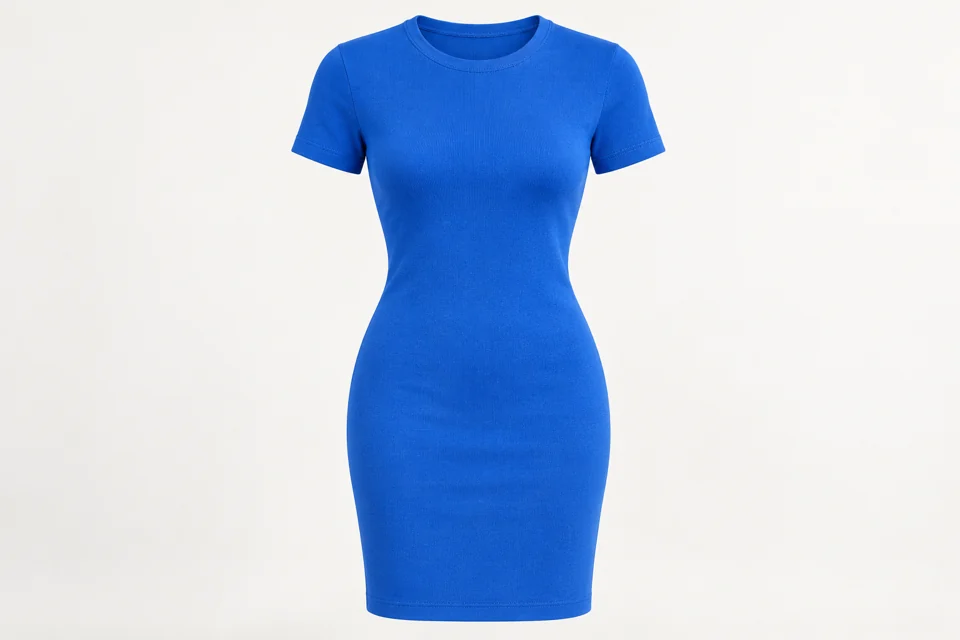
A bodycon knit dress follows the body, but the word bodycon does not specify how much ease belongs at the chest, waist, hip or hem. Ask the pattern developer to mark those decisions on the full dress drawing and explain the intended length. A short close dress and a longer narrow dress create different movement questions below the hip. Begin with the actual silhouette rather than selecting whichever cutting stretches most in the hand. The buyer needs a material-and-pattern proposition that can be assessed without confusing visible closeness with comfort, support or a tested shaping effect.
Compare the two constructions without assuming equal extension
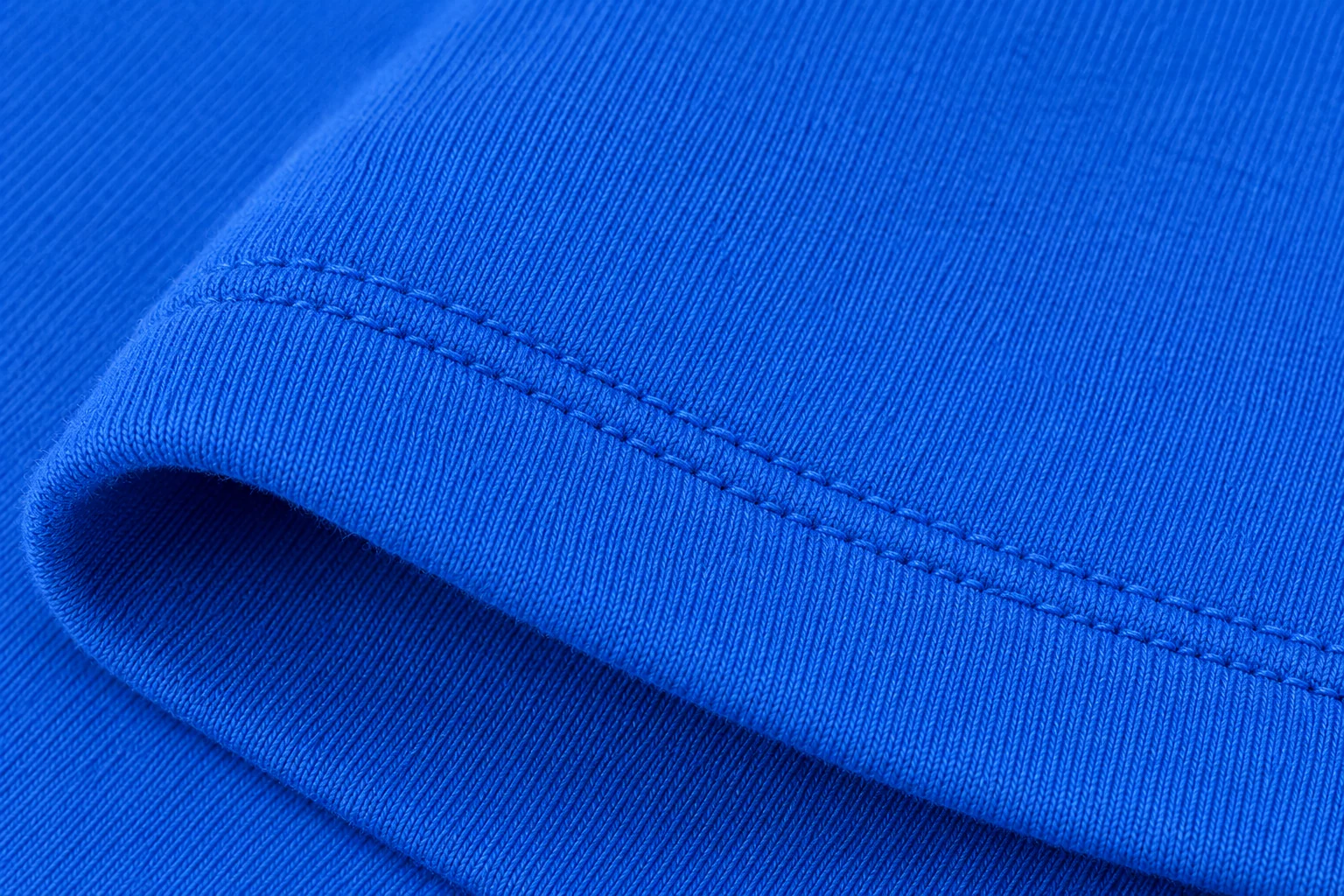
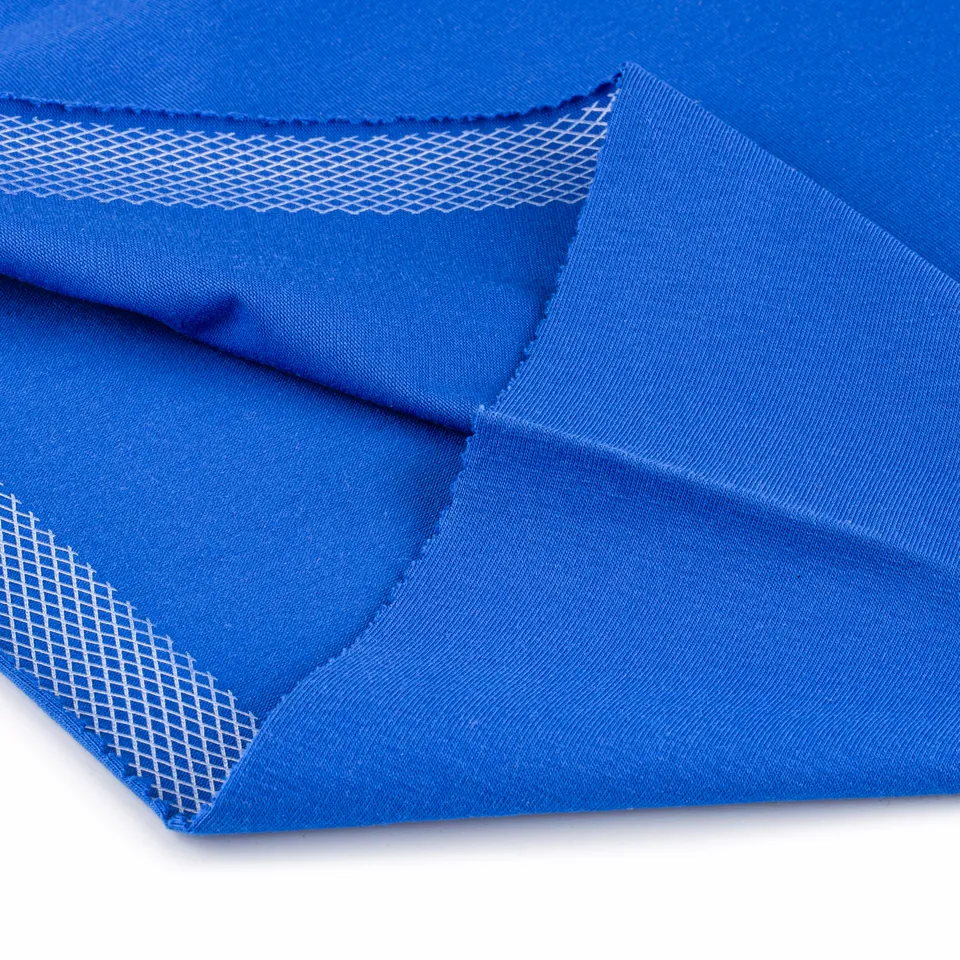
Both catalogue candidates contain the same stated cotton and elastane percentages, but one is single jersey and the other fine rib, with different weights and finishes. Their equal fibre blend is not evidence of equal extension, growth or recovery. ASTM's public stretch-method description distinguishes extension under load from subsequent fabric growth; neither is established by the blend label alone. Ask the technical team which actual material observations or tests are needed for the proposed dress. A fine-rib appearance can be a design reason to compare an article without making it a proven substitute for the jersey route.
ASTM D2594/D2594M-21 — public scope and significance — Public description distinguishes fabric extension under load from subsequent growth. No detailed test procedure, acceptance threshold or evidence that either catalogue article has passed is reproduced.
Make ease a documented pattern decision
The first trial should state which dimensions are smaller than, equal to or larger than the relevant body reference, with the pattern maker responsible for interpretation. Different parts of the dress need not share one reduction percentage. Inspect the waist-to-hip transition and the side view instead of judging only a close front photograph. If the sample feels restrictive at one area, identify whether the proposed remedy changes pattern shape, material or construction. Increasing tension throughout the dress can conceal one fit issue while creating another; it should not be the default correction.
Assess the full hem and movement proposition
Have the fitter review ordinary walking, sitting and returning to standing at the intended dress length. Observe whether the hem moves to an unintended position and whether the wearer can use the garment as proposed. If the design includes a walking opening, show its location and construction; do not introduce an unapproved slit as an invisible solution to a narrow silhouette. A longer body must be assessed as a complete dress, not inferred from a short upper-body trial. These observations are product development, not guarantees of fit across every wearer or size.
Catalogue starting points
The local SJ-102 record states 95% cotton 5% elastane, with 170, 180, 190, 200, 210 g/m² options and Enzyme + compacted finishing. FR-401 states 95% cotton 5% elastane at 230, 250, 270, 290, 310 g/m² with Silicone + compacted finishing. Neither record supplies tested bodycon-dress opacity, recovery, usable width or pressure performance. Request the offered weight and finish of each sample. The heavier fine-rib range is not automatically more opaque or more suitable, and the two different constructions should not share a garment approval simply because their composition matches.
Decide what a lining or separate layer must do
If the design includes a lining, identify its material, length, ease and attachment points and sample it with the body. An outer knit's movement does not prove compatibility with a proposed lining. If the dress is intended over a separate layer instead, show that item in the fitting brief and determine its place in the product description. Do not add either solution silently after the unlined design fails a coverage observation. Assess the actual colour and fit conditions chosen by the team; a small flat cutting cannot establish the finished dress's appearance over the body.
Select a dress system with unresolved items visible
Retain the accepted body sample, ease map, dress length, seam arrangement and any lining reference together. State which findings are accepted and which still need another trial. A useful decision might favour the rib surface while leaving seated hip fit unresolved, rather than giving the entire article range a bodycon endorsement. Revisit the trial when length, size grading or the inner layer changes. The material choice should explain the close silhouette the brand can actually demonstrate, with no compression, size-retention or guaranteed-coverage promise substituted for the missing evidence.
Technical background and scope
This is a structured editorial draft. Garment-specific development advice is paired with existing catalogue records; compatibility must be established by sampling. AL KUMAŞ supplies fabric. Cutting, sewing and finished-garment production are separate unless explicitly agreed.