





Make the close-fit sample measurable and identifiable
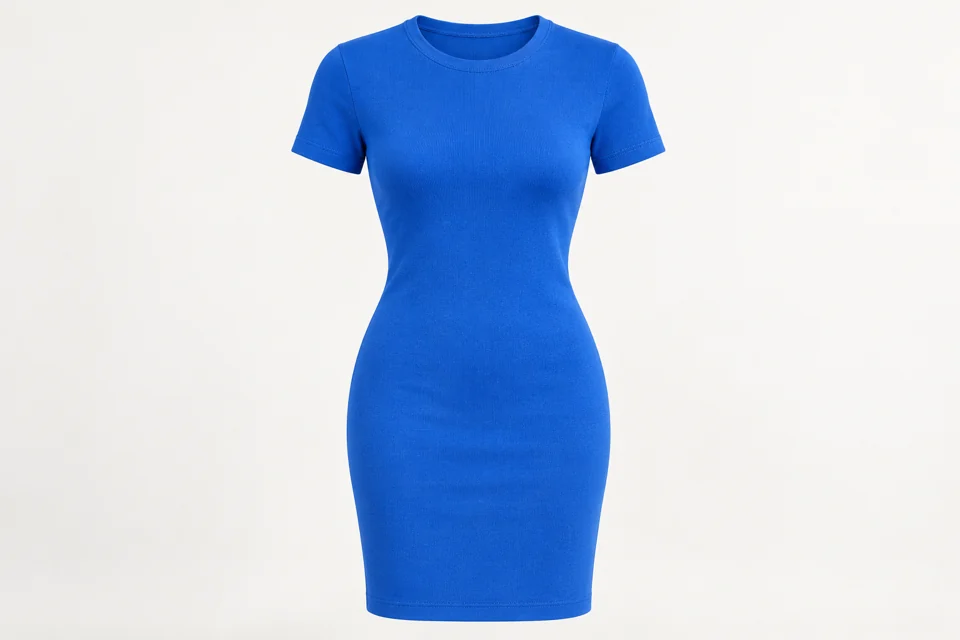
Record the body article, offered weight and finish, full pattern version, size and intended garment length before fitting. Add the proposed seam construction, edge finish and any lining or walking-opening detail. Identify the body reference used by the pattern team and the points at which ease is being evaluated. A sample-room substitution should be visible in the report. Without those boundaries, a comment that the dress is too tight or too loose gives insufficient information to distinguish a different material from a changed pattern or an unrepresentative fit reference.
Observe local strain instead of only the overall silhouette
Inspect chest, waist, hip, seat and upper-leg regions independently, using the development team's intended fitting approach. Note where seams appear drawn, the material becomes visually different or the wearer reports unacceptable pressure. Ask whether the observation changes while seated or after returning to standing. Do not assume that reducing every circumference solves a loose-looking region or that adding ease everywhere resolves a local problem. The pattern technician should interpret the evidence and propose a controlled correction. These observations do not establish compression, therapeutic support or a quantified comfort result.
Separate extension from growth and recovery evidence
ASTM's public description treats stretch under load and subsequent fabric growth as distinct measurements, with method scope and limitations that a laboratory must consider. A hand-stretched cutting therefore cannot qualify the complete dress. Ask the technical team which evidence is relevant to the proposed material, fit and intended use, and how it will be interpreted. Do not invent a universal acceptable extension or reduction percentage. Retain any supplied report with its article, finish, method and conditions so a result from another material is not silently used as the current dress's approval.
ASTM D2594/D2594M-21 — public scope and significance — Stretch and fabric growth are distinct assessment concepts, and applicability/limitations require technical interpretation. No universal ease, recovery or garment pass value is inferred.
Use walking and seated views to assess length and coverage
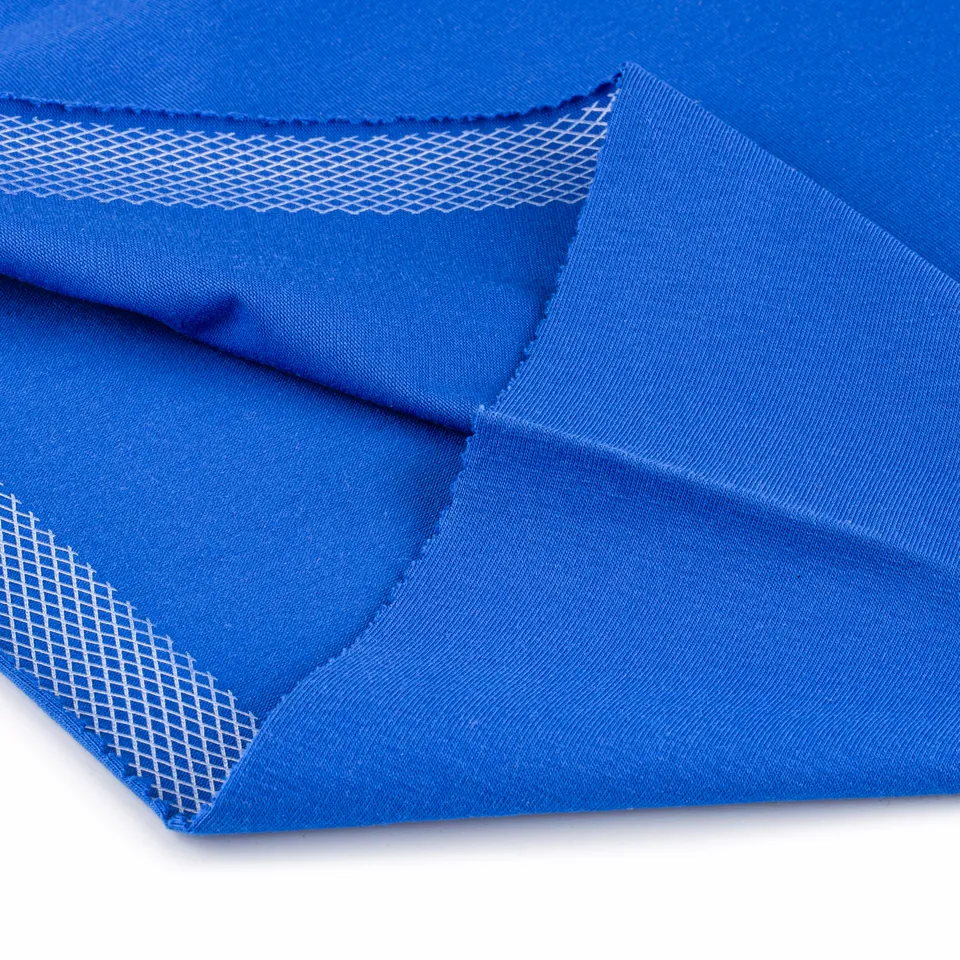
Select an ordinary movement sequence appropriate to the design, including walking, sitting and returning to a neutral stance. Record the hem's intended position and whether an actual specified walking opening behaves acceptably. Assess coverage under the agreed lighting and intended layer arrangement, noting the particular colour and size. If a lining is proposed after a problem appears, sample that revised combination rather than regarding it as an administrative fix. Do not label one successful view as proof of opacity in all conditions; identify what the fitting and appearance observations actually demonstrate.
Catalogue starting points
SJ-102 lists 95% cotton 5% elastane with 170, 180, 190, 200, 210 g/m² choices and Enzyme + compacted finishing. FR-401 lists 95% cotton 5% elastane at 230, 250, 270, 290, 310 g/m² with Silicone + compacted finishing. Neither listing contains a tested dress pressure, opacity, seam-extension or recovery result. Keep the actual trial option named, including any secondary material. The heavier recorded rib weights do not replace representative fitting, and the common fibre percentages do not establish identical behaviour under the dress's local strains.
Review seams and dimensions after the agreed procedure
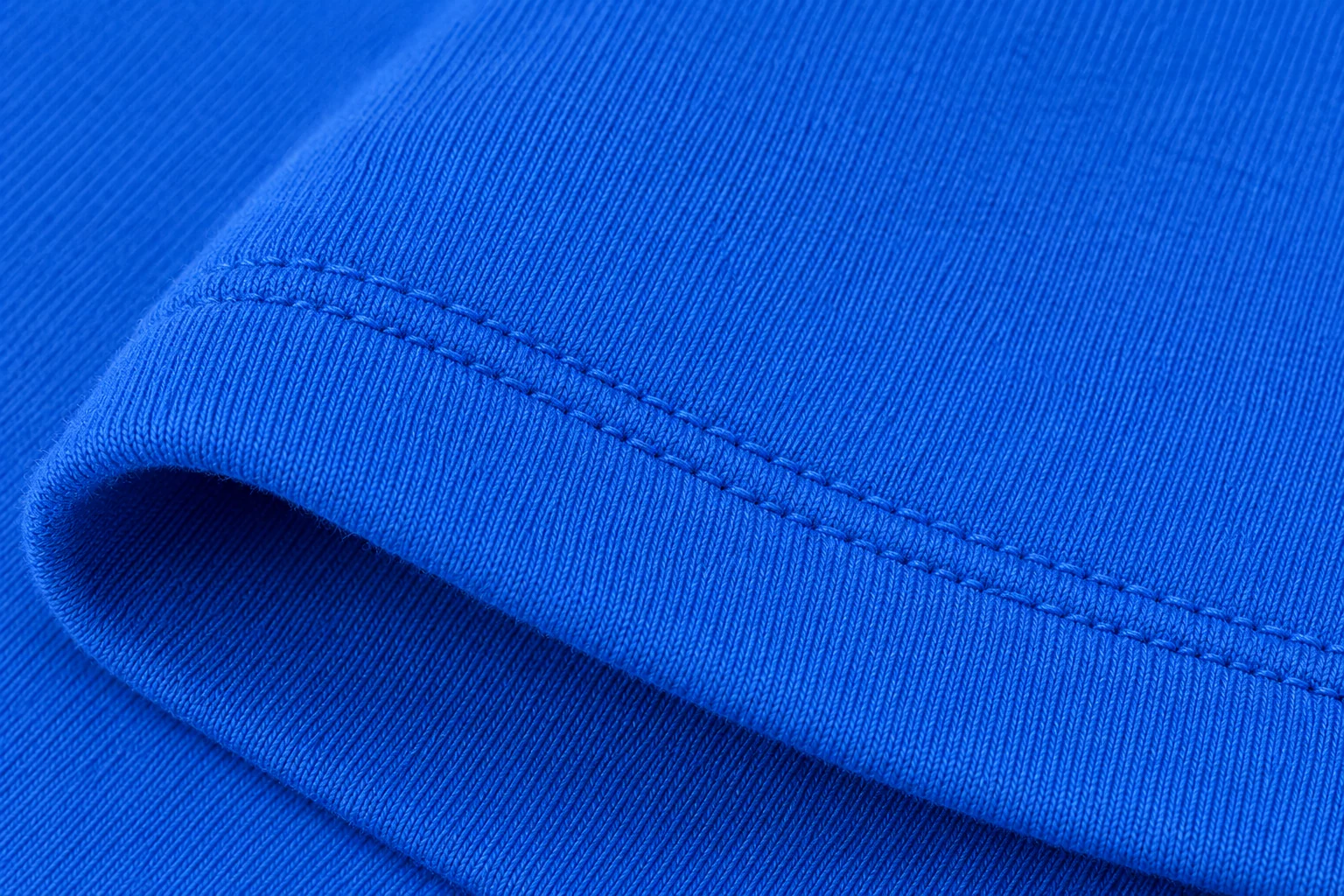
Have the sewing team inspect the areas under greatest observed strain, then define the care and measurement plan with the responsible quality specialist. Record body lengths, relevant circumferences, seam position and any lining relationship before and after the agreed exposure. CottonWorks identifies dimensional stability as relevant to garment fit and appearance; it does not provide a bodycon-dress pass value for these articles. Compare the post-trial silhouette without forced smoothing or restyling. If the hem position or seam appearance changes, document the location and ask whether the next correction concerns fabric, pattern, assembly or inner-layer compatibility.
CottonWorks: Quality Testing — dimensional stability — Dimensional stability is relevant to fit and appearance. Does not provide measured results or a dress-specific acceptance criterion for SJ-102 or FR-401.
Release a defined fitted design with a specific evidence boundary
Close each issue with an observed condition, proposed revision and the check required after that revision. A hypothetical dress might meet the standing appearance target yet restrict the intended seated posture; approving its photograph would not resolve that development finding. Retain the earlier sample beside the revised one. State which sizes, colours, length and layer combination were actually assessed and what additional evidence remains outstanding. The accepted result should describe a reproducible garment configuration, not extend into guarantees about every body shape, unlimited size recovery or untested coverage conditions.
Technical background and scope
This is a structured editorial draft. Garment-specific development advice is paired with existing catalogue records; compatibility must be established by sampling. AL KUMAŞ supplies fabric. Cutting, sewing and finished-garment production are separate unless explicitly agreed.