



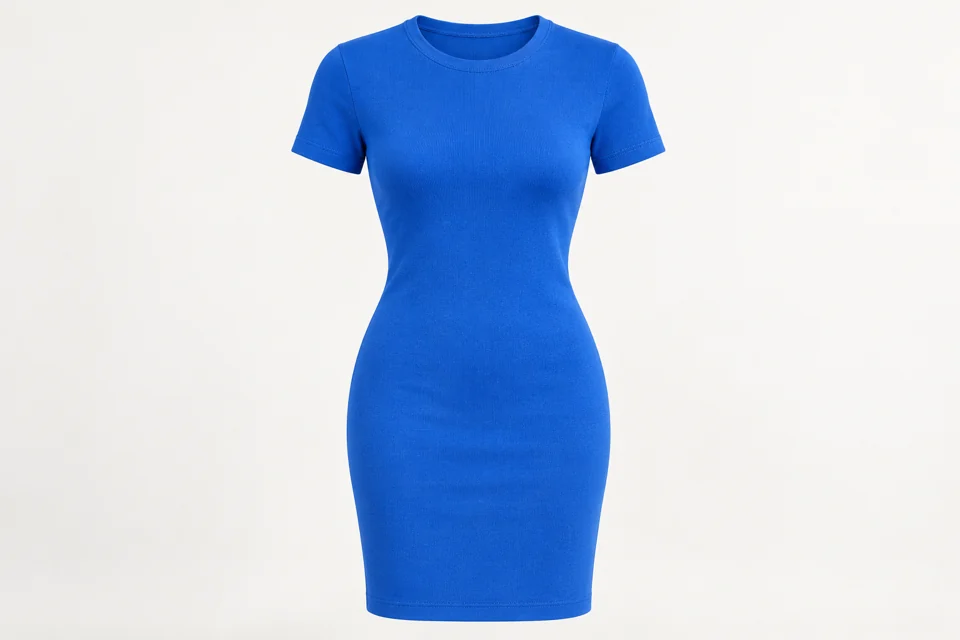


Describe the fitted dress beyond the word bodycon
Supply a full front-and-back technical drawing with dress length, neckline, sleeves where present, seam layout and any specified walking opening. Explain the intended close shape and the areas where the pattern team is still developing ease. Add the adult size range and the fit reference used for sampling. A retail photograph may communicate the style, but it cannot identify the pressure, movement or coverage conditions the buyer expects. Ask the fabric supplier for a material comparison against this defined concept rather than a generic best fabric for a tight dress.
Request an evidence-led comparison rather than a blend ranking
Tell the supplier why SJ-102 and FR-401 are being compared: for example, a smoother jersey direction against a fine-rib appearance, with the actual fit still to be developed. Ask what relevant technical information exists for the offered specification and identify the questions that need a garment trial. Neither the five-percent elastane label nor a heavier GSM establishes the ease reduction that the pattern should use. The garment maker and quality specialists must translate the design into requirements. Keep any required shaping or compression claim outside this ordinary dress brief unless a separate substantiation programme is intended.
Catalogue starting points
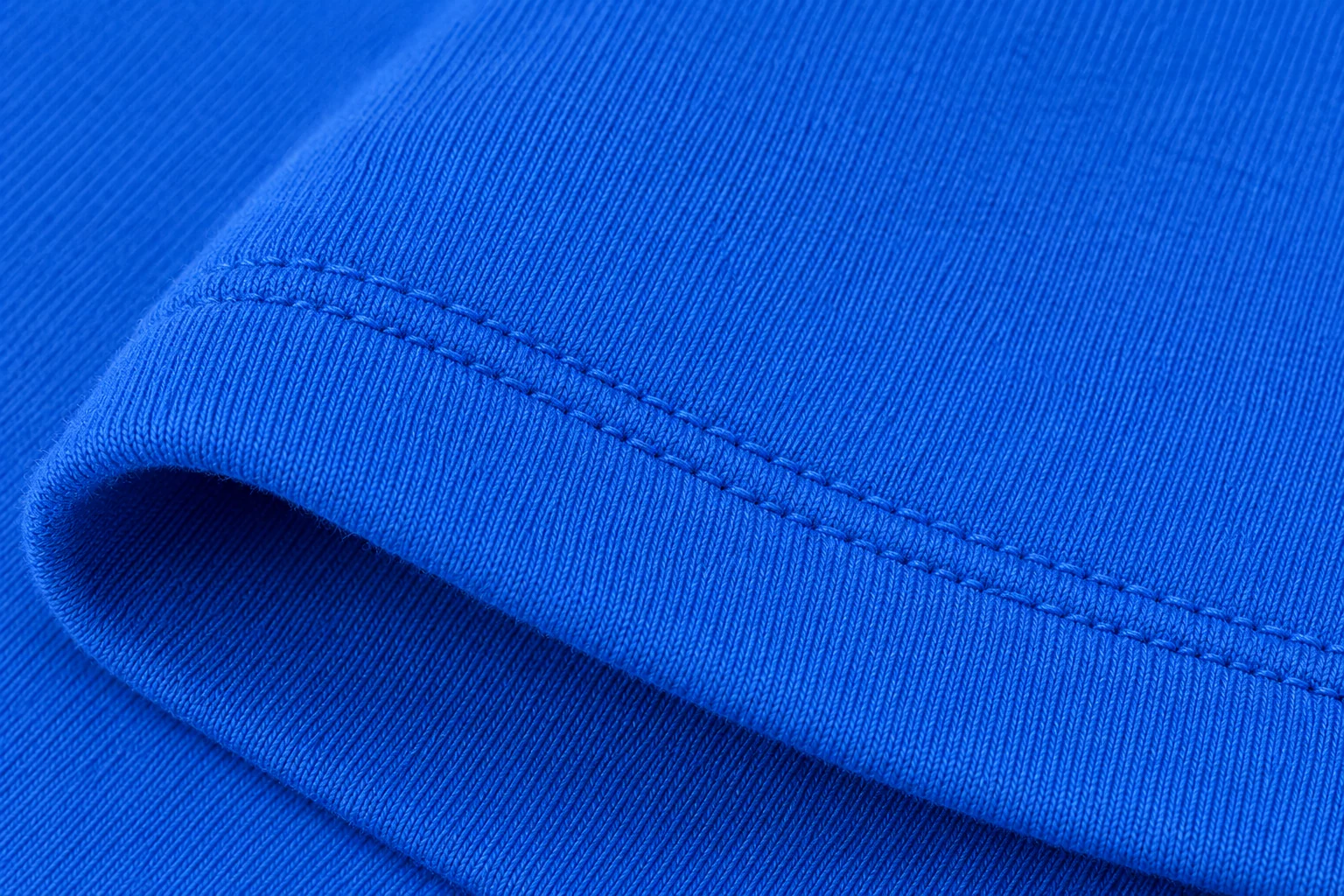
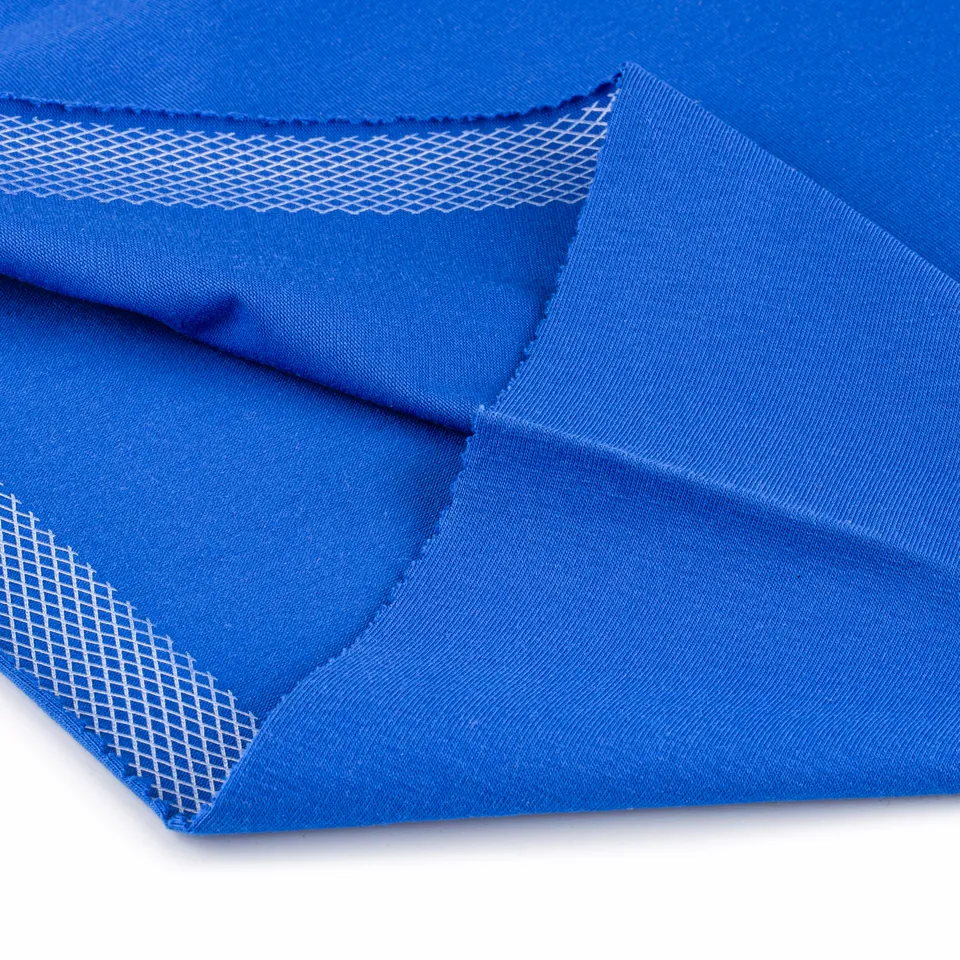
The requested jersey route, SJ-102, records 95% cotton 5% elastane at 170, 180, 190, 200, 210 g/m² and Enzyme + compacted finishing. The fine-rib route, FR-401, records 95% cotton 5% elastane at 230, 250, 270, 290, 310 g/m² and Silicone + compacted finishing. Specify which options should be quoted and ask for the actual current offer, usable width and supply format. These catalogue entries do not confirm stock, minimums, garment production or tested suitability for a bodycon pattern, and the two routes should remain separately identified through sampling.
Make lining and layer responsibility explicit
State whether the design is unlined, includes an attached lining or is intended to be styled over a separate garment. If a lining is included, ask the garment developer to identify its material, pattern, length and attachment and clarify who supplies it. A separate layer should not quietly appear as an assumed solution to an unresolved outer-dress appearance. List edge components, labels and decoration owners too. CottonWorks includes auxiliary components within garment construction; this reinforces the need for a complete assembly brief rather than suggesting the body-fabric offer automatically covers those additional supplies or services.
CottonWorks: Garment Construction — auxiliary components — Garment assembly involves components beyond body fabric. The lining responsibility and qualification package are editorial recommendations, not an existing mill service or tested suitability claim.
Forecast by length, colour and size mix
Provide estimated requirements with units and distinguish sampling material from a proposed bulk programme. Include the actual size ratio, length variants, colourways and whether decoration changes between them. Have the cutter calculate long-panel and optional lining demand from the current pattern instead of converting garment forecasts using a generic tight-dress allowance. Request applicable commercial minimums, sample charges and timing against each supply. If the fit or length is undecided, label the corresponding quantity estimate provisional so it cannot be mistaken for an approved production requirement or a guaranteed material consumption.
Ask for a qualification package that exposes local fit decisions
Arrange identified body material for comparison and a representative full-length sewn sample with the specified seams and layers. Ask the garment and quality teams to agree the relevant standing, walking, seated, appearance and care observations. Where quantified stretch or growth evidence is required, have a competent provider confirm the applicable method and interpretation rather than adopting an unsupported universal target. Any report should be traceable to the actual article and finish. A sample request is useful when it states the decision to be made, such as whether the hip region requires another pattern revision before the material is selected.
Keep commercial acceptance linked to the assessed configuration
Give the delivery destination, requested timing, purchasing stage and questions on price basis, packing, payment and delivery terms. Request written exceptions and identify who owns each unanswered technical question. Link the accepted offer and garment costing to the actual pattern, material and lining references, with the assessed sizes and colours visible. A later change in ease, length or inner layer should trigger a review decision rather than inherit approval by style name. This connects a marketable fitted-dress proposition to demonstrable development work without inventing opacity, recovery, size or commercial guarantees.
Technical background and scope
This is a structured editorial draft. Garment-specific development advice is paired with existing catalogue records; compatibility must be established by sampling. AL KUMAŞ supplies fabric. Cutting, sewing and finished-garment production are separate unless explicitly agreed.