



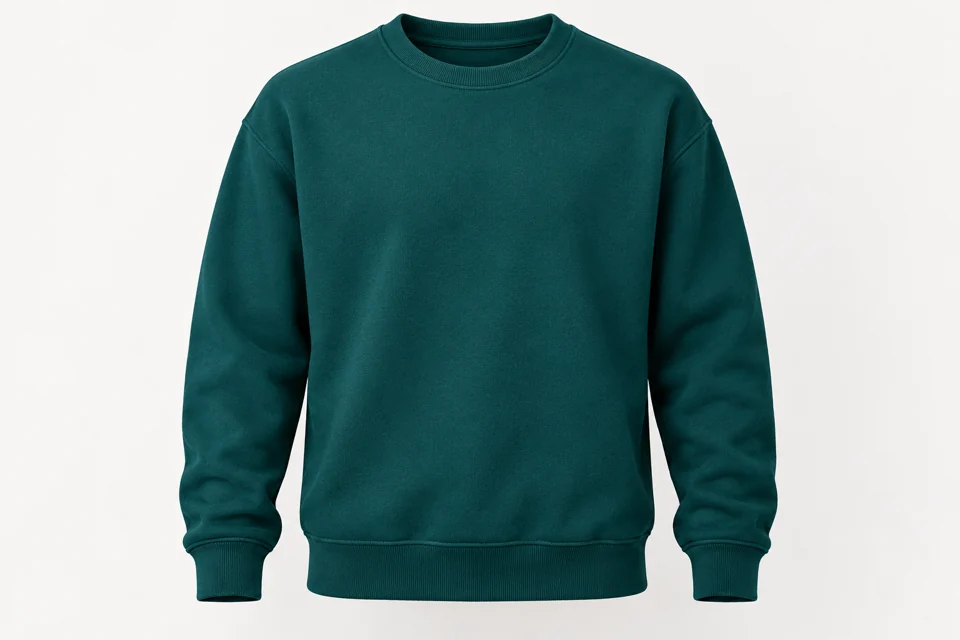


Describe the crew neck as a specific product
A useful fabric enquiry starts with a clear sweatshirt drawing and the intended silhouette. Show the neckband depth, shoulder position, cuff shape and lower-band treatment. State whether the body is straight or deliberately gathered into the lower band. These details help explain why a proposed material is being compared rather than simply requesting a premium sweatshirt quality. Clarify that the request concerns fabric supply. If you also need garment making or decoration, ask who will perform those operations instead of assuming the fabric supplier offers a finished-garment package.
Ask for two focused article proposals
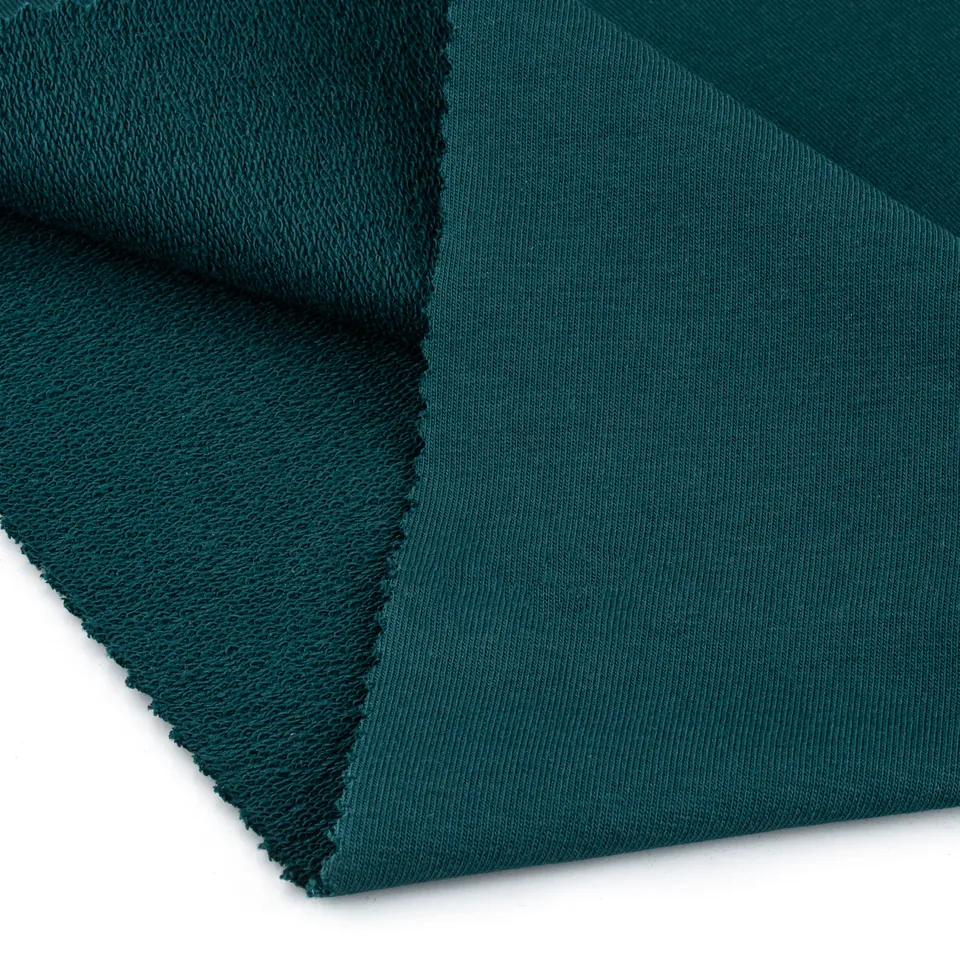
Name FT-601 and FT-602 and the exact weights under discussion. The catalogue lists FT-601 as 70% cotton and 30% polyester at 240, 260, 280, 300 and 320 g/m²; FT-602 uses the same blend at 300, 325, 350, 375 and 400 g/m². Explain the comparison you need, such as a cleaner shoulder line versus reduced seam bulk. FT-601 is catalogued as two-thread unbrushed silicone, while FT-602 is three-thread unbrushed compacted. Ask the supplier to confirm the current offer against those records. The catalogue numbers do not themselves verify available stock, brushing, thermal performance or the next production date.
Define how separate bands enter the enquiry
Create individual rows for body, neckband, cuffs and lower band. Say whether you are seeking component material proposals or already have an approved rib from another source. Give each row a colour reference and an estimated consumption basis if known. A body quotation does not confirm that matching rib is supplied or included. If the design contains a V-shaped insert, show its construction and material separately; if it is only a decorative stitch shape, make that distinction. This prevents a small ambiguous detail from changing the component requirement during sampling.
Disclose what the garment maker has not decided
Identify open decisions honestly: neckband material, graded head opening, finished width or the exact body weight. Request the information needed to settle each one rather than presenting an incomplete brief as a final order. CottonWorks recommends defining product attributes and end use at the start of knit development; for this sweatshirt, those questions become a clear opening fit and silhouette brief. Ask the maker to own pattern and consumption decisions, while the supplier confirms the fabric offer. That separation makes an unanswered question visible instead of letting both parties assume the other resolved it.
CottonWorks: Designing Knit Textiles — Product end use and desired attributes should be defined during knit development. The allocation of sweatshirt enquiry responsibilities is original practical editorial advice.
Structure colour and decoration quantities clearly
Break estimated body demand down by article, colour and unit. Identify sample yardage or metres separately from proposed bulk kilograms if the requests use different units. Where chest graphics vary by colour, describe the decoration plan even if it is handled elsewhere, because the representative material sample must reach that provider. Ask for actual minimums and development charges for the stated breakdown. Do not divide a total evenly across colours unless that is the real buying plan; the garment size mix and collection allocation should drive the quantities.
Request an offer with the technical gaps exposed
Ask the supplier to respond with finished weight, usable width, supply format, finish, sample availability and available article-specific documentation. Include desired destination and timing as requests, leaving space for the supplier's confirmation. Define the sampling milestones that must precede an order: band junction trial, fit review, care review and any decorated sample. State who approves each milestone and how the final material reference will be communicated. Do not let a tentative production estimate override unresolved fit or material questions that affect what must actually be supplied.
Reconcile the quote before accepting a repeat programme
Compare price basis, currency, quantity, delivery terms and component scope alongside the technical specification. Highlight any proposed substitution in weight, width or finish and ask whether another sample is needed. Have relevant destination documentation questions reviewed by the appropriate specialists; no catalogue entry establishes all garment compliance obligations. Retain the accepted offer with the approved sample and the garment maker's consumption record. On a repeat, check for changes in body shape, band supplier, size distribution or graphic application before assuming the previous fabric quantities and approval decisions remain valid.
Technical background and scope
This is a structured editorial draft. Garment-specific development advice is paired with existing catalogue records; compatibility must be established by sampling. AL KUMAŞ supplies fabric. Cutting, sewing and finished-garment production are separate unless explicitly agreed.