



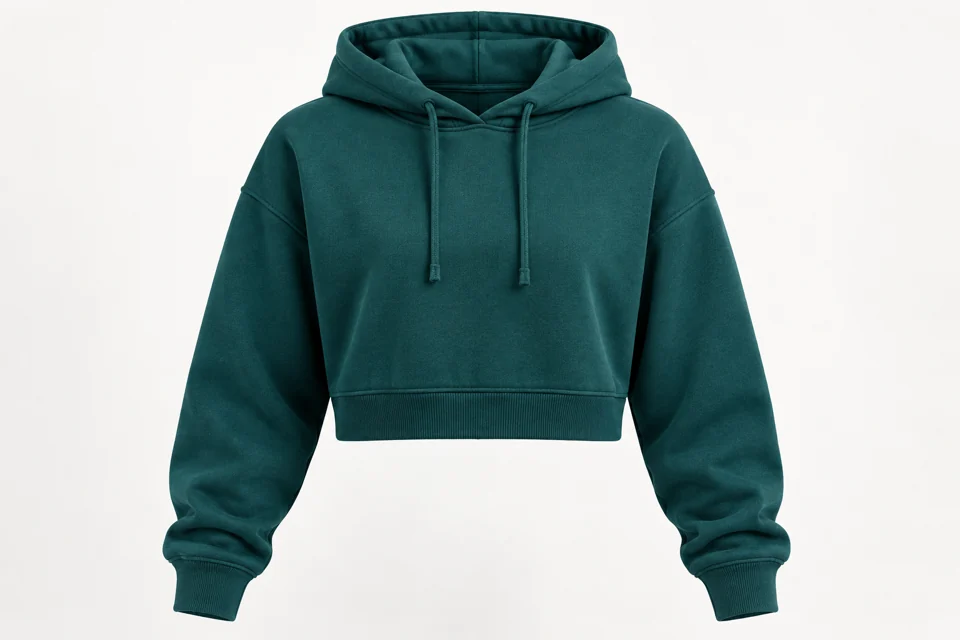


Compose between the resting hood and the short lower edge
The back of a cropped hoodie can have a limited visible artwork field between the resting hood and the lower hem or band. Show both boundaries on the actual design before scaling a graphic from a longer hoodie. Decide which words or image elements must remain visible with the hood down and which can appear when it is raised. The aim is an intentional composition across ordinary worn positions, not the largest image that fits on a flat body panel with the hood moved out of the way.
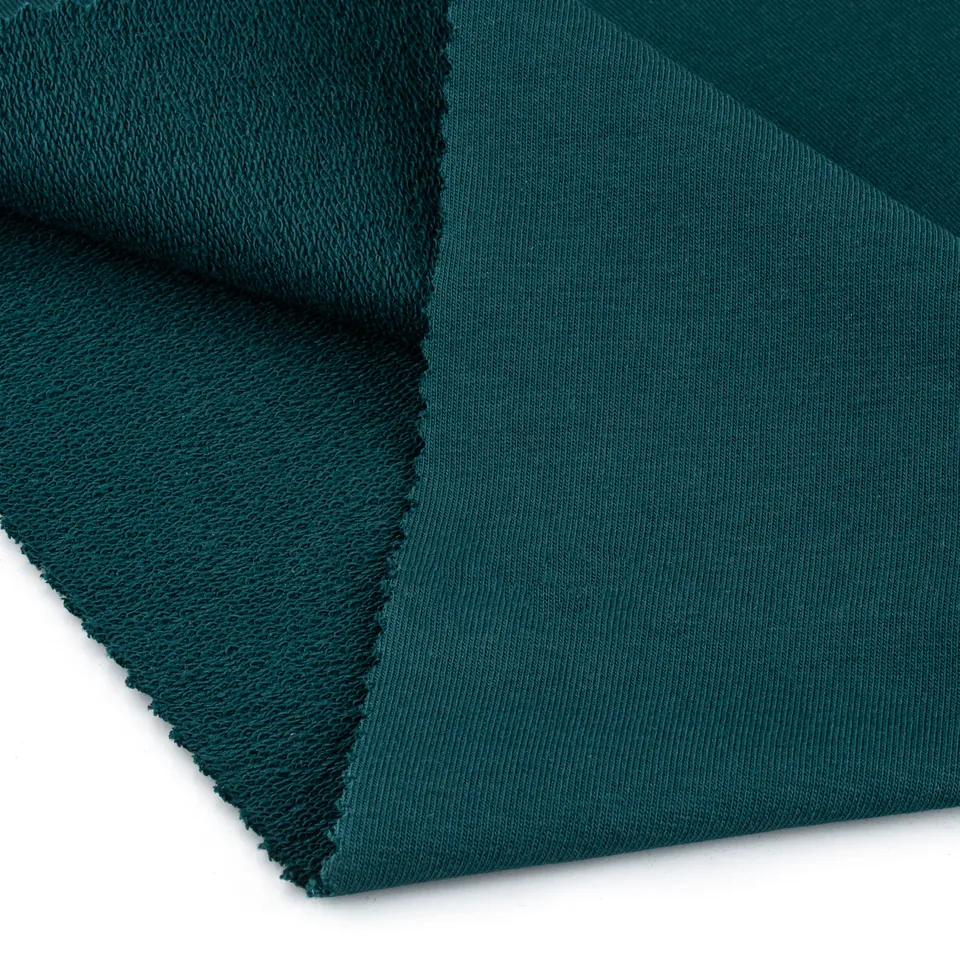
Identify the actual unbrushed surface and offered weight
FT-601 is seventy percent cotton and thirty percent polyester, two-thread French terry, unbrushed silicone finished, at 240, 260, 280, 300 or 320 grams per square metre. FT-602 is the same blend in three-thread unbrushed compacted material at 300, 325, 350, 375 or 400 grams per square metre. Record the actual offered option for each development sample. The shared blend and common 300 gram weight do not establish identical surface appearance, transferred colour approval or decoration compatibility. Keep the inner hood material and lower band identified separately.
Use the inner hood colour in the cropped silhouette
Review the hood lining on the completed short body, raised and resting, to see how its visible colour relates to the compact front and back. A contrasting inner surface can become a prominent element rather than a minor trim. Decide how cuffs, neck finishing and any lower rib connect to that choice. Do not approve a body shade without ever viewing the hood layers and bands together. Physical references should govern the accepted relationship; photographs help explain the arrangement but do not establish a reliable colour match across materials.
Place front artwork around the actual pocket and band
If the cropped design includes a pocket, show its real depth, opening and attachment in the placement drawing. An unchanged pocket from a longer style can compete with the smaller body field or approach the lower-band seam. Decide whether the graphic stays above the pocket, occupies it or intentionally crosses its boundary. Keep the actual total crop and visible band height on the drawing. A body shortening or band revision should trigger another layout review rather than leave the decorator to reduce the artwork by an assumed percentage.
Trial decoration without changing the balance invisibly
CottonWorks explains that fabric surface and fibre content influence printing choices. Have the relevant provider evaluate the application on the actual offered route, including backing or support where used. A large graphic or embroidery area should be inspected on the complete short body, not only for detail and shade but also for local handle and fold behaviour. Identify any change it introduces to the development configuration. The catalogue does not confirm a decoration service or establish that a process will preserve the accepted hood-and-body relationship.
CottonWorks: Cotton Textile Printing Basics — Fibre content and surface influence printing choices. Reviewing the actual decorated short-body configuration is original development advice, not confirmation of process compatibility or a supplier service.
Assess the image through hood transitions and reaching
Observe the decorated garment with the hood lowered, raised and returned to rest, then through the agreed adult movement views. Note whether the body shifts relative to the hood or lower edge so that important artwork disappears unexpectedly. Assess the relevant appearance again after the defined care procedure. CottonWorks includes cleaning-related appearance evaluation, but provides no result for this particular assembly. Keep a changed shade, altered surface and placement shift as separate observations rather than correcting the artwork location to conceal an unresolved garment-balance issue.
CottonWorks: Quality Testing — Quality evaluation includes cleaning-related appearance effects. The source supplies no article-specific shade, decoration or hood/body-balance result.
Release a two-boundary artwork specification
Retain the accepted body colour, hood lining, bands, pocket and decoration references with the actual crop and hood pattern. Identify artwork placement against defined points and review its rule on representative sizes. Include comparable hood-up and hood-down views showing what the design intentionally reveals. If a later change affects hood size, body length, band height or component material, reopen the related visual decisions. A repeat image file and shade name cannot alone reproduce the approved graphic field between a full hood and a short body.
Technical background and scope
This is a structured editorial draft. Garment-specific development advice is paired with existing catalogue records; compatibility must be established by sampling. AL KUMAŞ supplies fabric. Cutting, sewing and finished-garment production are separate unless explicitly agreed.