



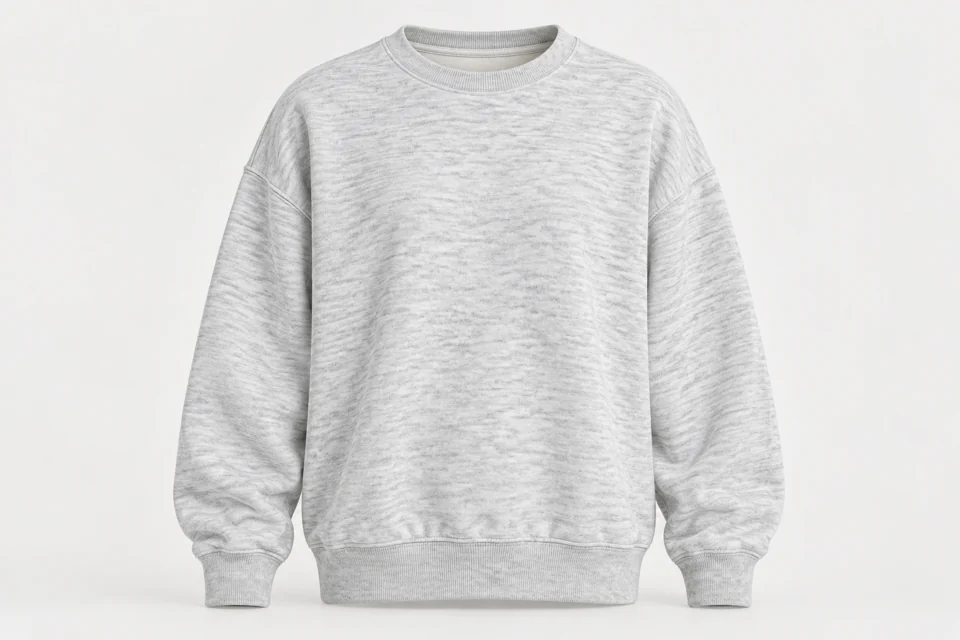


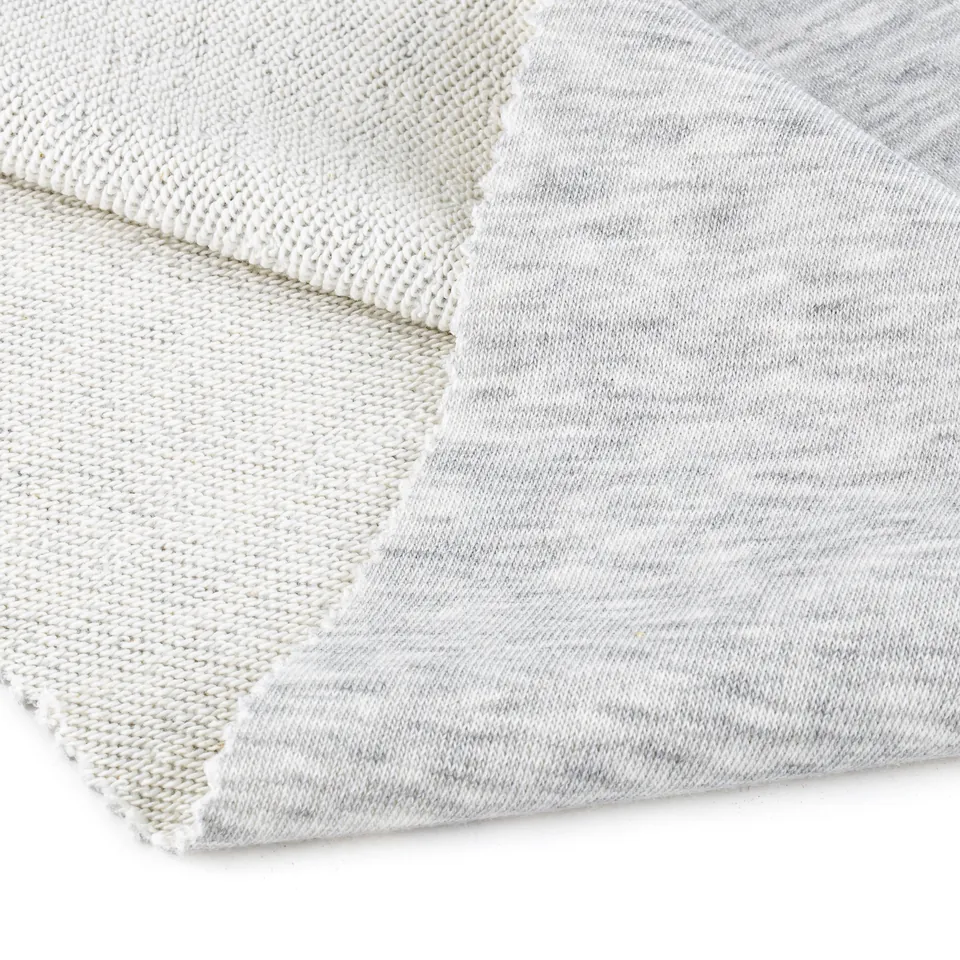
Freeze body volume before comparing shoulder variants
Start the enquiry with an adult sweatshirt drawing that separates chest width and body length from shoulder extension. Ask the developer to identify a first sample variant with those body dimensions fixed while shoulder placement and sleeve pattern are evaluated. This makes the buying question concrete: which material and construction reproduce the intended upper-arm join and wrist position? Do not ask the supplier to infer an oversized silhouette from the drop-shoulder name. A different body volume should be labelled as a separate design decision rather than hidden inside the fabric comparison.
Compare the two catalogue routes at named offered weights
Specify FT-602 as seventy percent cotton and thirty percent polyester, three-thread unbrushed compacted, with 300, 325, 350, 375 and 400 grams per square metre options. FT-601 is two-thread unbrushed silicone French terry in the same blend at 240, 260, 280, 300 and 320 grams per square metre. Ask for the current proposed weight and finish confirmation. A common 300 gram listing does not establish equivalence. Record whether the sample question concerns seam projection, sleeve fall or another defined result, without promising performance from either finish label.
Use a second variant to isolate the wrist decision
If the first sample fails at the wrist, ask the maker to distinguish a sleeve-path revision from a cuff-component revision. A proposed Variant B can change the identified sleeve pattern while retaining the cuff; a Variant C can evaluate another cuff against the recorded pattern. These are suggested controlled development options, not mandatory manufacturing sequences. State the observation each comparison should resolve. Keep the actual materials and component owners visible so purchasing does not mistake a successful sample using an unavailable substitute for the final production specification.
Make grading a defined comparison rather than a scale instruction
Ask which dimensions change across the intended size range: body shoulder, sleeve length, cuff dimensions and upper-arm volume. Request representative samples to review that rule rather than instructing the maker to enlarge everything by one percentage. CottonWorks describes pattern engineering as developing garment patterns from defined body and design information. The practical application here is an identified grade plan, not a source-supplied drop-shoulder formula. Record which sample sizes and observations support the chosen rule, and leave unresolved range questions explicit before estimating the full production demand.
CottonWorks: Garment Construction — Pattern engineering develops garment patterns using defined body and design information. The proposed grade comparison and variant ledger are original sourcing applications, not a source-provided drop-shoulder grading formula.
Request a component cost comparison for accepted variants
For every variant still under consideration, ask the maker to identify body and sleeve patterns, cuff source, band materials and the actual join construction. Show what changes between cost lines instead of requesting an undifferentiated lower price. If a deeper cuff replaces part of the lower sleeve, the material scopes should reflect both changes. Obtain the marker at confirmed usable width and intended size distribution. The catalogue does not verify that width, and the previous crew-neck marker cannot settle the economy of the revised shapes without review.
Choose the variant using a short evidence ledger
Compare intended seam location, resting sleeve fall, bent-arm wrist position, underarm geometry, junction bulk, appearance after care and material cost. Identify the reviewer and evidence for each field. A cheaper variant that misses the intended shoulder line is not automatically an acceptable substitute, while a heavier article is not automatically the premium answer. Request available article-specific documentation for any required performance claim and arrange the missing assessment with responsible specialists. Keep sample observations separate from marketing promises; the development comparison does not certify universal comfort or unrestricted movement.
Order the selected pattern-and-component scope
Attach the accepted variant, grade rule, physical sample and consumption basis to the material offer. Confirm current quantities, minimums, price units, currency, payment and delivery terms for the actual colour breakdown. If a later alternative changes cuff, body finish, usable width or shoulder pattern, identify the affected ledger fields before accepting it. Retain those references for repeat orders so the supplier and maker can distinguish a genuine repeat from another silhouette. The product name alone does not specify the deliberate shoulder extension and sleeve relationship the collection approved.
Technical background and scope
This is a structured editorial draft. Garment-specific development advice is paired with existing catalogue records; compatibility must be established by sampling. AL KUMAŞ supplies fabric. Cutting, sewing and finished-garment production are separate unless explicitly agreed.