



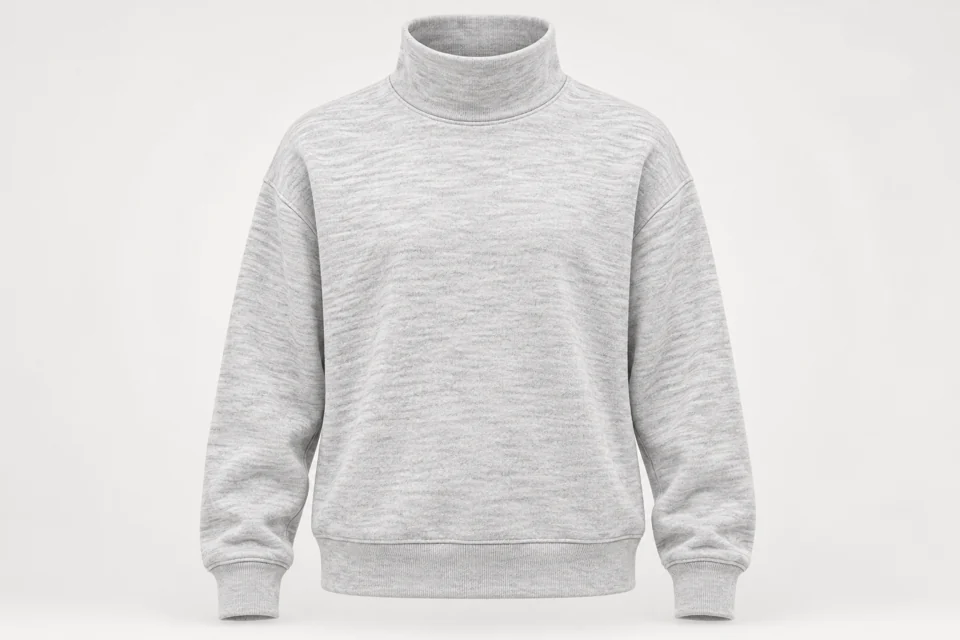

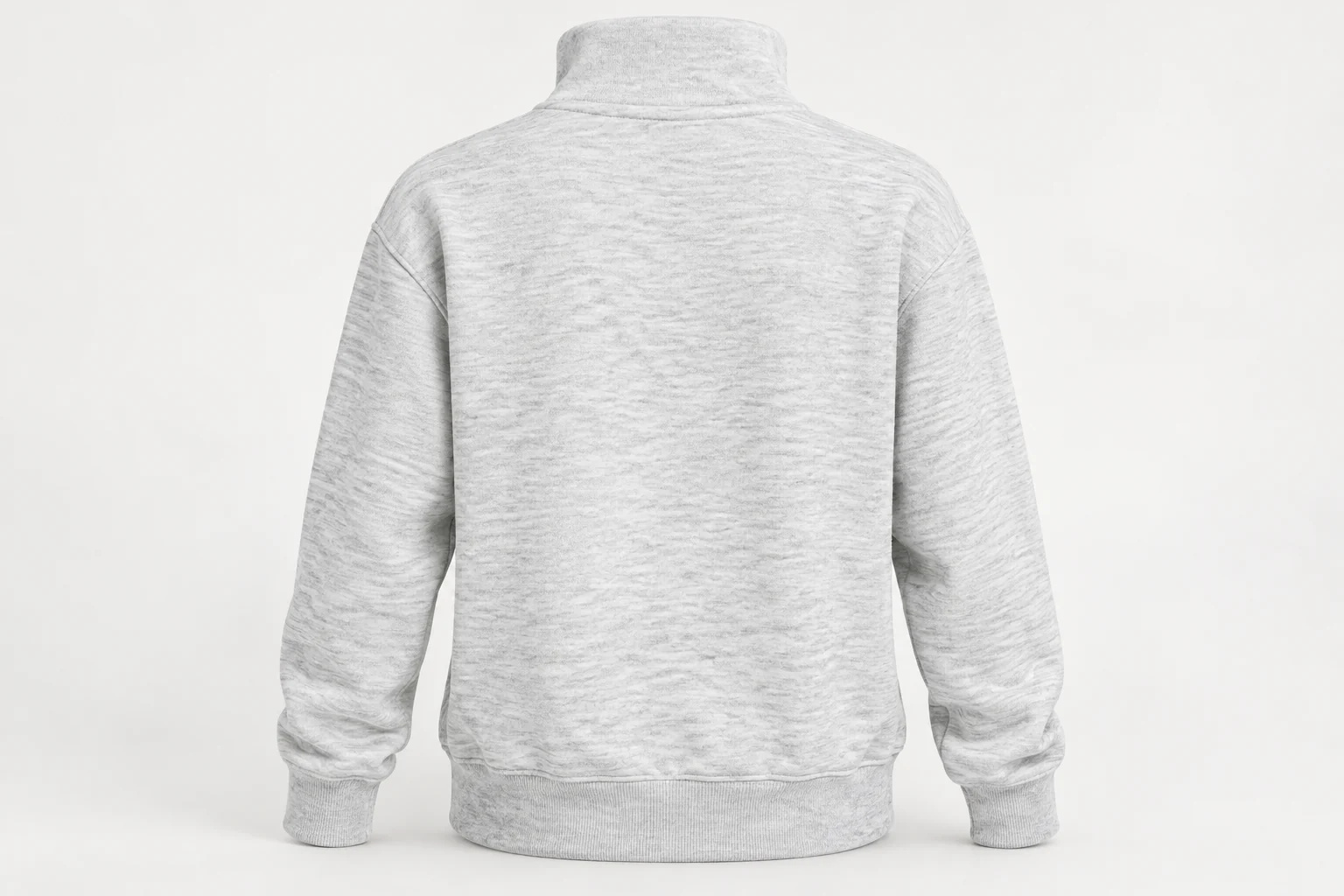
Treat the raised neckline as the main visual frame
A funnel collar sits close to the face and can become the sweatshirt's strongest colour feature. Decide whether it continues the body shade, contrasts deliberately or reveals a different inside at the upper edge. View the design from front and side, with the collar in its ordinary fall rather than arranged into one ideal pose. The visible inner area may change when the wearer turns or sits. A colour plan should accommodate those normal views instead of approving only the outer surface shown in a standing product image.
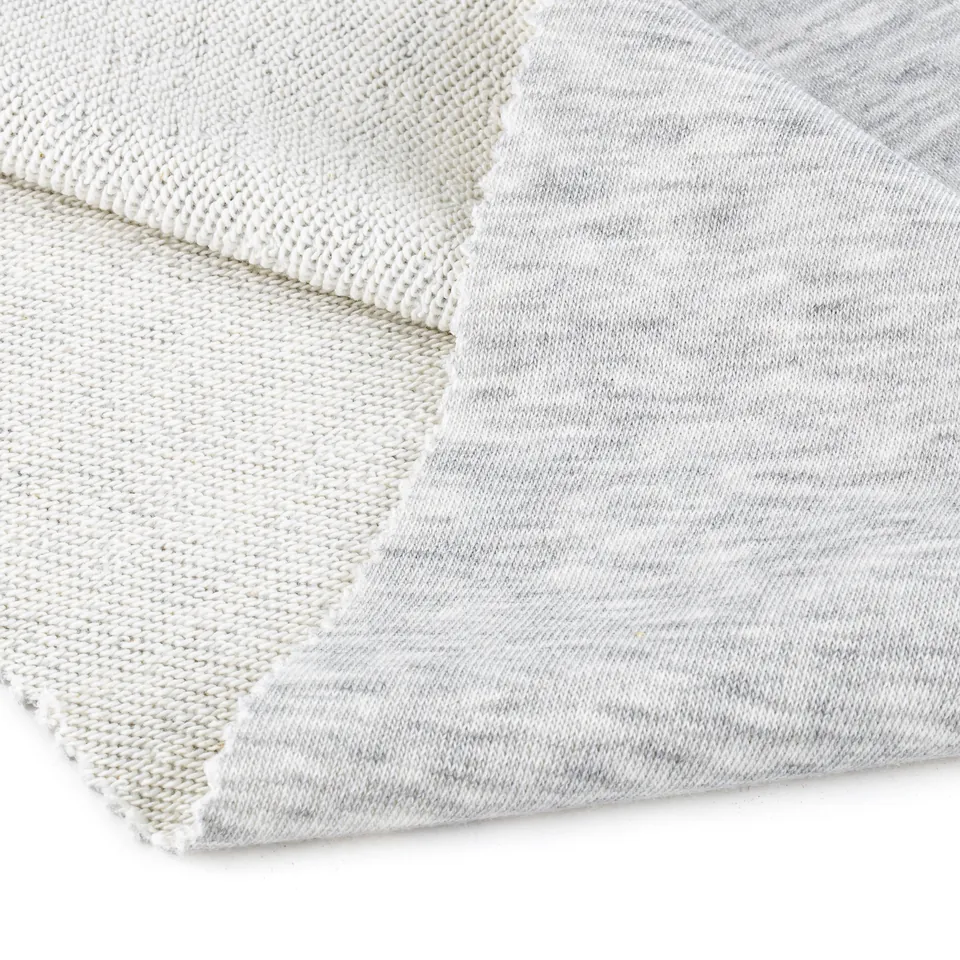
Identify the actual face and reverse under review
The proposed FT-602 route is seventy percent cotton and thirty percent polyester, three-thread unbrushed compacted, at 300, 325, 350, 375 or 400 grams per square metre. FT-603 is sixty-five percent cotton and thirty-five percent polyester, three-thread brushed fleece, labelled brushed anti-pilling, at 320, 345, 370, 395 or 420 grams per square metre. Keep the offered weight and finish identified with the sample. These records do not establish identical shade appearance between materials or a transferable approval for an inside collar using another article.
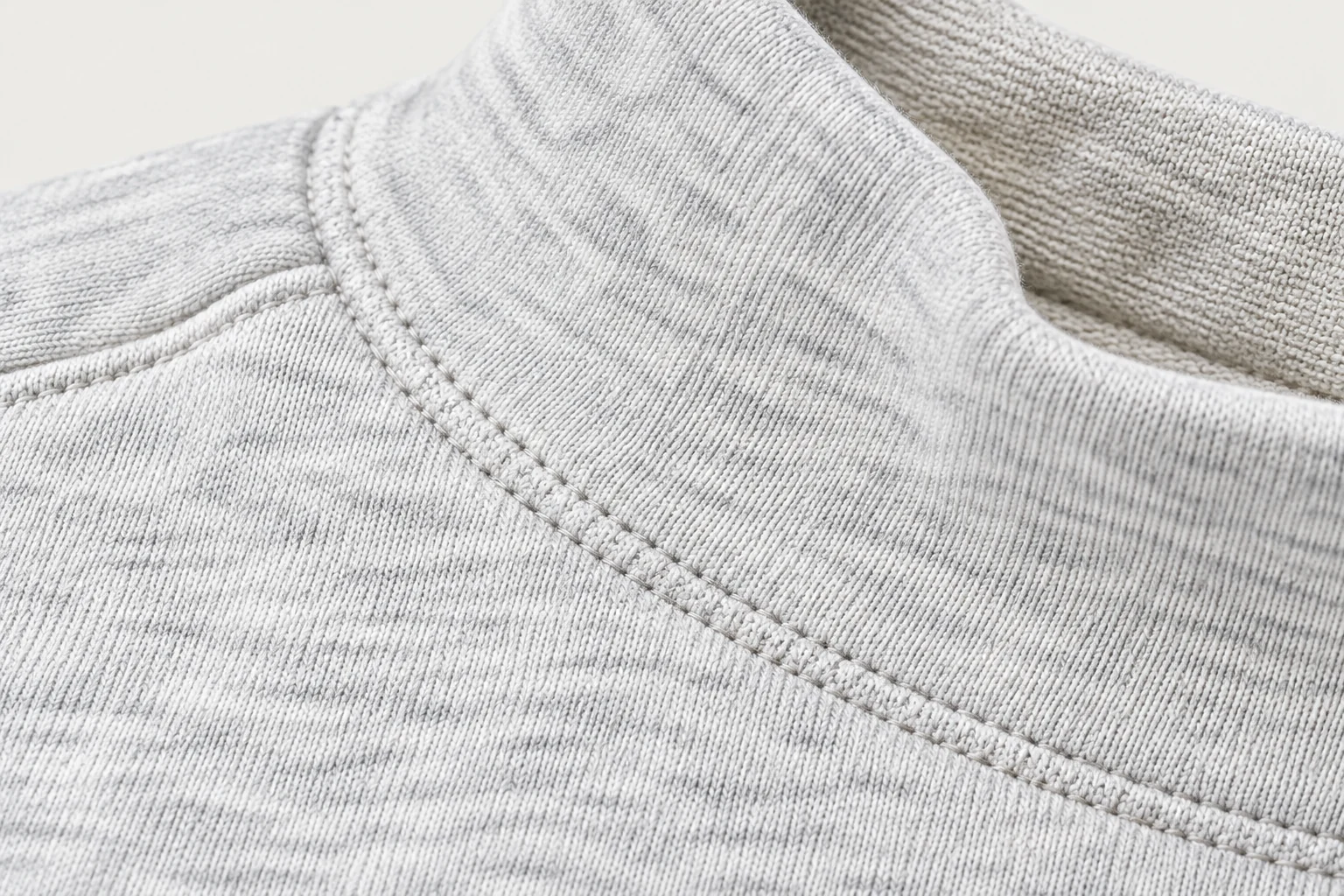
Review the top edge and inner layer together
Place the actual inner and outer collar materials beside the body, bands and thread, then assess their sewn relationship. A narrow line of contrast at the top may be intentional or may be an unwanted result of the collar construction. Mark the decision explicitly. If the collar is folded from one material, identify which face is meant to show where; if it has separate layers, retain both references. Photographs can explain the edge arrangement, while the agreed physical samples should govern its shade relationship and accepted surface appearance.
Map decoration with the collar's fall in view
For a chest mark, show the neckline seam and the area the raised collar occupies as it falls naturally. A large motif positioned close to that seam can compete with the collar or become partly concealed in some views. Decide whether that interaction is intended. Check representative sizes before setting the artwork rule. Do not borrow a crew-neck placement distance unchanged without reviewing the new neckline. A small embroidered mark may also create local thickness near the collar base, so include its actual backing and construction when assessing the sample.
Trial an application on the actual substantial knit
CottonWorks explains that fabric surface and fibre content influence printing choices. Have the responsible decorator evaluate the offered FT material and finish instead of approving a process solely because both candidates contain cotton and polyester. Inspect the application on the full panel, including its handle and any support. If decoration is proposed on the collar itself, assess the resulting edge and movement near the face as a new construction choice. Neither catalogue finish designation confirms application compatibility, and the fabric supplier is not assumed to provide the decorating service.
CottonWorks: Cotton Textile Printing Basics — Fibre content and surface influence printing choices. Collar-adjacent artwork and decorated-collar trials are original editorial suggestions, not confirmation of process compatibility or service availability.
Reassess appearance in the agreed care review
Review the collar top, inner surface, base attachment and decorated panel after the defined development procedure. CottonWorks includes cleaning-related appearance changes in quality evaluation, but its general guidance supplies no result for these particular garments. Keep shade, surface coverage and collar fall as separate observations. An inner layer that becomes more visible is not automatically a colour failure; the assembly relationship may have changed. Request appropriate technical evidence for any performance requirement instead of turning a satisfactory photograph into a promise of permanent shade or shape retention.
CottonWorks: Quality Testing — Quality evaluation includes cleaning-related appearance changes. No article-specific shade, collar shape or retention result is supplied for these sweatshirts.
Release the collar's visible arrangement explicitly
Retain the accepted inner and outer references, thread, bands and artwork with the actual sweatshirt sample. Add comparable photographs showing the intended collar fall from front and side, noting any accepted contrast at the top edge. If a new inner material or finish is proposed, review the visual decisions it affects before treating it as a simple repeat. Keep the anti-pilling wording on FT-603 at the level of its catalogue label unless suitable evidence supports a specific statement for the offered material and completed programme.
Technical background and scope
This is a structured editorial draft. Garment-specific development advice is paired with existing catalogue records; compatibility must be established by sampling. AL KUMAŞ supplies fabric. Cutting, sewing and finished-garment production are separate unless explicitly agreed.