




Give the funnel collar its own component calculation
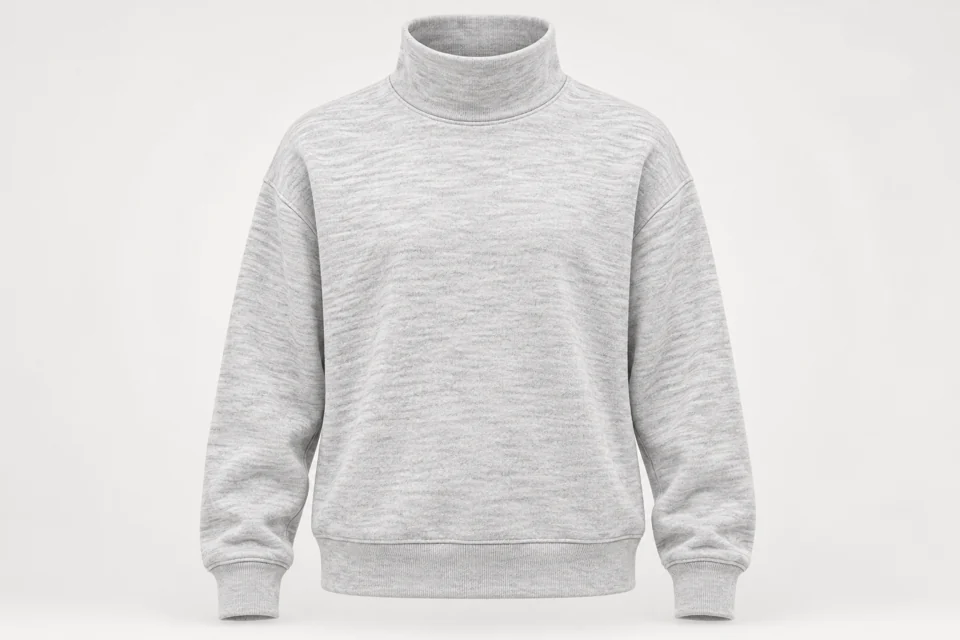
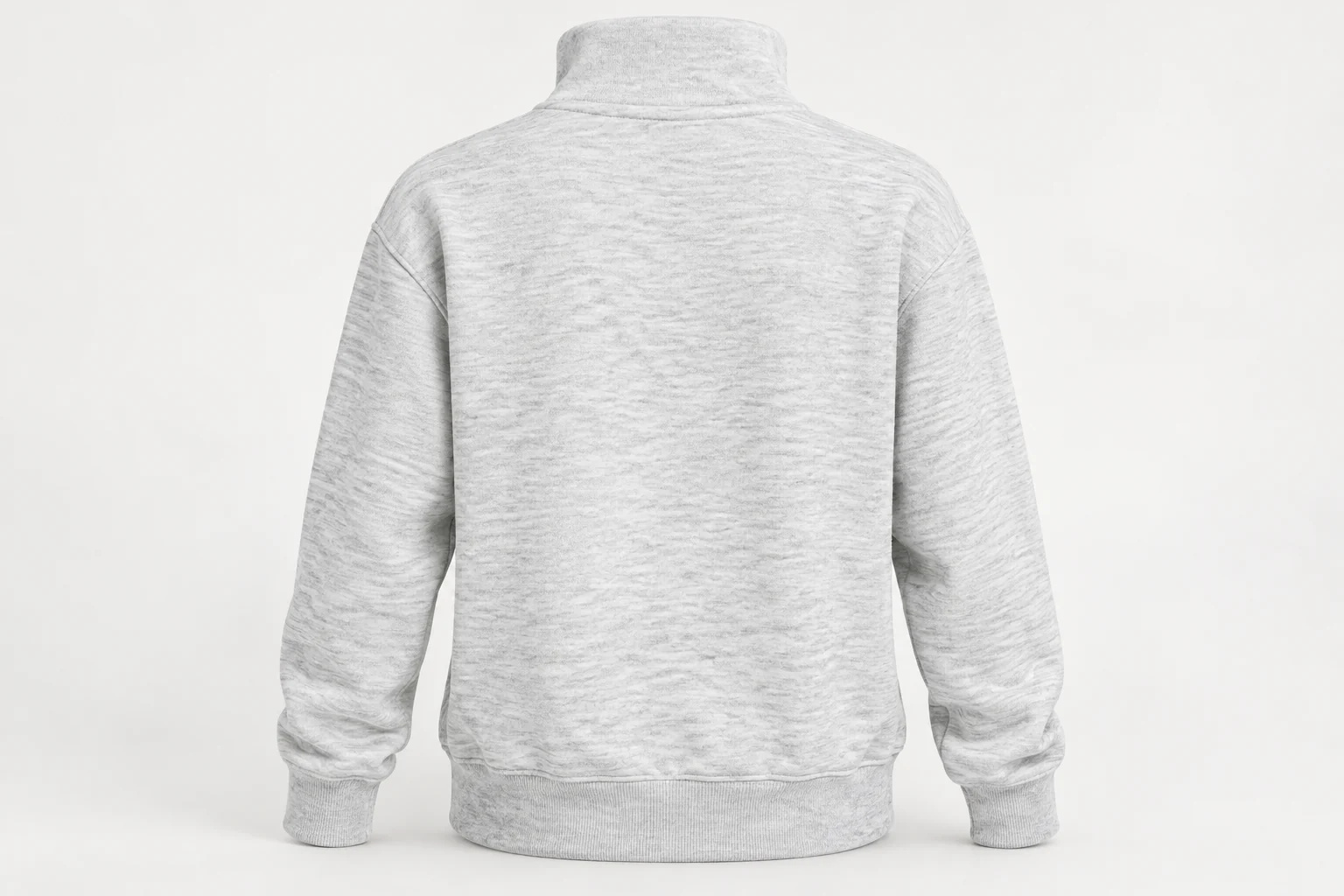
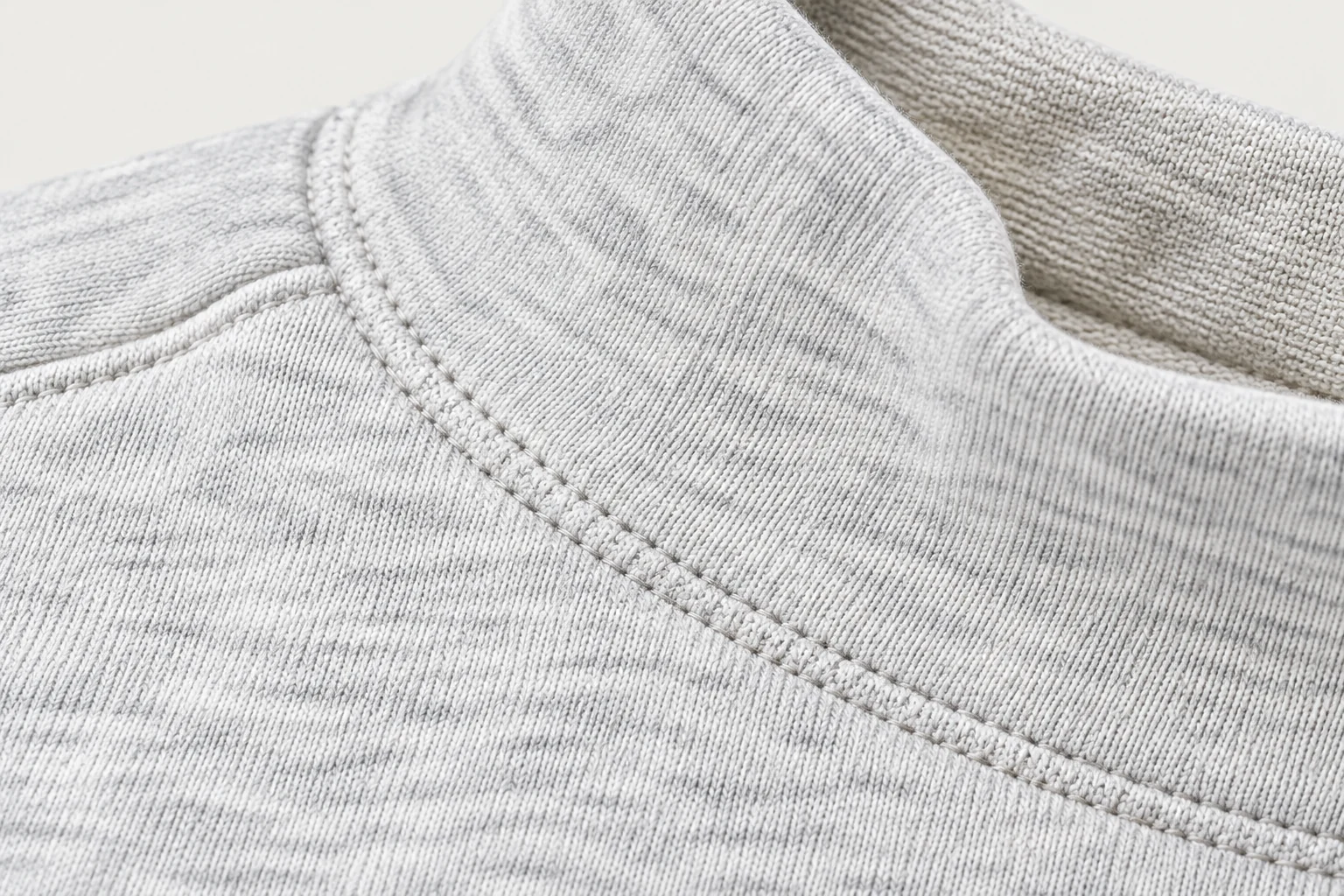
A raised pull-on collar can be a small portion of the sweatshirt's visible area but an important part of its material and assembly decision. Identify the full outer and inner pattern pieces, top-edge construction and base attachment before costing. Finished collar height is not the same as unfolded material height, particularly for a folded arrangement. Ask the maker to identify the actual cut component rather than estimating its requirement from a product photograph. Keep any separately sourced inner material distinct from the main body roll.
Cost the offered weight in its recorded construction
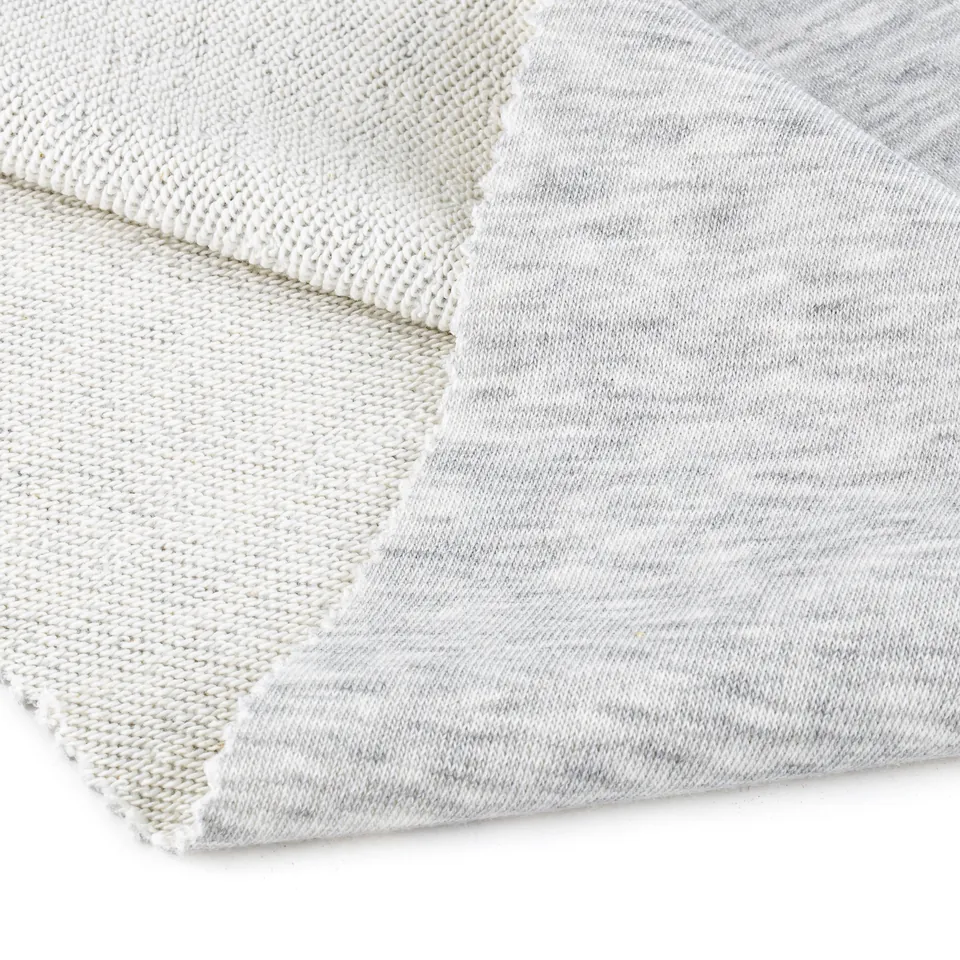
FT-602 offers 300, 325, 350, 375 and 400 grams per square metre in seventy percent cotton and thirty percent polyester, three-thread unbrushed compacted material. FT-603 records 320, 345, 370, 395 and 420 grams per square metre, sixty-five percent cotton and thirty-five percent polyester, three-thread brushed fleece with a brushed anti-pilling designation. Specify the selected finished option and confirm the current offer. The catalogue lists no identical weight between these two routes, so a comparison should retain both the weight and finish differences instead of calling them equivalent.
Use simplified geometry only as a teaching estimate
Imagine a fictional rectangular collar component, unfolded, measuring 0.24 metres by 0.64 metres before separately determined allowances. Its area is 0.1536 square metres. At 350 grams per square metre, that area represents 53.76 grams. This example is not a real funnel-neck pattern, an AL KUMAŞ yield or a recommended opening dimension. A shaped collar may need a different outline and more than one component. The calculation simply demonstrates why costing the visible folded height alone could omit material; the actual pattern maker must supply the production geometry.
Fit collar pieces into an actual complete marker
CottonWorks describes marker planning as arranging the garment's pattern pieces for cutting and material utilisation. Give the planner the approved body, sleeves and collar shapes together, at the confirmed usable width and size ratio. The local catalogue does not verify that width or supply format. A long collar piece may fit in one gap but not another, and its permitted direction needs to be recorded. Do not presume every collar can rotate freely simply because it is smaller than the front panel or because a rough paper layout looks economical.
CottonWorks: Garment Construction — Marker planning arranges actual pattern components for cutting and material utilisation. It does not establish a collar shape, usable width or consumption for this garment; the rectangular example is explicitly hypothetical arithmetic.
Separate a collar experiment from a new whole-body offer
If the preferred collar requires another inner layer, identify its consumption and purchase basis before deciding whether to change the main fabric. Compare a body-wide substitution with a collar-only alternative as different commercial scopes. The latter may add another material, sample requirement or minimum order; ask the actual suppliers rather than assuming it is cheaper. Keep collar sewing and any additional finishing operations visible on the garment quote. A reduction in main-roll consumption is not a complete saving if another necessary component disappeared from the comparison.
Keep fit corrections out of unexplained purchasing factors
A larger top opening, changed collar taper or revised base circumference can alter material requirement even when finished body dimensions remain unchanged. Request the new component pattern and marker assessment after the accepted fit revision. Identify where any agreed dimensional allowances are already included and distinguish them from cutting loss or purchasing contingency. Do not add a generic extra percentage because the neck is raised. The cost should follow the approved opening and its material system, not a rule borrowed from a folded rib collar or a zipped style.
Compare the price of the accepted silhouette
The final comparison should connect body article, offered weight, actual width, collar pattern, inner material and size mix. Include bands and relevant sewing scope, then request current prices and commercial terms for that complete requirement. Record whether the selected route meets the intended collar fall and access through sample approval rather than assigning those qualities to the price. Retain the cost sheet with the accepted garment. A future change in collar height, layer count or inner material should reopen the affected calculation even when the sweatshirt keeps the same name.
Technical background and scope
This is a structured editorial draft. Garment-specific development advice is paired with existing catalogue records; compatibility must be established by sampling. AL KUMAŞ supplies fabric. Cutting, sewing and finished-garment production are separate unless explicitly agreed.