





Review the deeper endpoint as a chest-panel feature
Identify where the actual half-zip design ends in relation to the adult wearer and front pattern, then assess that area through the intended movements. The style label alone does not define a new test or a fixed fraction of garment length. This review concerns an opening whose termination and support extend into a meaningful chest-panel area. If another approved design uses the identical assembly and endpoint, reuse its traceable information rather than claiming the name creates a different result. Record what genuinely changed in the sample being assessed.
Record the body and full insertion materials
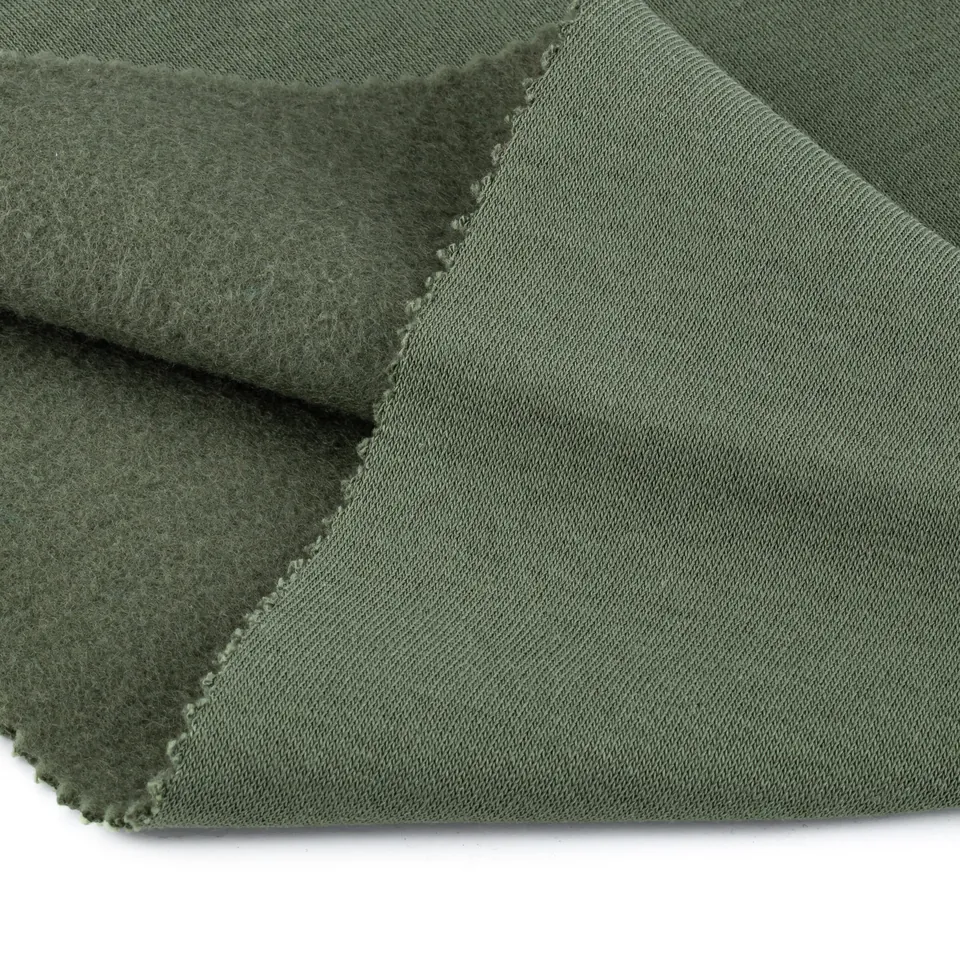
FT-603 is sixty-five percent cotton and thirty-five percent polyester, three-thread brushed fleece, labelled brushed anti-pilling, at 320, 345, 370, 395 or 420 grams per square metre. FT-602 is seventy percent cotton and thirty percent polyester, three-thread unbrushed compacted material, at 300, 325, 350, 375 or 400 grams per square metre. Identify the offered option plus fastener, facing, support and thread references. Neither body entry establishes a tested end-construction result. A substituted sample component must remain labelled before a successful observation becomes a production approval.
Observe the end seated and under forward reach
Assess the front relaxed, then with the wearer seated and reaching as appropriate to the intended adult use. Look for a local pulling line, pronounced lump, facing displacement or another departure from the approved shape. Note the precise position and zip state involved instead of recording only untidy front. Keep pattern balance and assembly questions distinct: a body that pulls generally may need a different investigation from a ridge confined to the termination. Do not assume extra support or a heavier fabric is the correct response to either observation.
Investigate waviness without guessing a single cause
Compare the actual opening before and after its relevant sewing stages where retained trials are available. Coats describes multiple sources of puckering, including tension, feed and component-instability factors. Ask the technician to choose a controlled comparison and record its outcome rather than adjusting several materials and machine variables invisibly. An improved short seam trial should then be checked in the complete front panel. The general bulletin does not prescribe a universal setting for these FT articles, and a wavy opening is not sufficient evidence that the body roll itself is unsuitable.
Coats: Eliminating Seam Puckering — Puckering can involve tension, feed and component-instability factors. It does not diagnose this untested opening or prescribe a universal machine setting.
Check operation and the collar junction without damaging the sample
Use the actual fastener as intended and stop if operation appears likely to cause damage. Inspect the upper tape enclosure and collar seam as well as the lower endpoint, identifying where material enters the operating area or creates an intrusive stack. YKK's manual warns that trimming tape can weaken it, so ask the component specialist to review a bulky junction rather than cutting away an unexplained part. Its reference guidance is not an approval of the selected component or a substitute for current product-specific instructions.
YKK: Zipper Usage Instruction Manual — The reference manual warns that trimming tape may weaken its structure. This does not approve the selected component; the maker should obtain current product-specific guidance.
Repeat the chest-panel assessment after the defined care work
Agree procedure, measurement conditions and acceptance criteria with the technical team. Revisit endpoint position, facing behaviour, collar junction and the opening's closed line after the trial, comparing like views and movements. CottonWorks includes cleaning-related appearance evaluation; it establishes no universal passing limit for this assembly. If the material and fastener components change their relationship, record that observation rather than correcting a single body measurement and assuming the problem is solved. The completed sample and relevant evidence must inform the next construction decision.
CottonWorks: Quality Testing — Cleaning-related appearance needs evaluation. It establishes no universal passing limit or article-specific post-care insertion result.
Issue separate decisions for operation, panel shape and evidence
The report should state whether the fastener operates as intended, whether the deeper chest assembly meets the visual and fit brief, and which technical requirements have supporting evidence. A pass in one category does not erase an unresolved issue in another. Keep failed trials and their identified changes with the accepted sample. If a later offer changes tape, support, facing or the actual opening depth, identify the checks that depend on it. The body-fabric cutting alone cannot approve that whole insertion system.
Technical background and scope
This is a structured editorial draft. Garment-specific development advice is paired with existing catalogue records; compatibility must be established by sampling. AL KUMAŞ supplies fabric. Cutting, sewing and finished-garment production are separate unless explicitly agreed.