





Create an opening-end handoff instead of a style-name request
Send the garment maker and relevant component suppliers a drawing that locates the deeper opening's actual endpoint and shows the intended opened front. State what differs from any existing quarter-zip or other approved sample: depth, chest-panel support, termination, collar intersection or another named feature. If nothing differs except the commercial label, do not invent a new technical scope. The handoff should identify the real decision still needed and the person responsible, allowing the fabric enquiry to support a specific chest assembly rather than an ambiguous half-zip category.
Separate pattern dimensions from fastener purchase dimensions
Have the pattern maker identify opening length and end location, while the fastener specialist provides the proposed component drawing and purchase basis. YKK's manual distinguishes stops, tape extensions and fastener dimensions, so one number is not the complete insertion specification. Connect those references rather than asking purchasing to translate a garment sketch into an unverified component order. Mark whether each dimension is proposed or accepted. A sample using an available fastener should not automatically authorise the production component if its relevant geometry or end arrangement differs.
YKK: Zipper Usage Instruction Manual — Fastener stops, extensions and dimensional references are distinct. The opening-length/zip-end handoff is original sourcing advice, not a source-approved assembly or purchase dimension.
Hand over the termination bill of materials
Ask the maker to list the body section, facing, support, thread and any separate end treatment, identifying the supplier and sample reference for each. Include the collar layers where they meet the upper tape. State which pieces come from the body roll and which require separate purchasing. A drawing of the outside stitch shape is not enough to reproduce the inside assembly. Request a physical or clearly documented construction trial with the full chest panel. No garment-making, fastening or decoration service is assumed to be included in AL KUMAŞ body-fabric supply.
Tie the body offer to that exact trial pack
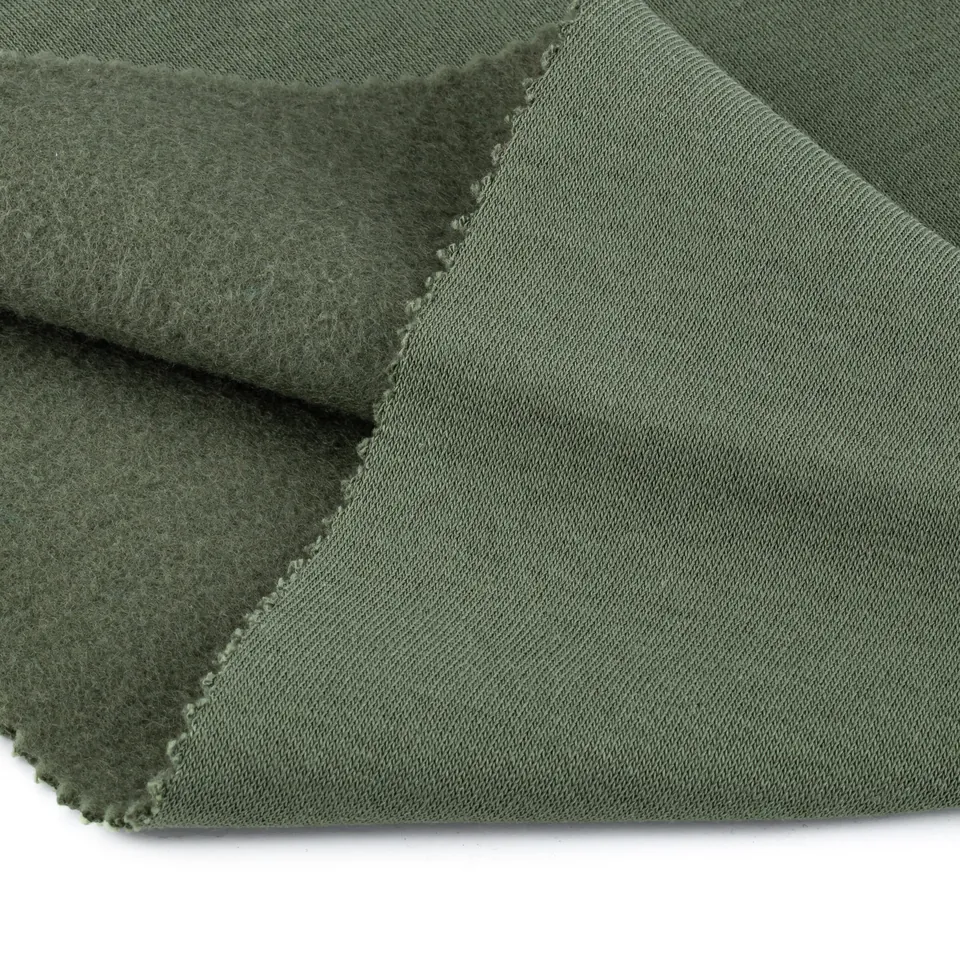
FT-603 is three-thread brushed fleece, sixty-five percent cotton and thirty-five percent polyester, with a brushed anti-pilling label at 320, 345, 370, 395 and 420 grams per square metre. FT-602 is seventy percent cotton and thirty percent polyester, three-thread unbrushed compacted, at 300, 325, 350, 375 and 400 grams per square metre. Request the actual offered option and confirm its current finish, width and supply format. Those records do not provide a pilling grade, warmth result or demonstrated compatibility with the handed-over termination. Keep any alternative identified as another trial condition.
Make each failed observation produce a named next action
If the deeper end forms a ridge, return the issue to the maker with the location, material stack and observed position. If the fastener catches, involve the component specialist with the actual sample identity and operating condition. If the whole chest pulls during reach, ask the pattern developer to review body and opening balance. Coats describes several sewing and component contributors to puckering; a wavy line should trigger an identified investigation rather than an automatic fabric rejection. Record the proposed comparison and owner so another sample produces useful evidence instead of repeating a vague request for better quality.
Coats: Eliminating Seam Puckering — Several sewing and component causes can contribute to puckering. The proposed routing of failed observations to responsible specialists is an original decision workflow, not a diagnosis or a guarantee that the body material passes.
Reconcile the changed component quantities before commitment
When the endpoint or support changes, have the maker issue the revised bill of materials and marker where needed. Separate main fabric, self-fabric facing, other textiles and purchased fasteners in the quantity schedule. Provide the intended size and colour mix, then ask which supplies are already committed and which are still proposals. Confirm actual commercial consequences directly rather than assuming cancellation or reuse terms. Keep sample and technical approvals visible as pending where unresolved; a costed component list is not evidence that the revised assembly has passed its required review.
Release the specific configuration or return it for another trial
The output of the handoff is either an accepted opening configuration with pattern, component and evidence references, or an unresolved issue with a next trial and responsible owner. Do not replace that decision with a general approval of half-zip fabric. Once accepted, reconcile quantities, units, price basis, currency, delivery and payment terms against the exact configuration. A later tape, facing or body substitution should return to the affected decision rather than bypass it as a similar item. This keeps commercial instructions attached to the actual deeper chest-panel system the collection selected.
Technical background and scope
This is a structured editorial draft. Garment-specific development advice is paired with existing catalogue records; compatibility must be established by sampling. AL KUMAŞ supplies fabric. Cutting, sewing and finished-garment production are separate unless explicitly agreed.