



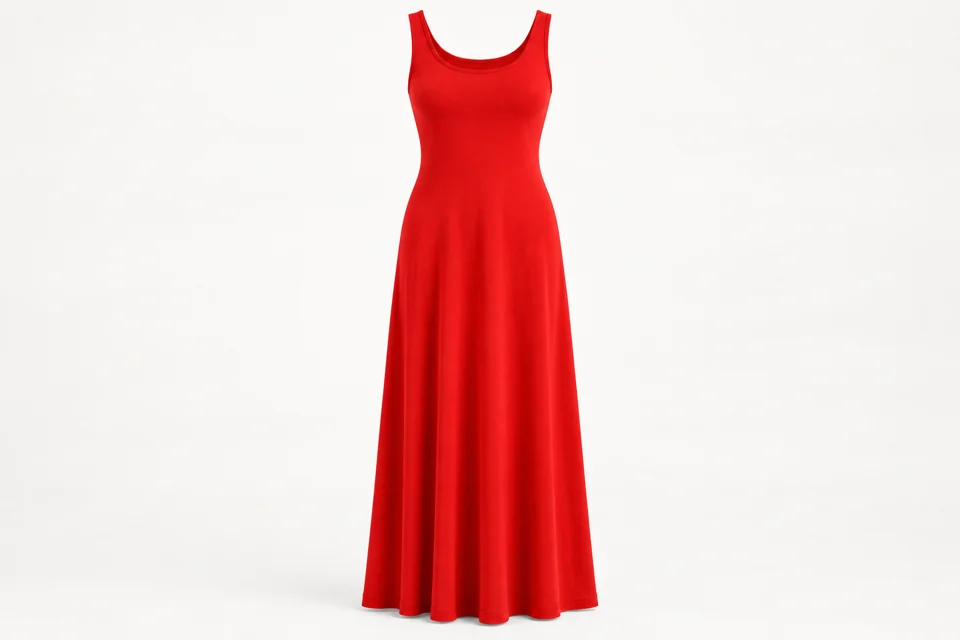
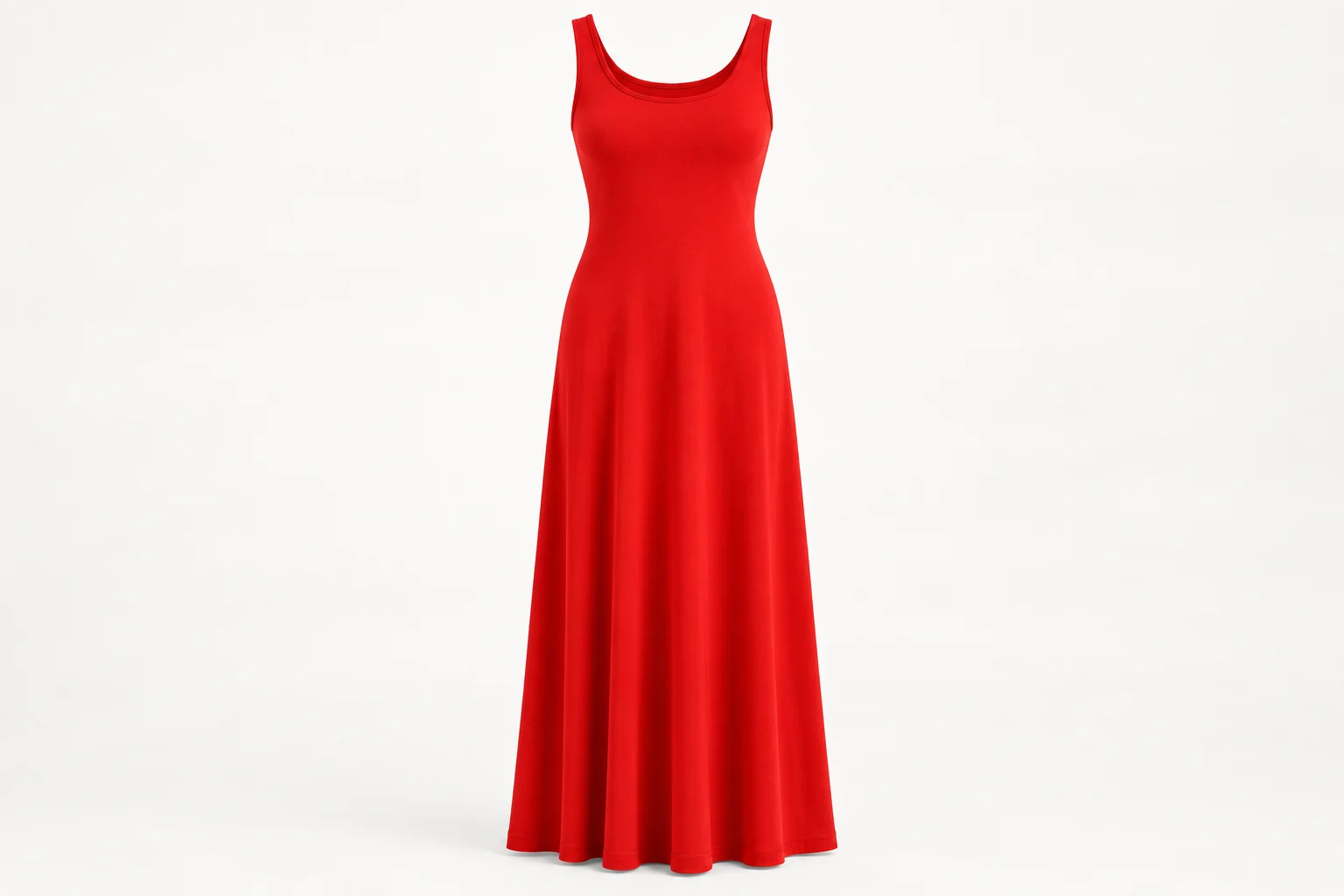
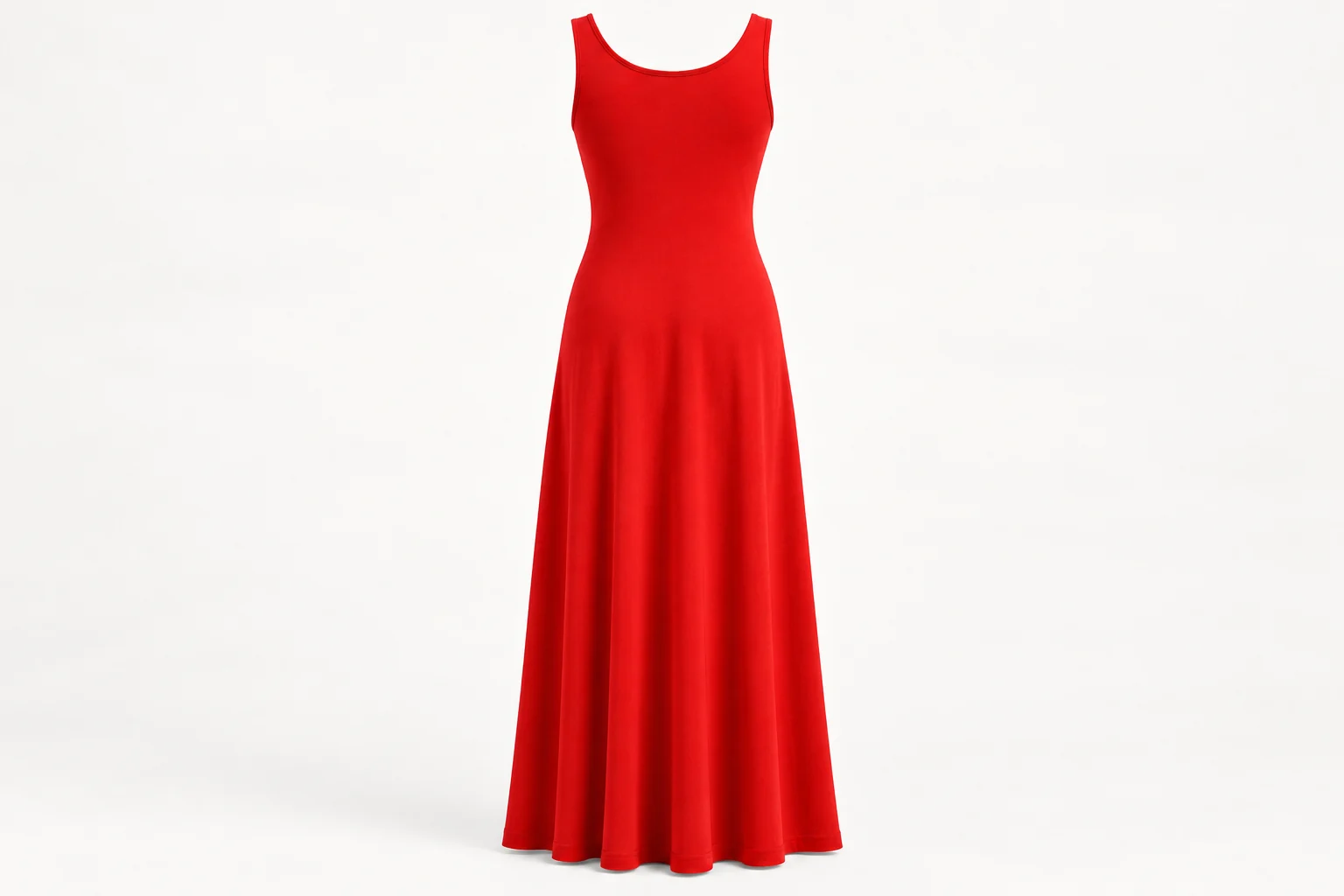

Explain the long outer-dress programme
Send front and back technical views showing the maxi length, body shape, shoulder and neckline construction, sleeves where specified and actual walking-opening detail. Include the intended hem clearance and footwear reference for fitting. State whether the collection plans several lengths and which decisions remain provisional. A nightdress or short jersey-dress reference may help explain handle, but it cannot communicate the full public-facing maxi silhouette. Ask the fabric supplier for a comparison against this specific development brief and keep finished-garment production outside the request unless a separate service is explicitly agreed.
Ask the materials question that the long sample must answer
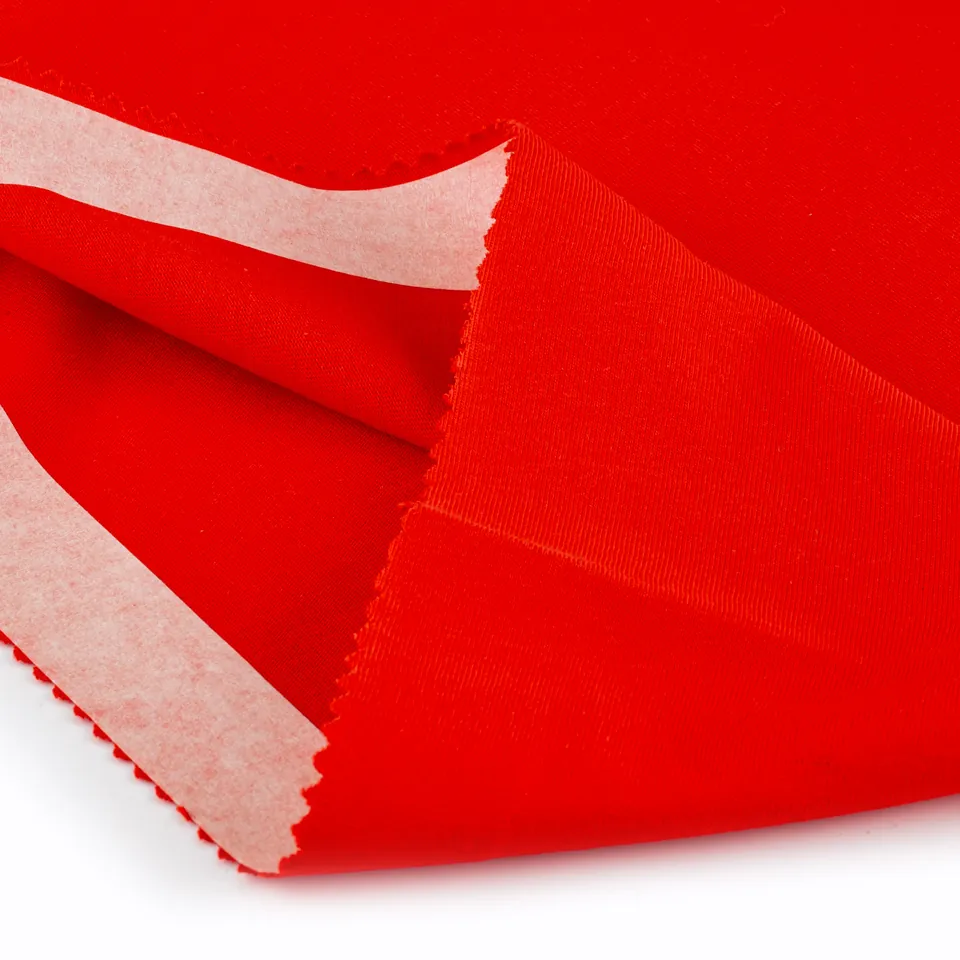
Describe why viscose and modal routes are being compared, such as the intended panel appearance and how the whole dress is carried at the shoulders. Avoid requesting the best flowing fabric without defining the observed design target. Ask what relevant technical information exists for the actual offered article, finish and weight, and coordinate the full-length sample with the garment maker. Neither a fibre name nor a favourable small-cutting impression establishes drape or length stability. The next development decision should identify the evidence required rather than turn a catalogue description into a maxi-dress endorsement.
Catalogue starting points
SJ-103 is listed as 95% viscose 5% elastane with Bio-polish + silicone finishing and weights of 160, 170, 180, 190, 200 g/m². SJ-104 is listed as 95% modal 5% elastane with Bio-polish + soft hand finishing at 150, 160, 170, 180, 190 g/m². Select the options for the first discussion and request the exact current offer, usable width and supply format. Those catalogue entries do not confirm stock, commercial minimums, complete garment manufacture or tested suitability at the intended maxi length. Keep any alternative proposal distinctly identified through sampling.
Forecast lengths and sizes before estimating fabric demand
Provide a quantity table with units, colour or print, size ratio and each intended length configuration. Ask the cutting team to calculate long-panel consumption using the current pattern and confirmed width before converting garment forecasts into material orders. Where a lower border or directional artwork restricts the layout, include those instructions with the estimate. Do not merge sampling material and proposed bulk requirements into an apparently firm order. Ask suppliers to confirm applicable minimums, sample charges and timing for the actual request rather than treating a catalogue article as evidence of a standard stock programme.
Assign lining, support and decoration responsibilities
Identify whether the dress is unlined, lined or styled over a separate layer. For an attached lining, name who develops its material, length, pattern and attachment; for a separate garment, clarify whether this purchase covers it at all. List any shoulder support, neckline material, label and decoration owners without adding features the drawing does not contain. CottonWorks includes auxiliary materials within garment assembly. Applied here, the practical requirement is a complete responsibility map so a body-roll offer cannot be mistaken for the supply and approval of every component in the long dress.
CottonWorks: Garment Construction — auxiliary materials — Assembly includes components beyond base material. The long-dress responsibility map and full-length qualification plan are editorial applications, not asserted AL KUMAŞ services.
Request a full-length qualification stage
Arrange identified material for the first comparison and a sewn dress at its intended length with the proposed components. Agree who reviews shoulder position, walking room, hem clearance, layer interaction and care effects, and which observations or tests are required. Ask the relevant specialist to define methods and acceptance criteria where quantified evidence is necessary. A report for another article or finish should not silently qualify the current offer. If a print border is central to the design, include its placement and material trial as a separate decision rather than assuming the plain sample approves the decorated programme.
Link the offer to a controlled long-garment specification
Close with destination, requested timing, purchasing stage and questions about price basis, packing, payment and delivery terms. Request written exceptions and keep unresolved technical inputs assigned to responsible roles. The accepted material offer and garment costing should reference the same pattern, length mix, layer construction and sampled article. If the brand changes floor clearance, hem sweep or lining later, revisit the affected costing and qualification work. This connects the marketing proposition of a long fluid silhouette to an identifiable development result without inventing assured drape, opacity, dimensional stability or commercial commitments.
Technical background and scope
This is a structured editorial draft. Garment-specific development advice is paired with existing catalogue records; compatibility must be established by sampling. AL KUMAŞ supplies fabric. Cutting, sewing and finished-garment production are separate unless explicitly agreed.