



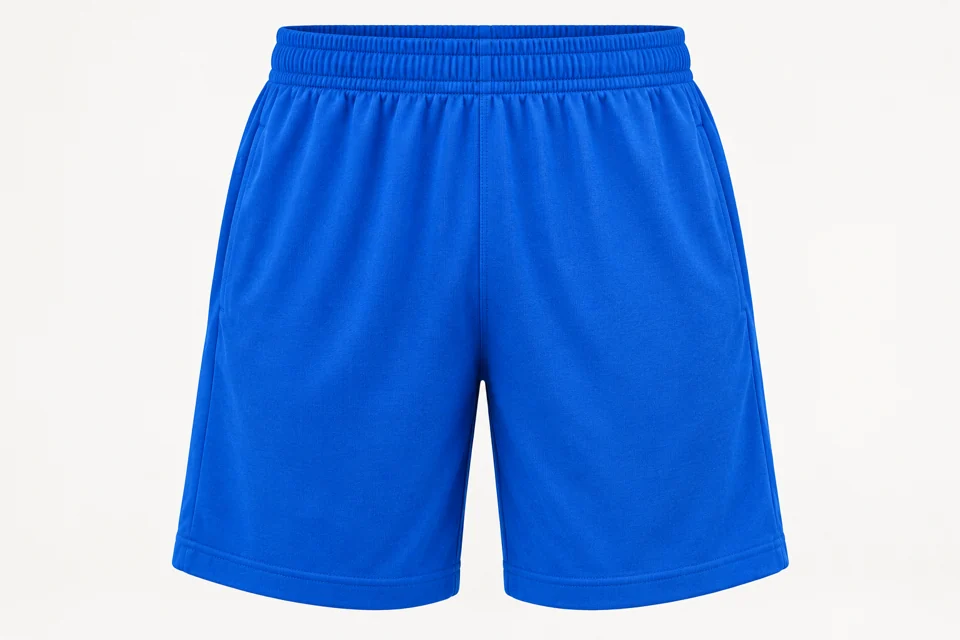


Define an easy knit short rather than a fitted legging cut short
An easy jersey short should begin with an intended amount of room at the seat and leg, not an assumption that fabric stretch permits any pattern reduction. State the finished length, waist position and opening shape on a drawing. Decide whether the short should hang away from the thigh or follow it more closely. CottonWorks recommends defining end use and required function before knit development. Here, the material choice should serve the chosen everyday silhouette and seated coverage, without borrowing the fit or performance assumptions of a cycling-length training short.
CottonWorks: Designing Knit Textiles — Defining the Product — End use and required function are early knit-design questions. Easy-fit, seated-coverage, waist and hem observations are original garment-development applications, not opacity, comfort or recovery results for SJ-102 or IN-202.
Compare jersey and interlock with their actual records
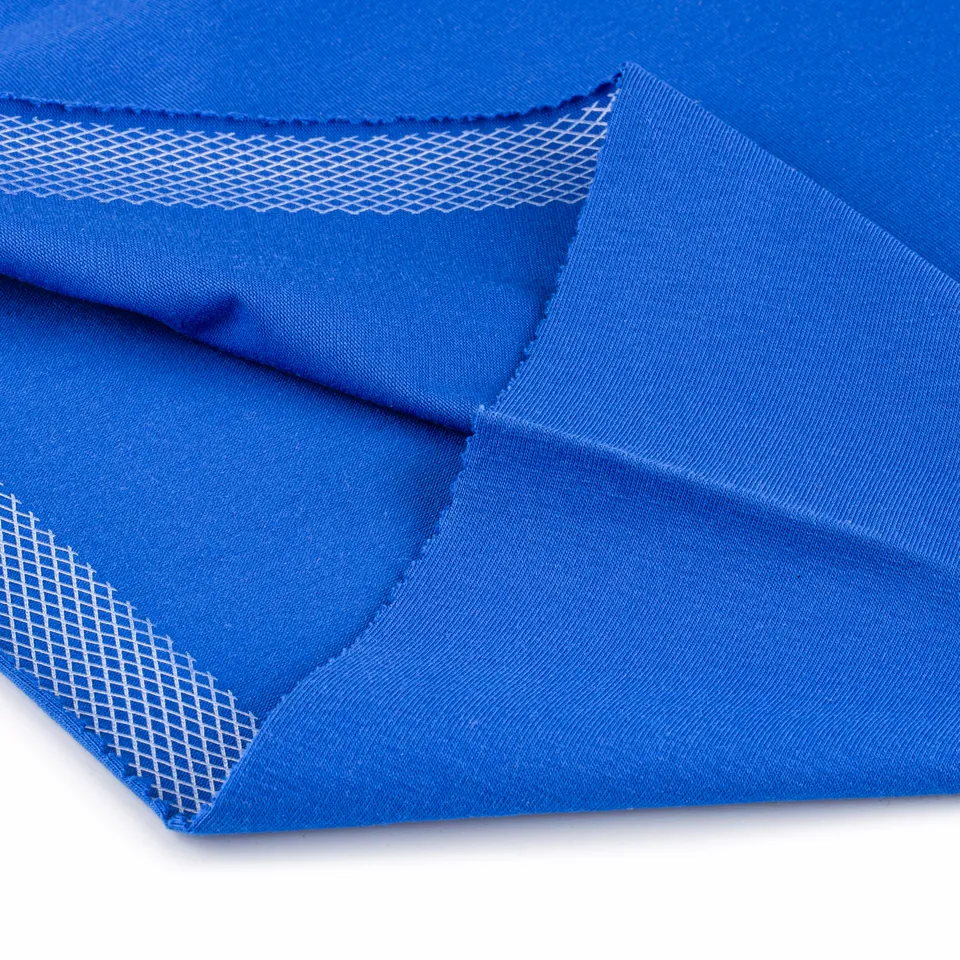
SJ-102 is 95% cotton and 5% elastane single jersey, enzyme and compacted, with weights of 170, 180, 190, 200 and 210 g/m². IN-202 is 92% cotton and 8% elastane interlock, compacted and silicone finished, at 220, 235, 250, 265 and 280 g/m². They differ in recorded construction, blend, finish and weight range. Ask for precise offered sample options. Neither the higher elastane percentage nor the heavier range establishes seat opacity, recovery or waistband comfort. The comparison needs actual short assemblies rather than a ranking based on one catalogue number.
Separate material extension from the intended ease
Ask the pattern maker to identify the body measurements, relaxed garment measurements and proposed pattern ease separately. A roomy seat can still use a stretch material; a close seat needs its own assessment and should not be presented as the same design. Compare the samples with their intended ease recorded, including the direction of material orientation. If a candidate needs a revised pattern to produce the chosen line, name that change. Do not tighten both samples until they look similar and then assume that the resulting comparison represents an easy-fit short.
Use the seated sample to examine coverage deliberately
Review the short standing and seated with the intended underlayer where one belongs in the programme. Identify which region changes appearance or position, rather than describing the whole garment as see-through or safe from exposure. Agree consistent viewing conditions for the development observation. Ask the pattern maker to review front and back rise and crotch position: adding leg width alone does not define the seated architecture. A heavier cutting still needs coverage evaluation at the actual extension imposed by the pattern. If a measurable opacity requirement is part of the product brief, ask a qualified provider to define the assessment and acceptance requirements; do not invent a universal result from a single fitting photograph.
Develop waist pressure independently of body hand
Specify the actual waist assembly and sample it with the complete short. Record dressing access, resting position and the wearer's comments when sitting, without turning those comments into medical findings. Ask the maker to distinguish elastic choice, attachment and garment rise from the body material decision. A softer-feeling body cutting does not establish a comfortable waistband, and more body elastane does not replace a separate elastic component. If the band is changed, repeat the relevant observation with the same identified pattern so the reason for a difference remains understandable.
Compare hem behaviour without changing the waist to disguise it
Observe how the leg opening sits before and after ordinary walking and sitting. If the hem draws upward, folds or appears too close to the body, ask the maker to review edge construction and leg shape while retaining the intended waist position. Pulling the short lower for a photograph changes the coverage relationship and can conceal the cause. A deeper turn-up, another stitch or a revised opening are different sample proposals. Judge their complete effect rather than accepting a flat edge sample as approval of the worn short.
Select a complete fit and component route
Retain the article, offered weight, finish, orientation, pattern ease, waist and hem versions with comparable standing and seated records. State which coverage and movement observations were accepted and which properties still need evidence. Confirm current material availability separately from the design decision. If purchasing proposes another weight, construction or component, review it against the accepted short rather than only its cotton-elastane description. The outcome should reproduce an intentional easy knit garment, without guarantees of universal opacity, comfort or lasting recovery unsupported by the actual supply.
Technical background and scope
This is a structured editorial draft. Garment-specific development advice is paired with existing catalogue records; compatibility must be established by sampling. AL KUMAŞ supplies fabric. Cutting, sewing and finished-garment production are separate unless explicitly agreed.