





Cost the intended ease before comparing fabric prices
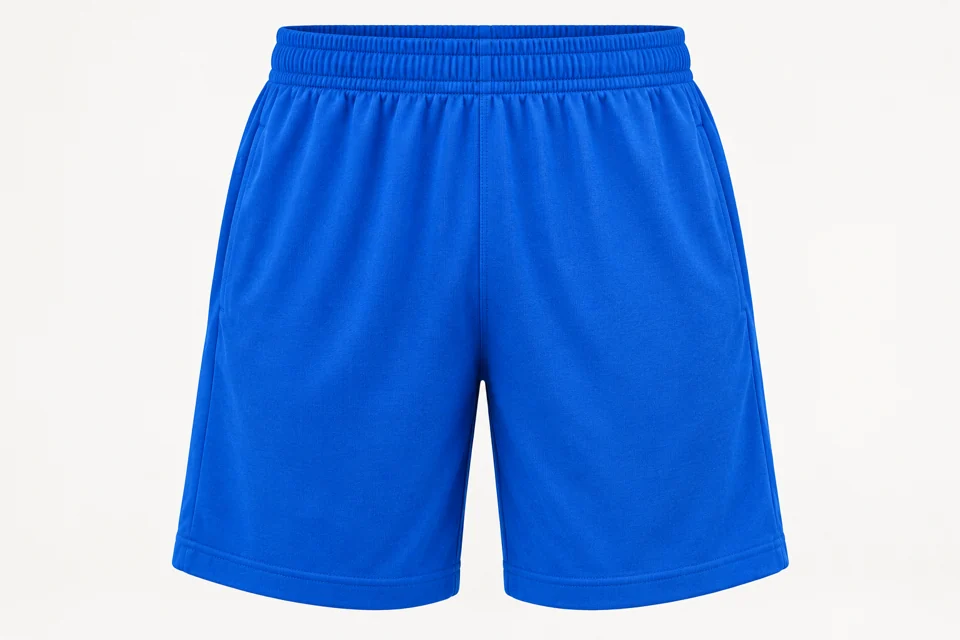
A jersey short can be drafted as an easy everyday shape or a closer stretch fit, and the two versions need not share consumption. Give the cutter the actual seat room, rise, leg opening and finished length. CottonWorks describes marker planning as arranging actual pattern pieces efficiently, so a material estimate should follow the selected pattern rather than a generic shorts size label. If fit remains unresolved, request two identified estimates. That exposes the cost of the design choice instead of allowing a low fabric price to imply that a different, tighter pattern is automatically acceptable.
CottonWorks: Garment Construction — Marker Making — Marker planning arranges actual pattern pieces efficiently. The fit-version costing is an original application; the added-area example is explicitly hypothetical arithmetic, not a production pattern, grading rule or supplier yield.
Keep the offered article and weight inseparable
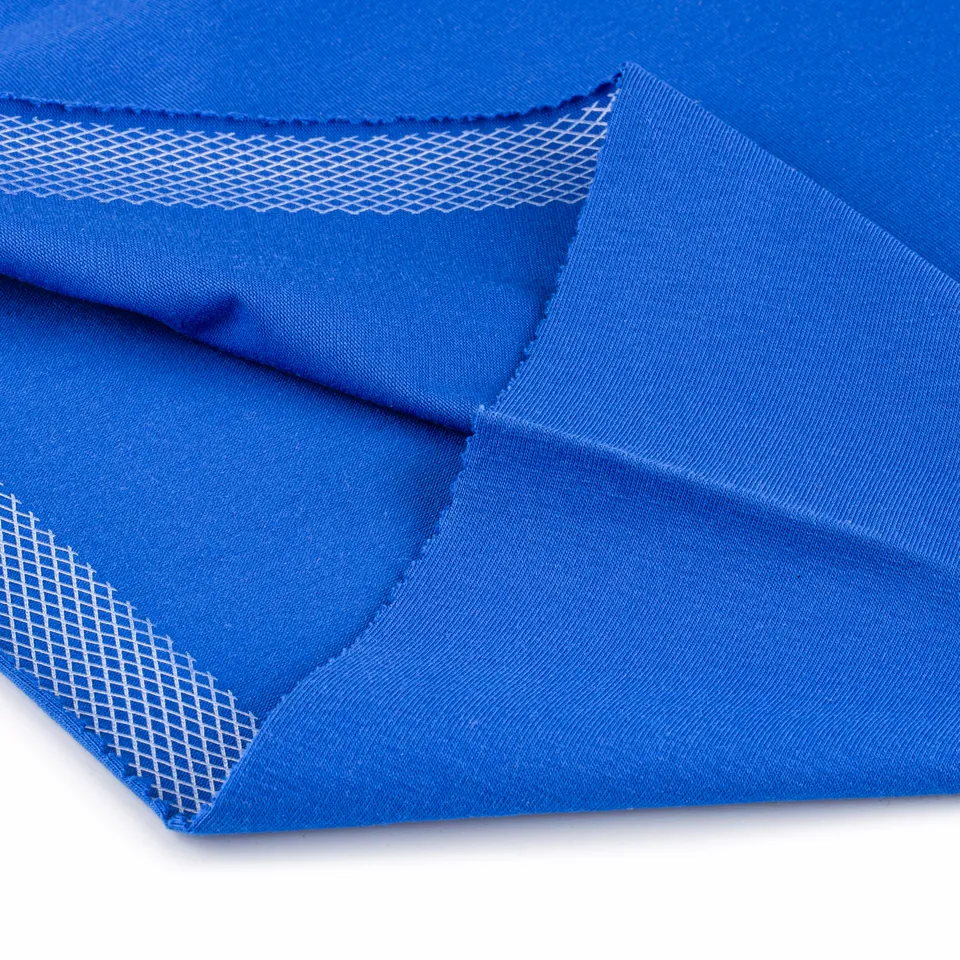
SJ-102 lists 170, 180, 190, 200 and 210 g/m² in 95% cotton and 5% elastane single jersey with an enzyme and compacted finish. IN-202 lists 220, 235, 250, 265 and 280 g/m² in 92% cotton and 8% elastane interlock, compacted and silicone finished. The ranges do not overlap. Request the exact option being sampled and quoted. A comparison changes construction and composition as well as weight, so a material-cost difference cannot be explained as a GSM decision alone. Neither record establishes the actual useful width or garment yield.
Show what an ease revision adds to the pattern
Consider a simplified illustrative change that adds three centimetres across each of four main short panels over an average thirty-centimetre length. Its added area would be 0.036 square metres. At a hypothetical 200 g/m², that area represents 7.2 grams of fabric before other considerations. These are not production dimensions, a grading rule or an actual consumption result. The example explains why more room is not cost-free, but the marker still decides how that revised shape changes purchased material. Ask for the real pattern comparison before quoting an order quantity.
Put usable width and format beside the quantity calculation
Ask each supplier proposal to state usable finished width, supply format and the measurement convention used. Clarify a tubular dimension before using it with an open-width layout. Give the marker planner the intended size ratio rather than only the sample size. A wider seat panel in the larger sizes can change the layout, even when the short leg appears easy to nest. Keep the actual width assumption visible on the offer sheet so a later supply change cannot be accepted without checking its effect on the proposed cutting arrangement.
Separate waist material from body-panel assumptions
List the waistband, elastic casing or separate band construction that the design actually uses. Identify whether the fabric component is cut with the body or purchased from another article, and show the elastic supply separately where relevant. If the seated fitting changes waist height or rise, update the corresponding pieces. Do not count a body extension and a separately supplied band for the same construction by accident. Ask the maker to show what the estimate includes so the buyer can compare equivalent assemblies rather than one complete short against another body's incomplete material figure.
Link hem revisions to a revised marker
If the edge trial changes turn-up depth, leg width or opening shape, require a new pattern reference and consumption calculation. A cleaner hem operation may add cut area or alter nesting; it should not be hidden inside a generic waste allowance. Keep agreed dimensional allowances, marker loss and other purchasing allowances distinct. Label a forecast provisional while seated coverage or waist pressure still requires a design change. The useful estimate identifies the unresolved decision and who will replace the assumed value after the sample review.
Compare the cost of the approved easy-fit scenarios
Show article, finish, exact GSM, confirmed width and format, pattern ease, size ratio, marker reference and component quantities beside the quotation basis. Ask for current minimums and terms for the defined colour and quantity programme. If the jersey and interlock routes use different acceptable patterns, preserve those differences rather than claiming the materials are interchangeable. The buyer can then judge whether the additional cost belongs to a material choice, a roomier silhouette or another waist assembly. A lower kilogram price alone does not answer that garment-level purchasing question.
Technical background and scope
This is a structured editorial draft. Garment-specific development advice is paired with existing catalogue records; compatibility must be established by sampling. AL KUMAŞ supplies fabric. Cutting, sewing and finished-garment production are separate unless explicitly agreed.