



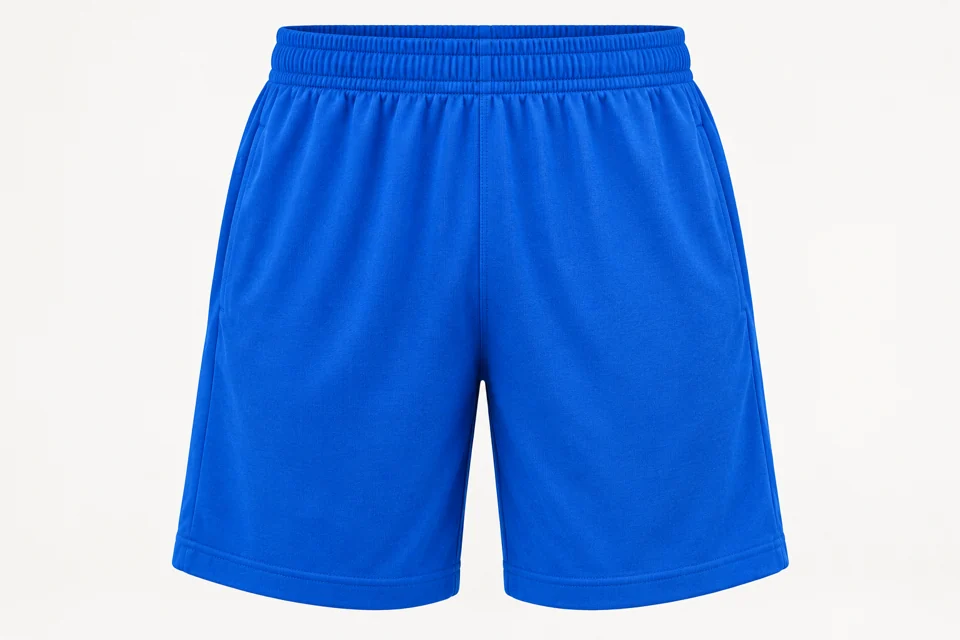


Plan the graphic for an easy short that changes shape when seated
Begin with the actual seat ease, leg length and hem construction before deciding the size or location of a print. An easy short can fold differently from a fitted training garment, while seated appearance can reveal another part of the panel. Decide whether the design is a small identity mark, an all-over repeat or a larger motif intended to remain recognisable. Mark finished seams and the hem on the drawing. A flat mock-up cannot settle every worn view, and its visual appeal should not replace the separate coverage decision.
Approve the proposed substrate rather than the blend category
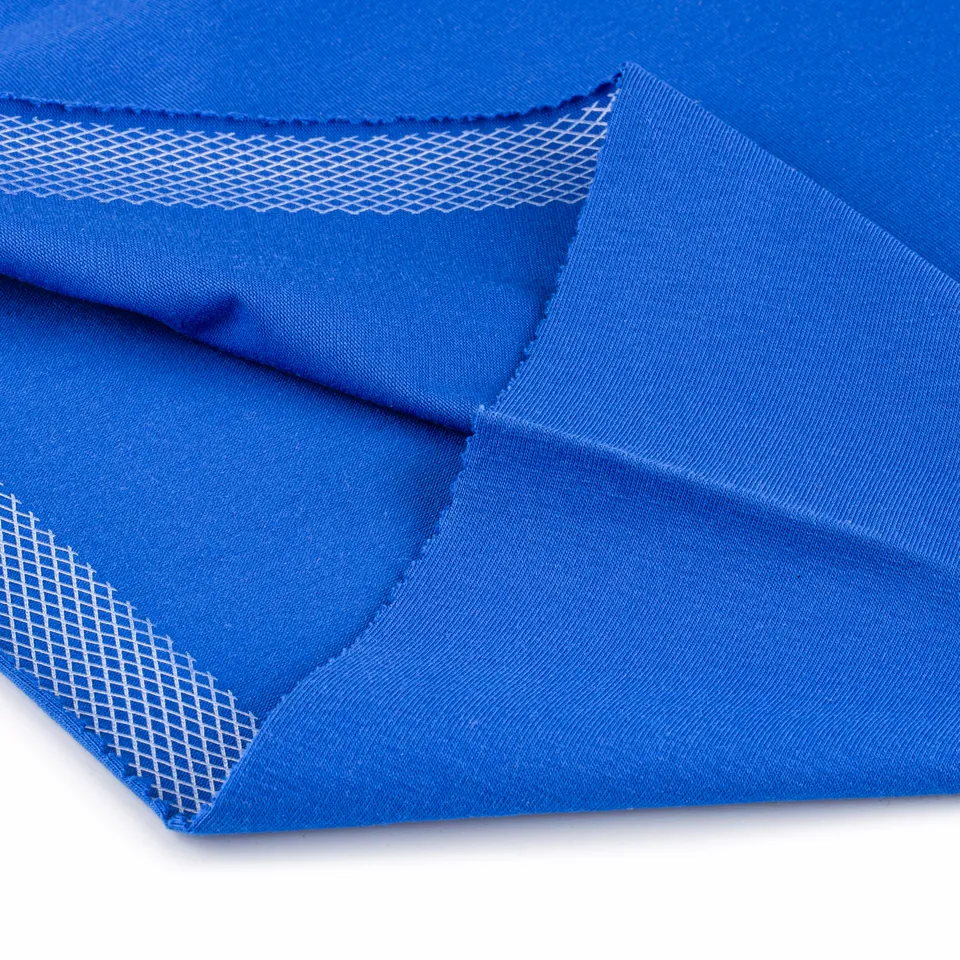
The two candidates are SJ-102, 95% cotton and 5% elastane single jersey, enzyme and compacted, at 170, 180, 190, 200 and 210 g/m²; and IN-202, 92% cotton and 8% elastane interlock, compacted and silicone finished, at 220, 235, 250, 265 and 280 g/m². Ask the processor to evaluate the exact offered material and finish. These catalogue records do not establish print-process availability, application compatibility or identical colour response. An approved cotton-elastane application should not be treated as permission to substitute either article without reviewing the changed substrate.
Keep seat coverage separate from shade preference
Choose a governing physical colour reference and review the short under consistent conditions in the intended standing and seated fit. If appearance changes at the seat, record the location, sample identity and underlayer arrangement instead of attributing the result to colour alone. A dark shade is not an opacity certificate, and a print does not automatically conceal a coverage problem. Ask the technical team how any measurable requirement should be assessed. A material or pattern change made to address coverage can require a new visual review, even when the chosen shade reference remains unchanged.
Compare print scale with the relaxed and seated folds
Review the repeat or motif on full sewn panels, then examine how it reads as the short folds in the intended fit. If one large motif becomes visually unbalanced at the seat or near the inner leg, discuss a different scale or placement rather than declaring the application defective without checking the artwork intent. Record the decision for the actual size range. CottonWorks links visual design and construction choices; the programme still needs its own sample to determine whether the proposed easy-fit shape and graphic work together.
CottonWorks: Designing Knit Textiles — Designing the Fabric — Construction and visual design are connected development choices. Print scale and seated folds require programme-specific sample evaluation; no application capability or coverage performance is established.
Resolve the waist-to-hem visual relationship deliberately
Identify whether the waist should match the body, contrast with it or be visually subordinate beneath the intended top. At the other end, show which printed area enters a turn-up or edge operation and what remains visible at the finished opening. If a separate band material is proposed, give it a component identity and reference colour. Do not assume that a matching colour name on two constructions creates an accepted result. Ask the designer to approve the complete proportion, rather than allow whichever offcut is available to define the visible waist.
Request evidence for the actual colour and application
AATCC's public index identifies rubbing, perspiration and laundering colourfastness as distinct categories. A qualified provider should select appropriate current procedures and agreed requirements for the proposed material and decoration. Those listings do not supply results for SJ-102 or IN-202. Keep any report tied to the actual colour, finish and application, including relevant contrasting components. A visually accepted sample does not establish resistance to transfer, repeated care or surface change. If a processor changes its application to suit the alternative construction, identify that change before carrying approval forward.
AATCC: Standard Test Methods and Procedures — Colourfastness — Public index separately identifies rubbing/crocking, perspiration and laundering colourfastness categories. No method details, pass limits or article results are supplied.
Release the visual design against the accepted fit version
Retain article, offered weight, finish, colour reference, artwork file, graded placement and component identities with standing and seated sample photographs. State whether approval covers shade alone or the complete decorated short. If ease, rise, hem depth or waist construction changes, review the affected artwork and colour relationship before another cutting instruction is issued. The approved file should preserve an intentional easy-short design while keeping untested opacity and durability claims outside the decision. A broad category such as jersey shorts cannot define the scope of a particular colour or application approval.
Technical background and scope
This is a structured editorial draft. Garment-specific development advice is paired with existing catalogue records; compatibility must be established by sampling. AL KUMAŞ supplies fabric. Cutting, sewing and finished-garment production are separate unless explicitly agreed.