





Cost the bodice and flared skirt as related component groups
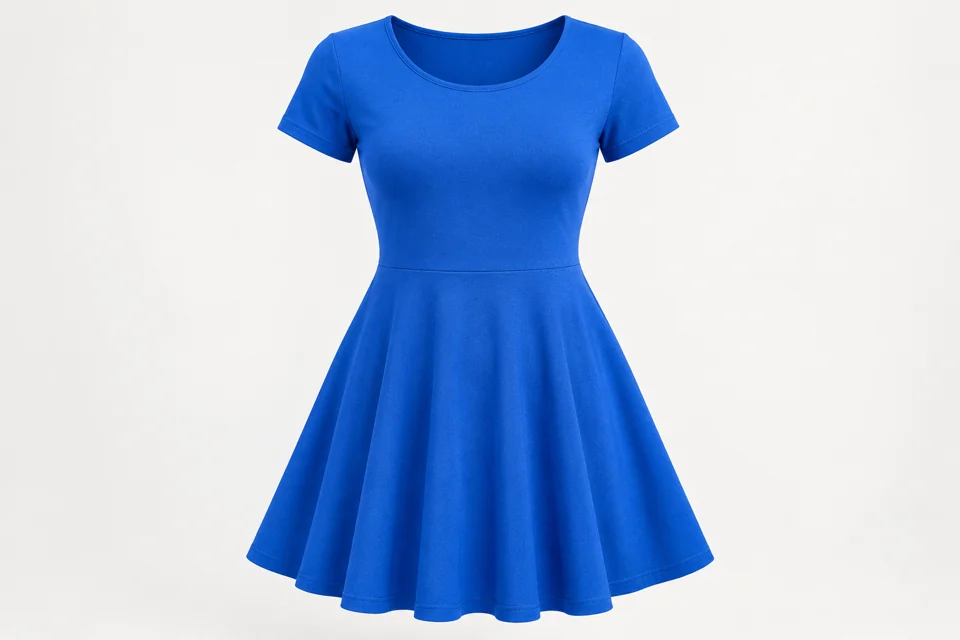
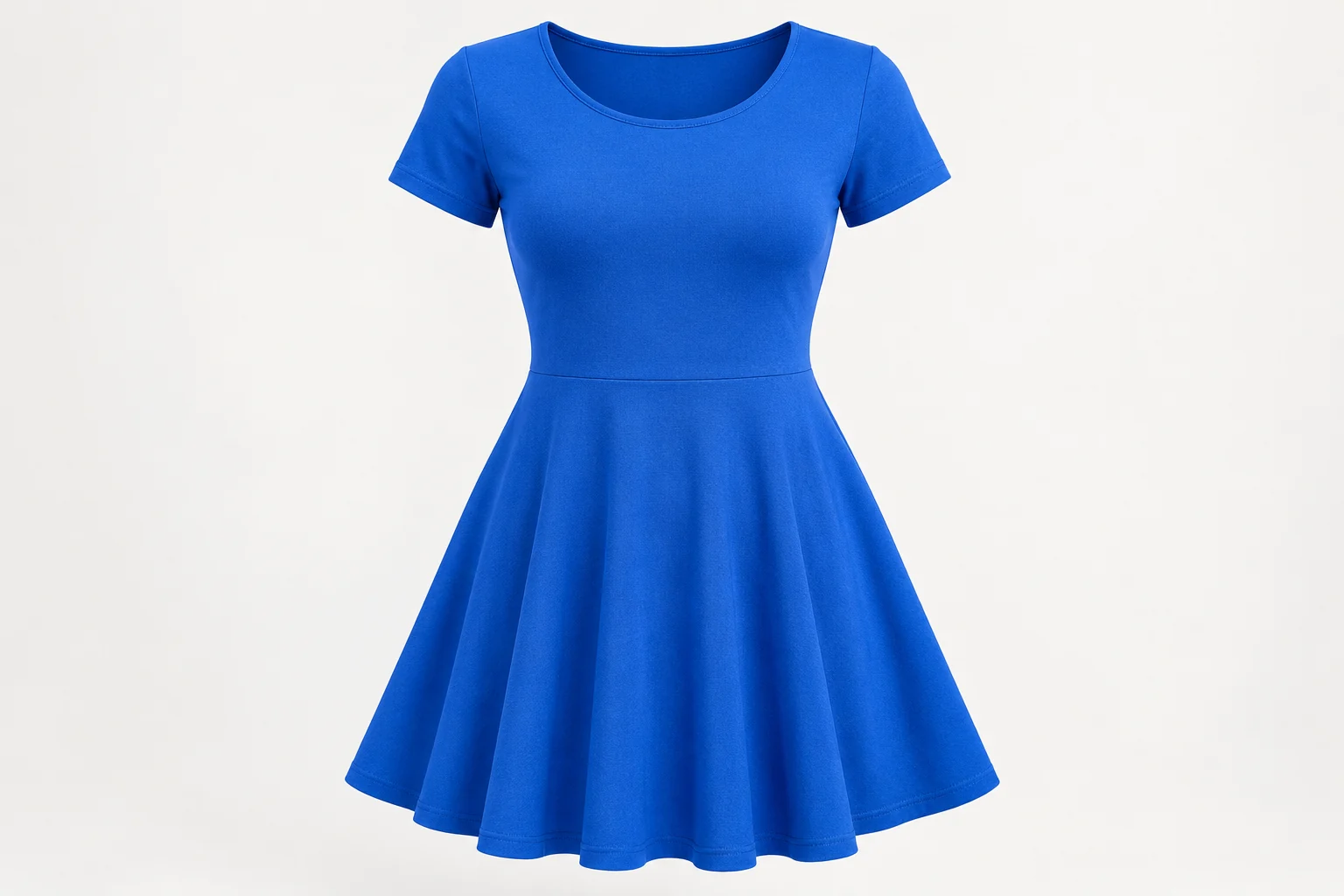
Separate the bodice, skirt panels, sleeves where specified, neckline pieces and any lining in the pattern list. Show where the waist seam falls and how the skirt obtains its flare. A gathered skirt and a shaped-panel skirt should not inherit one consumption assumption merely because both are sold as skater dresses. Give the cutter the actual size ratio and length variants. This prevents the estimate from becoming a fitted-top marker plus a guessed skirt allowance, a shortcut that hides the material and layout decisions most important to this silhouette.
Compare two flare proposals with the same waist target
If skirt sweep remains unresolved, ask the pattern maker to supply two identified options that meet the intended waist junction, then have the cutter calculate each at the proposed usable width. The comparison can reveal how a visual change affects panel area, nesting and hem length without pretending those variables move proportionally. Do not reduce the bodice merely to offset a more expensive skirt route. The accepted upper fit and the desired flare are design requirements; material cost should make their consequences visible rather than silently alter them to reach a headline price.
Use a skirt-area calculation only for what it can show
For hypothetical arithmetic, suppose an approved flare revision adds 0.12 square metres of net skirt area. At 190 g/m² that area represents 22.8 grams before cutting losses, components and other allowances. These invented dimensions are not a real dress pattern, recommended sweep or AL KUMAŞ yield. The calculation isolates area mass; it cannot predict how the revised panels nest or whether the waist seam remains acceptable. Request the actual marker and assembly comparison after the design choice so the purchasing sheet contains more than a simple multiplication detached from the garment.
Let the complete skirt outline drive the marker review
Provide grain, surface and artwork directions for every skirt panel, including any restrictions on rotation. CottonWorks describes marker planning as arranging garment pieces for utilisation; a wide or curved skirt shape makes the actual arrangement especially relevant here. Ask whether the bodice and smaller components can use spaces around the skirt without unapproved joins or direction changes. If a directional print constrains placement, cost it separately from a plain version where necessary. A narrow visible waist does not establish a small material requirement when the lower part of the dress spreads into a broad flare.
CottonWorks: Garment Construction — marker making — A marker arranges actual garment pieces for utilisation. The flare-area calculation uses explicitly invented figures, not offered consumption, recommended sweep or a verified pattern.
Catalogue starting points
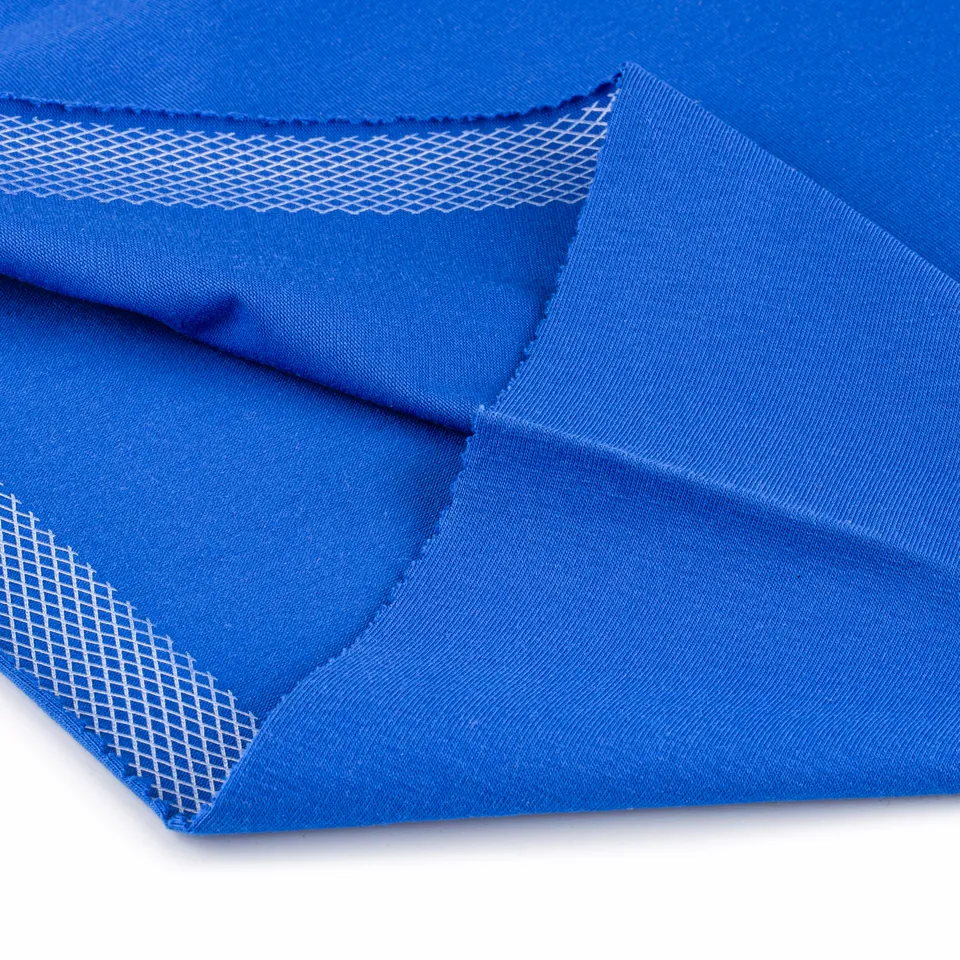
The cotton-elastane candidate SJ-102 lists 95% cotton 5% elastane, 170, 180, 190, 200, 210 g/m² and Enzyme + compacted finishing. The viscose-elastane candidate SJ-103 lists 95% viscose 5% elastane, 160, 170, 180, 190, 200 g/m² and Bio-polish + silicone finishing. No usable width, skater marker or finished skirt yield is confirmed by those entries. Ask which exact offered weight and format underpin each quotation. Even at a shared nominal GSM, the accepted pattern and finish must remain identified rather than treating the two material routes as interchangeable cost inputs.
Include the waist and hem operations in the comparison
Ask the garment maker to state the construction and cost of joining the fitted bodice to the chosen skirt, including any actual gathering or support. Add the agreed hem treatment and lining assembly where specified. A flare increase may add finishing work as well as material, which a kilogram price cannot explain. Keep pattern compensation, marker losses and purchasing buffers distinct and note what is already included. If a lining uses another outline or length, calculate that material from its own pattern rather than assuming it mirrors the outer skirt exactly.
Price an accepted silhouette with its variants visible
The comparison should identify body article, offered dimensions, pattern, flare construction, length, size mix and all additional components. If the buyer is choosing between sleeve or neckline-facing variants, show their material and assembly differences explicitly instead of blending them into one broad allowance. Update the relevant figures after a waist-position or sweep correction. An economical skater dress is an acceptable developed configuration with transparent costs, not the smallest partial material estimate. Confirm commercial terms against that configuration rather than interpreting an early cutting calculation as a complete production offer.
Technical background and scope
This is a structured editorial draft. Garment-specific development advice is paired with existing catalogue records; compatibility must be established by sampling. AL KUMAŞ supplies fabric. Cutting, sewing and finished-garment production are separate unless explicitly agreed.