



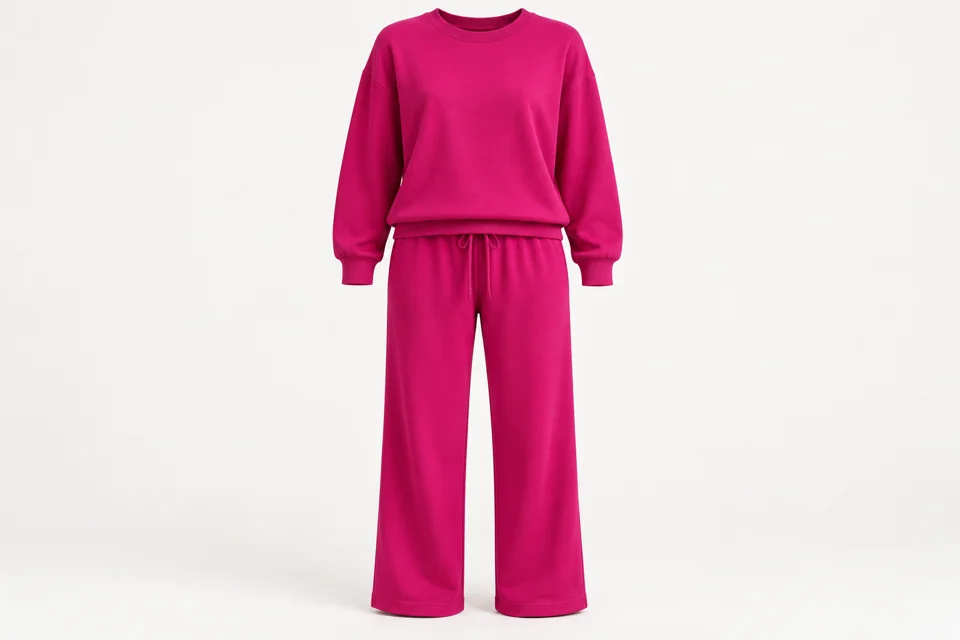

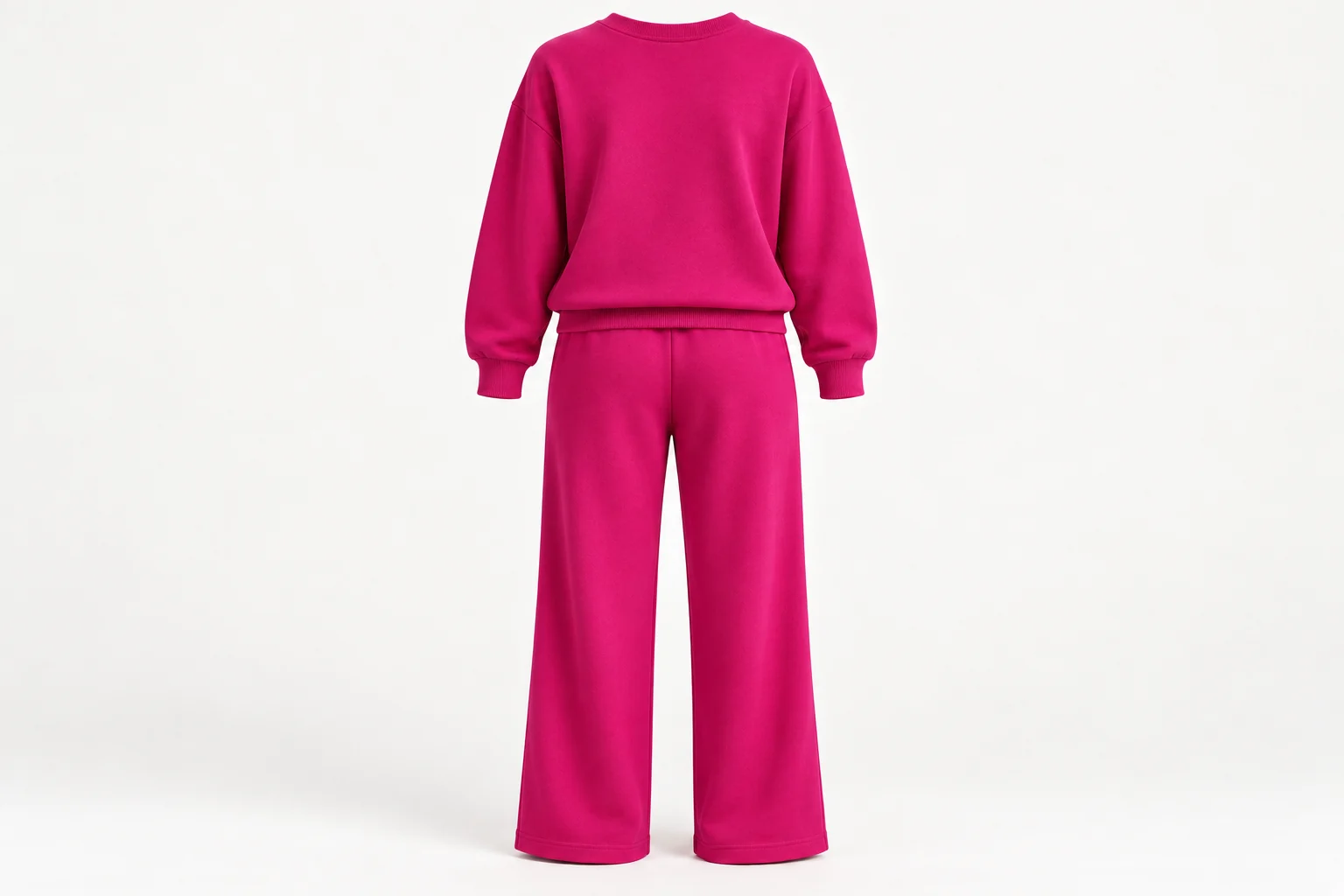

Approve the colour relationship at the set boundary
A coordinated lounge pair is read where the top ends and the lower piece begins, as well as across the full body. Decide whether the intention is an apparent match, a tonal combination or a deliberate contrast. Review both complete pieces in their actual proportions, not just two equal-sized cuttings. The same colour can occupy a small top and a much larger lower surface, so the buyer should assess that real visual balance. A shared colour name is an instruction to develop a relationship, not evidence that the relationship has been approved.
Record the exact material proposal for each partner
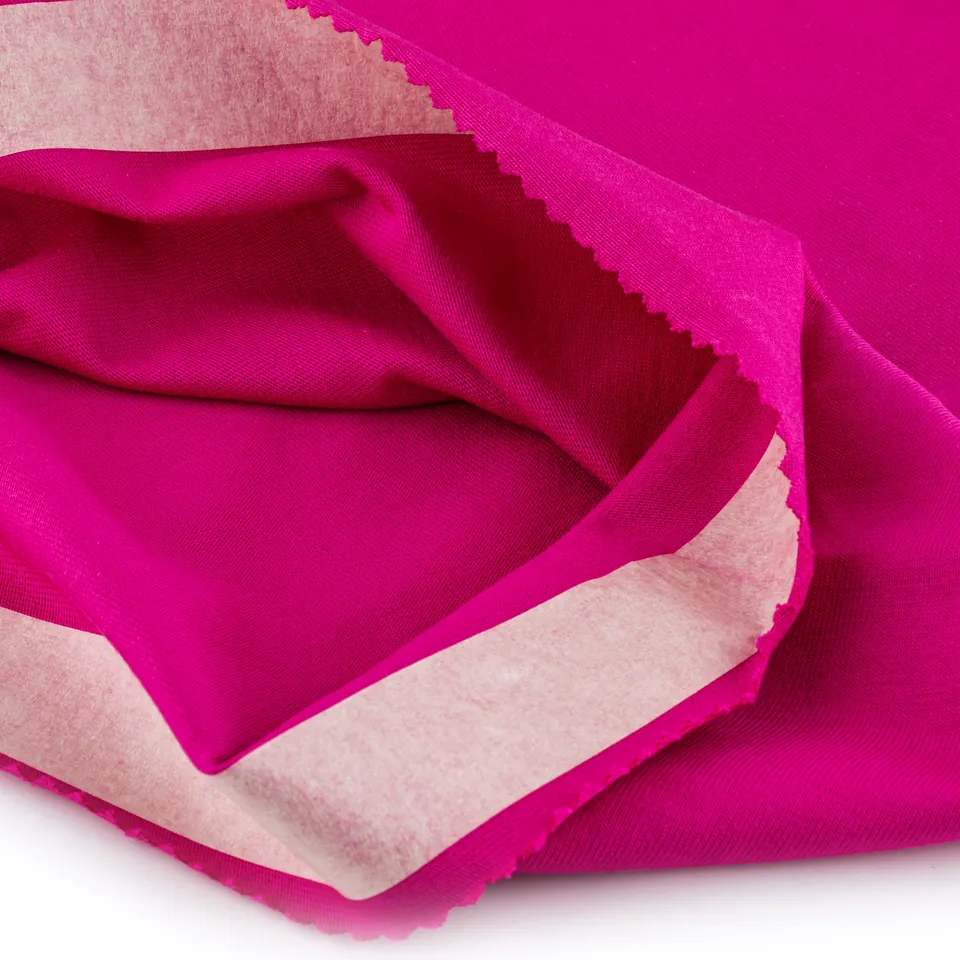
The SJ-104 route is 95% modal and 5% elastane, Bio-polish + soft hand, with 150–190 g/m² options; SJ-103 is 95% viscose and 5% elastane, Bio-polish + silicone, at 160–200 g/m². If both pieces use one article, identify their offered version and samples. If the set deliberately mixes articles or weights, retain separate references. CottonWorks relates print choice to fibre and fabric characteristics, but its cotton examples do not validate either modal or viscose application. Ask the provider to qualify the actual material rather than transferring an approval through the shared jersey description.
CottonWorks: Cotton Textile Printing Basics — Fibre and fabric characteristics inform print choices; cotton examples do not qualify modal or viscose decoration.
Define one governing reference and a paired visual decision
Identify the physical colour standard for each intended colour, then label the top and bottom development samples against it. Review the pieces together under the agreed conditions and record whether the pair relationship is accepted, even if each cutting has already been assessed separately. If a compromise is intentional, say which piece or physical reference governs it. Do not substitute a phone photograph for the governing sample. The useful record distinguishes a colour decision on one material from the buyer’s separate acceptance of two garments as a coordinated pair.
Plan print scale across two different garment areas
An all-over motif on the top and bottom may need a shared repeat, different scales or another deliberate relationship. Draw the actual garments and inspect motif interruptions at the top hem and lower waist. A small chest placement with a plain lower piece is not the same artwork package as a full repeat on both. If the design requires continuity across the boundary, have the maker explain what can realistically remain aligned as the wearer moves. Do not promise a continuous picture solely because the samples can be arranged that way for one photograph.
Control material-group pairing before assembly
Ask the production team to identify which actual material groups supplied the paired samples and how proposed groups will be assessed for compatible appearance. A common article code is not a reason to mix any available top and bottom without a visual review. Where a different supply group is introduced, keep its identity visible and request the relevant pairing assessment. The buyer should distinguish a named approved pairing from a blanket instruction to match everything. This is a proposed control decision, not a claim about the mill’s existing lot-management system.
Review the pair after the agreed care programme
Retain the initial paired appearance reference and label each sample through the defined care stages. Assess whether the intended top-to-bottom relationship remains acceptable, noting shade, decoration, surface and dimensional observations separately. Do not diagnose every changed impression as a dye failure; a different fold or length relationship can also alter what the buyer sees. Ask the responsible specialists to define any colourfastness or decorated-material evidence required. An accepted visual pair supplies no sleep, skin or thermal guarantee, and no catalogue finish provides a fastness result by itself.
Release partner identities with the artwork and references
The final appearance package should identify the top and bottom sample, article, weight, finish, colour reference, artwork file and relevant material grouping. Record the accepted match or contrast and any restriction on substituting one partner. If replacement pieces are offered, define how their relationship to an existing garment will be reviewed rather than promising an exact future match. Confirm decoration responsibilities and commercial timing separately. The release is a specific design and pairing decision; it should not turn an appealing co-ord into unsupported claims about material performance or production capability.
Technical background and scope
This is a structured editorial draft. Garment-specific development advice is paired with existing catalogue records; compatibility must be established by sampling. AL KUMAŞ supplies fabric. Cutting, sewing and finished-garment production are separate unless explicitly agreed.