





Give the set a linked sample identity
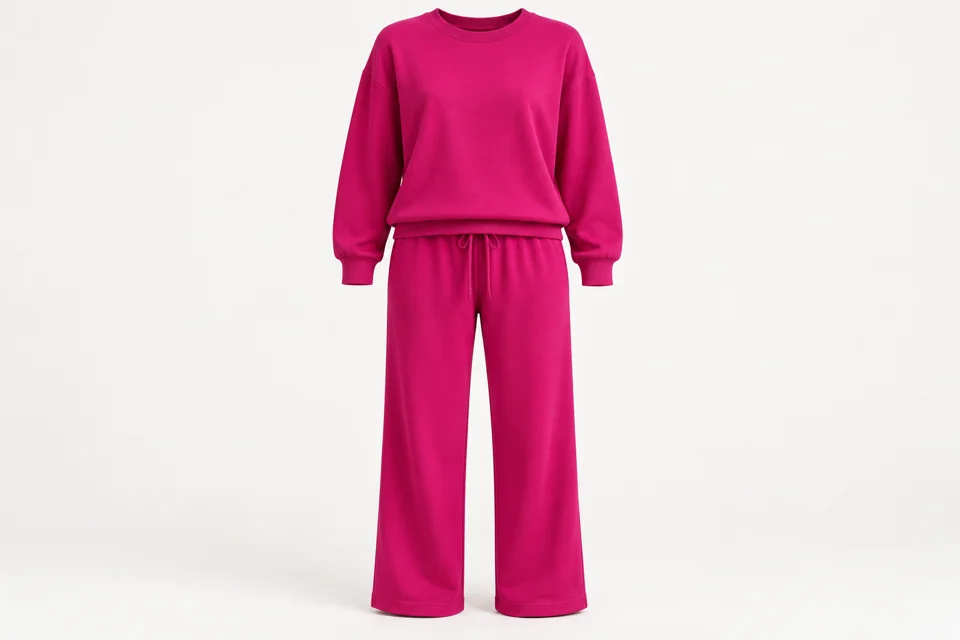
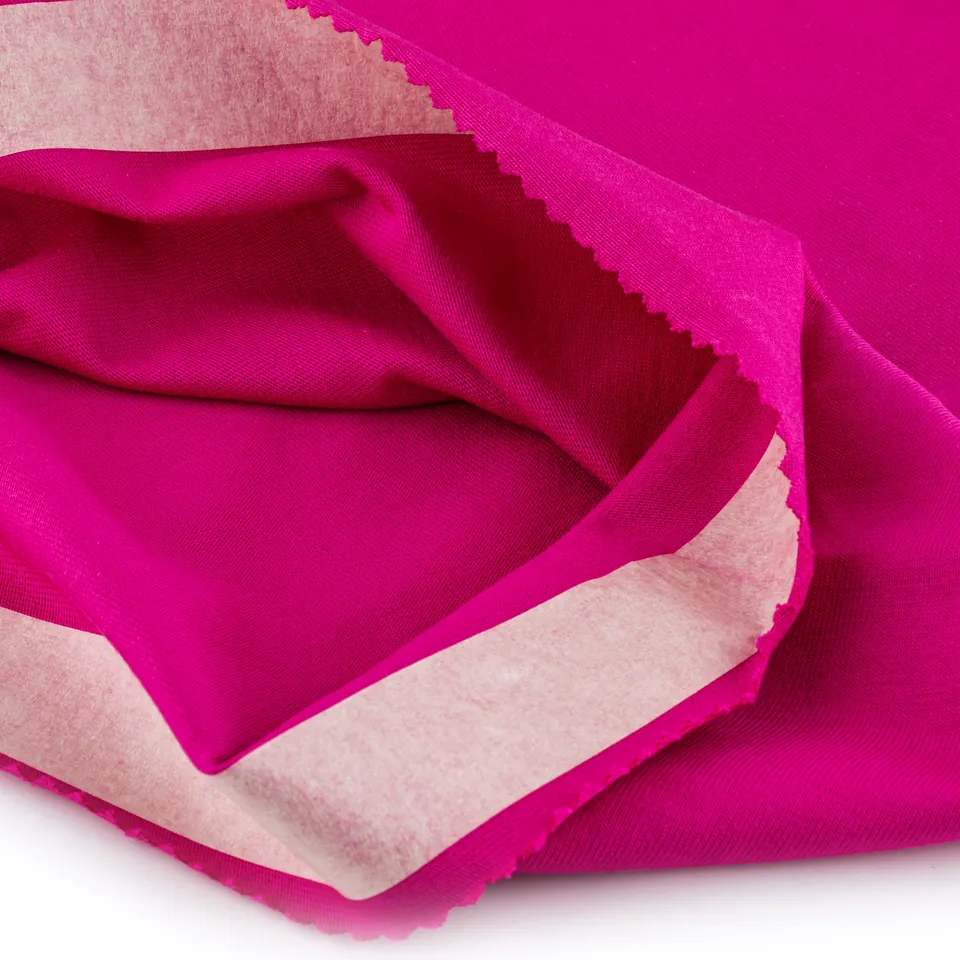
Label the adult top and bottom individually, then link them as the pair being reviewed. Record patterns, sizes, components and whether the body route is SJ-104 or SJ-103. SJ-104 is 95% modal and 5% elastane with Bio-polish + soft hand; SJ-103 is 95% viscose and 5% elastane with Bio-polish + silicone. State the offered weights and any deliberate mixed-material proposal. Two unlinked garment samples cannot show which pair the buyer accepted, especially if one has been replaced during development while the other retained its earlier pattern or material.
Review the shared boundary before isolated fit comments
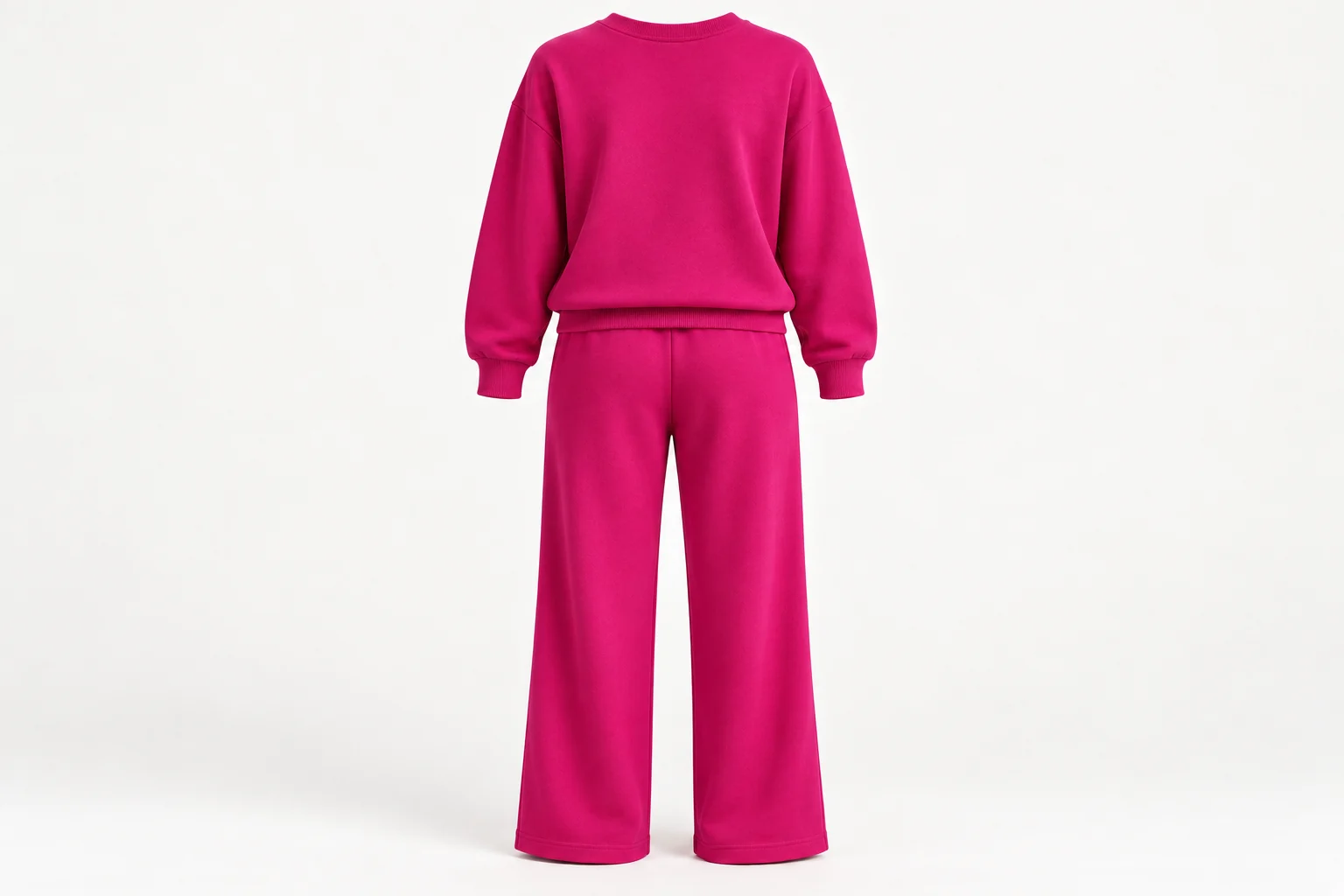
Assess where the top ends relative to the bottom waist while the adult wearer stands, sits and moves in the agreed sequence. Keep front, side and back views and note the actual size combination. A top that appears too short may be interacting with a changed lower-waist position rather than needing more body length. Conversely, an individually acceptable waistband can produce an unwanted gap in the specified pair. Record the relationship and proposed correction together, then check both pieces again instead of closing the issue from a photograph of only the changed garment.
Separate paired silhouette from individual material observations
Inspect the full visual balance of the pair, then locate any change in one piece: top hem movement, lower-piece seat shape or an asymmetrical panel relationship. Record when the observation appeared and which pattern or component may be involved. A shared elastane percentage does not justify applying a material conclusion from the bottom to the top. CottonWorks includes garment fitting beyond fabric-stage approval. For this programme, use actual fitted pieces to examine their interaction rather than treating a single body cutting as evidence that both patterns will produce the intended outline.
CottonWorks: Designing Knit Textiles — Developed knit material is assessed in garment fitting beyond fabric-stage approval. Paired-set card and allocation workflow are original buyer guidance, not a source-prescribed mill system.
Test the permitted size combinations rather than an assumed set
If the programme sells fixed matched sizes, identify which representative pairs are reviewed and which size-range questions remain open. If customers may choose separate sizes, assess the intended combinations or define a plan with the technical team. Do not presume a successful medium-with-medium sample approves every mix. Observe the shared boundary and proportions again where the sizes differ. This is a development review, not a universal fit certification. Keep the retail size-pairing promise aligned with the combinations actually assessed or still scheduled for appropriate review.
Use linked care records without assuming identical outcomes
Define the appropriate care procedure and assessment stages for the actual materials and components. Preserve the pairing identity whether the pieces are assessed in the same permitted load or through another agreed laboratory or development approach; do not impose an unverified combined-care instruction. CottonWorks identifies construction, processing and care among dimensional influences, without giving results for these articles. Record each piece’s relevant measurements separately and then assess the paired length and appearance relationship. A common body article does not remove differences introduced by a top edge, bottom waist or other component.
CottonWorks: Shrinkage & Skewing — Construction, processing and care can influence dimensional behaviour; no SJ-104/SJ-103 set-specific result or allowance is supplied.
Investigate a changed pair with both baselines retained
If the cared set looks mismatched, separate the observation into shade, surface, dimensions or construction before requesting a correction. Compare the initial references and both individual measurement records. A hypothetical top that shortens relative to its partner requires a different investigation from an unchanged shape whose colour relationship is unacceptable. Record any replacement material, component or pattern as a changed variable. Do not approve the revised partner alone; put it back beside the retained other piece and repeat the relevant stage or observation that exposed the issue.
Close the pair while preserving piece-level holds
The set report should state what is accepted as a pair and what remains unresolved on either partner. Link the reviewed sizes, materials, patterns, components, care stage and appearance references. A top can pass its individual construction review while the pair stays on hold for an unresolved lower-piece or matching question. Keep that distinction in release instructions so two separate approval marks do not automatically become a set approval. The outcome documents this adult co-ord programme and its evidence boundaries, not universal comfort, sleep improvement, skin benefits or thermal performance.
Technical background and scope
This is a structured editorial draft. Garment-specific development advice is paired with existing catalogue records; compatibility must be established by sampling. AL KUMAŞ supplies fabric. Cutting, sewing and finished-garment production are separate unless explicitly agreed.