



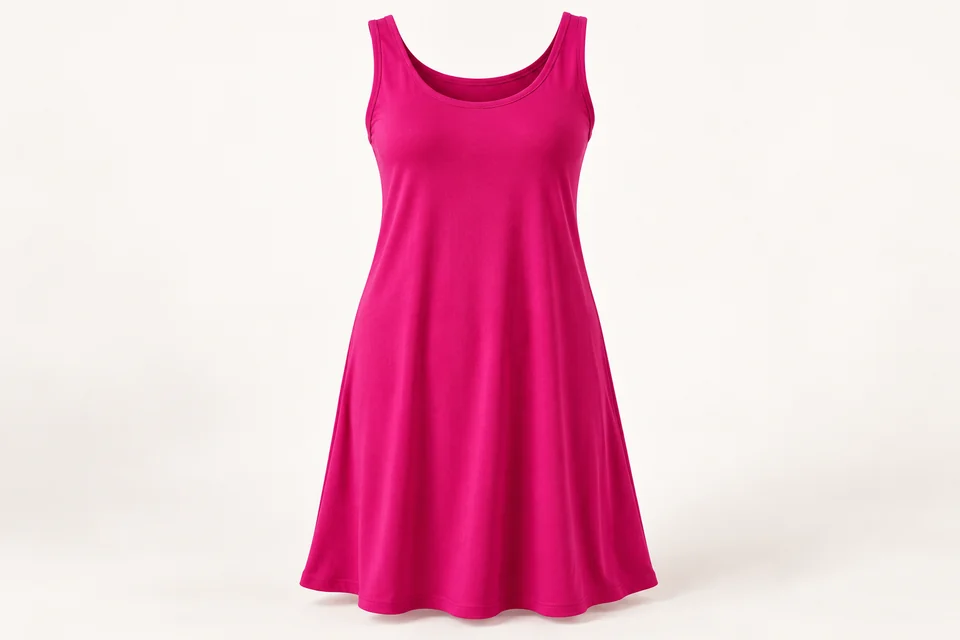


Define the nightdress as a suspended garment
An adult nightdress hangs from its shoulder or strap area and carries a longer body below it. Begin with the intended shoulder construction, neckline and finished length, then show the shape from the side. A short sleeved nightdress, a broad-strap version and a narrow-strap design do not put the same requirements on those upper details. State whether the body should fall freely or follow the torso. The fabric discussion can then address a specific silhouette rather than turning the garment name into an unsupported promise of sleep or comfort benefits.
Read the modal and viscose records without ranking them
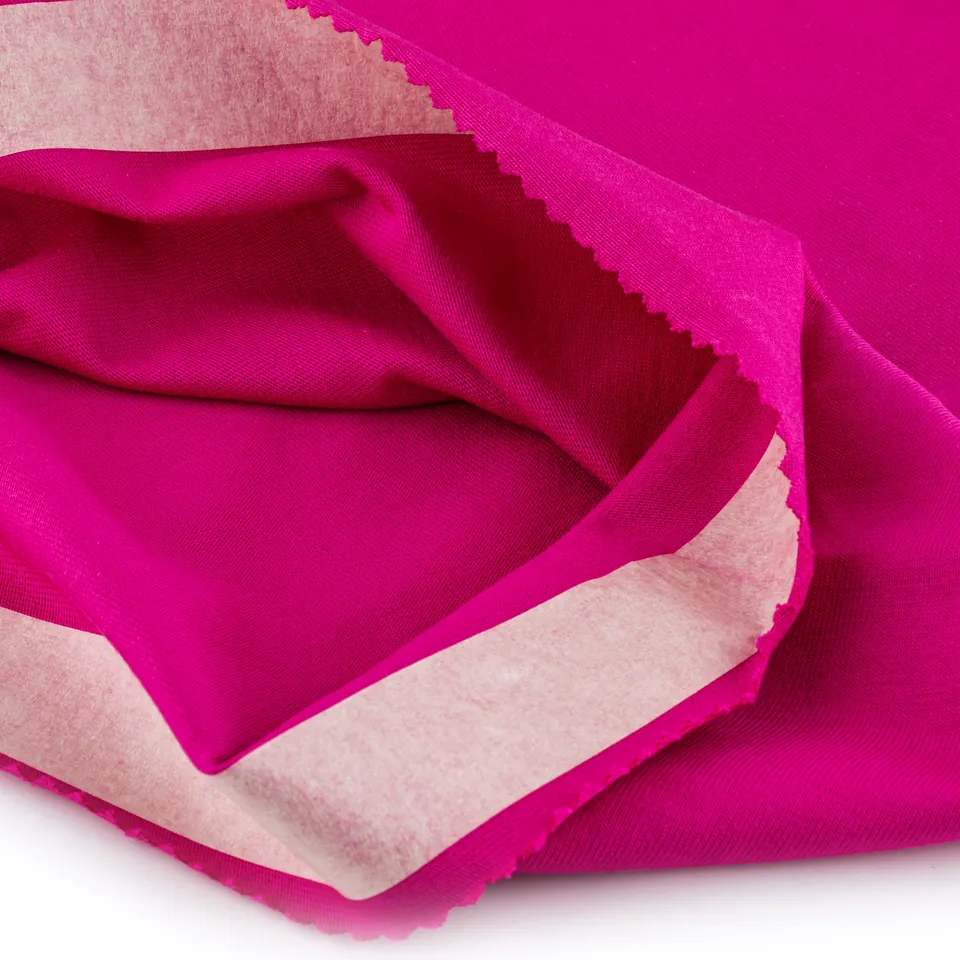
SJ-104 is 95% modal and 5% elastane, with 150, 160, 170, 180 and 190 g/m² options and a Bio-polish + soft hand finish label. SJ-103 lists 95% viscose and 5% elastane at 160, 170, 180, 190 and 200 g/m², labelled Bio-polish + silicone. Both are single-jersey routes, but those specifications do not establish which will make the better nightdress. Request identified sample material at the offered weights and finishes. The finish descriptions are catalogue facts, not measured evidence of skin comfort, durability or dimensional stability.
Let full hung length expose the shoulder decision
Sample the actual intended body length rather than deciding from a cropped upper-body prototype. Compare the neckline and shoulder position shortly after dressing and after an agreed period on the wearer or hanger. If the opening changes position, record where the movement begins before tightening a strap or shortening the body. The garment team may need to examine upper-body balance, strap attachment, neckline finish and the amount of material hanging below. A soft-feeling cutting cannot answer how those parts behave together in a complete longer garment.
Evaluate coverage in the positions relevant to the design
Agree the intended underlayer and assess the sample seated, reaching forward and in a carefully chosen resting position appropriate to the adult product. Observe front neckline coverage, side opening and hem position separately. Treat any concern as a pattern-and-construction question to investigate, not evidence that more elastane automatically resolves it. For a hypothetical broad-strap design whose neckline moves forward when seated, compare strap balance and opening shape before requesting a smaller neckline. Make one documented correction at a time so the next fitting explains the result.
Include the seam and label arrangement in material selection
Specify the neck finish, shoulder seams, side seams and label position in the comparison samples. Review their bulk and contact with the wearer, asking for feedback about the assembled garment rather than describing the body fabric alone as comfortable. A printed care label and a sewn label are different component proposals and need their own evaluation if considered. Coats identifies fabric structure, sewing tension and feeding among possible seam-puckering contributors. Its guidance supports investigating the operation when a light nightdress seam waves, rather than attributing every visible issue to fibre composition.
Coats: Eliminating Seam Puckering — Tension and feeding are among possible contributors to seam puckering; the source does not validate any nightdress operation.
Add lace or a slit only when the design calls for it
A lace neckline, decorative band or side slit changes the development brief and should not be introduced simply to make the style sound premium. If lace is specified, evaluate its attachment and movement with the actual jersey; a visually pleasing contrast is not proof of compatible behaviour. If a slit is specified, review its reinforcement and opening during sitting and walking. Keep a plain sample available if those features are optional. The comparison helps the buyer decide whether the added component contributes enough to justify its cost and approval work.
Close selection with an upper-body and length record
CottonWorks discusses fitting developed knit material in the garment rather than stopping at fabric approval. For this nightdress, retain the accepted shoulder or strap construction, neckline measurements, body length and relevant coverage photographs with the body article and weight. Identify any unresolved care or material-performance question before purchasing. The result is approval of a defined adult trial, not confirmation of sleep improvement, flammability compliance or children’s suitability. If the product scope changes, create a separate technical brief rather than transferring the adult sample decision to a different programme.
CottonWorks: Designing Knit Textiles — Developed knit fabric is assessed in garment fitting beyond fabric-stage approval. Nightdress-specific workflow is original advisory content.
Technical background and scope
This is a structured editorial draft. Garment-specific development advice is paired with existing catalogue records; compatibility must be established by sampling. AL KUMAŞ supplies fabric. Cutting, sewing and finished-garment production are separate unless explicitly agreed.