



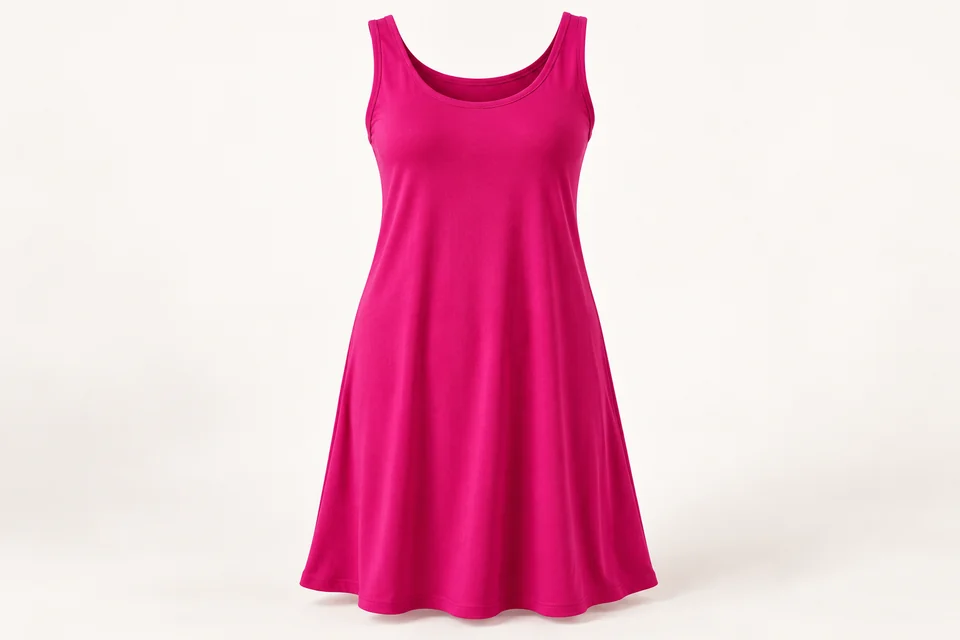


Place the artwork on the full nightdress outline
The visible artwork area of a nightdress extends from an upper-body opening to a hem that may move considerably when the wearer sits or rests. Start with a full-size placement drawing showing front, back and side seams. Decide whether the print is an all-over repeat, a chest motif or a lower border. A repeat that looks balanced on a square cutting can cluster awkwardly at the neckline or produce a partially cut motif at the hem. Make those visual choices explicitly instead of expecting the sewing team to infer the designer’s priority.
Qualify decoration on the actual modal or viscose article
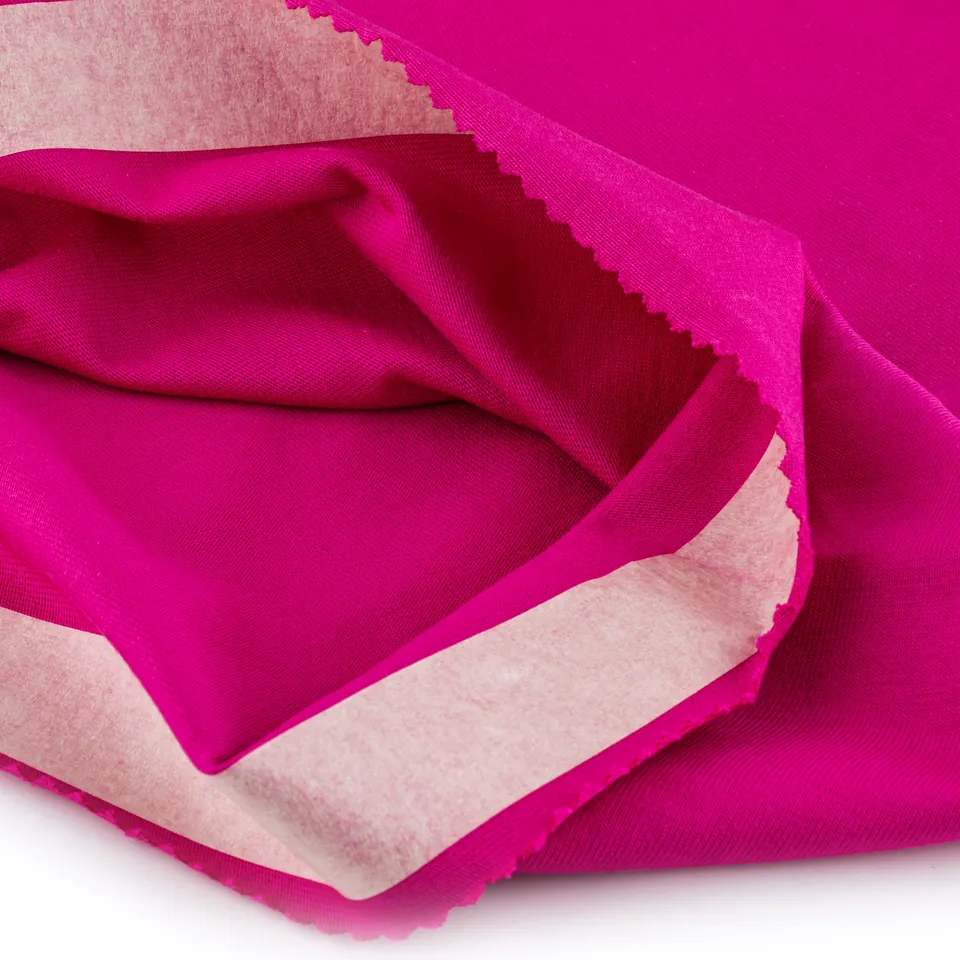
SJ-104 is recorded as 95% modal and 5% elastane with Bio-polish + soft hand, while SJ-103 is 95% viscose and 5% elastane with Bio-polish + silicone. Their weight options overlap at 160–190 g/m², but the printing route is not established by those entries. CottonWorks explains that fibre and fabric characteristics influence printing choices. That is general background for asking the decorator to qualify its method; cotton-specific preparation guidance is not proof of compatibility on either proposed nightdress material. Request the exact article, preparation and process used for the development sample.
CottonWorks: Cotton Textile Printing Basics — Fibre and fabric characteristics affect printing choices; cotton-specific guidance does not qualify a process on modal or viscose articles.
Keep a chest motif clear of the opening and body folds
Mark the motif dimensions and its position from stable pattern landmarks rather than only from the cut edge. A neckline binding changes the finished opening, so a distance measured before sewing can be misleading. Review the decorated upper body worn and seated, looking at the motif’s relation to the neckline and any gathering. If the design includes a placket, pleat or lace insertion, show those interruptions on the artwork drawing. Decide whether a partly folded motif is acceptable; do not move it repeatedly without updating the approved placement file.
Plan a lower border for every offered length
A hem border needs a defined relationship to the finished hem and any side slit. Ask whether the border is placed on the fabric before cutting or applied in another proposed production stage, and confirm the consequences for the marker. If the range includes different lengths, review where the design ends on each version. Shortening the pattern after artwork approval can remove a key part of the border. Request drawings for the relevant length extremes and an assessment of any consumption difference before accepting the print as a single universal layout.
Assess repeats at the side seam and resting folds
Decide whether motifs must align across the side seam, whether approximate visual balance is enough or whether the seam should intentionally interrupt the repeat. Continuous matching may constrain cutting, so obtain a marker assessment rather than promising it freely. Examine the decorated sample in a draped, folded state as well as flat: the adult wearer will not always see the fabric as an uninterrupted rectangle. This review is about the design’s appearance. It does not establish print durability, rubbing fastness or other performance evidence that has not been supplied.
Review trim colour without assuming a single substrate
If the nightdress includes lace, binding or straps made from another material, place those components beside the decorated body sample. Decide which colour must match and which is intended to contrast. A soft hand finish label does not prove that two materials will present the same shade, and a shared colour name is not an approval record. Use the governing physical reference and retain the samples assessed together. For a coordinated robe or other item, review that garment separately rather than approving its colour by association with the nightdress cutting.
Record print appearance and product evidence separately
Close the artwork decision with the body code, selected weight, sample reference, repeat or placement size and file revision. List accepted changes to colour, position and scale individually so a later resample does not reopen an already settled point. Ask the technical team which decorated-material assessments are needed for the actual adult product and destination. Keep any requested evidence distinct from the aesthetic approval. Neither the approved picture nor the modal or viscose composition establishes sleep benefits, a care label or sleepwear safety compliance, and decoration availability remains subject to a specific commercial response.
Technical background and scope
This is a structured editorial draft. Garment-specific development advice is paired with existing catalogue records; compatibility must be established by sampling. AL KUMAŞ supplies fabric. Cutting, sewing and finished-garment production are separate unless explicitly agreed.