





Choose a sleeved night top rather than a daytime basic
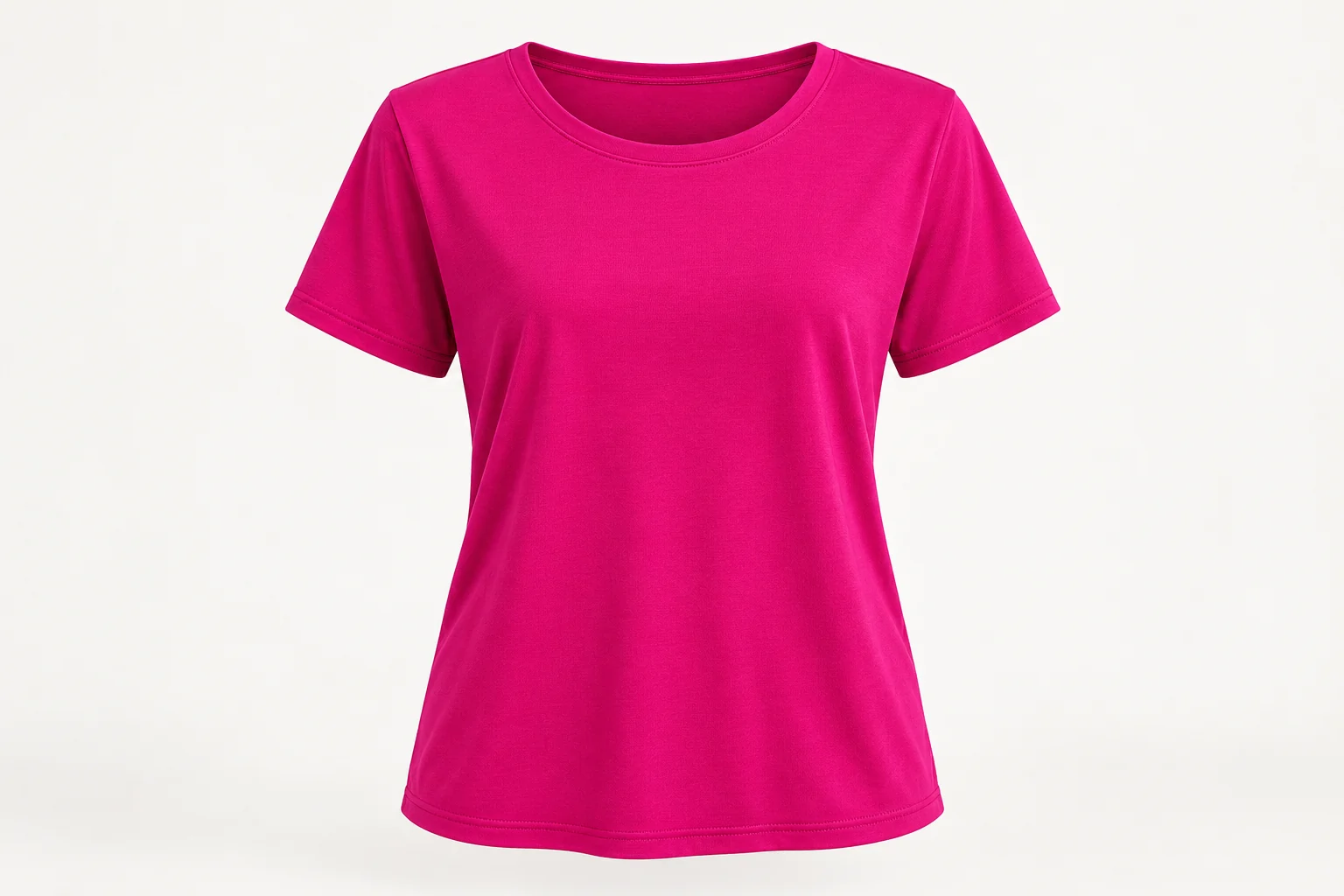
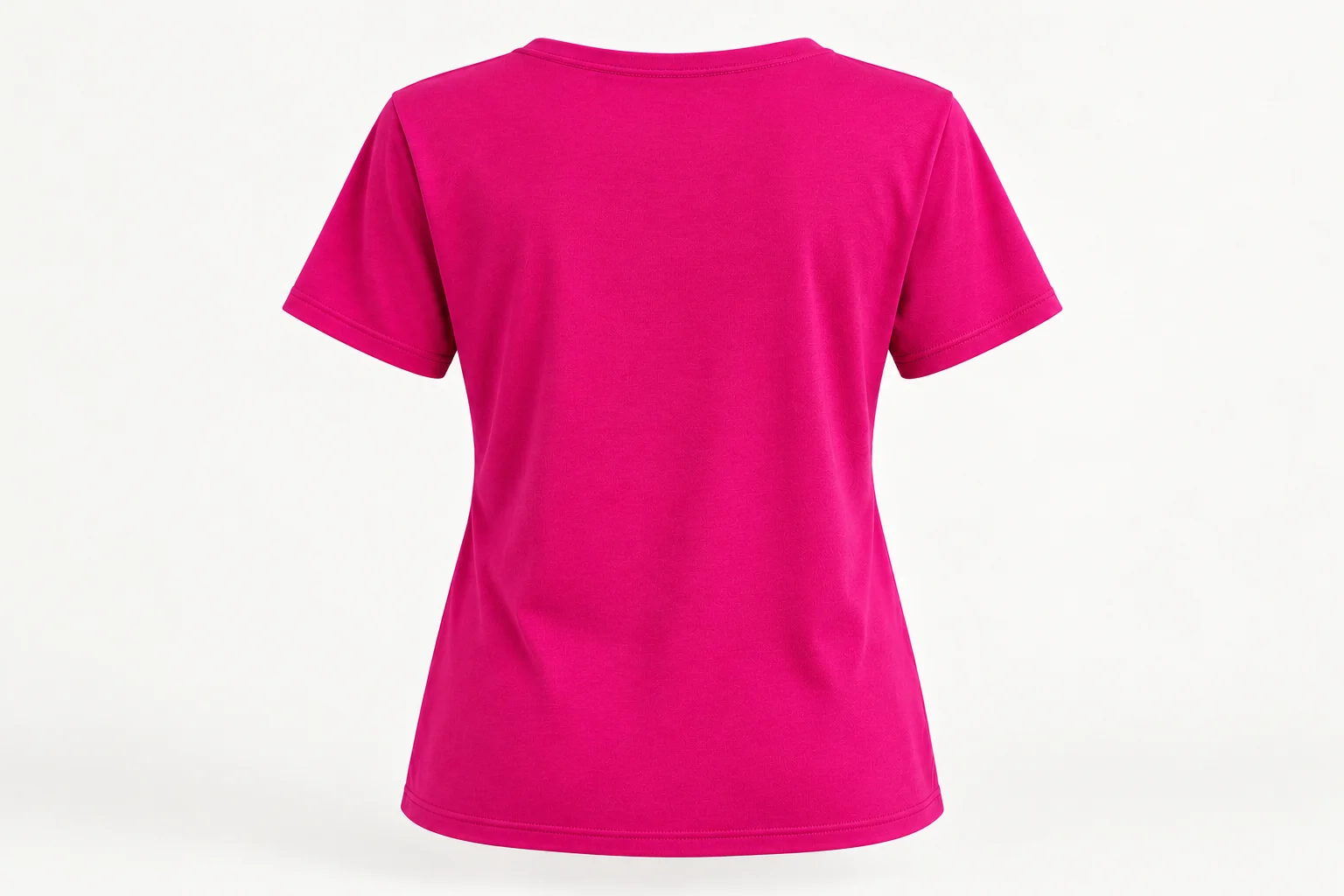
A pyjama T-shirt should be developed around its stated adult nightwear combination, sleeve room, neck opening and unobtrusive seam arrangement. Draw the body length relative to the chosen shorts or trousers, and show whether the top is relaxed or closer to the wearer. This is not the same question as a longline daytime silhouette or the narrow armholes of a sleep tank. Decide which contact points and coverage observations matter before choosing material. The brief can seek an acceptable sample without promising improved sleep, universal comfort or benefits to the skin.
Read the modal and cotton offers as complete routes
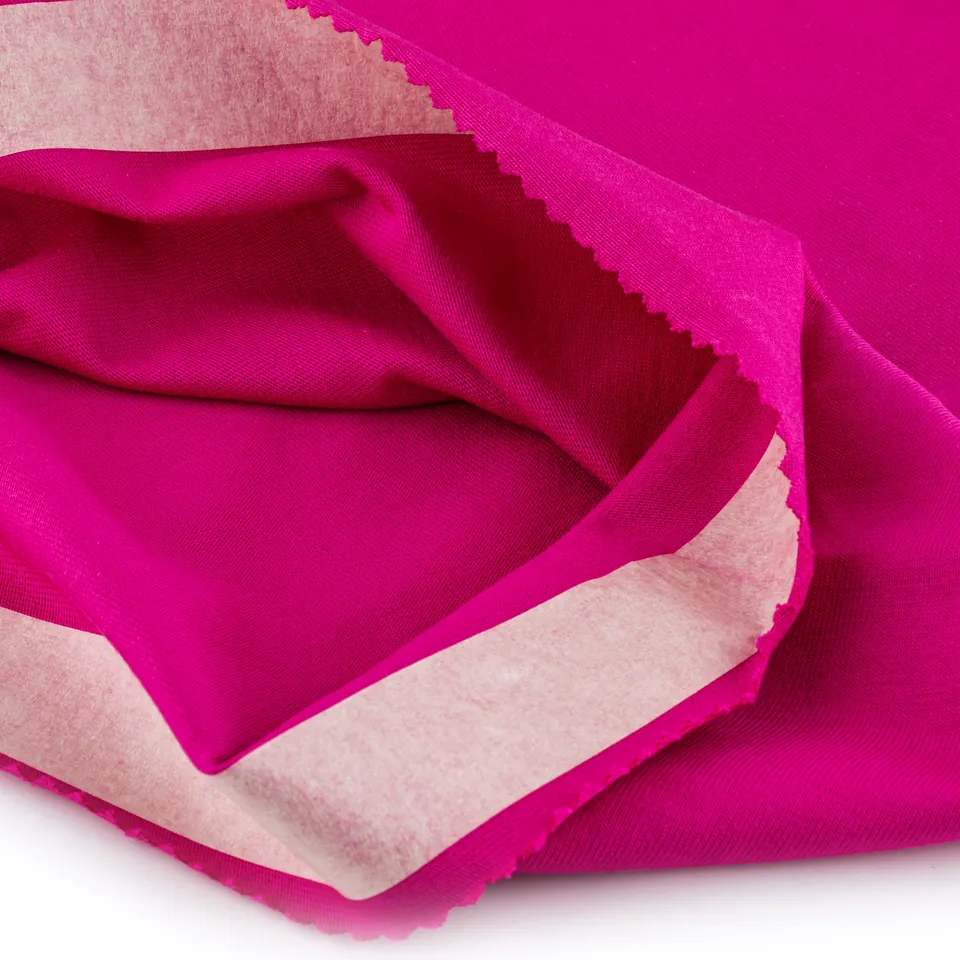
SJ-104 contains 95% modal and 5% elastane in single jersey, with Bio-polish + soft hand and 150, 160, 170, 180 and 190 g/m² options. SJ-101 is 100% compact combed cotton single jersey, Enzyme + silicone, at 130, 140, 150, 160 and 170 g/m². Choose identified offered weights when comparing them. A common nominal weight does not remove the fibre and finish differences, and no elastane is listed for SJ-101 without quantifying its total extension. Neither entry establishes sleep-top seam feel, neck recovery, opacity or care results.
Sample the neckline for dressing and unobtrusive contact
Ask the maker to show the proposed neckband or edge finish and its join position, including any support or tape. Assess ordinary putting on and removal, then observe how the opening sits in the adult sample. Do not approve a tight-looking band merely because it lies flat on a table. Compare a changed band or operation with the body and opening pattern identified. A soft-feeling body may still produce an unwanted ridge at the back neck when combined with several layers, so the assembled edge belongs in the material decision.
Review shoulder and underarm seams in the night-layer setting
Include the intended sleeve and shoulder construction in the comparison sample. Ask the adult wearer to identify unacceptable contact during the agreed seated or resting-position review, with any outer layer specified by the product brief. Record the location and assembly rather than labelling the entire fibre unsuitable. A seam positioned away from one contact point may change sleeve or shoulder balance elsewhere. Have the technician explain the proposed alternative and retain the original trial. This separates the body-material choice from the seam solution instead of expecting one softer-sounding fabric to answer both.
Make decoration a material variable only when it is specified
A large front application, small motif, embroidery backing or no decoration creates different proposals for a next-to-body top. If artwork is planned, evaluate its actual size and construction rather than approving an undecorated body and assuming the application is irrelevant. Inspect the inside as well as the face and ask about the adult wearer’s observations in the intended use. A smaller design or another placement can be considered as an explicit revision. Do not add technical or comfort claims merely because the decorated sample looks pleasant or belongs to a nightwear set.
Use a hem and seam trial before changing the body weight
Build the intended sleeve and lower hems, noting any wave, rolling edge or local bulk. Coats identifies tension, feeding and component differences among possible puckering causes. Ask the sewing technician to investigate the actual operation and name the corrected setting or construction. Retain the original on the same material where practical so the comparison is interpretable. Moving to a heavier body is one material proposal, not an automatic cure for an assembly issue. Review the corrected hem with the intended lower garment rather than judging only its flat appearance.
Coats: Eliminating Seam Puckering — Tension, feeding and component differences can contribute to puckering; no particular seam or edge on these pyjama tops is validated.
Select a material plus the accepted contact-point assembly
CottonWorks includes garment fitting after developed knit material has been assessed at fabric level. Keep the chosen body article and weight with neck finish, seam arrangement, label position, decoration if any and the lower-layer relationship actually reviewed. Record pending care or other evidence without converting a successful fitting into a health or sleep claim. If the next order changes a neck tape, print size or sleeve seam, identify which observation selected the original combination. The approval should explain the specific adult pyjama top, not treat a fibre label as permanent approval of every nightwear construction.
CottonWorks: Designing Knit Textiles — Developed knit material is assessed through garment fitting beyond fabric approval; the seam-decision sheet is original advisory content.
Technical background and scope
This is a structured editorial draft. Garment-specific development advice is paired with existing catalogue records; compatibility must be established by sampling. AL KUMAŞ supplies fabric. Cutting, sewing and finished-garment production are separate unless explicitly agreed.