




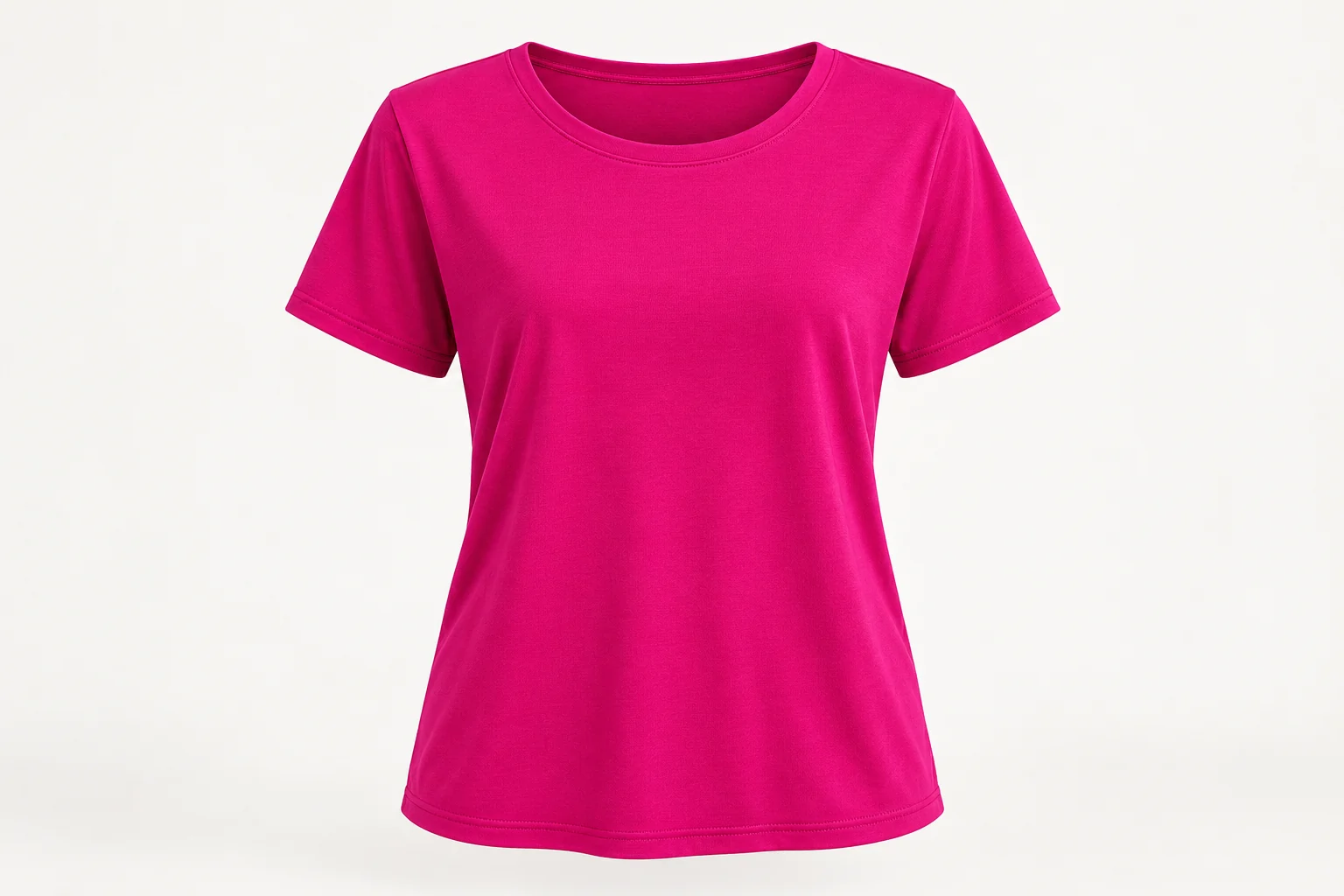
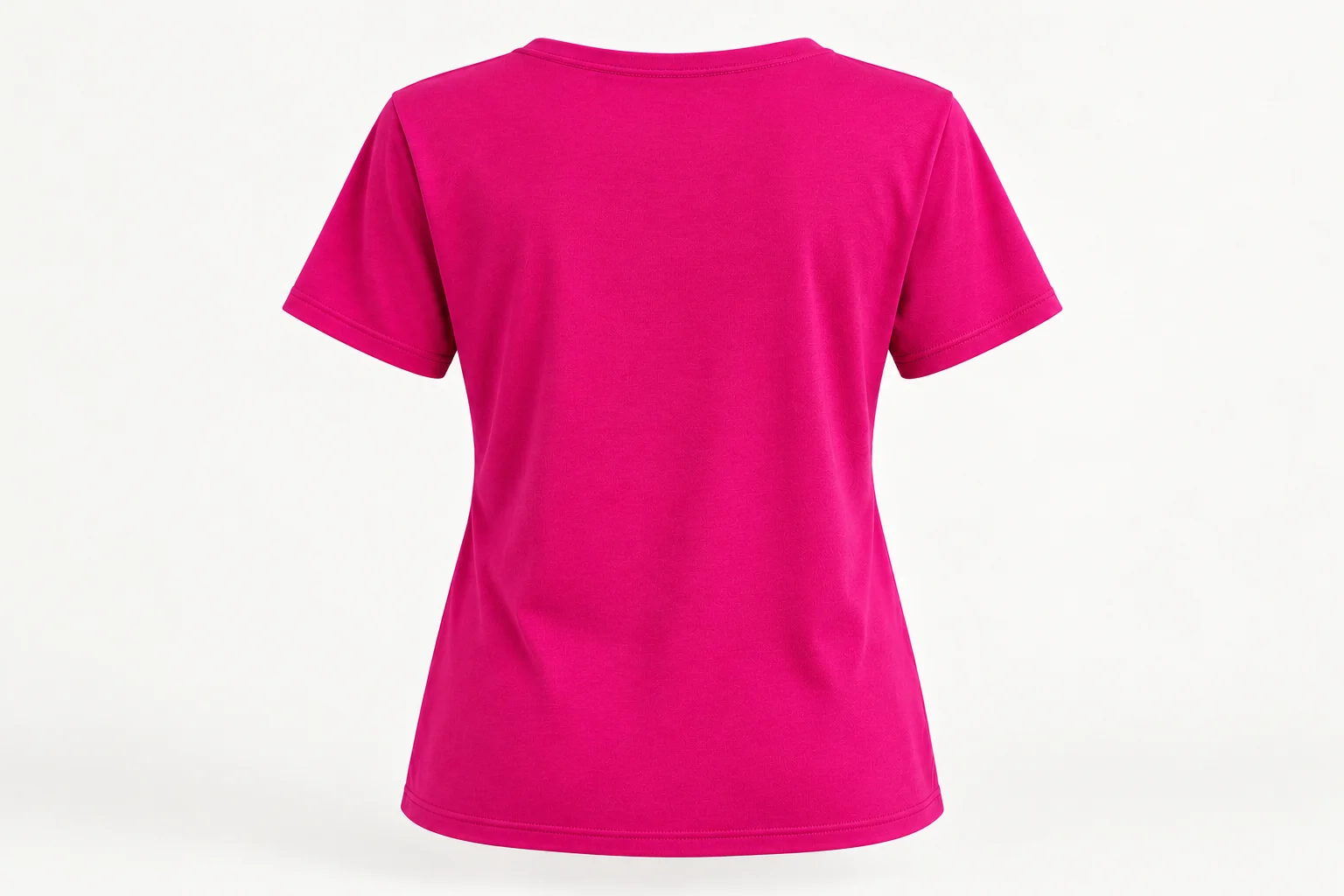

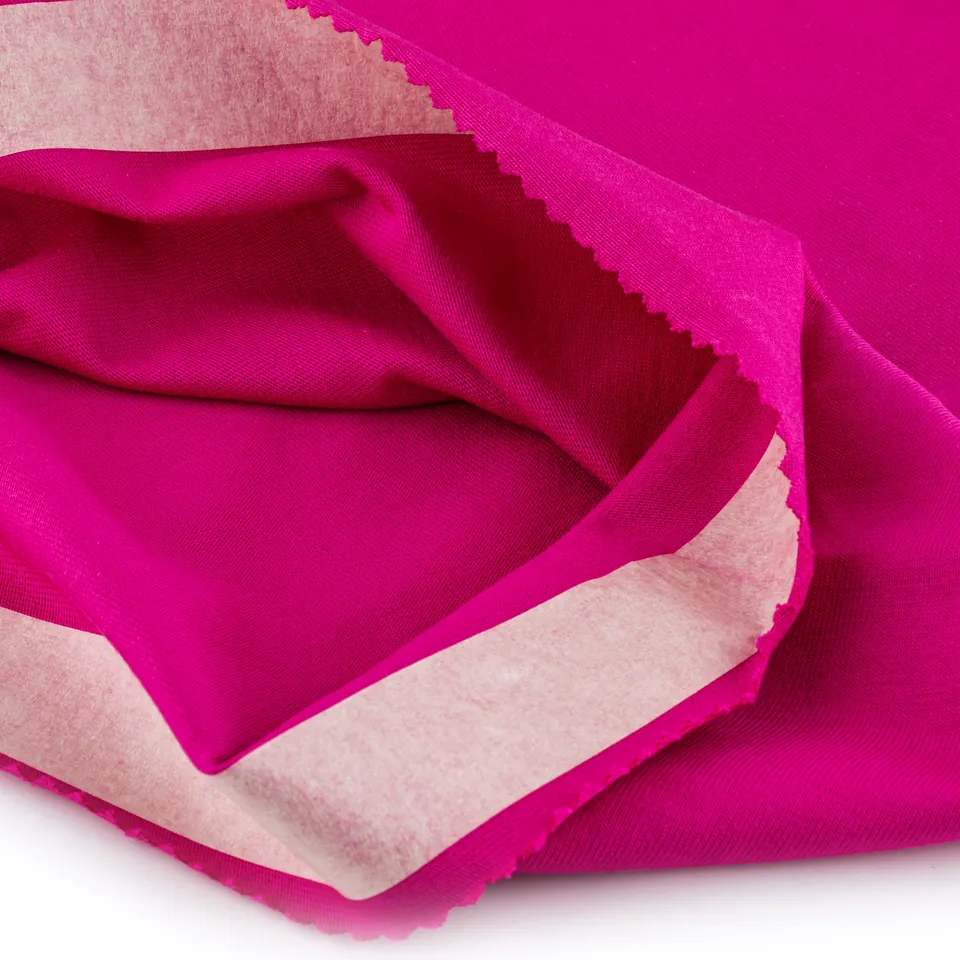
Read the log by issue, not by the newest sample
Use an issue-disposition log for a pyjama T-shirt already in development. Give each concern an identifier tied to a physical sample and region: back neck, label attachment or inside decoration backing. A useful row contains the observed condition, care stage, affected component, proposed cause, exact authorised change and retest outcome. It is not a scorecard for selecting an overall favourite top. Several rows can remain open while another closes. The log should prevent a clean-looking replacement sample from erasing an unresolved contact complaint that appeared only after care. For the illustrative records below, C0 means before care, C1 after one agreed care cycle and C3 after three; those checkpoints are fictional programme choices, not universal requirements.
Keep body provenance inside every affected record
Identify the body in the issue record, even when the proposed correction concerns tape or thread. SJ-104 is 95% modal and 5% elastane with Bio-polish + soft hand at 150, 160, 170, 180 and 190 g/m². SJ-101 is 100% compact combed cotton with Enzyme + silicone at 130, 140, 150, 160 and 170 g/m². Record the actual offered weight, cutting identity and pattern revision. Neither description explains a neck ridge by itself. If the body changes during investigation, mark that substitution as another changed variable rather than attributing the outcome solely to the seam correction.
Disposition example N: a back-neck ridge after the first stage
In a hypothetical record N, the adult reviewer notices an unwanted ridge at the taped back neck at C1, after the first agreed care cycle. Retain the before-care view, the reviewed sample and a close photograph locating the ridge. Record whether the wearer’s comment concerns contact, visible distortion or both; do not convert it into a medical claim. The technician may propose a specific tape or attachment correction, identified by component reference and operation revision. Keep N open until the changed sample undergoes the same C1 checkpoint and relevant adult observation, with any later C3 decision tracked separately. A flatter unused replacement does not close it.
Disposition example L: a label concern without a body change
For hypothetical issue L, locate the exact label edge or stitched corner that the adult reviewer identifies. Record the label reference, attachment operation and that the complaint was recorded at C0, before care, with a separate C1 follow-up required in this example. If a relocated label is authorised, mark its new position on the pattern and preserve the old location in the record. Do not silently replace the label material at the same time. The outcome might be accepted after the same observation, or still unresolved because another corner contacts the wearer. A supplier’s statement that the label is soft is not a retest result.
Disposition example P: inside backing and uncertain causality
For hypothetical inside-decoration issue P, record artwork area, backing identity, attachment or application reference and that the change was first noticed at the example’s C3 checkpoint, while C0 and C1 notes did not identify it. Distinguish the observation from the suspected cause: an uneven inside surface does not prove whether backing, thread, application or body behaviour produced it. Coats identifies component dimensional differences and sewing conditions among possible puckering contributors. Use that background to request a technician-led investigation, not to diagnose from a photograph. If several components were changed before the next trial, mark causality unresolved even if appearance improved; the record cannot claim which single correction worked.
Coats: Eliminating Seam Puckering — Component dimensional differences and sewing conditions can contribute to puckering. The issue-disposition log, hypothetical records and commercial change accounting are original buyer guidance, not a source-prescribed test method.
Attach component cost to the authorised change only
For each issue, ask the maker to enter the affected material and operation delta against the exact revision. A changed neck tape may alter tape quantity or unit cost; a relocated label may change an operation without changing body-fabric area; a smaller backing proposal may change its own consumption and application assessment. These are illustrative consequences, not guaranteed savings or mill prices. Leave unrelated body costs unchanged unless the actual pattern or material changed. A commercial acceptance can then refer to the corrected assembly without disguising an unresolved issue inside a new complete-top quotation.
Close with a matched-stage retest or retain the hold
Define the care stages and observation conditions in the programme before interpreting the log; no universal cycle count is prescribed here. Record a clear disposition for N, L and P separately: accepted after the matched retest, another exact change authorised, or held for the named missing evidence. Preserve who authorised the change and which physical sample was reviewed. Reopening is appropriate if a later stage reveals the concern again. The closed row documents that particular adult observation and construction, not universal comfort, improved sleep, skin compatibility or safety approval, and it does not automatically approve an unrecorded component substitution.
Technical background and scope
This is a structured editorial draft. Garment-specific development advice is paired with existing catalogue records; compatibility must be established by sampling. AL KUMAŞ supplies fabric. Cutting, sewing and finished-garment production are separate unless explicitly agreed.