



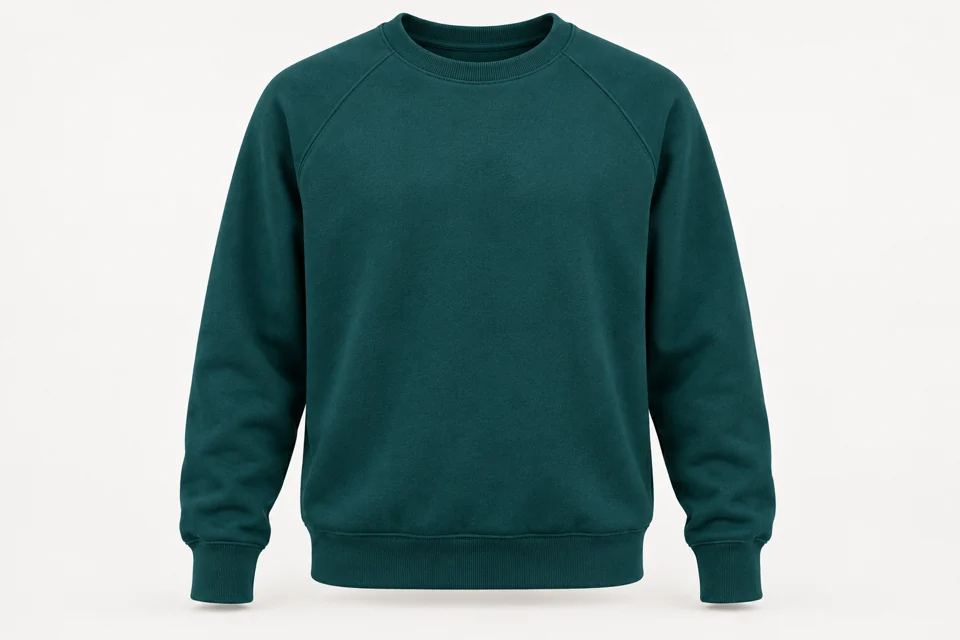
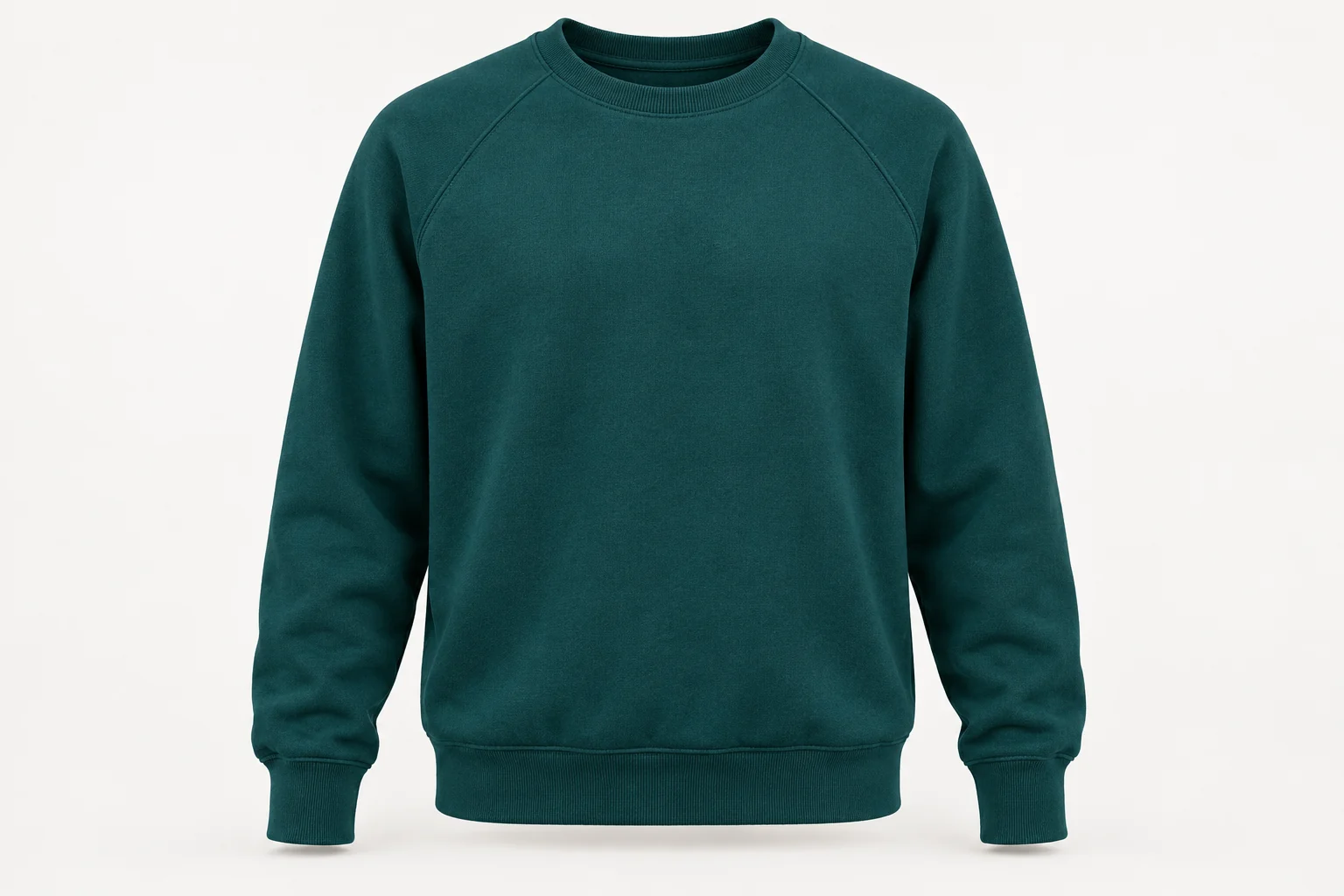


Treat the diagonal seam as a design line and a working join
A raglan sweatshirt carries its sleeve-to-body joins from the neck region toward the underarm rather than placing a conventional armhole seam around the shoulder. Those diagonals can emphasise a broad upper body, create a softer visual shoulder or divide contrasting panels. Choose the intended effect before comparing fabric. The raglan name alone does not guarantee freedom of movement: sleeve pitch, upper-body dimensions, seam construction and the actual material still need to work together. A relaxed-looking photograph cannot establish that the wearer can reach comfortably.
Compare the two constructions without losing their identity
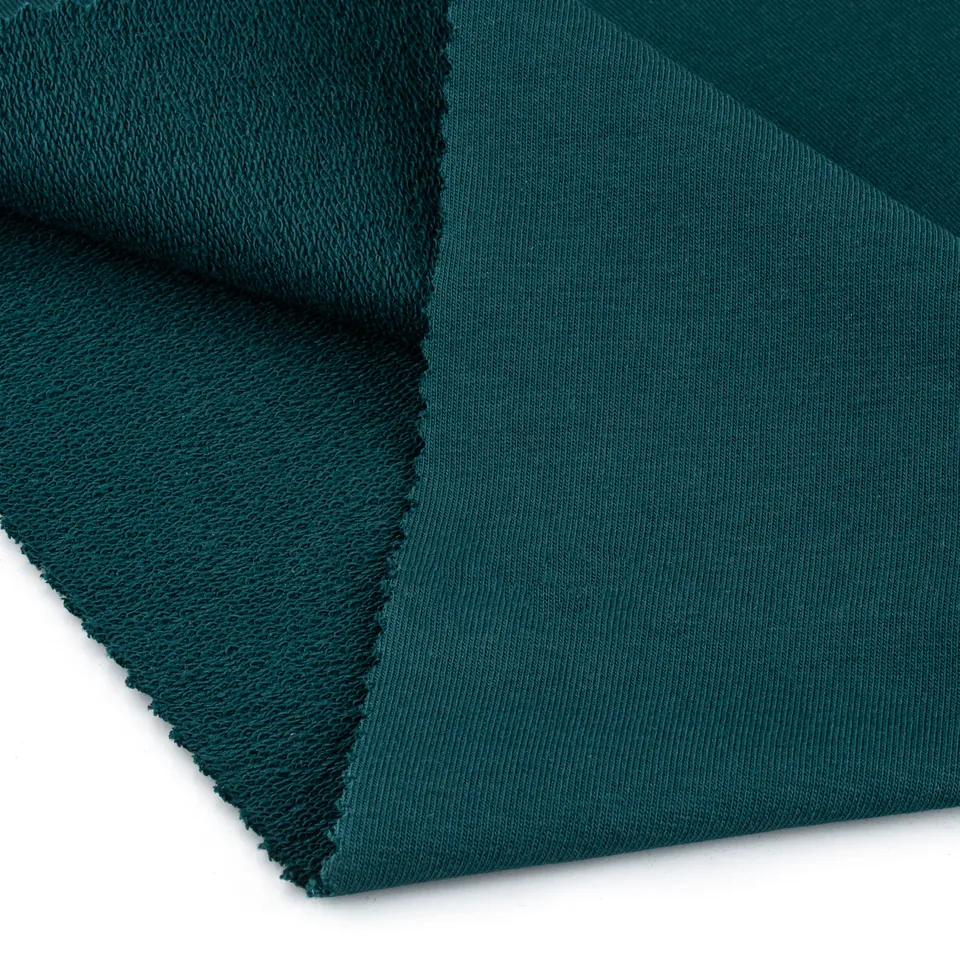
FT-601 records two-thread French terry, 70% cotton and 30% polyester, with unbrushed silicone finishing and 240, 260, 280, 300 and 320 g/m² options. FT-602 is three-thread unbrushed material with compacted finishing in the same blend at 300, 325, 350, 375 and 400 g/m². These labels distinguish actual catalogue routes but do not provide measured seam extension, recovery or warmth. Identify the offered weight and finish on each cutting. The common 300 g/m² entry does not make the two constructions interchangeable.
Sample the diagonal seam in its actual direction
Ask the sample room to join representative sleeve and body pieces with the intended sewing method. Do not evaluate only a straight strip cut in a convenient direction: the real diagonal relationship belongs in the trial. Inspect how the seam lies relaxed and how the adjacent material folds during movement. Coats distinguishes seam construction from stitch choice and explains that different applications need appropriate combinations. The word overlocked or a visible decorative row alone therefore does not fully specify the raglan join. Record the actual assembly, thread and finishing arrangement.
Coats: Seam Types — Seam component arrangement and stitch choice are distinct, with combinations selected for the application. The diagonal trial and intersection checks are original garment-development advice, not a validated seam specification for either FT article.
Inspect the neckband crossing as a separate junction
Each diagonal join reaches the neckline, where its seam allowance meets the band attachment. Build that intersection with the proposed body, sleeve and neckband materials. Look for a pronounced ridge, an uneven band or a diagonal seam that pulls the opening out of shape. Ask the maker to compare a construction revision before changing the whole fabric route. The band needs its own specification; neither FT article defines a matching rib. A visually tidy junction must also allow the intended adult head access and remain comfortable against the chosen underlayer.
Check the underarm convergence in the worn sample
The lower raglan joins meet other sleeve and body seams around an area that moves substantially during wear. Observe the inside assembly and the outside profile with the wearer reaching forward and lifting the arms. If the join feels bulky or the upper body pulls, ask whether the pattern, seam allowances or sewing arrangement needs revision. More material weight is not an automatic remedy. Compare controlled alternatives so a pattern correction is not confused with a fabric improvement simply because both changed between samples.
Decide whether sleeve contrast changes the material brief
A contrasting sleeve may use a different colour of the same article or an entirely different material. Make that distinction explicit. If the materials differ, evaluate their handle, surface and care behaviour together, not just their colour compatibility. A dramatic panel contrast can make seam waviness more visible, so inspect the diagonal line on a complete sample. There is no confirmed programme in these records proving that any two finishes behave identically together. Keep mixed-material versions provisional until the garment team has reviewed the actual supplied combination.
Select on upper-body balance rather than the style label
Compare front, back and side views of the sewn alternatives in the intended size and layer. Record whether the sleeve pitch places the cuff naturally, whether the diagonal seams look balanced and whether the neckline stays in its intended position. Evaluate any required performance evidence separately; a few fitting movements are not a tested mobility claim. Choose the route that meets the design with an identified construction, then retain that full specification. The approved body swatch, sleeve material and seam method should remain connected throughout the purchasing handover.
Technical background and scope
This is a structured editorial draft. Garment-specific development advice is paired with existing catalogue records; compatibility must be established by sampling. AL KUMAŞ supplies fabric. Cutting, sewing and finished-garment production are separate unless explicitly agreed.