





Define the movement the actual wearer needs
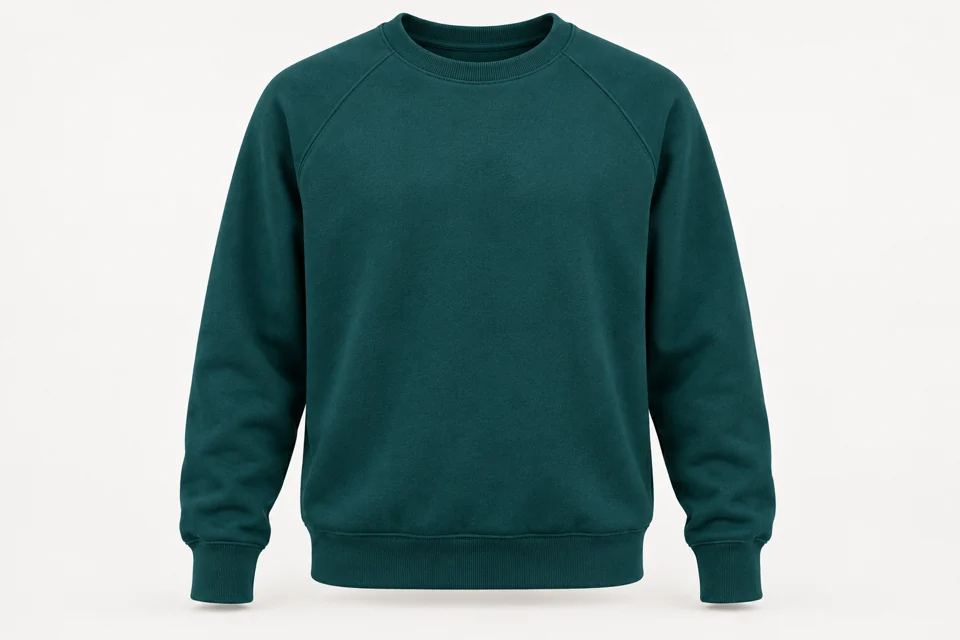
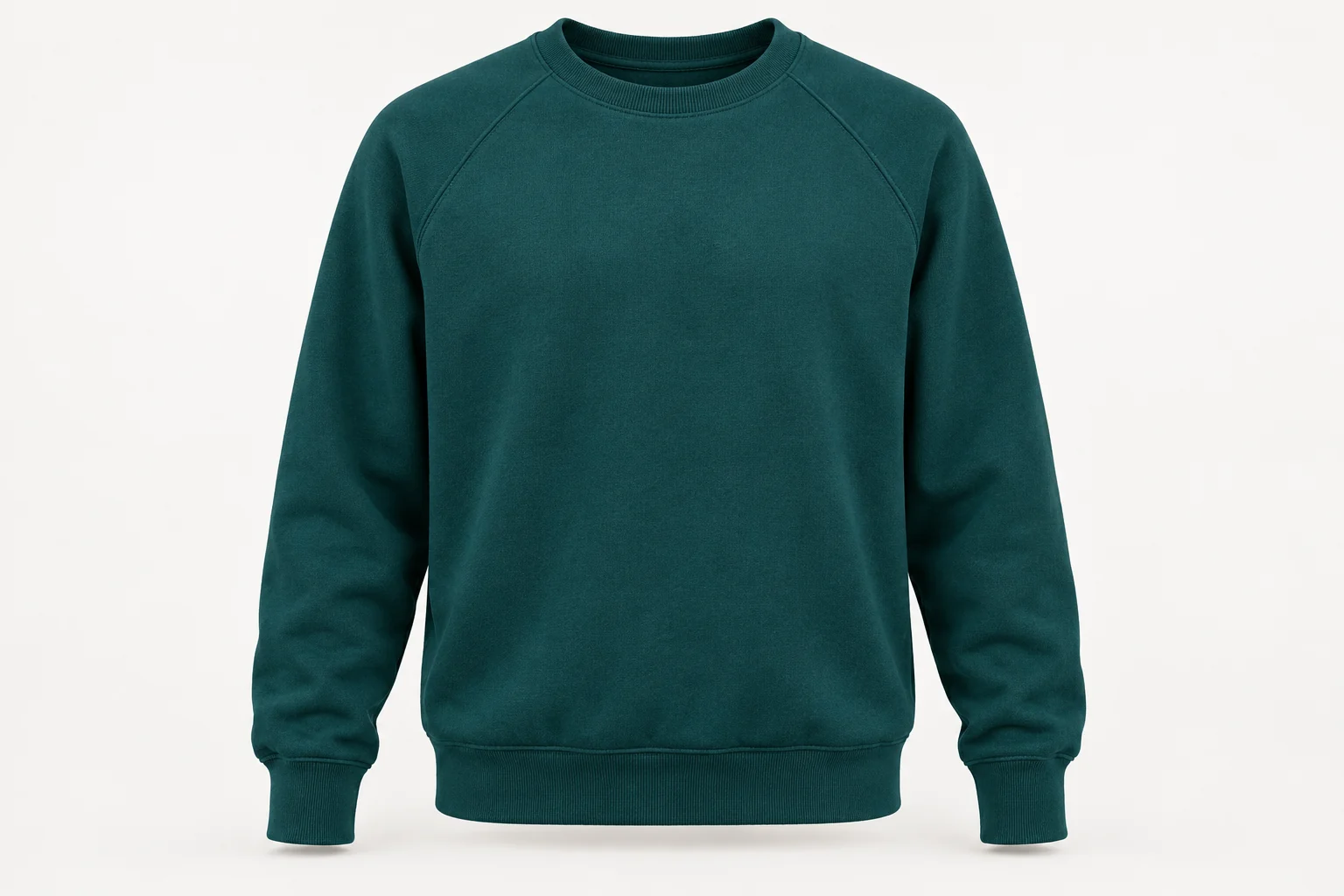
Raglan describes a sleeve arrangement, not a certified mobility level. Begin the sample session by identifying the ordinary adult-use actions relevant to this sweatshirt: for example reaching forward, lifting the arms or wearing a bag over a shoulder. Agree the intended ease and underlayer with the design team. Avoid an unspecified instruction to make it more sporty. The reviewer should be able to explain which movement exposed a restriction and where the garment responded, so a pattern correction can be investigated rather than assumed to be a fabric problem.
Record the tested body and sleeve combination
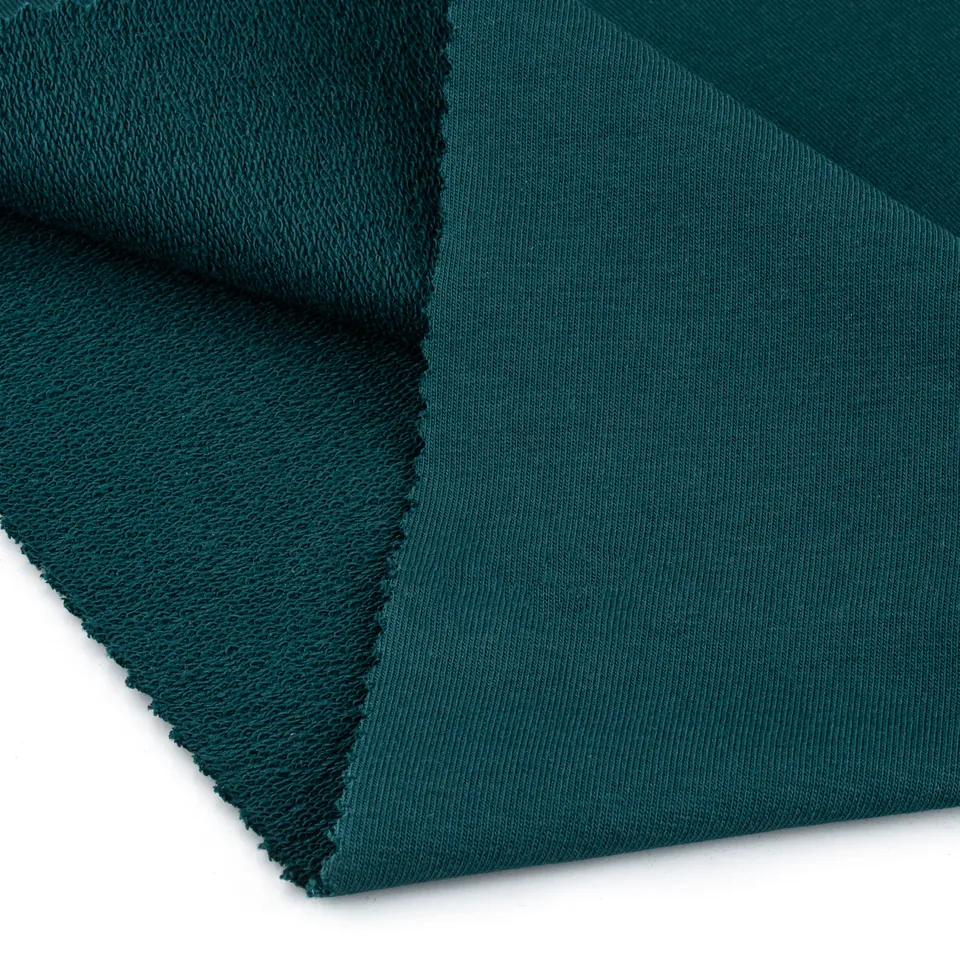
FT-601 is catalogued as 70% cotton and 30% polyester, two-thread French terry, unbrushed silicone, at 240, 260, 280, 300 or 320 g/m². FT-602 is the same recorded blend in three-thread unbrushed compacted material at 300, 325, 350, 375 or 400 g/m². Identify which article and weight appears in each panel, especially for a contrast style. Add neckband, cuffs and seam details to the sample sheet. A successful fitting made with one sleeve route cannot silently approve another at a different weight or finish.
Observe sleeve pitch through the upper-body actions
Ask the wearer to let the arms rest naturally before performing the agreed movements. Examine the angle of the sleeve, the direction of folds across the upper chest and whether the cuff returns to the intended position. Compare front, back and side views. A diagonal line that looks symmetrical laid flat may behave differently on the body. If the sweatshirt pulls, have the pattern specialist review sleeve pitch and upper-body balance alongside the material response. Increasing overall size or choosing a softer fabric should not be the automatic first correction.
Check neck and underarm intersections individually
Inspect where the raglan seams meet the neckband and where they converge toward the underarm. Feel and view the actual layers, including any topstitching. Ask whether a local ridge, twisted band or bulky meeting point is causing the observed issue rather than treating the entire diagonal seam as defective. Coats explains that seam arrangement and stitch type are separate aspects of assembly. Preserve the accepted combination explicitly; changing one to improve appearance can alter the construction that the previous movement trial assessed.
Coats: Seam Types — Seam component arrangement and stitch choice are separate technical descriptors. The neck and underarm observations are original sampling suggestions, not a certified seam assessment.
Separate fitting observations from durability evidence
Document normal movement observations without converting them into a claim of exceptional stretch, seam strength or unlimited freedom of movement. CottonWorks explains that durability evaluation involves defined preparation, testing and assessment, with satisfactory performance agreed for the product and end use. A short fitting cannot replace that evidence. If the customer requires quantified seam or fabric performance, involve the appropriate testing specialist and identify the relevant specimen and method. The actual sewn diagonal assembly may raise questions that a test of the body material alone does not answer.
CottonWorks: Garment Durability — Durability evaluation requires preparation, testing and assessment, with satisfactory performance agreed for the product and end use. A movement fitting does not replace performance evidence.
Repeat the same views after the agreed care work
Compare the sweatshirt after the documented procedure using the same points, worn layer and actions where practical. Inspect diagonal alignment, sleeve twist, band shape and the relationship between contrasting panels. Record whether a change concerns dimensions, surface appearance or the sewn join, since those observations may require different investigations. Do not conceal an altered seam line by rotating the garment on the wearer for the photograph. Agree acceptance criteria with the responsible team; these development views do not establish a universal post-care pass threshold for either catalogue article.
Close the sample with a clear change history
For each issue, record the affected diagonal or intersection, the observation, the proposed change and the result of the next controlled trial. Keep pattern revisions separate from material substitutions so the team knows what improved the garment. Retain an approved sample in the actual body-and-sleeve combination with the seam and band references. On a repeat order, a new sleeve colour, finish or sewing treatment should trigger review of the affected decision. A material cutting remains only one part of the approved raglan sweatshirt system.
Technical background and scope
This is a structured editorial draft. Garment-specific development advice is paired with existing catalogue records; compatibility must be established by sampling. AL KUMAŞ supplies fabric. Cutting, sewing and finished-garment production are separate unless explicitly agreed.