



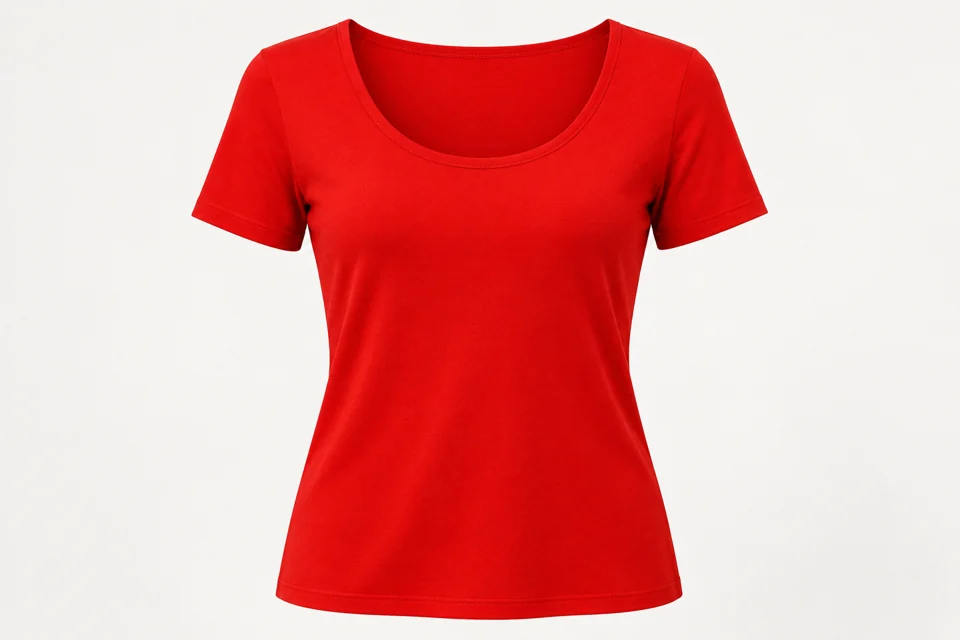


Compose the visual around a continuous neckline boundary
A scoop opening removes a curved region from the upper body, creating a different visual frame from a V or boat neck. Show its actual depth and width on the artwork drawing before choosing graphic scale. Decide whether the design follows the curve, sits below it or intentionally ignores it. A body mock-up with a different opening can conceal where a word, emblem or motif approaches the finished edge. The designer should approve the relationship on the intended top rather than transferring a placement from another neckline without a new view.
Treat a contrast edge as a developed colour component
If the opening uses a contrast binding, identify its actual material and governing physical reference separately from the body. Review the full finished curve under agreed conditions, asking whether the designer accepts the visible width and transitions. A close-match edge is a different brief from a deliberately outlined scoop, so name the intention. Keep the colour decision connected to the developed construction; a changed binding material or width can alter the visible effect even when the digital colour remains the same. An attractive loose strip cannot release the complete neckline presentation.
Choose the artwork landmark when depth changes
Define whether graphic placement follows the finished lower curve, a fixed upper-body landmark or another specified reference. These instructions can move an image differently when the opening is deepened. For an editorial example, small lettering arranged beneath the curve may need revised spacing if the neckline width changes, not merely a downward shift. Ask the designer to choose the intended composition and have the maker and decorator assess the actual pattern. Do not promise a universal clearance or assume that a semicircular artwork path describes every scoop shape.
Check motifs where the curved cut intersects the pattern
For an all-over design, decide whether motifs may be interrupted freely at the opening or whether recognisable elements need controlled placement. Show the finished edge and relevant turnings on the component layout. A repeat that looks balanced on a cutting may leave an unintended fragment at the curved boundary after assembly. Ask the cutter to demonstrate the proposed arrangement before promising matching or symmetry. If the style is solid with an unrelated chest graphic, omit those repeat restrictions; the approval should govern the real design, not accumulate unnecessary rules from other tops.
Qualify decoration on the actual offered jersey
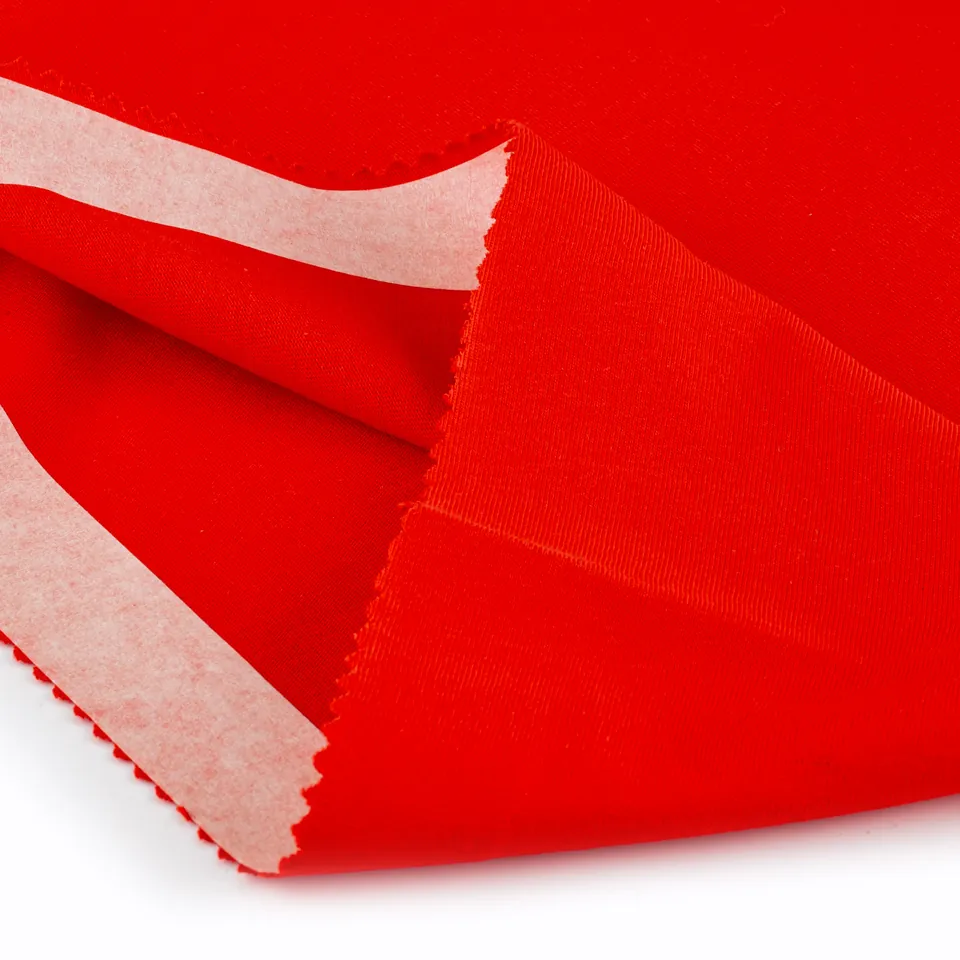
The CottonWorks printing overview relates fibre, yarn and fabric characteristics to process choices and the resulting printed appearance. Request the proposed decorator's trial on the real SJ-103 or SJ-102 version, including its offered finish, rather than transferring a colour approval between the routes. Neither catalogue entry confirms a decoration service or a tested image beside a curved binding. Inspect the sewn and worn neckline as well as the colour cutting, keeping visual acceptance separate from required care or fastness evidence. If the construction changes, identify which graphic and colour decisions need another relevant review.
CottonWorks: Cotton Textile Printing Basics — Fibre, yarn and fabric characteristics influence printing choices and appearance. No graphic clearance rule, decoration service or printed-garment performance is confirmed for either catalogue substrate.
Catalogue starting points
The local SJ-103 description gives 95% viscose 5% elastane single jersey, 160, 170, 180, 190, 200 g/m² and Bio-polish + silicone. SJ-102 gives 95% cotton 5% elastane single jersey, 170, 180, 190, 200, 210 g/m² and Enzyme + compacted. These records identify body candidates without approving binding shade, artwork geometry or decorated-garment performance. Name the offered versions used in each visual sample. A separate edge material also needs its own reference rather than inheriting every colour decision from the body article.
Release the curve-aware visual rather than a loose artwork file
Keep the accepted neckline drawing, component colour references, artwork revision and any controlled cutting instruction together. Include a full opening view and relevant worn presentation, stating which representative sizes were assessed. A later depth or band-width change can alter the composition, so review that relationship before using the previous approval again. Record any technical evidence still outstanding without obscuring the design decisions already made. This gives production a coherent scoop-neck colourway whose artwork and edge construction refer to the same actual top.
Technical background and scope
This is a structured editorial draft. Garment-specific development advice is paired with existing catalogue records; compatibility must be established by sampling. AL KUMAŞ supplies fabric. Cutting, sewing and finished-garment production are separate unless explicitly agreed.