





Establish the intended curve before judging its evenness
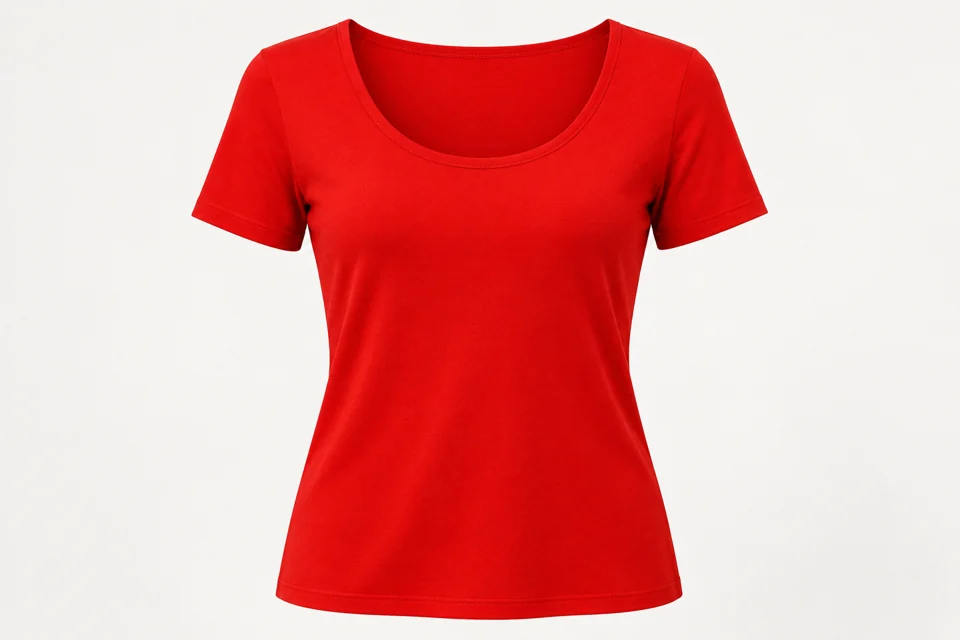
Identify the approved neckline drawing, body material, edge material and construction used in the sample. Mark the relevant measurement and comparison landmarks agreed by the technical team, distinguishing the cut outline from the finished opening. The reviewer needs to know which shape the garment is meant to show before calling a dip or transition incorrect. A small flat sample can illustrate an operation but cannot release the worn scoop. Keep the actual garment and its material version connected to the review so the team does not judge an anonymous opening against a different design reference.
Inspect the lower curve and both transitions separately
Review the front edge from one shoulder transition through the lower curve to the other, then inspect the back opening. Note where visible width, rippling or standing away departs from the intended appearance. Coats explains that puckering can have several material and assembly causes, so ask for investigation rather than automatically tightening the entire binding. A local correction should be assessed along the whole opening because improving one region may change another. Preserve photographs in the same stated condition so the buyer can compare a defined adjustment rather than a differently arranged sample.
Coats: Eliminating Seam Puckering — Puckering can have several material and assembly causes. A specific scoop-edge diagnosis and correction remain for the responsible technical team, not a conclusion drawn from fibre percentage.
Compare flat and worn appearance without forcing the curve into place
Lay the top in the agreed condition, then observe it worn naturally. Do not stretch or smooth the neckline into the desired shape for the approval photograph. If the opening differs between those states, ask the maker to examine body fit, curve geometry and edge attachment together. CottonWorks includes garment-stage fitting within fabric development, supporting the worn comparison. A band that looks smooth on the table may still need another trial, and the presence of elastane in the body is not evidence that a particular curve must return or sit evenly.
CottonWorks: Designing Knit Textiles — Actual garment fitting forms part of material development. Flat-versus-worn curve observations are original development proposals, not a named neckline recovery test.
Observe depth and position through relevant movement
Have the wearer sit or reach as relevant to the intended product and then return to the neutral pose. Record the position and appearance of the continuous edge rather than assuming any movement is failed recovery. State the coverage target the design actually requires and inspect representative sizes selected to examine the graded curve. These are development observations, not a named neckline-growth test or a guarantee for every wearer. If the intended depth changes during the review, treat that as a design revision and identify the new comparison baseline before another sample is assessed.
Reassess the actual curve after the agreed care work
Record the procedure and compare the same finished landmarks, edge appearance and body relationship under consistent conditions. CottonWorks identifies construction, processing and garment care among dimensional influences. Ask the appropriate provider to define any formal assessment needed for this programme rather than inventing a universal pass percentage. Body and binding should not be assumed to change identically just because both are knitted materials. An overall body measurement alone cannot explain an uneven opening, so retain the full curve observations with the numbers and distinguish internal care trials from independent laboratory evidence.
CottonWorks: Shrinkage & Skewing — Construction, processing and garment care influence dimensions. The article supplies neither a universal pass limit nor an assumption that body and edge components change identically.
Catalogue starting points
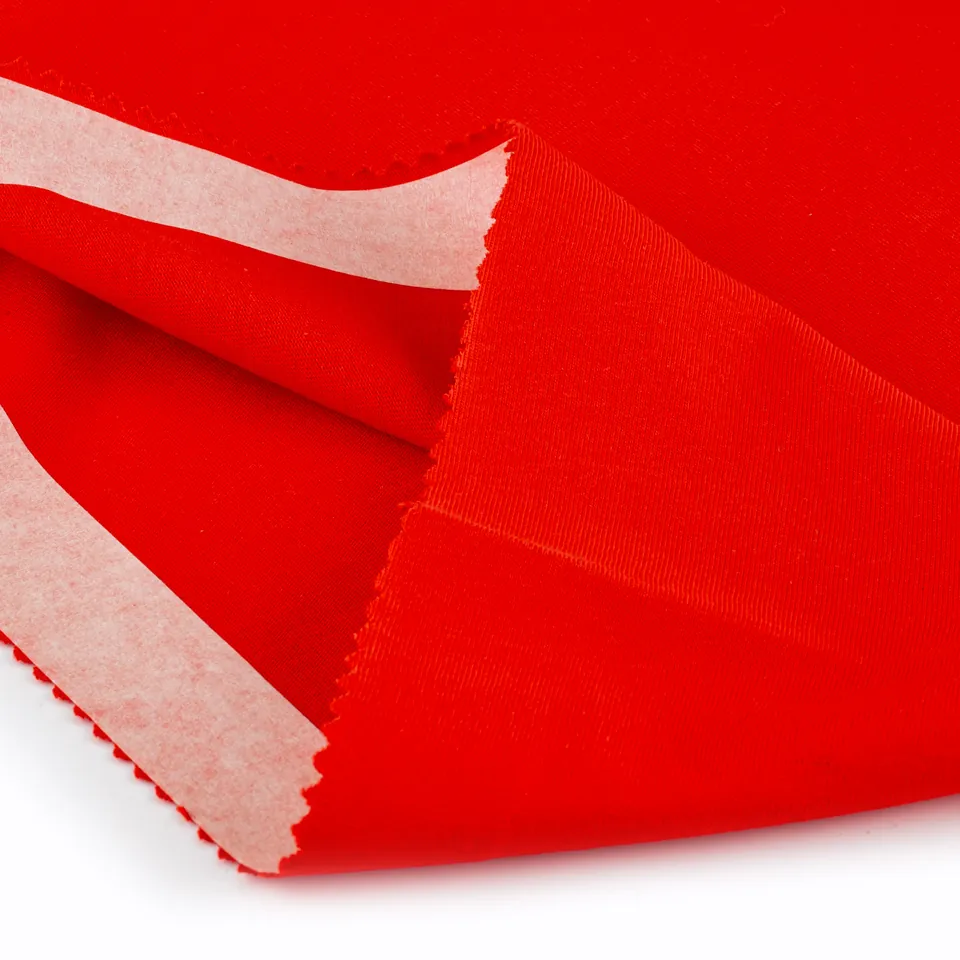
For SJ-103, the record is 95% viscose 5% elastane, 160, 170, 180, 190, 200 g/m² and Bio-polish + silicone. For SJ-102, it is 95% cotton 5% elastane, 170, 180, 190, 200, 210 g/m² and Enzyme + compacted. Both single-jersey candidates require actual garment assessment; neither entry supplies a finished scoop-opening evenness, coverage or recovery report. Identify the offered materials and any substitution on the sample record, including the actual binding. A result on another component combination cannot silently approve the one being proposed for production.
Close the review with the curve and construction version identified
Record decisions for shape, visible edge width, local appearance, worn depth, movement observations and care work. Keep accepted construction details and the complete opening view under the same reference. If the band or neckline geometry changes later, identify the affected checks to repeat instead of carrying an unrestricted approval forward. The resulting release should explain what this scoop-neck sample actually demonstrated, with its sizes and evidence limits visible. It should not imply that one smooth photograph proves permanent positioning or that a material family guarantees an even curve across every design.
Technical background and scope
This is a structured editorial draft. Garment-specific development advice is paired with existing catalogue records; compatibility must be established by sampling. AL KUMAŞ supplies fabric. Cutting, sewing and finished-garment production are separate unless explicitly agreed.