



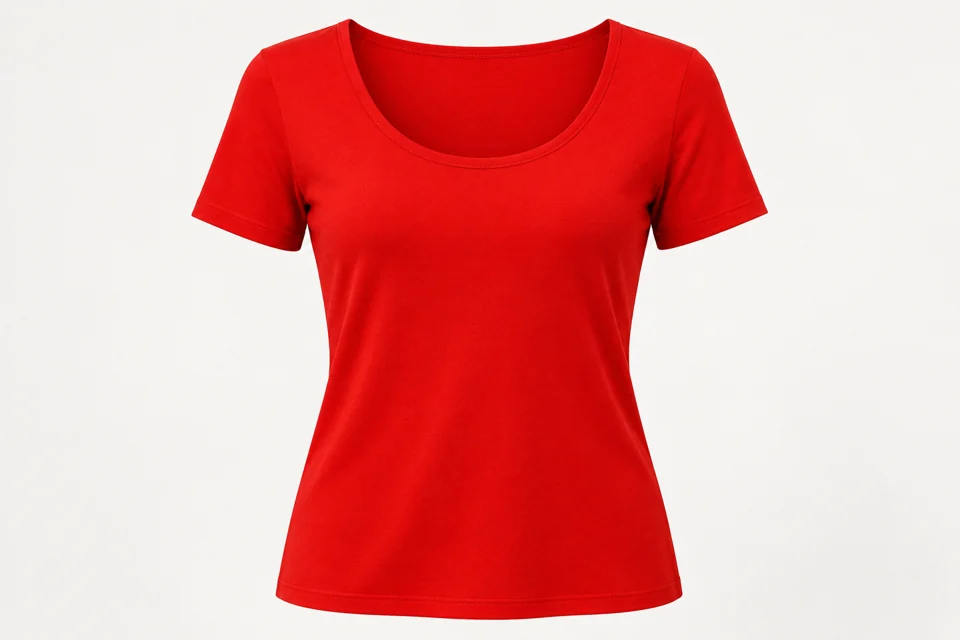


Cost a developed curved opening rather than an assumed circular hole
A scoop-neck pattern is not necessarily a simple circle, and its cut edge, stitch line and finished opening are different references. Give the cutter the developed body and edge components rather than estimating binding use from a photographed opening. State which line the maker uses for the construction calculation. A deeper curve can change component requirements without producing a proportional saving in body material. The purchasing comparison should therefore follow the actual accepted pattern, not a shortcut that subtracts a rough neckline area and calls the remainder the finished top's consumption.
Keep binding geometry and its attachment decision separate
Ask the maker to record the developed strip width, cut length, direction and joining arrangement for the selected body and opening. The geometric neckline length alone does not establish those values. A universal ratio copied from another top can hide differences in material, edge width and construction. Where two body candidates need different binding proposals, show each one with its own sample and estimate. The buyer is then comparing complete routes rather than treating the same percentage as technical evidence that the strips will create equivalent curves.
Use a strip example to understand a small material change
For invented arithmetic only, a strip with a cut envelope four centimetres wide and 82 centimetres long occupies 328 square centimetres. At a hypothetical 180 g/m², its theoretical mass is about 5.90 grams before losses or other pieces. Increasing that illustrative length to 92 centimetres adds forty square centimetres, or about 0.72 grams at the same mass per area. These are not developed band dimensions or AL KUMAŞ specifications. The example shows one material variable, not the appropriate attachment ratio, marker yield or complete price of a curved-edge operation.
Test body and strip layout without changing approved direction
Send the actual front, back and any sleeve patterns with the accepted edge components to the marker planner. Ask which pieces are included and whether direction restrictions limit use of apparently empty spaces. If the band uses a separate substrate, request a separate consumption figure on its offered supply basis. A small geometric strip area does not guarantee that all pieces can be cut from body-marker gaps. Keep the real size ratio attached to the estimate, especially where graded neckline geometry changes the strip requirements across the range.
Reconcile geometry changes before accepting the cost
If the designer deepens the opening or changes the visible edge width, ask the maker and cutter which patterns, components and operations need revision. American & Efird describes communicating assembly through seam drawings and stitch specifications, supporting a defined scope rather than an unspecified neckline finishing charge. A material saving may be small while development or assembly changes remain important. Do not let an old body estimate and a new band proposal circulate as one accepted product. The quotation should identify the actual version represented by its consumption and operation assumptions.
American & Efird: Stitches and Seams — Drawings and stitch specifications can communicate assembly scope. The strip dimensions and mass calculation are original hypothetical arithmetic, not a developed binding ratio, pattern, supplier operation charge or source-prescribed curved-edge method.
Catalogue starting points
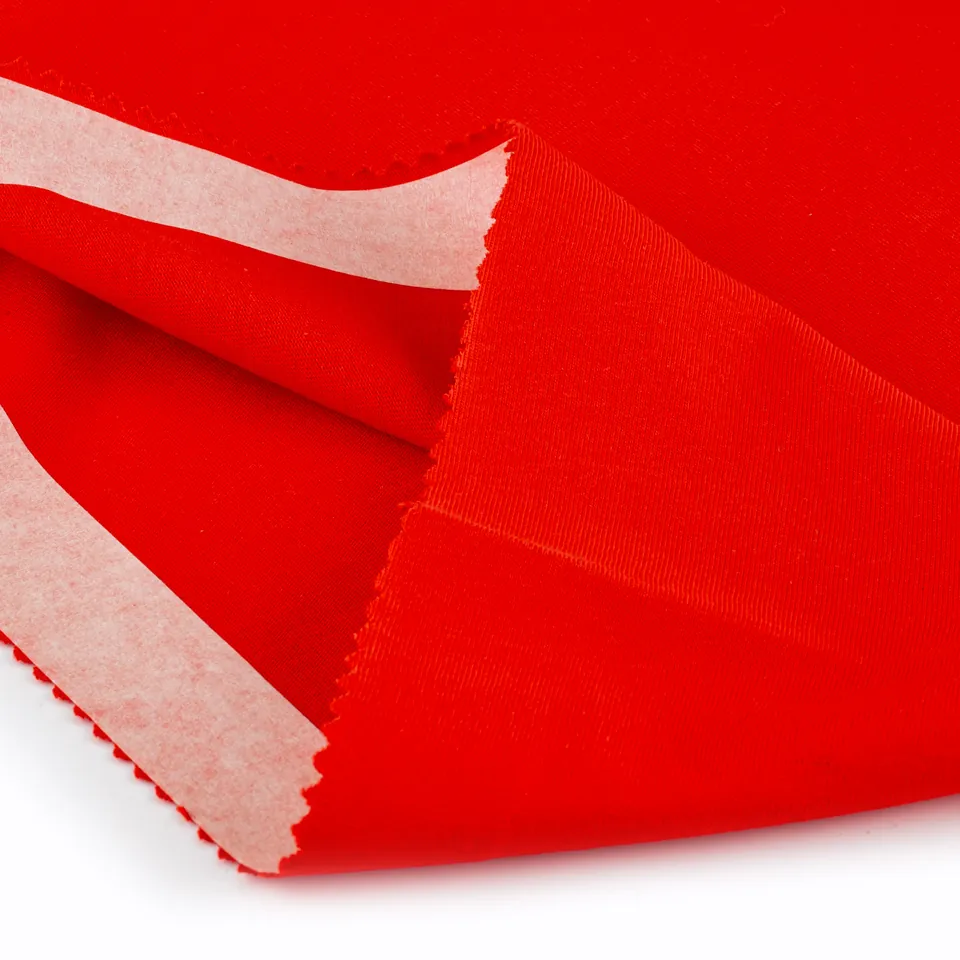
The SJ-103 route lists 95% viscose 5% elastane, Bio-polish + silicone and 160, 170, 180, 190, 200 g/m². SJ-102 lists 95% cotton 5% elastane, Enzyme + compacted and 170, 180, 190, 200, 210 g/m². These single-jersey entries contain no scoop pattern, strip consumption or confirmed usable width. Ask for the actual offered finished versions before costing the accepted samples. An equal listed GSM or elastane percentage cannot establish identical binding calculations, body layout or complete cost per top.
Preserve the edge proposal in the economic comparison
Show the body and binding identities, curve revision, strip requirements, marker and assembly scope with each estimate. Identify separately purchased material and any agreed allowances rather than inventing universal loss rates or minimums. When the fit review changes the opening, update the affected cost references before proceeding with the purchase discussion. A useful comparison tells the buyer what creates the accepted curved edge and how that configuration uses material. It does not claim that the cheaper kilogram offer or the smallest cut strip automatically produces the best finished scoop neckline.
Technical background and scope
This is a structured editorial draft. Garment-specific development advice is paired with existing catalogue records; compatibility must be established by sampling. AL KUMAŞ supplies fabric. Cutting, sewing and finished-garment production are separate unless explicitly agreed.