





Review the complete leg line before correcting local details
Establish a full-length sample with the intended waistband, leg width and open hem construction. Record the reference footwear or defined standing height arrangement used to judge length. Photograph the front, side and back before sitting or walking. The aim is to see how the broad panels hang as one garment, not to approve a pleasant cutting and assume the seams will follow. Keep the design intention visible: a fluid outline and a more pronounced loopback shape may be different valid routes, but they should not be judged against an unstated moving target.
Keep the proposed article and finish identifiable
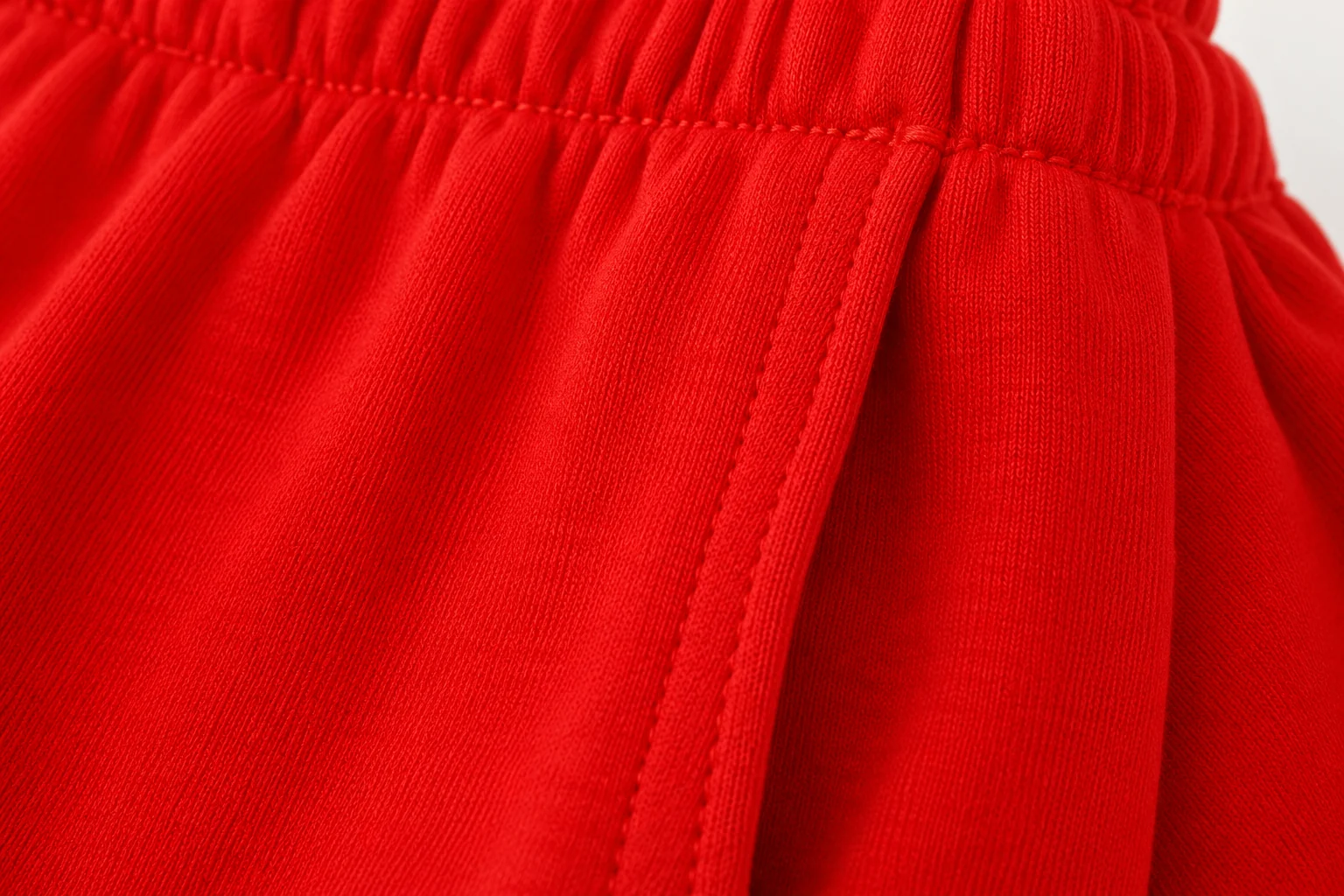
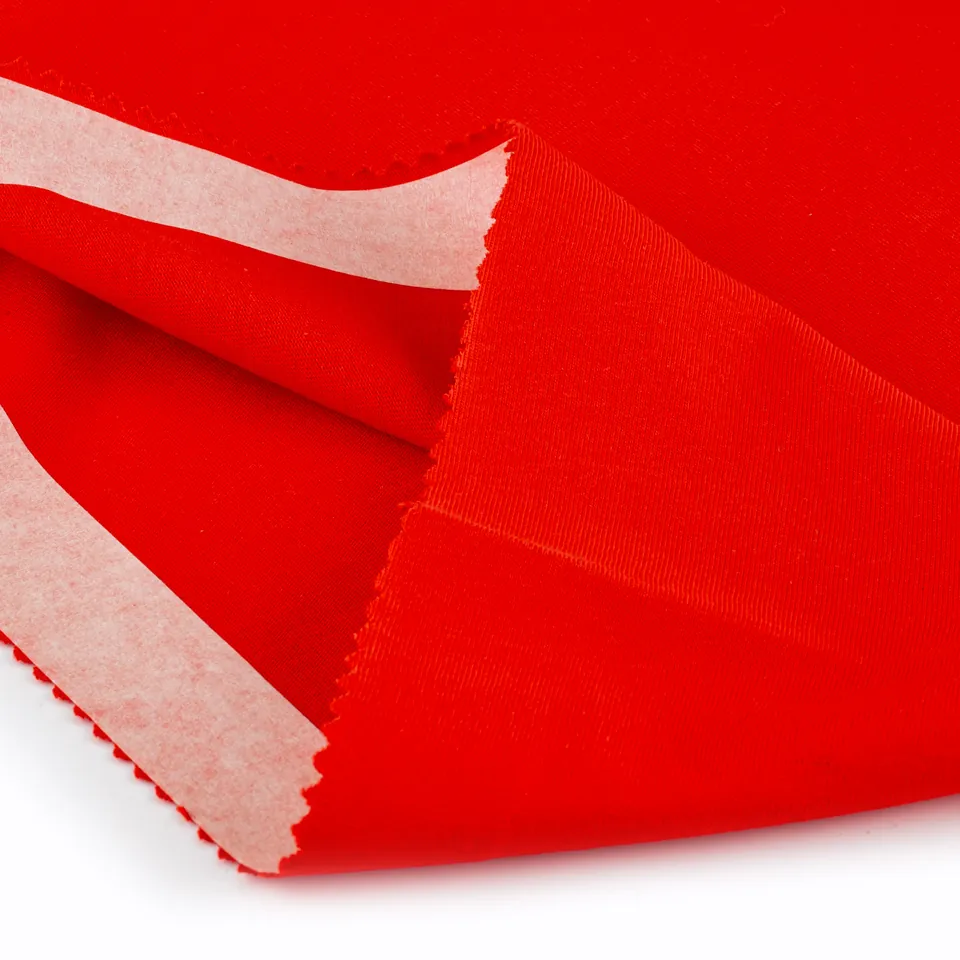
SJ-103 offers 160, 170, 180, 190 and 200 g/m² in 95% viscose and 5% elastane single jersey, with a biopolish and silicone finish. FT-601 offers 240, 260, 280, 300 and 320 g/m² in 70% cotton and 30% polyester two-thread French terry, unbrushed and silicone finished. Record the actual sampled weight, colour and components. These descriptions do not establish seat recovery, dimensional stability or measured drape. If the sample room substitutes another cutting or waist material, name the change before interpreting the result as evidence about the original route.
Track inner-leg fall during a short walking review
Observe the trousers at rest, during ordinary steps and after returning to the starting position. Note whether the inner-leg seam appears to pull, the broad panels bunch or the openings swing beyond the intended line. Ask the pattern and sewing teams to examine grain direction, balance and seam assembly before adding width or changing fabric. Use consistent views so a momentary movement is not mistaken for a permanent distortion. These are development observations for the intended garment, not a universal gait test or proof that a material will behave identically in every pattern.
Review waist position with the full garment attached
Mark the intended waist position and record it before and after the agreed wearing sequence. Examine elastic or other support actually specified, attachment and the relationship between front and back rise. A heavier complete leg assembly may pose a different question from a partial waist prototype. Do not tighten the band to conceal movement without checking dressing access and the wearer's feedback. If the waistband changes, repeat the full garment observation. The presence or absence of listed elastane in the body record does not establish the performance of that separate assembly.
Document the seat after sitting without calling it a test result
Agree the sitting observation, including the sample, seating arrangement and when photographs or measurements are taken after standing. Record visible changes at the seat and any related waist or inner-leg movement before the wearer readjusts the garment. Compare the revised sample under like conditions. If quantified recovery is a programme requirement, have a specialist choose a suitable assessment and requirements. Do not convert an informal observation into a universal pass percentage or assume that either material's finish guarantees the return of the intended wide-leg silhouette.
Reassess hem balance after the defined care procedure
Agree the care and measurement preparation, then track both leg lengths, waist, relevant seat dimensions and the hem opening. AATCC separately lists garment dimensional changes and appearance after home laundering; a competent provider should confirm current applicable methods and requirements. Photograph the full hem as well as recording one inseam number. If one side hangs differently, ask the team to review cut and seam balance alongside the measured change. Avoid correcting a post-care problem by unevenly trimming the sample without recording what happened and why a production solution is expected to work.
AATCC: Standard Test Methods and Procedures — Garment Care — Public index separately identifies garment dimensional changes and appearance after home laundering. Current applicable method selection and agreed requirements remain necessary; standing, walking and sitting observations are not presented as an AATCC protocol or recovery proof.
Approve a silhouette with its unresolved evidence still visible
Close the record with the accepted material, offered GSM, finish, pattern, waist and hem versions. State what the walking, sitting and care reviews actually demonstrated and which questions remain open. A changed leg width, material or band should trigger the relevant repeat observations, not automatic approval because it is another lounge trouser. Keep reported results tied to their scope and do not claim guaranteed shape retention from a fitting alone. Purchasing should receive an identifiable assembly that preserves the desired fall, rather than a vague instruction to buy soft wide-leg fabric.
Technical background and scope
This is a structured editorial draft. Garment-specific development advice is paired with existing catalogue records; compatibility must be established by sampling. AL KUMAŞ supplies fabric. Cutting, sewing and finished-garment production are separate unless explicitly agreed.