





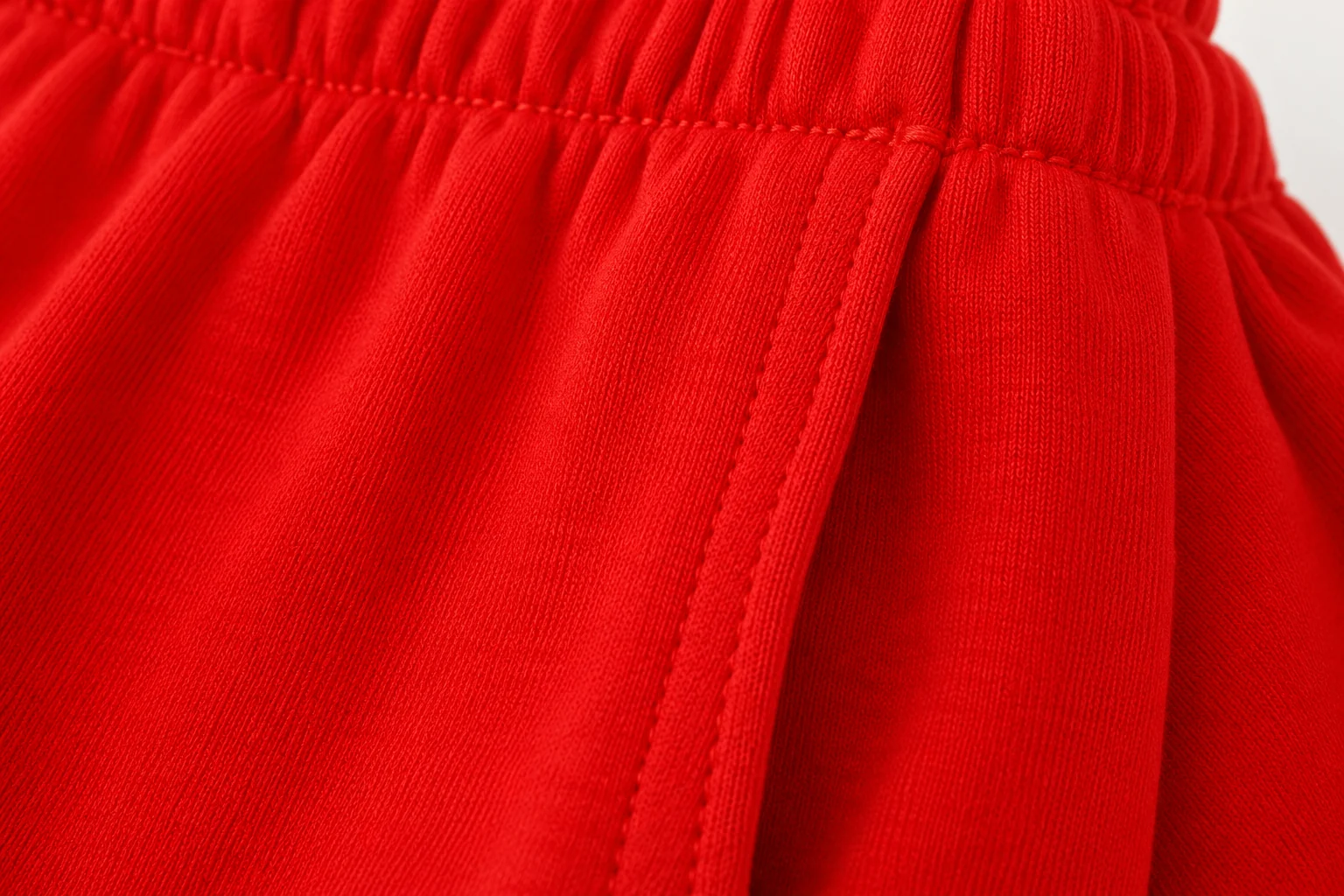
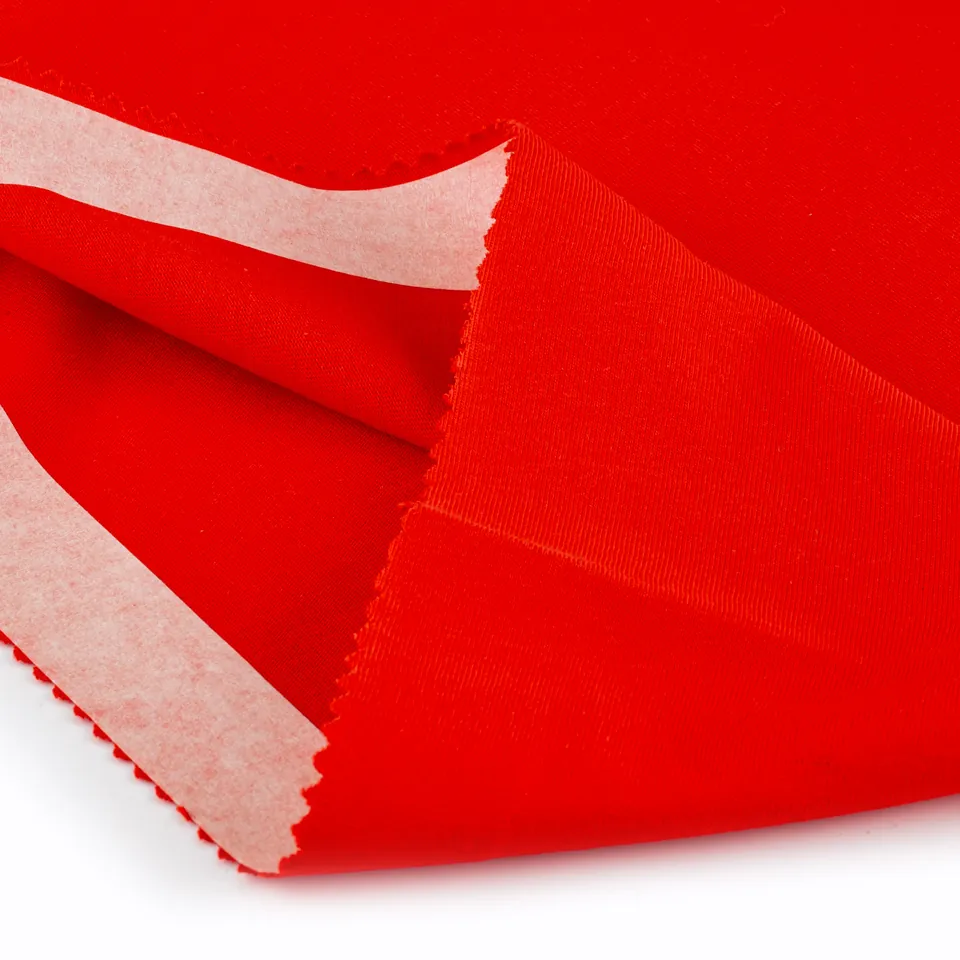
Send two silhouette options rather than one vague lounge request
An effective first brief can ask the garment developer to compare route F, intended to fall close around the body, with route B, intended to show a more pronounced wide-leg outline. Those labels describe design intentions, not measured properties of the proposed articles. Include full front and back drawings, the intended open hem and a reference waist position. CottonWorks begins knit development with end use and required function. Apply that principle by asking what each route must demonstrate in a full-length sample, instead of ordering whichever material a supplier describes as fluid.
CottonWorks: Designing Knit Textiles — Defining the Product — Define end use and required function before textile development. The two silhouette routes, waist/hem ownership, width-sensitive costing and comparison sheet are original decision aids, not published acceptance criteria or confirmed supplier offers.
Attach real material identities to the two questions
For the initial comparison, name SJ-103: 95% viscose and 5% elastane single jersey, biopolish and silicone finished, at 160, 170, 180, 190 and 200 g/m². Name FT-601 as the contrasting route: 70% cotton and 30% polyester two-thread French terry, unbrushed and silicone finished, at 240, 260, 280, 300 and 320 g/m². Ask the supplier which precise offered options can be sampled. Do not tell it that either code already guarantees the intended fall or seat recovery. The route assignment remains a development proposal until the complete trousers are reviewed.
Make the full-width panel the first sample requirement
Request a trial that includes the actual broad front and back leg pieces, not a narrow mock-up that cannot show the proposed outline. Give the maker the intended size range and identify the largest relevant panel to consider. Ask it to retain an unchanged reference pattern for the first comparison where useful, then document any route-specific revision. If one material needs a narrower leg or different waist arrangement, keep that as a separate design option. The buyer should be able to see which shape was evaluated, not receive one photograph labelled approved wide-leg fabric.
Assign the waist and hem decisions to named owners
State who specifies and supplies elastic, band material, thread and optional pocket components. Ask the garment maker to explain how the complete legs will be supported at the waist and which hem construction will be trialled. Identify the reviewer responsible for accepting the reference length and seated silhouette. Do not allow a body-fabric offer to imply responsibility for finished-garment production. If the design includes pockets, request a pocketed sample; if it does not, keep that feature outside the enquiry rather than adding an uncosted component by convention.
Request width-sensitive costs for the actual pattern variants
Ask for exact offered GSM, usable finished width, format and its measurement convention. Give the cutter the permitted directions and matching restrictions, then request separate constrained markers for routes F and B where their patterns differ. Include the actual size ratio and intended lengths. A broad panel may cross a nesting threshold when width changes, so do not accept an unexplained proportional adjustment to another marker. Ask the maker to show the main layout assumption and separate body, waist and optional component quantities. This exposes the real cost of choosing each silhouette.
Use a comparison sheet built around the unresolved decisions
Create columns for standing fall, inner-leg movement, waist position, seated appearance and after-care hem balance. For each route, record accepted intent, further sample required or rejected, with the reason and sample identity. Ask for qualified assessment where a measurable recovery or dimensional property belongs in the programme; do not invent numerical pass limits. Add colour or border-print restrictions only where they affect the chosen design. This decision sheet gives the supplier a useful response target and keeps general softness descriptions from standing in for the specific garment behaviour the buyer needs.
Confirm quantities only after the chosen route is identifiable
Once a route is selected, tie the commercial request to its accepted article, weight, finish, pattern, width assumption and components. Show estimated demand by colour and length programme with units and size ratios; ask for current minimums, price basis and terms for that defined request. Keep unresolved forecasts labelled as estimates. A new material, changed waistband or altered leg width should reopen the affected comparison cells and marker rather than inherit approval from the original name. Retain the selected sample so a reorder reproduces an intentional wide-leg garment instead of merely another soft knit trouser.
Technical background and scope
This is a structured editorial draft. Garment-specific development advice is paired with existing catalogue records; compatibility must be established by sampling. AL KUMAŞ supplies fabric. Cutting, sewing and finished-garment production are separate unless explicitly agreed.