





Decide whether the zip divides or joins the graphic
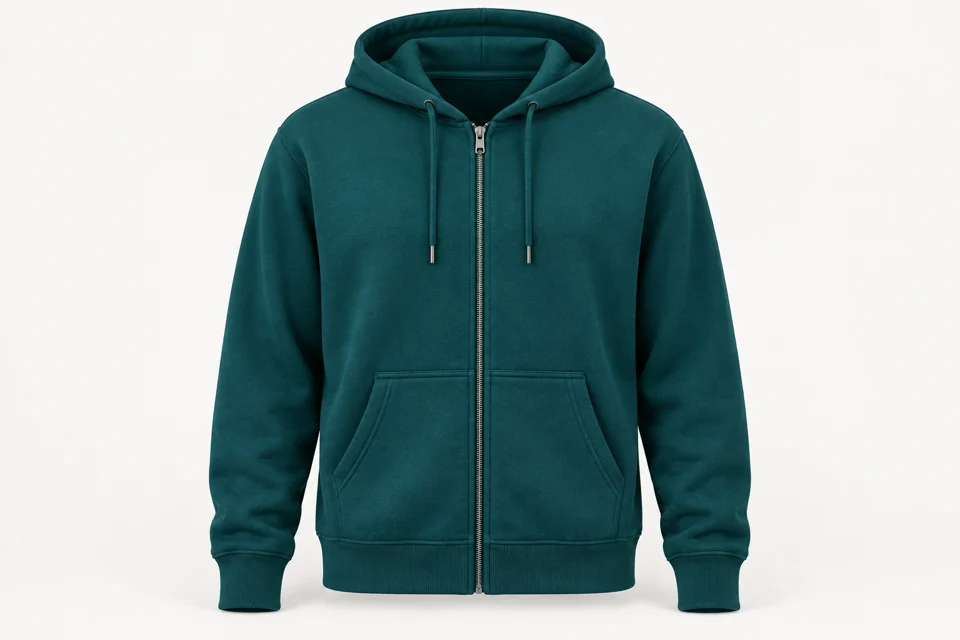
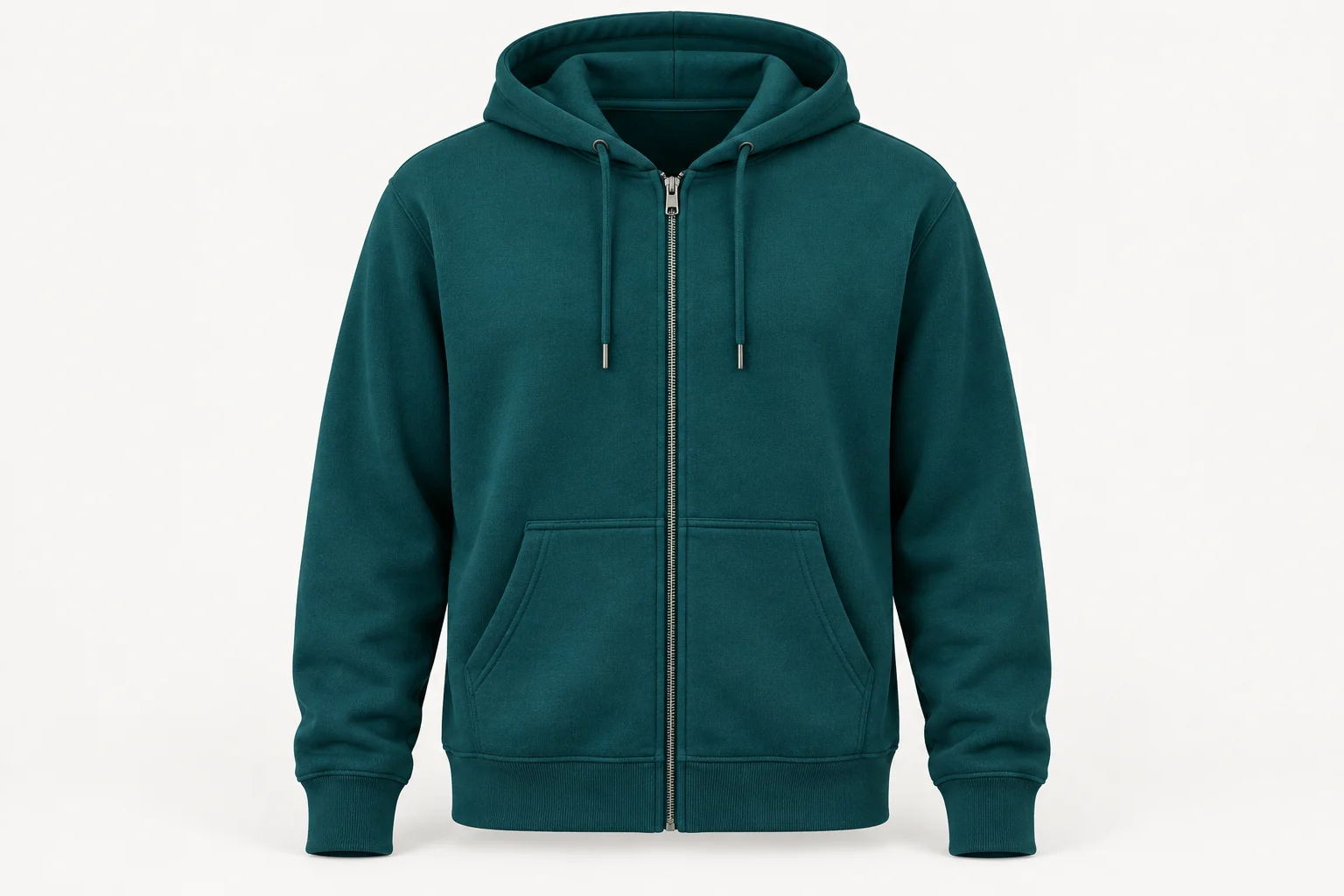
A central zip creates a visible interruption through the front of a hoodie. Treat that interruption as part of the artwork plan: the design can stop on each side, continue approximately across the opening or make the gap an intentional feature. Do not approve a single uninterrupted digital graphic and leave the decorator to decide how it should meet the fastener. Request a drawing with the actual opening width, seam lines and pocket outlines before assessing the visual balance of the garment.
Develop the body shade on its recorded material
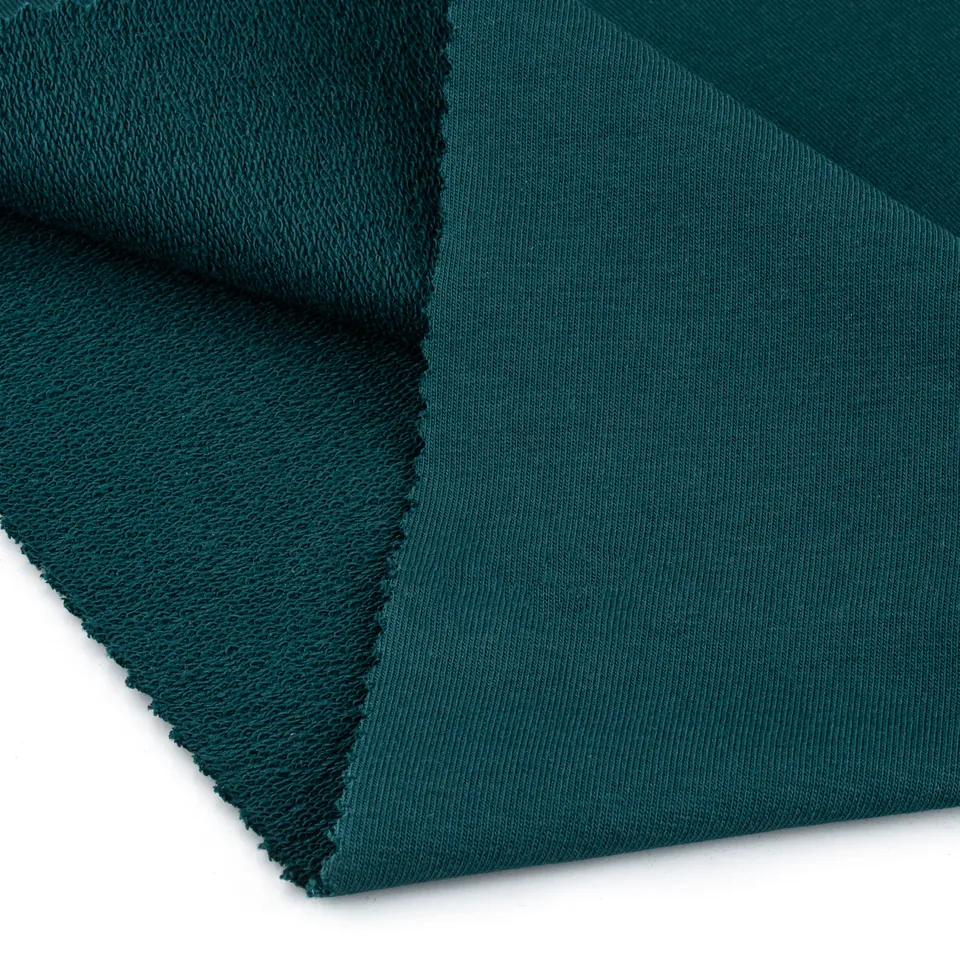
FT-601 is catalogued as 70% cotton and 30% polyester, two-thread, unbrushed silicone, with 240–320 g/m² weight options. FT-603 is 65% cotton and 35% polyester, three-thread brushed fleece, labelled brushed anti-pilling, at 320–420 g/m². Their different substrates should remain identified during colour work. CottonWorks describes a lab-dip request using a specified colour and substrate; a shade accepted on one of these routes is not automatically the approval for the other. Ask which finish and offered weight the development sample represents.
CottonWorks: Lab Dip Process — Colour-development requests specify a colour and substrate. It does not establish that an approval on FT-601 transfers to FT-603 or identify a dyeing recipe for either blend.
Evaluate tape, teeth and puller as separate visible parts
Choose whether the fastener should blend into the front or contrast deliberately. Zip tape colour, teeth appearance and puller finish can each influence that impression, so identify them separately with the fastener supplier. Put the fastener next to the body, facing and lower band in the physical component review. An attractive main-fabric shade does not establish the look of that combined set. Photograph it open and closed for orientation, while retaining the physical colour references that govern the approval rather than relying on the photograph as a standard.
Define the acceptable relationship across the opening
If two front graphic halves should appear continuous, identify matching reference points on the artwork and specify how they are located relative to the zip and pattern. Assess the arrangement on the actual sample fully closed. Ask the garment maker and decorator to agree what can be achieved before promising precise continuity. Also inspect the hoodie partly open: a split word or image may become difficult to read in normal wear. A pair of intentionally independent graphics can be preferable when continuity is not essential to the concept.
Plan decoration around seams and processing order
CottonWorks notes that fibre content and fabric surface affect printing choices. Obtain a trial on the chosen article rather than assuming the same application behaves identically on silicone-finished unbrushed material and brushed material. Ask whether decoration will occur on panels or on the assembled garment, and how that choice affects placement and access near the zip. Include the proposed facing and pocket where relevant. No printing, embroidery or heat-process compatibility is established by the catalogue label, and this guide does not imply that the fabric supplier performs those services.
CottonWorks: Cotton Textile Printing Basics — Fibre content and fabric surface influence printing choices. Assembly-stage, zipper-crossing and positioning suggestions are original editorial development advice, not confirmed process capabilities.
Inspect split pockets and worn views with the artwork
Review the two pocket sections as part of the front layout. A motif that looks centred between the shoulder seams may appear off balance when one pocket opening or reinforcement overlaps it. Use representative sizes to check the relationship rather than scaling every coordinate blindly. Assess the approved decorated hoodie closed, with hands in the pockets and worn open. These are editorial development views, not standard laboratory tests. Record which visual compromises the designer accepts so purchasing does not request a different solution during the final material release.
Release a combined shade and layout reference
The release package should connect body article, finish, offered weight, component colour references, fastener identity, artwork version and placement drawing. Include a decorated sample that has undergone the agreed care assessment, with any required durability evidence addressed separately. The anti-pilling finish label on FT-603 is not proof of a decorated garment's appearance retention. If a different zip tape, facing or body route is later proposed, reopen the affected visual decisions. Keep colour and artwork acceptance separate from confirmation of production quantities and commercial timing.
Technical background and scope
This is a structured editorial draft. Garment-specific development advice is paired with existing catalogue records; compatibility must be established by sampling. AL KUMAŞ supplies fabric. Cutting, sewing and finished-garment production are separate unless explicitly agreed.