
End use
Choosing T-shirt fabric: weight, yarn and hand feel
A T-shirt fabric decision comes down to three variables: weight, yarn quality and finishing. Together they set the drape, the shape after washing and how the garment looks on the shelf.
End use
A T-shirt fabric decision comes down to three variables: weight, yarn quality and finishing. Together they set the drape, the shape after washing and how the garment looks on the shelf.
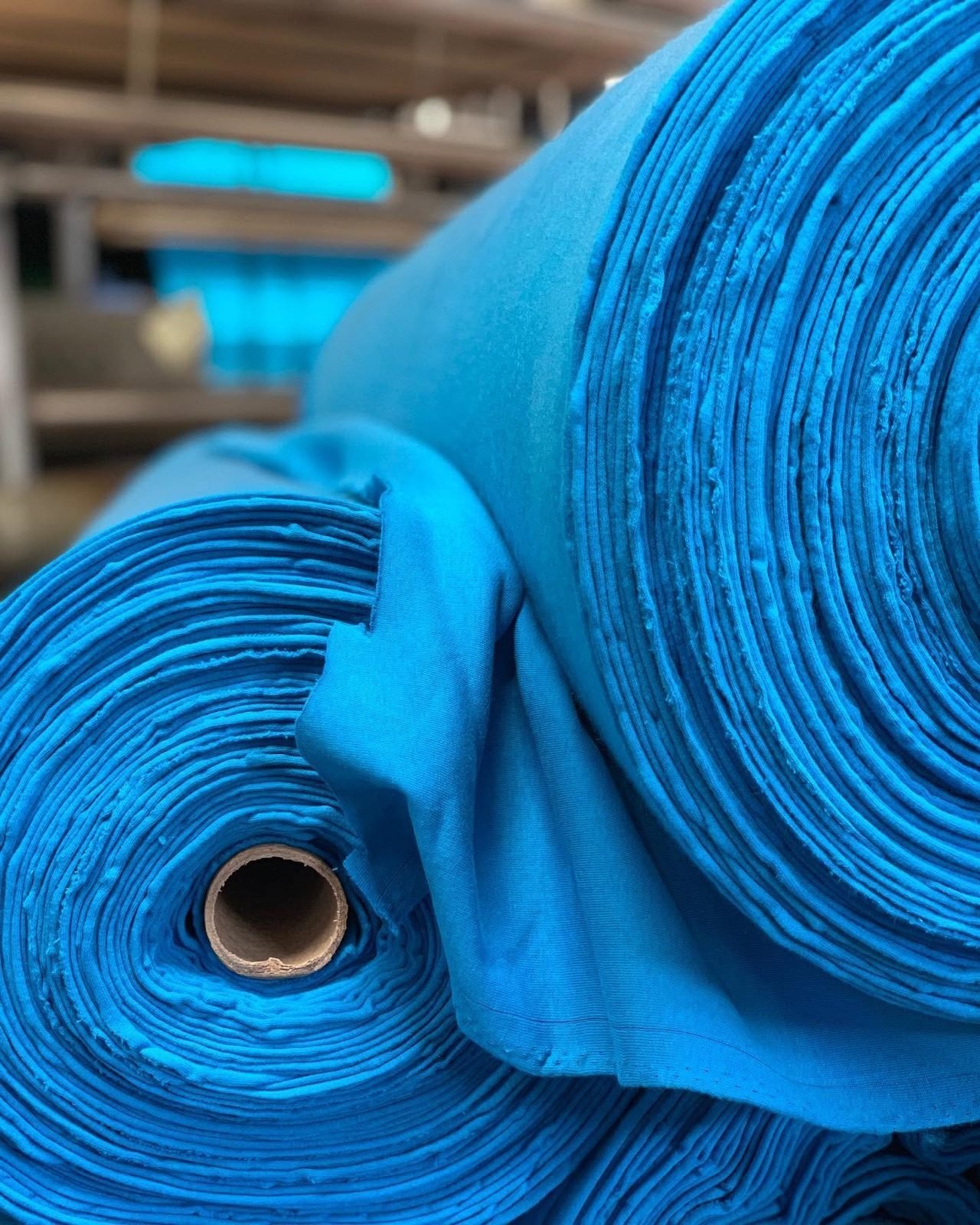
Lightweight summer tees sit at 130–150 g/m², standard basics at 150–180 g/m², and fuller premium bodies at 180–210 g/m². Weight alone is not a quality signal: compact combed and carded yarn at the same GSM produce completely different surfaces.
Carded yarn gives a hairier, matter face; combed is smoother; compact combed pills least and prints cleanest. Most pilling complaints trace back to the yarn choice rather than the finishing route.
Single jersey is a single-bed construction, so it carries a tendency to twist. Compacting and controlled drying limit it. Agree an acceptance range for length and width shrinkage and for spirality angle before the order — a figure quoted without its test method cannot be compared.
40 recorded Single jersey qualities in the catalogue, 130–210 g/m².
%100 compact combed cotton · %95 cotton %5 elastane · %95 modal %5 elastane · %95 viscose %5 elastane
150–180 g/m² is the most common band for basics. Target market, season and print method move it up or down.
Compact combed single jersey: the even surface gives cleaner reactive and digital print results.