





Treat the opening and short body as one design
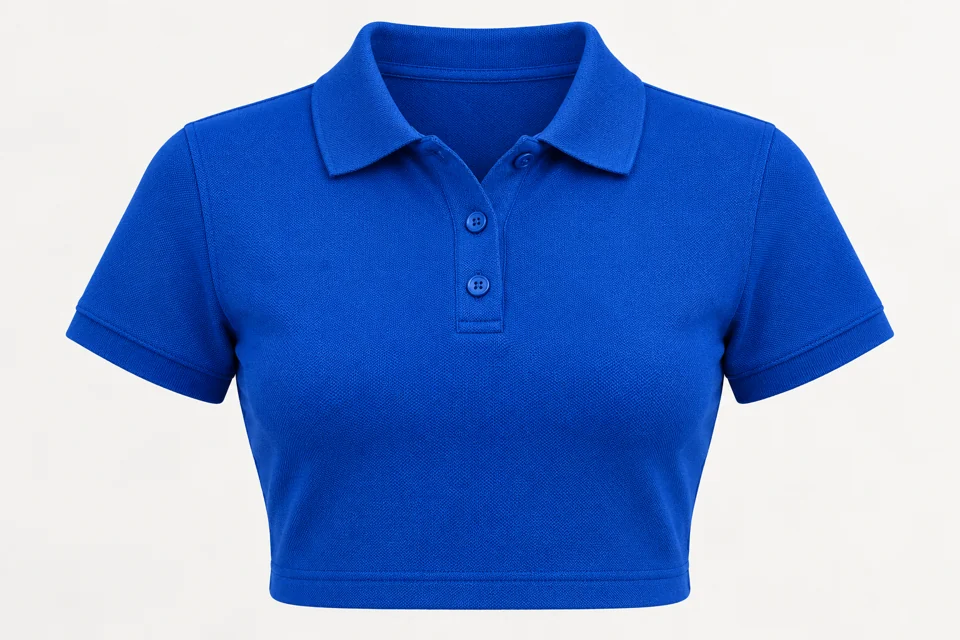
A cropped polo needs enough uninterrupted front below its opening to express the intended shape. Draw the proposed finished hem, collar and opening endpoint together before comparing cloth. A conventional polo shortened without revisiting the opening may have a very different visual proportion from the intended cropped style. Ask the designer whether the neckline should look compact or deliberately oversized and identify the actual styling reference. The purpose is not to prescribe a universal ratio, but to choose a specific design question that the material sample can help resolve.
Catalogue starting points
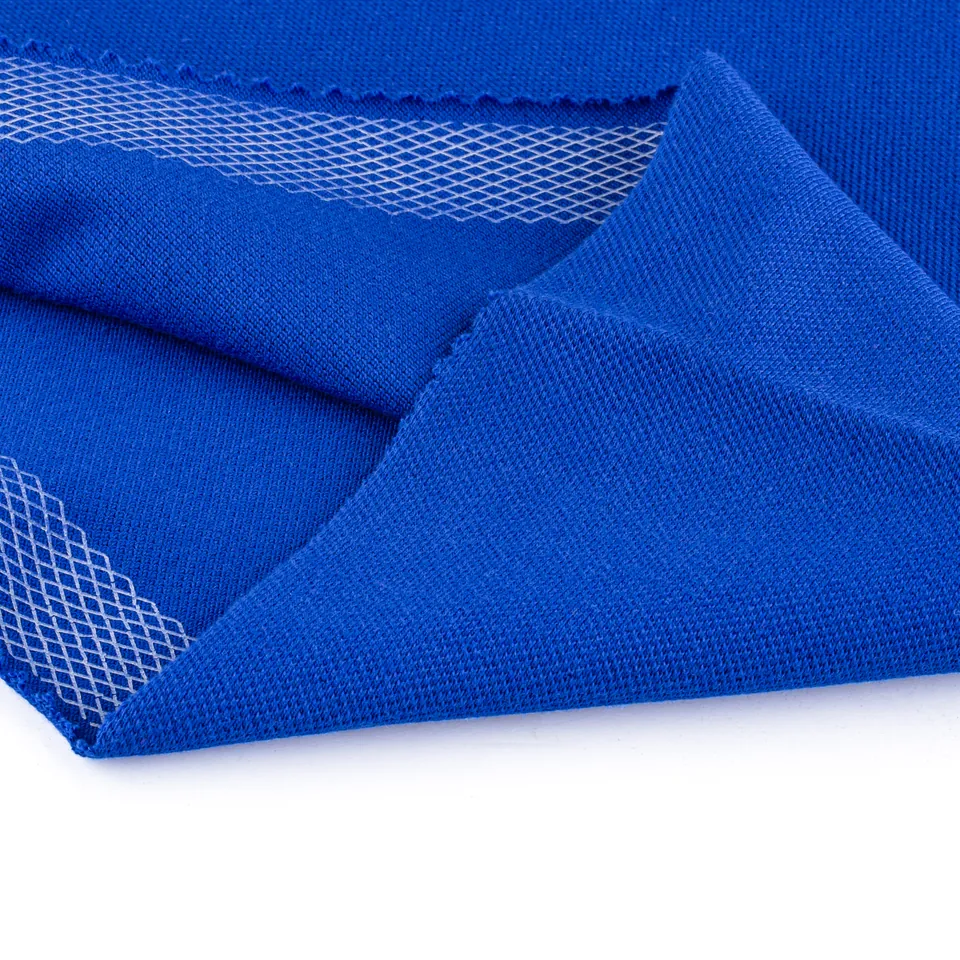
PQ-501 is the recorded 100% combed cotton piqué candidate, offered in the catalogue at 190, 205, 220, 235, 250 g/m² with Enzyme + silicone finishing. SJ-102 is cotton-elastane single jersey, 95% cotton 5% elastane, listed at 170, 180, 190, 200, 210 g/m² with Enzyme + compacted finishing. Confirm the actual offered weight and sample. Neither listing establishes a supplied collar, placket assembly or finished cropped-polo service. These distinct constructions and finishes require a garment comparison rather than substitution based only on their shared 190 g/m² entry.
Choose the surface with the collar actually attached
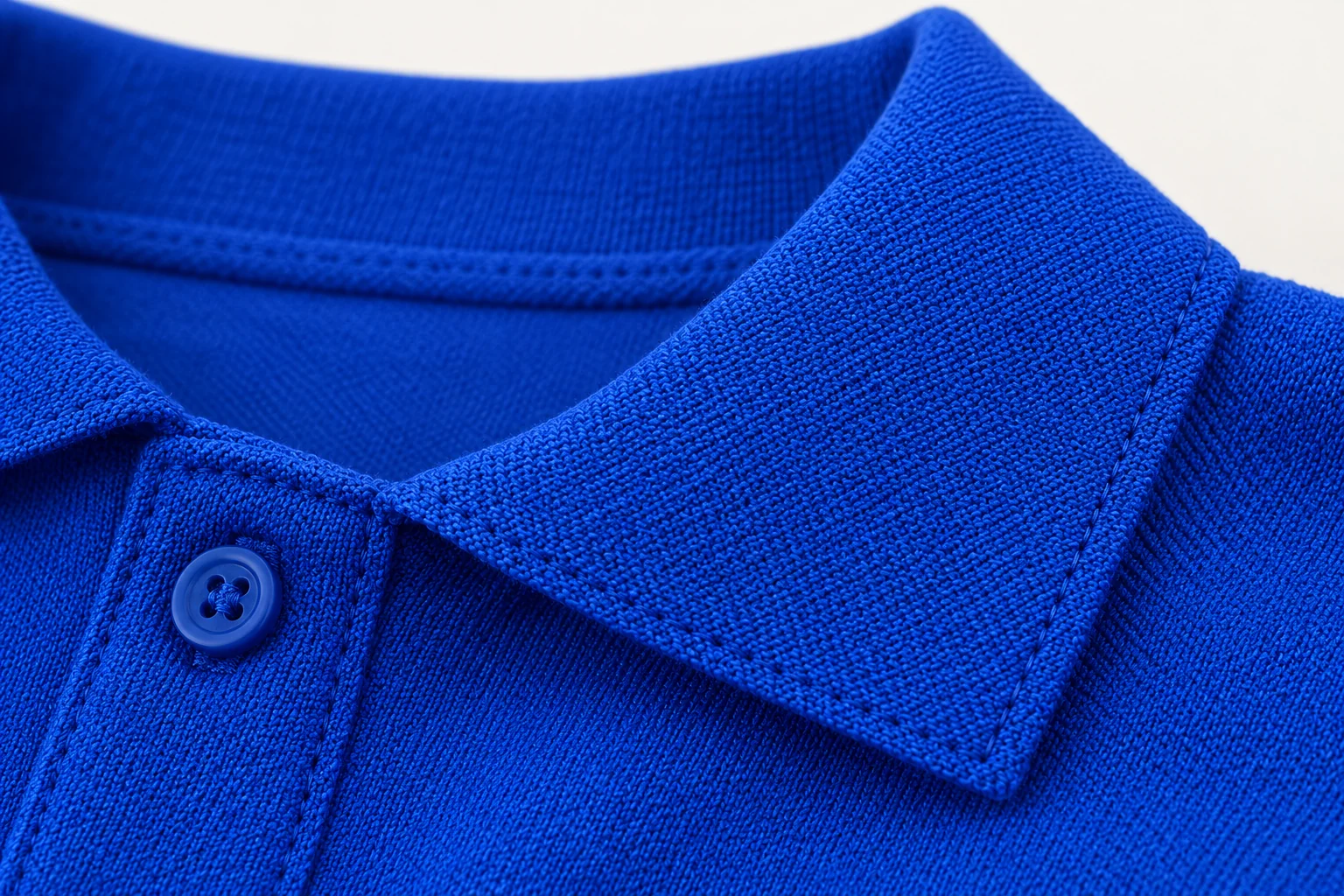
CottonWorks describes piqué as commonly used in polo shirts, which provides general context for considering that route without defining the exact PQ-501 subtype. View the actual piqué and jersey samples under the proposed collar construction. A prominent collar occupies more of the short garment’s visual field, so its shape and attachment should be part of the comparison. Do not assume that the body supplier includes a finished knitted collar. Record whether the developed collar is knitted, self-fabric or another confirmed construction and retain its identity beside the body reference.
Single & Double Knits — CottonWorks — Piqué is commonly used for polo shirts; not proof of PQ-501 subtype, performance or suitability.
Resolve how much opening belongs in the shortened front
Have the pattern developer show the opening depth and any fastening arrangement on the proposed body, including the surrounding support and lower termination. Inspect both the intended open position and the fastened view. More elastane in a body description is not evidence that a deep opening will sit acceptably, and a heavier piqué is not proof of support. Compare the actual assemblies without prescribing a firmer insert as the automatic solution. The buyer needs to see whether the opening remains a deliberate neckline feature instead of consuming an unintended share of the front.
Develop the hem with the opening still present
Review the proposed hem construction in the complete polo rather than on a short undecorated tube. Ask whether the selected lower edge contributes a straight, flared or other intended silhouette and show its relationship to the actual lower garment used for styling. During a fitting, distinguish a hem that rises from an opening that separates or reveals more than intended; these are different observations. Do not promise coverage from fabric weight or stretch content. If an underlayer is part of the proposed look, identify it rather than quietly using it to conceal an unresolved sample decision.
Keep body and opening-component changes visible during care development
Coats discusses how differing component changes and sewing influences can affect seam appearance. This supports examining the proposed body and placket assembly together, not diagnosing an actual problem before evidence exists. Ask the relevant specialist to define care-related observations for this short polo, including the opening endpoint and lower edge. The listed finish names do not establish shrinkage or recovery results. A body cutting can support preliminary material choice, but cannot demonstrate how the collar, opening support and hem will behave together after the intended care.
Eliminating Seam Puckering — Coats — Component changes and sewing can affect seam appearance; no diagnosis or candidate-specific care result.
Select the complete short-polo configuration
Retain the preferred body offer with its collar, opening, hem and reviewed styling reference. Explain which short-front proportion was selected and identify any remaining sample or evidence questions. If later development changes the collar size or opening depth, the buyer should be able to recognise that it changes the selected design rather than merely repeating it in another cloth. This creates a specific material recommendation for a cropped polo. It leaves untested recovery, guaranteed coverage, future stock and finished-garment supply outside what the catalogue and sample have actually established.
Technical background and scope
This is a structured editorial draft. Garment-specific development advice is paired with existing catalogue records; compatibility must be established by sampling. AL KUMAŞ supplies fabric. Cutting, sewing and finished-garment production are separate unless explicitly agreed.