



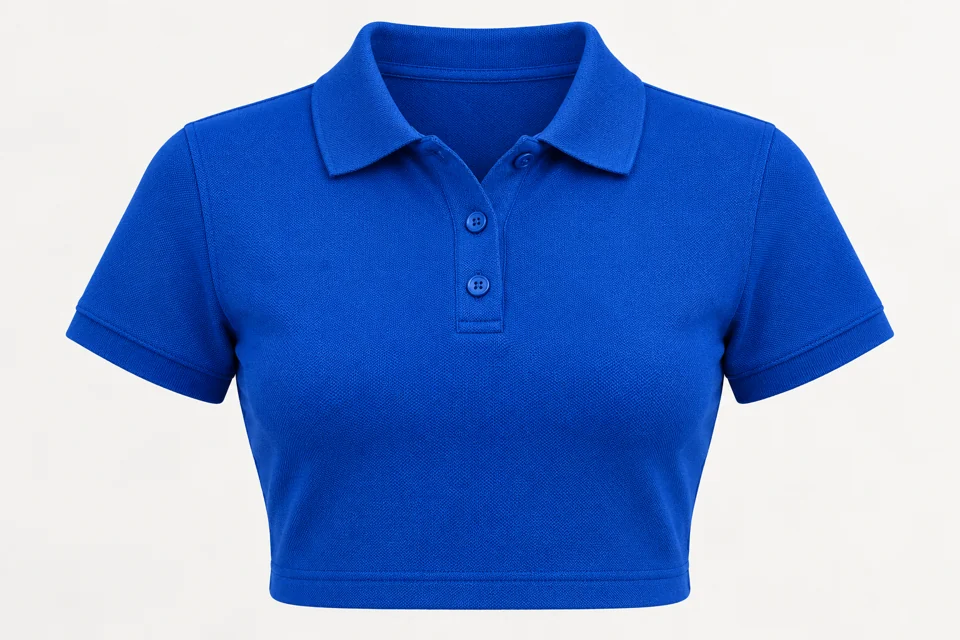


Keep neckline demand visible when the body becomes shorter
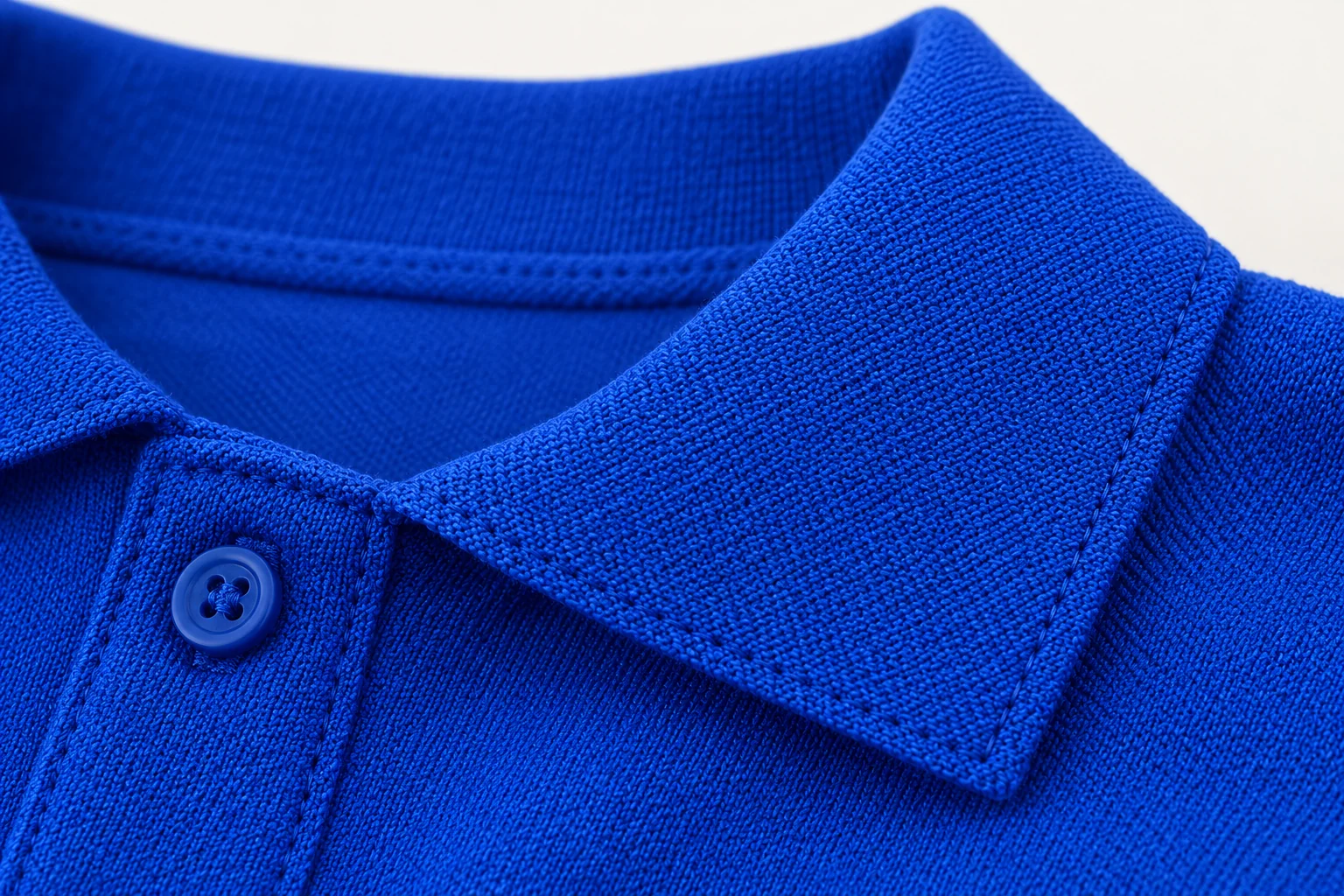
Shortening a polo does not proportionally shorten its collar, fastening or every opening piece. Ask the pattern owner for the actual component list before comparing the cropped version with a longer reference. A shorter body may retain the same purchased collar while using a different placket and support arrangement. Identify those decisions rather than applying one percentage reduction to the complete garment. The buyer needs separate questions about body cloth, opening components and assembly, because a small change in visible length can leave much of the neckline work unchanged.
Catalogue starting points
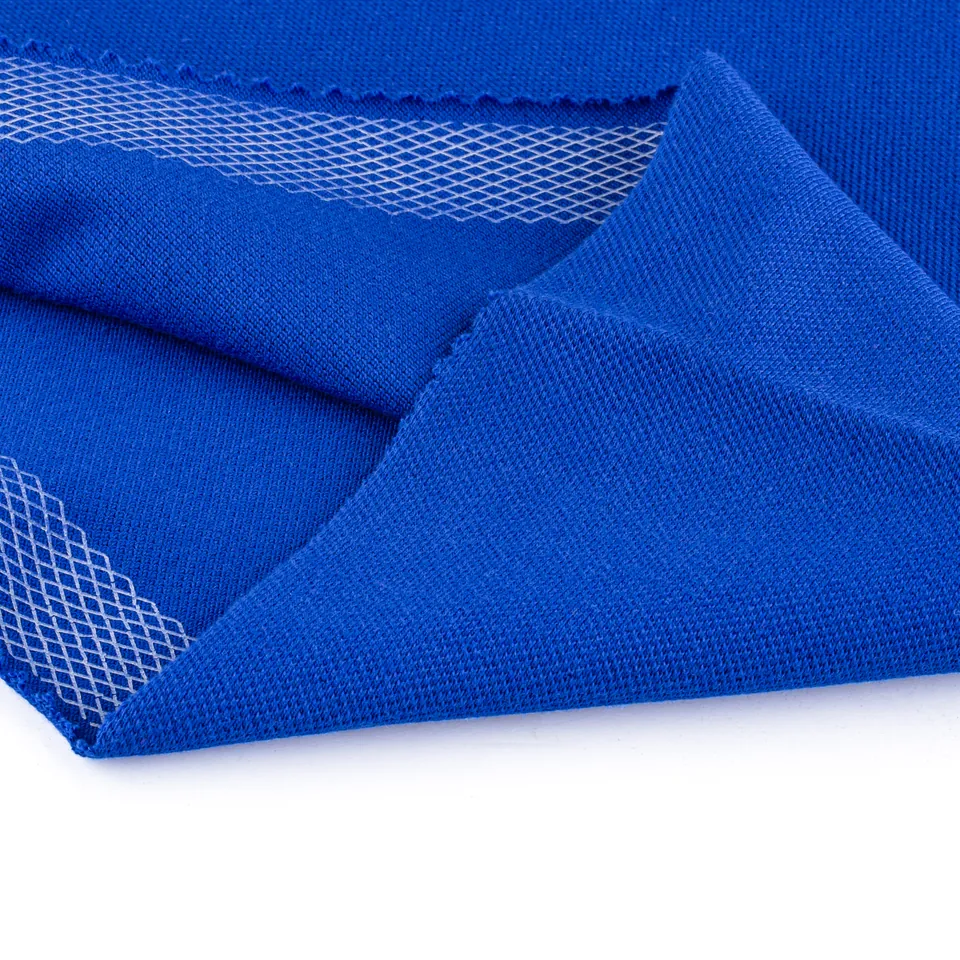
The piqué route PQ-501 lists 100% combed cotton, weights of 190, 205, 220, 235, 250 g/m² and Enzyme + silicone finishing. The jersey route SJ-102 lists 95% cotton 5% elastane, 170, 180, 190, 200, 210 g/m² and Enzyme + compacted finishing. Obtain the actual offered width, format and chosen weight for each comparison. The records confirm no usable cutting width or stock quantity. A 190 g/m² comparison holds nominal weight constant while construction, composition and finish still differ; it cannot prove equivalent consumption or finished appearance.
Use a length-change example with its assumptions exposed
For illustration only, removing a hypothetical 0.03 m of length across 1.00 m of combined flat panel width removes 0.03 m² of net panel area. At 190 g/m² that represents 5.7 g before any change in hem allowance, layout or other pieces. This is not a pattern instruction or an order quantity. The actual pattern may change shape rather than lose a simple strip, and the opening may also require revision. Use the example to ask where the real material change occurs, then obtain the marker planner’s calculation.
Calculate the opening as unfolded pieces
Have the maker identify the full cut dimensions of the proposed placket, support and any facing instead of measuring only the visible opening. Confirm whether the lower termination changes when the opening becomes shorter. Purchased components should be costed on their actual unit, while self-fabric pieces belong in the relevant layout. A visually smaller opening is not automatically a proportionate reduction in cutting or sewing work. Do not invent a universal allowance: the proposed construction must show which layers and operations are actually present in this cropped-polo version.
Ask the marker to answer whether shortening improves utilisation
CottonWorks explains that markers arrange garment pieces for cutting and that their utilisation depends on the layout. Request a marker for the intended size ratio, actual width and direction rules rather than assuming shorter fronts always create a given saving. Small neckline pieces may or may not fit into the available spaces; the planner must confirm their real placement. If sleeve length or body width differs between alternatives, disclose that as another design change. A comparison based only on front length cannot explain the cost of two substantially different polos.
Garment Construction — CottonWorks — Markers and utilisation as general cutting concepts; no claimed saving for shortening this polo.
Separate the cost of a new opening from the cloth reduction
Request the actual differences in pattern work, cutting and assembly when the fastening count, support or opening termination changes. A cropped style could use less body cloth while needing a different neckline development sample. Keep that development cost separate from the quoted production configuration, and confirm whether collars and buttons are included. This allows the buyer to understand why the finished offer may not fall by the same percentage as net area. It does not imply a particular surcharge, service, MOQ or manufacturing method from the fabric supplier.
Compare complete short-body proposals at the same decision stage
Place the accepted collar, opening and hem references beside each costing basis, with the stated order quantity and size mix. If one quote retains a larger collar or deeper opening for a deliberate look, name that difference instead of presenting it as a like-for-like cloth alternative. Ask the maker to distinguish a commercial assumption from a confirmed inclusion. The resulting comparison should show which cropped polo is being priced and what remains provisional. Keep the real marker and component basis so a later length revision can be explained without reusing an unrelated saving estimate.
Technical background and scope
This is a structured editorial draft. Garment-specific development advice is paired with existing catalogue records; compatibility must be established by sampling. AL KUMAŞ supplies fabric. Cutting, sewing and finished-garment production are separate unless explicitly agreed.