





Start the enquiry with an opening architecture choice
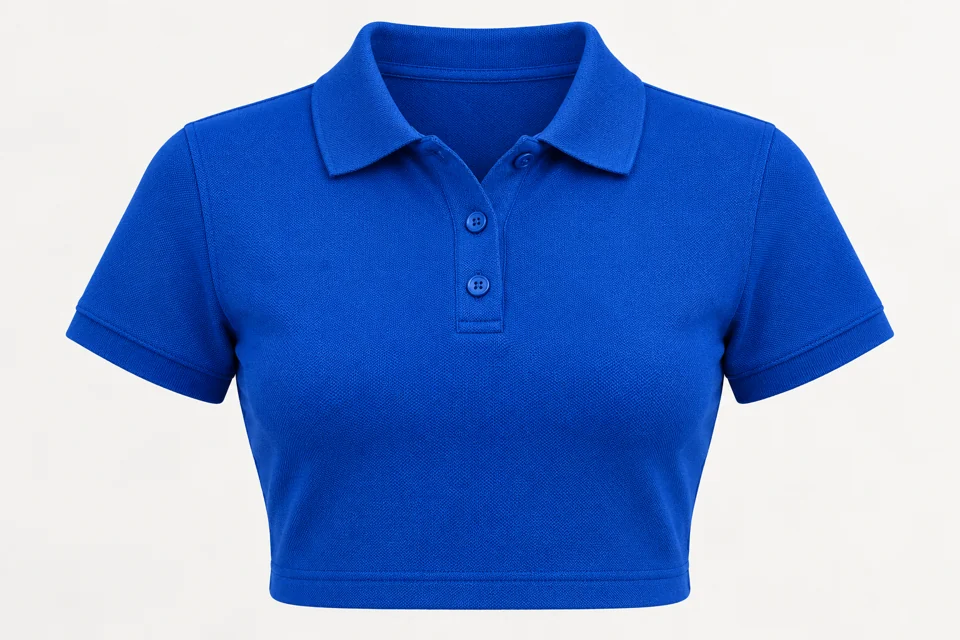
Before requesting a cropped-polo quote, ask the designer to name the proposed fastening arrangement rather than inheriting the longer style’s opening by default. For example, a hypothetical design comparison could consider a shorter opening with fewer fastenings against a deeper opening with the original arrangement. These are illustrative alternatives, not actual catalogue products. The useful buyer output is a selected opening architecture tied to the short front. It should make the intended collar, open-neck view and remaining area below the placket understandable before sources price an unspecified cropped version.
Catalogue starting points
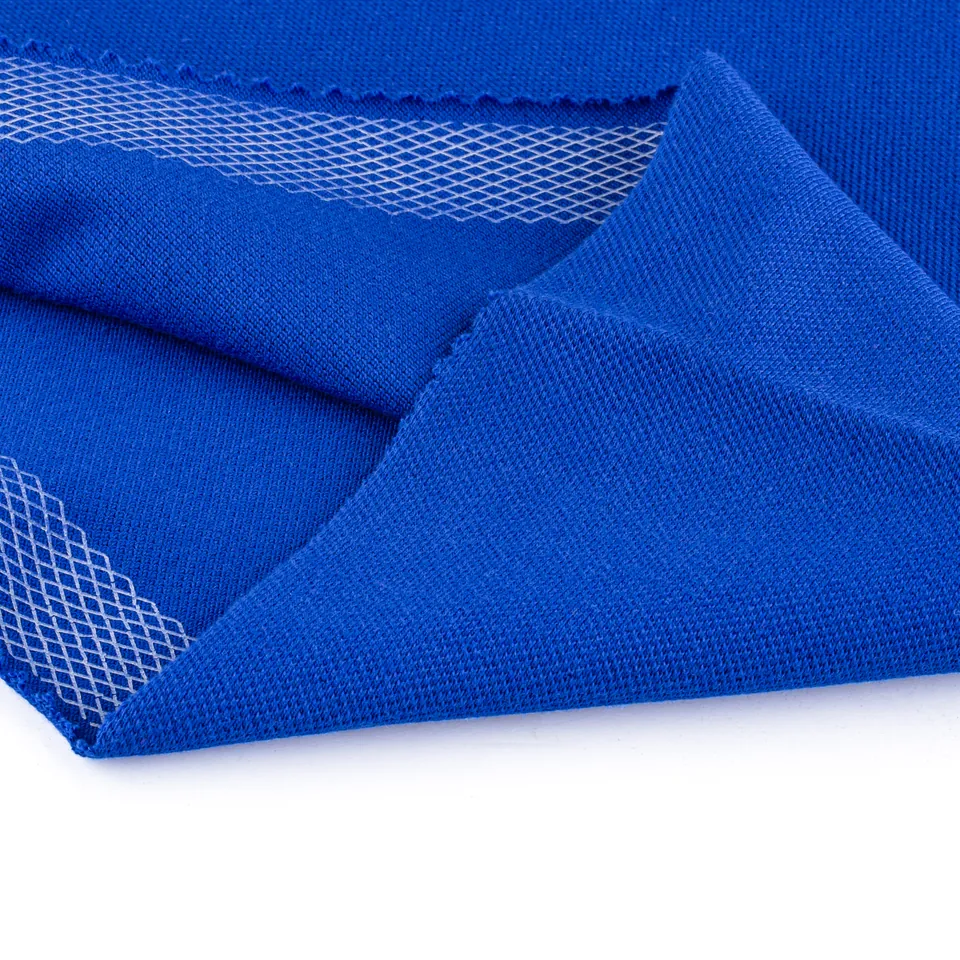
The body enquiry can identify PQ-501, 100% combed cotton piqué, 190, 205, 220, 235, 250 g/m² with Enzyme + silicone, or SJ-102, 95% cotton 5% elastane single jersey, 170, 180, 190, 200, 210 g/m² with Enzyme + compacted. Confirm the actual offered weight, format and usable width for the selected route. Neither record provides finished collars, fastening counts or a cropped-garment pattern. Ask who can address those separate development items; do not imply that the material source supplies a complete opening or finished polo.
Distinguish opening length from fastening count
Have the pattern and garment specialists show the actual opening endpoints, fastening positions and overlap for each proposed configuration. Removing one button from a drawing does not necessarily shorten the cut opening, and shortening the visible placket does not define every underlying piece. CottonWorks describes closures as systems that hold garment openings together, which supports treating the arrangement as more than a decorative count. The specialists must develop the actual dimensions. Avoid prescribing standard spacing here; the chosen short body, collar and intended access determine which proposal should be developed.
Garment Construction — CottonWorks — Closures hold garment openings together; proposed opening architecture, counts and commercial decisions are editorial development questions, not source dimensions or supply commitments.
Ask the designer which neckline expression should remain
Place the alternative openings beneath the proposed collar on the same short-body drawing. Have the design owner explain whether the important feature is a compact fastened front, a deeper open-neck view or another clearly identified intention. Ask what change to the remaining front below the placket is acceptable. This is a concrete design choice rather than a general request for better balance. If the preferred image requires a different collar proportion, state that explicitly before the maker prices it. A drawing does not establish comfort or coverage, but it can prevent contradictory instructions.
Translate the chosen architecture into the actual pieces
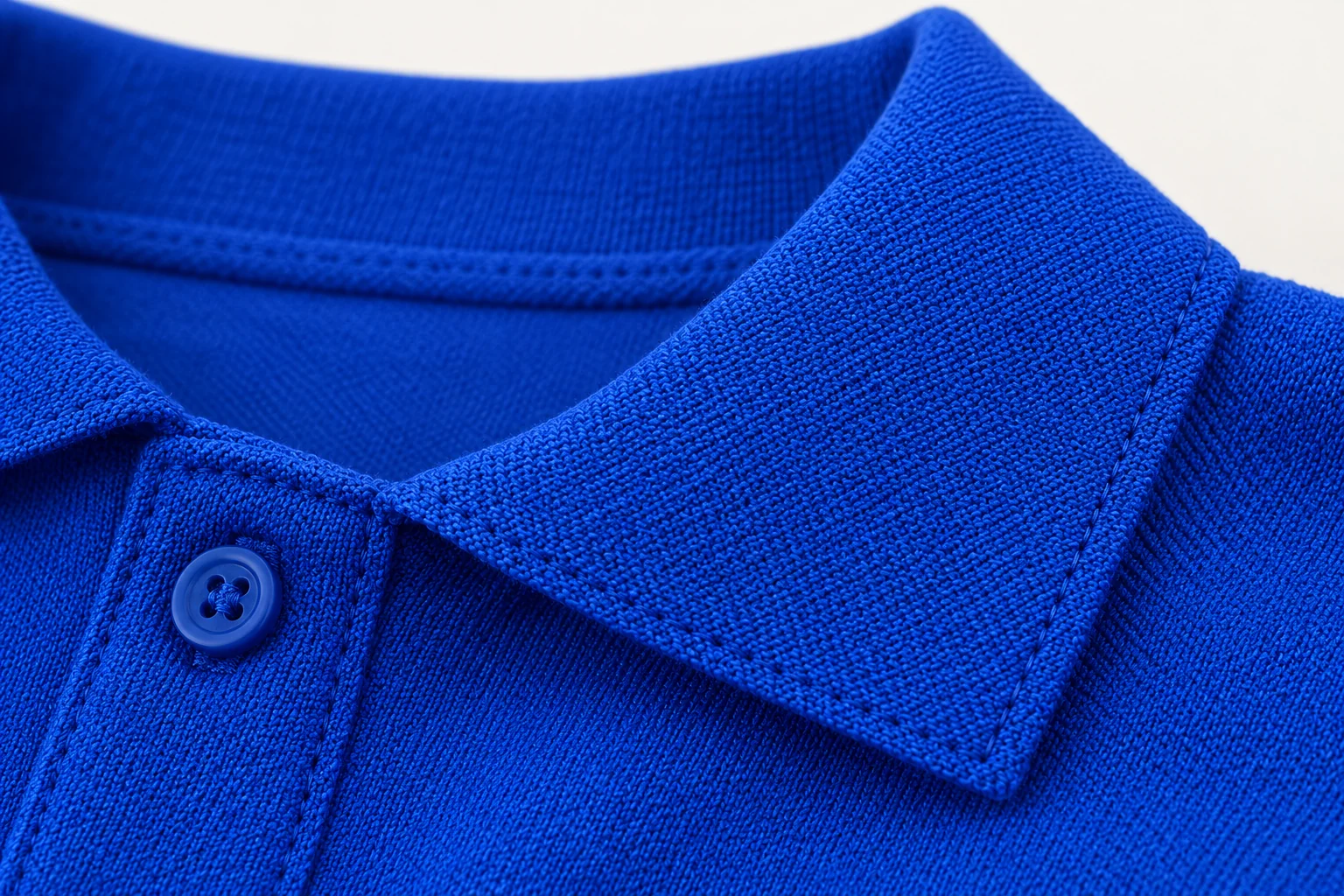
Once the preferred arrangement is identified for development, ask the maker to enumerate the placket pieces, support, fastenings and collar components it requires. Mark the actual cut and finished dimensions supplied by the responsible specialist, not dimensions inferred from a photograph. Record whether the shortened opening retains an existing termination or uses a revised construction. The buyer can then see precisely what is being requested from each relevant source. This is not a promise of production feasibility; unresolved assembly questions should accompany the proposed piece definition rather than being concealed by a clean sketch.
Request costs for architecture changes rather than a crop discount
Ask the maker to separate the effect of fewer or different opening components from any changed body-fabric consumption and assembly work. Keep pattern development and the required completed sample distinct from a production offer. If the alternative changes the collar, show that purchase separately instead of assuming it remains included at the original price. Use the same stated quantity and size basis for the comparison. No reduction, MOQ or service is established by this article. A meaningful response explains the selected arrangement’s actual commercial basis rather than promising savings simply because the body is shorter.
Carry the selected opening into the first complete-polo request
Return the chosen configuration with its fastening arrangement, collar reference, remaining short-front intention and the maker’s actual piece proposal. Ask for a complete sample that can be assessed in its intended fastening states and with the short hem present. Keep unselected opening drawings clearly identified so they do not become contradictory production instructions. The authorising buyer should know which matters are design choices and which remain subject to sample evidence. This handoff resolves what cropped polo is being developed while leaving garment suitability, movement coverage, supply capability and untested care outcomes qualified.
Technical background and scope
This is a structured editorial draft. Garment-specific development advice is paired with existing catalogue records; compatibility must be established by sampling. AL KUMAŞ supplies fabric. Cutting, sewing and finished-garment production are separate unless explicitly agreed.