





Observe the two openings separately
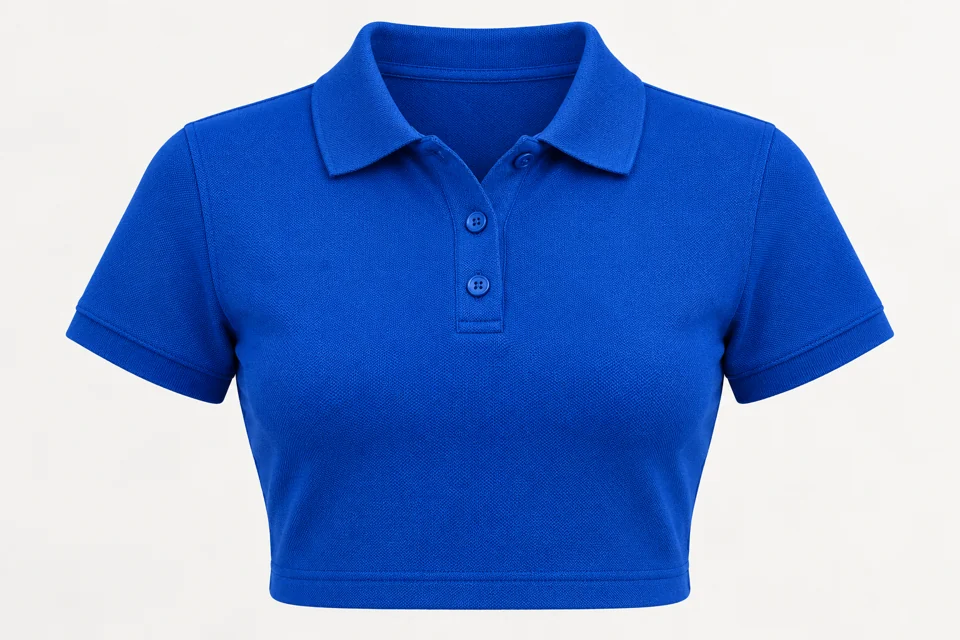
A cropped polo has a neckline opening and a short lower edge, and movement can change both at once. Before the fitting, identify the intended fastening state and styling reference so the reviewer knows which configuration is being assessed. Record the opening endpoint and hem positions without treating them as one coverage measurement. A neckline that opens farther during a reach is a different issue from a body that lifts, even if both appear in the same photograph. Ask for specific observations rather than an overall judgement that the crop is too short.
Catalogue starting points
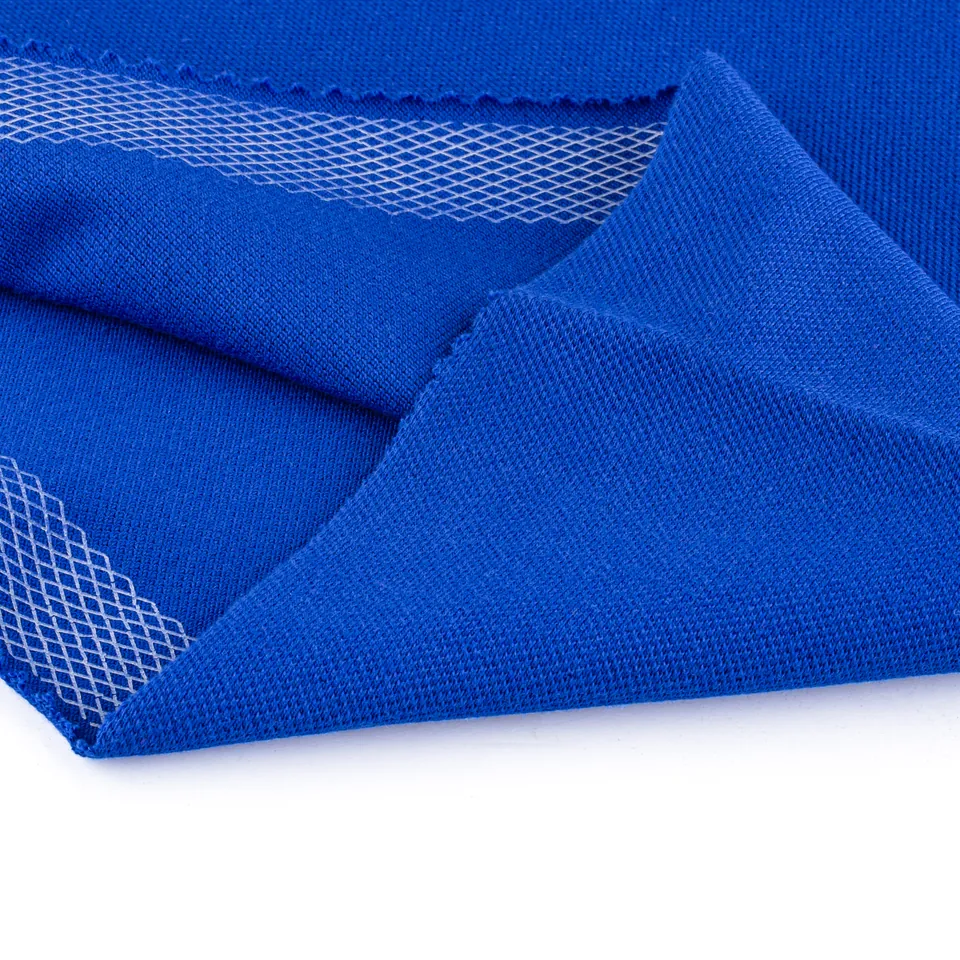
The actual sample should name its selected offer from PQ-501, 100% combed cotton piqué, 190, 205, 220, 235, 250 g/m², Enzyme + silicone; or SJ-102, 95% cotton 5% elastane single jersey, 170, 180, 190, 200, 210 g/m², Enzyme + compacted. Add the real collar, placket layers, fastening and hem construction. None of those component details is established by the body record. The documented weights and finishing identify development starting points, not measured recovery, seam stability or assured coverage of the completed cropped garment.
Check the fastening without arranging the rest of the front
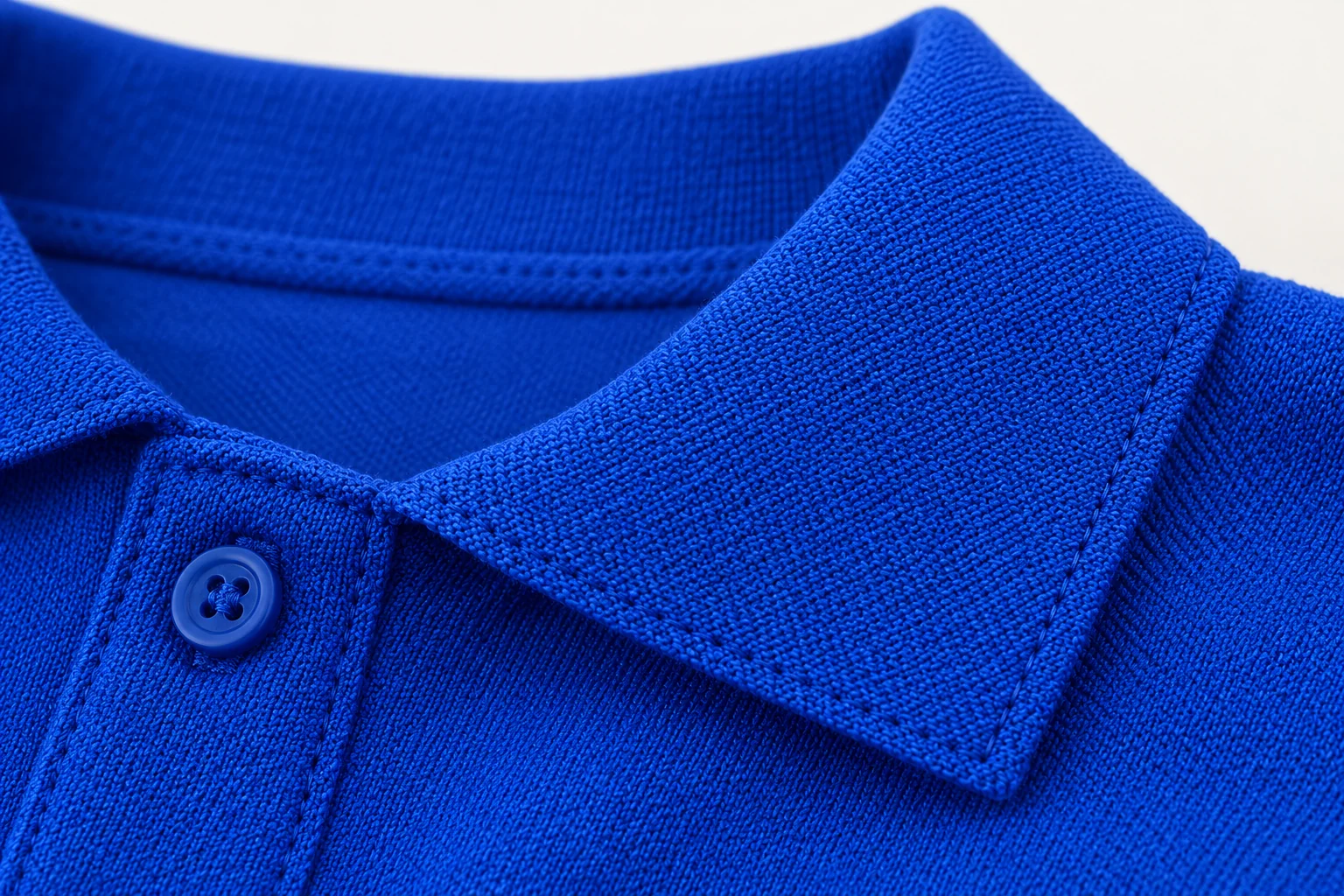
Observe the actual polo fastened and in the intended open position, recording how the collar and the area below the placket sit in each case. Ask the wearer to use the opening normally rather than forcing a doubtful closure. Compare its endpoint with the remaining front length and inspect the underside where the opening terminates. A neat local placket sample cannot resolve its effect on the short body. Keep the design intention beside the views so an intentionally prominent collar is not confused with an accidental proportion problem.
Watch movement and the return without resetting the garment
Use the ordinary movements agreed for the sample review, including arm raising where relevant, and observe what happens when the wearer returns to rest. Note the hem and opening separately before anyone adjusts them. If an underlayer or particular waistband is part of the intended look, identify it in the record. Do not treat a tighter lower edge as automatic coverage insurance or infer that elastane guarantees return. Ask the pattern and construction specialists to interpret a concern using the actual sample, rather than prescribing a generic longer body as the only response.
Inspect the short spacing between assembly features
Examine the area between the placket termination and hem, including any support layers, seam intersections and visible distortion. Coats describes sewing and component influences on puckering; that background supports a qualified assessment without diagnosing the sample from its fabric name. The maker should identify the actual construction being reviewed. A short body may bring features visually close together, but no universal minimum spacing is established here. If a construction revision is proposed, keep its actual effect on the opening, collar and lower edge visible instead of reviewing it only as an isolated seam.
Eliminating Seam Puckering — Coats — General sewing/component influences on seam appearance, not a diagnosis or prescribed construction.
Repeat the relevant views after the defined care evaluation
Have the responsible specialist set the care method and acceptance criteria suited to the proposed garment. CottonWorks describes dimensional stability and collar or placket appearance as care-quality concerns; it supplies no result for these candidates. Retain the original measurements and views, then assess the same sample configuration afterwards. Distinguish a body dimension change from an opening appearance concern or a collar change. Do not invent a cycle count, shrinkage limit or laboratory claim. The purpose is to understand the short-polo relationship under the agreed conditions, not to infer lifetime behaviour from one development observation.
Quality Testing — CottonWorks — Dimensional stability and collar/placket appearance as care-quality concerns; actual methods and criteria require specialist definition.
State what the reviewed sizes actually demonstrated
Have the authorised reviewer record the outcome for the chosen sizes, fastening states and styling reference, with unresolved questions attached to the relevant feature. A base-size sample cannot silently approve every graded opening and crop relationship. Ask the pattern owner which additional sizes or revised configurations require review when the intended range is established. Retain sample identities so changes in body cloth, collar or support do not inherit another configuration’s evidence. The final note should make the observed opening and hem decisions clear while preserving the limits of coverage and performance claims.
Technical background and scope
This is a structured editorial draft. Garment-specific development advice is paired with existing catalogue records; compatibility must be established by sampling. AL KUMAŞ supplies fabric. Cutting, sewing and finished-garment production are separate unless explicitly agreed.