



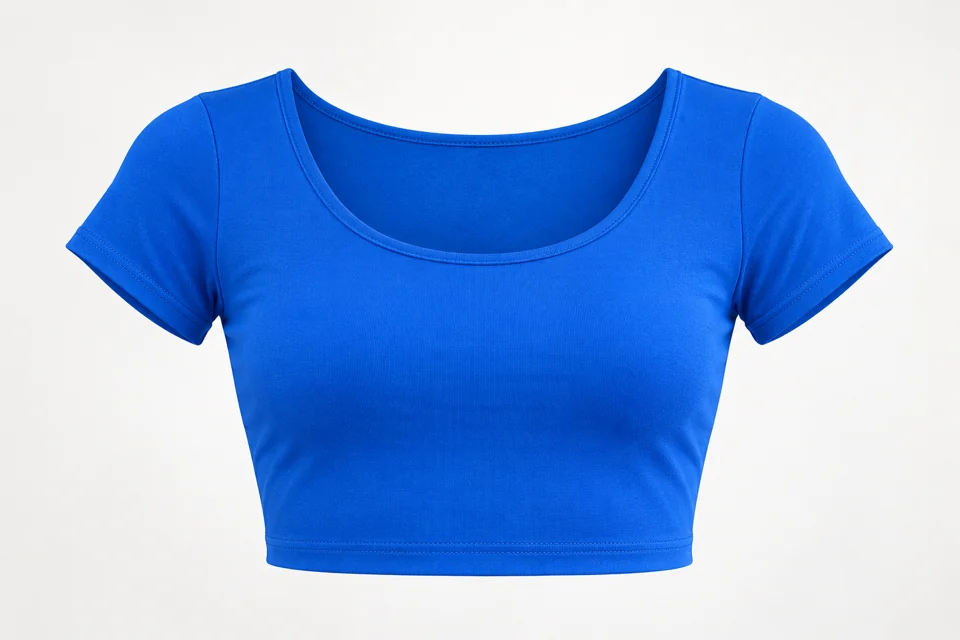


Choose whether the top follows the body line or moves around it
A dance-practice top can be intended to reveal the dancer's outline through a close silhouette or create a more fluid line around the torso. Neither direction is automatically better. Ask the designer and practice reviewer which visual effect belongs to the declared choreography brief, using the normal relevant movement rather than inventing a universal dance test. CottonWorks starts knit development with end use and required function. Here, the material decision should answer an intentional relationship between body line, free fabric and neckline position, not a generic promise that stretch jersey suits every practice style.
CottonWorks: Designing Knit Textiles — Defining the Product — End use and required function are early knit-design questions. Declared choreography, close/fluid silhouette and neckline observations are original garment-development guidance, not published performance results or dance instructions.
Compare the actual cotton and modal jersey options
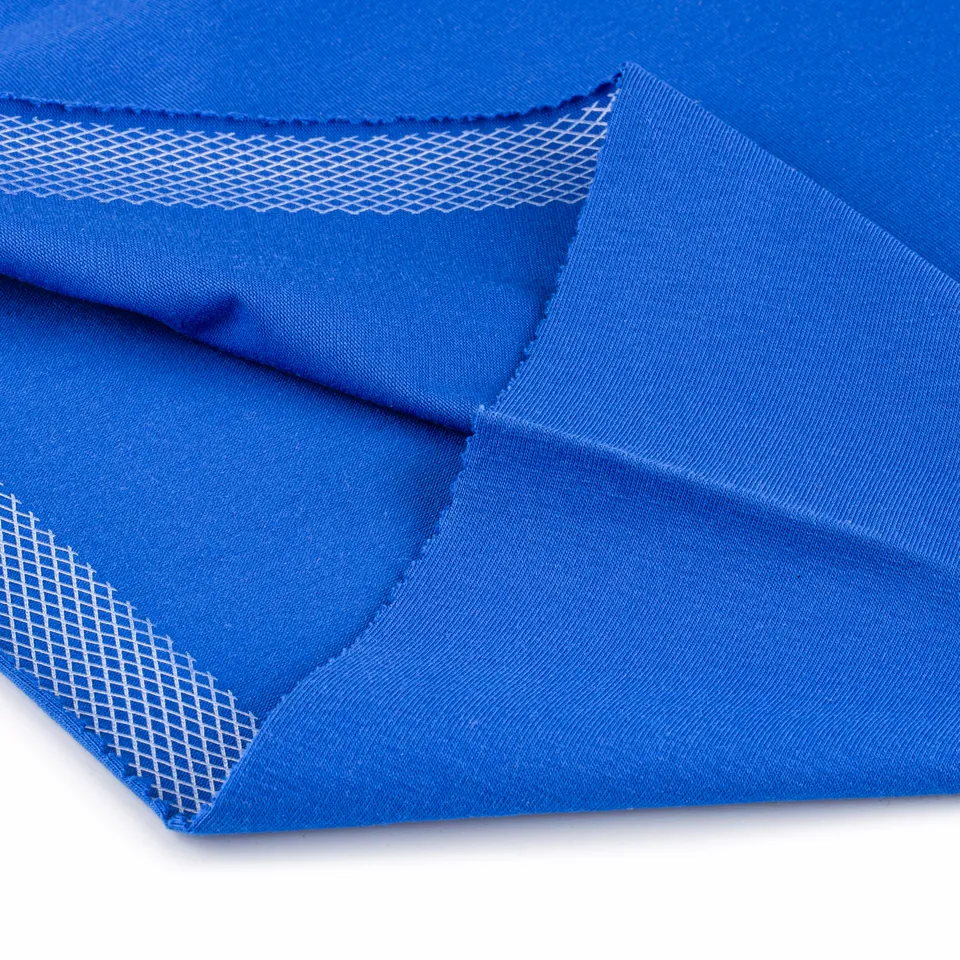
SJ-102 is 95% cotton and 5% elastane single jersey, enzyme and compacted, at 170, 180, 190, 200 and 210 g/m². SJ-104 is 95% modal and 5% elastane single jersey, bio-polish and soft-hand finished, at 150, 160, 170, 180 and 190 g/m². Ask for the exact offered weight and finish. The shared elastane percentage does not demonstrate equal extension, return or neckline hold, and a soft-hand label is not a measured recovery result. Treat the close cotton route and fluid modal interpretation as sample proposals, not guaranteed properties inferred from fibre names.
Ask how fabric direction enters each pattern region
Have the maker mark material orientation on the actual front, back and sleeve or strap pieces the design uses. Identify which directions are being evaluated for the proposed movement. Do not rotate a panel solely because it makes a fluid-looking cutting or saves space in the marker. The changed direction needs a garment review. A whole top involves seams and shaped pieces, so a hand stretch of one strip cannot approve its behaviour. Keep any orientation change visible when comparing samples rather than attributing the resulting difference entirely to cotton versus modal.
Use the neckline as an anchor decision rather than an isolated edge
Define where the opening should sit at rest and which movement of that line is acceptable to the design. Ask the maker to develop the actual neck shape, binding or facing and its relationship to shoulders and armholes. A tighter edge can change the top's motion or dressing access without solving an underlying pattern imbalance. Observe the complete assembly at the relevant moments of the declared practice phrase. The aim is a reproducible neckline position, not a claim of support, protection or unrestricted movement from a particular composition.
Judge free fabric after the body changes direction
For a fluid silhouette, observe where the body panel and hem travel during the intended phrase and where they settle afterwards. For a close version, observe the line and local pulling rather than criticise it for lacking the other design's loose movement. Keep the silhouette target explicit. If a sample creates an unwanted fold or shifted opening, ask which pattern region and assembly need investigation. Do not approve a different size simply to improve one camera view without recording that the fit proposal has changed.
Separate practice feedback from material test results
Ask the reviewer to identify the seam, edge or panel that was noticed and describe the observation with the sample and practice context retained. Perceived comfort and a preferred moving outline are useful development inputs, not measured stretch recovery or skin-performance evidence. Where a quantified property belongs in the programme, request article-specific information and qualified assessment. Do not add cooling, medical, protective or support claims to the garment story because it has been used in a practice sample. A successful visual trial still leaves unmeasured properties unresolved.
Select a silhouette, direction and neck assembly together
Retain article, offered GSM, finish, pattern, material-direction arrows, neckline construction and the actual silhouette intention with the accepted sample views. State which choreography brief informed the decision and what remains unreviewed. Ask for current supply separately from garment approval. A later weight, direction or edge substitution should reopen its affected question instead of inherit acceptance from the phrase dance jersey. The selected route should reproduce a specific practice top's intended visual and fit behaviour without promising that every dance style, size or movement has been qualified.
Technical background and scope
This is a structured editorial draft. Garment-specific development advice is paired with existing catalogue records; compatibility must be established by sampling. AL KUMAŞ supplies fabric. Cutting, sewing and finished-garment production are separate unless explicitly agreed.