



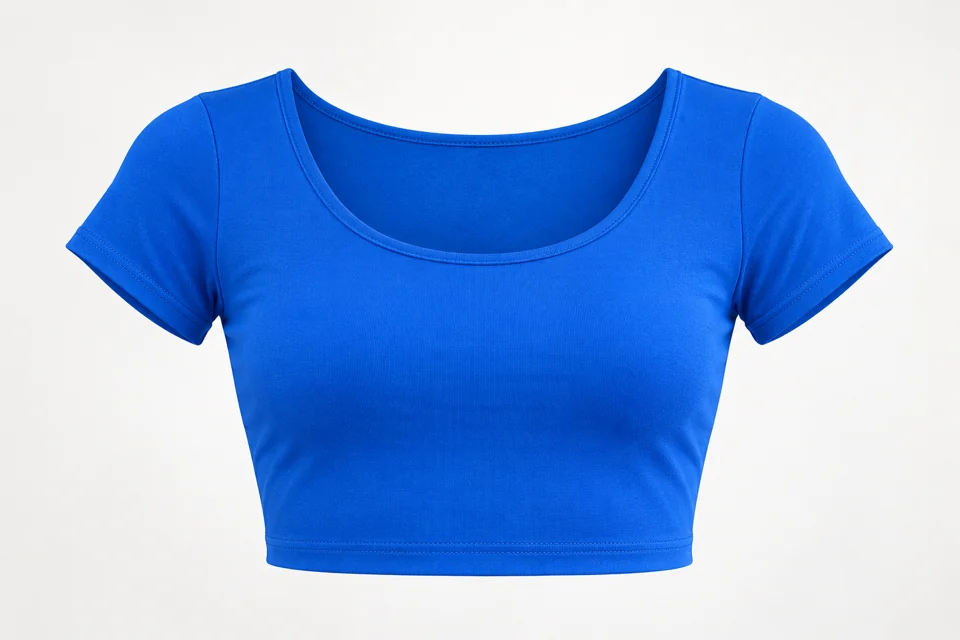


Choose what the graphic should reveal during the practice phrase
A practice-top graphic can emphasise a close body line or sit on a panel intended to move more freely. Decide which effect belongs to the choreography brief before choosing artwork size. Identify the moments and views that matter to the designer rather than seek one universally flattering pose. A line crossing the torso can make panel movement more visible, while a motif in a free fold may disappear intentionally. The visual request should describe that choice, not assume a sports logo placement from another top will communicate the same dance-practice design.
Identify the precise cotton or modal substrate
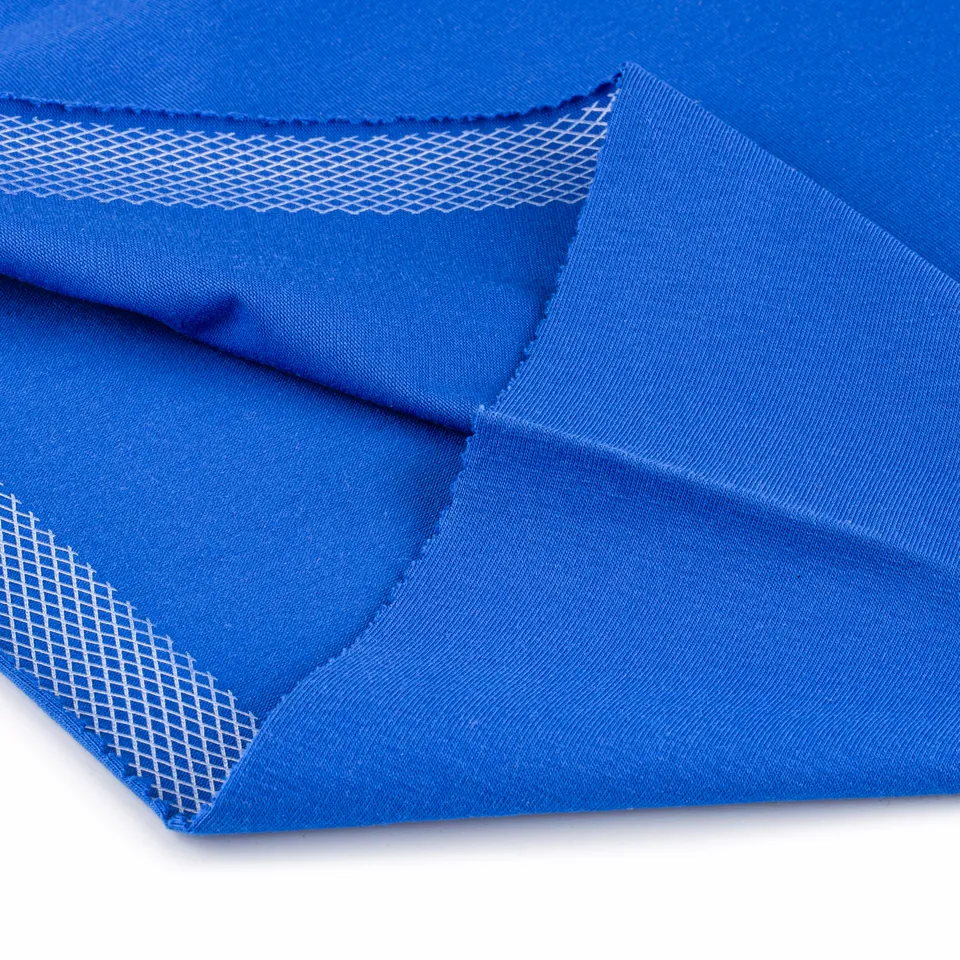
SJ-102 is recorded as 95% cotton and 5% elastane single jersey, enzyme and compacted, at 170, 180, 190, 200 and 210 g/m². SJ-104 is 95% modal and 5% elastane single jersey, bio-polish and soft-hand finished, at 150, 160, 170, 180 and 190 g/m². Ask the decorator to evaluate the exact offered material and finish. These labels establish neither printing availability nor application compatibility or fastness results. An accepted graphic on one construction-and-finish proposal should not release another simply because both have five percent elastane and a similar nominal weight.
Map artwork against the actual cut and direction proposal
Mark neckline, seams, finished hem and material-direction arrows on the layout. If the graphic is intended to follow a panel line, ask how that relationship changes across graded sizes. A design placed before the neckline or free panel is resolved may need revision after fitting. Keep an intentional diagonal graphic distinct from a rotated fabric piece: one does not automatically authorize the other. Ask the maker and decorator to identify which pattern and orientation the trial uses so a visual comparison does not conceal a different garment assembly.
Review apparent distortion as a design decision
Observe the decorated sewn top during the normal relevant practice phrase and when it settles afterwards. Record whether the graphic follows the intended visual line or becomes an unwanted cue to pulling, fold placement or an unresolved opening. Ask whether the response is an artwork change or a garment correction before choosing it. CottonWorks connects construction and visual design; this programme needs its own decision about the relationship. Do not call a preferred image proof of recovery, and do not reject deliberate moving-panel distortion as an application fault without checking the design intent.
CottonWorks: Designing Knit Textiles — Designing the Fabric — Construction and visual design are connected development choices. Choreography-specific graphic judgement remains a programme decision requiring the actual decorated sample, not measured recovery or application compatibility evidence.
Keep room appearance separate from governing colour approval
Choose a physical colour reference and agreed viewing conditions for shade approval, then observe the accepted sample in the actual practice setting if that appearance matters to the buyer. Record the setting rather than treat a room-lit photograph as the governing standard. If the close and fluid proposals show different surfaces or folds, ask the colour reviewer to identify the actual concern before requesting a dye correction. A desired modal-hand interpretation and a cotton route may need different sample decisions; a shared colour name alone cannot approve their final visual relationship.
Ask for relevant application and colour-care evidence
AATCC's public index separates rubbing, perspiration and laundering colourfastness categories. A qualified provider should select applicable current procedures and requirements for the actual material, colour and decoration. No results for these articles are supplied by that listing. Keep body shade, edge components and graphic acceptance distinct from any report. If a new application is proposed to suit the changed finish or moving panel, identify it as another trial. The practice-top design should not acquire cooling, support, skin or protective claims from an attractive decorated sample.
AATCC: Standard Test Methods and Procedures — Colourfastness — Public index distinguishes rubbing/crocking, perspiration and laundering colourfastness categories. Qualified selection of current applicable methods and requirements remains necessary; no test procedures, limits or article results are supplied.
Release a graphic-to-garment relationship, not an isolated artwork file
Retain material, offered weight, finish, pattern, direction and neck construction with artwork version, graded placement and accepted practice-view comments. State which distortions or interruptions are deliberate and which required correction. If a free panel or neckline changes, compare the revised visual line before issuing another instruction. Keep unconfirmed process capability and evidence outside the approval. The resulting file should let production reproduce the designer's intended practice-top appearance without implying that every size, choreography setting or material substitution has already been reviewed.
Technical background and scope
This is a structured editorial draft. Garment-specific development advice is paired with existing catalogue records; compatibility must be established by sampling. AL KUMAŞ supplies fabric. Cutting, sewing and finished-garment production are separate unless explicitly agreed.