





Review the declared choreography brief rather than inventing a movement test
Ask an appropriately experienced practice reviewer to select a normal relevant phrase or excerpt that exposes the design questions, and record what was selected. This is a garment review, not instruction to attempt unfamiliar movements or proof of athletic performance. Identify whether the proposed silhouette should follow the body closely or create fluid movement around it. Keep front, side and back reference views where useful. A general exercise demonstration cannot settle an unstated dance brief, and a single attractive frame should not be treated as approval of the entire top.
Control material direction as well as the article code
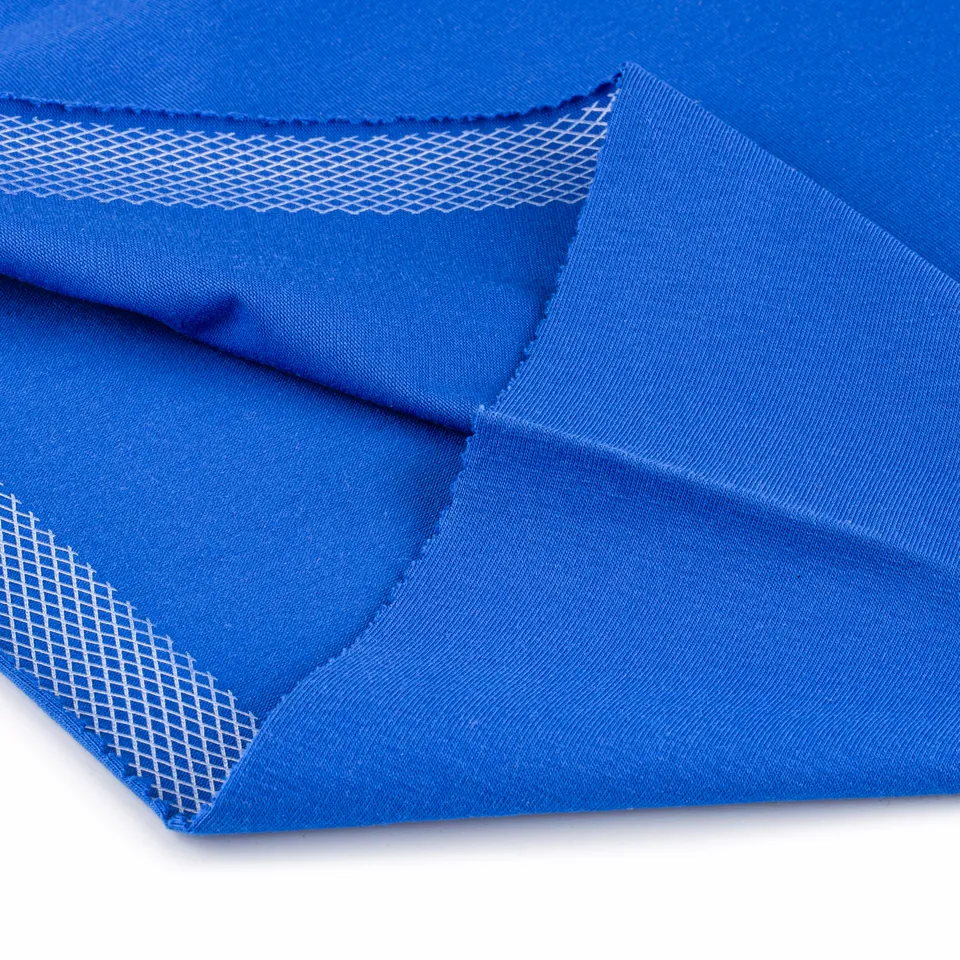
The candidates are SJ-102, 95% cotton and 5% elastane single jersey, enzyme and compacted, at 170, 180, 190, 200 and 210 g/m²; and SJ-104, 95% modal and 5% elastane single jersey, bio-polish and soft-hand finished, at 150, 160, 170, 180 and 190 g/m². Record the exact sample option, colour, panel orientation and actual edge materials. Equal elastane content does not supply a recovery result. If the sample room rotates a panel or substitutes a binding, keep that change visible before attributing the trial's behaviour to the body material alone.
Observe where the neckline is held and where it moves
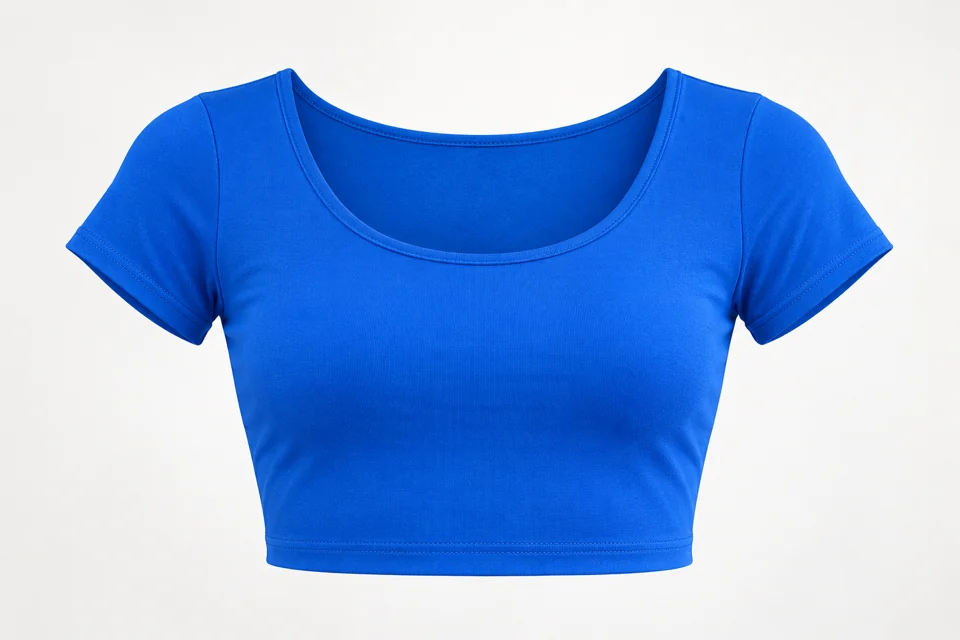
Mark the intended opening position and relevant shoulder landmarks before the practice excerpt. Note any displacement and the position after the garment settles, without having the wearer reset it before the observation is recorded. Ask the pattern and sewing teams to examine shape, edge assembly and shoulder relationship where a correction is needed. A tighter binding can change another region or dressing access, so repeat the relevant whole-top observation afterwards. Do not describe neckline hold as support or protection, and do not assume a fibre change is the only available response.
Distinguish free-panel motion from unwanted pulling
For a fluid proposal, record the intended movement of the body panel and hem during and after the selected excerpt. For a close proposal, inspect the chosen line and any local strain or fold that does not belong to the brief. Ask the designer to identify which observed effects are deliberate. The developer should not correct all free movement out of a fluid design or accept every displaced seam as its natural character. Retain the pattern version and practice reference so a second sample can be compared with the same intended visual outcome.
Record seam feedback and residual shape without overclaiming
Ask the reviewer to identify the seam, edge or area actually noticed, with the sample and context recorded. Inspect that construction with the maker rather than diagnose a skin problem or promise freedom from irritation. After the trial, use an agreed preparation and resting arrangement to observe residual shape consistently between candidates. Those observations are not a laboratory recovery percentage. If measured extension or return is required, have a competent specialist choose relevant assessments and requirements for the actual proposed supply instead of deriving a result from the shared elastane percentage.
Revisit the same neck and panel questions after care
Agree the care procedure, measurement preparation and landmarks before comparison. Track the opening, body and relevant panel dimensions and retain appearance photographs. AATCC lists garment dimensional changes and appearance after home laundering separately; the qualified provider should confirm current applicable methods and requirements. Where appropriate, review the same declared practice excerpt with the cared sample. A similar overall length does not close a changed neckline or free-panel relationship, and a preferred hand before care should not be assumed permanent from a finish label.
AATCC: Standard Test Methods and Procedures — Garment Care — Public index separately identifies garment dimensional changes and appearance after home laundering. The practice excerpt and resting comparison are original development observations, not an AATCC movement protocol or recovery rating.
Close the decision on the intended visual and construction scope
Record accepted observations, requested revisions and evidence still missing against article, offered GSM, finish, pattern, material direction and edge construction. Identify the practice excerpt, actual layers and sizes reviewed. A changed orientation, neckline or free panel should reopen the affected observation instead of inherit approval from the style name. Keep any report attached to its measured scope. The release should let the maker reproduce a specific dance-practice design without claiming universal movement, protection, support or lasting recovery that the sample and evidence have not established.
Technical background and scope
This is a structured editorial draft. Garment-specific development advice is paired with existing catalogue records; compatibility must be established by sampling. AL KUMAŞ supplies fabric. Cutting, sewing and finished-garment production are separate unless explicitly agreed.