



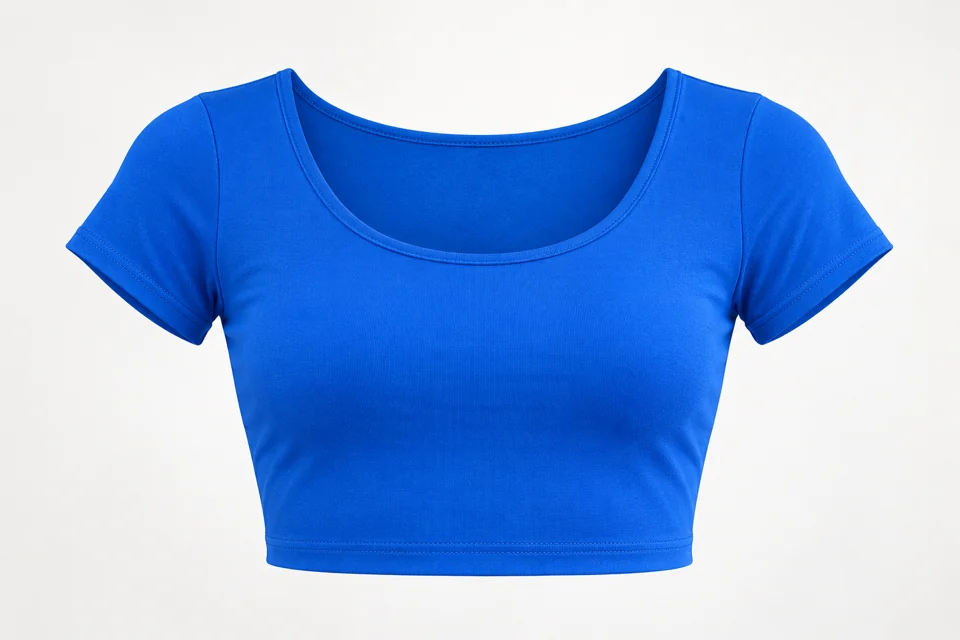


Cost the close and fluid interpretations as different patterns
A closer dance-practice top and a fluid interpretation can use different body areas, shapes and edge constructions even when their finished neckline looks similar. Identify the intended silhouette before estimating fabric demand. CottonWorks describes marker making as arranging actual pattern pieces efficiently. Ask the cutter to use the accepted direction and shape of each proposal rather than give one consumption figure for dance tops. If the fluid version still needs a pattern revision after practice review, keep its estimate provisional rather than price a smaller close version and assume the design difference is free.
CottonWorks: Garment Construction — Marker Making — Markers arrange actual pattern pieces efficiently. Silhouette- and direction-specific costing is an original application; the cut-area calculations are hypothetical arithmetic, not actual garment weights or measured supply yield.
Keep the weight, blend and finish of each proposal visible
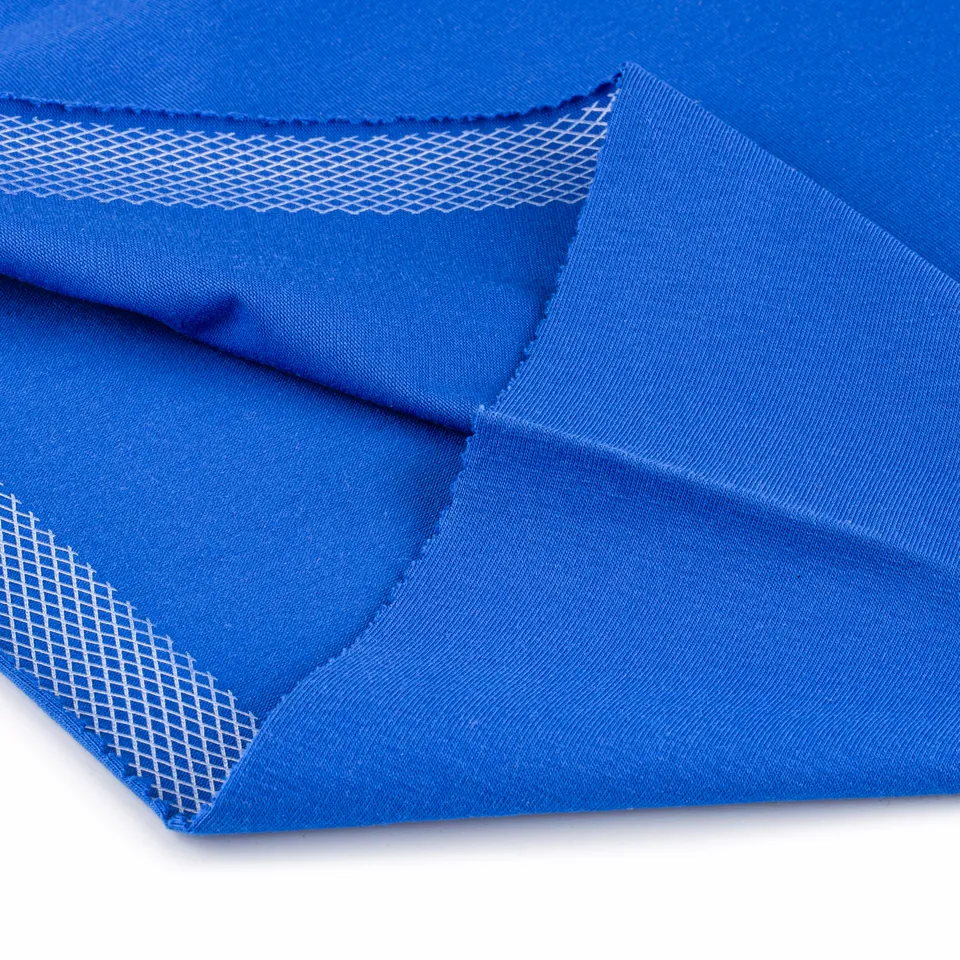
The SJ-102 record lists 170, 180, 190, 200 and 210 g/m² in 95% cotton and 5% elastane single jersey, enzyme and compacted. SJ-104 lists 150, 160, 170, 180 and 190 g/m² in 95% modal and 5% elastane, bio-polish and soft-hand finished. Shared recorded options can help frame a comparison at the same nominal GSM, but the materials still differ in fibre and finish. Ask which exact sample and offered option is being costed. Equal weight and elastane content do not establish equal movement, coverage or recovery in the garment.
Show the area difference without declaring garment yield
For an illustrative study, suppose the combined cut area is 0.48 square metres for a close proposal and 0.66 square metres for a more fluid one. At a hypothetical 180 g/m², those areas represent 86.4 and 118.8 grams of fabric respectively, before other considerations. These are not actual dance-top patterns, finished garment weights or consumption offers. The example makes the silhouette's area consequence visible. Purchased quantity still depends on the real marker and the permitted material directions, so ask for both proposals to be laid out rather than estimate the difference from mass alone.
Protect the developed orientation from marker optimisation
Give the cutter the direction approved for each front, back and other actual panel. A rotated piece may fit a gap but change the behaviour under review in the practice sample. If another orientation is proposed, ask the garment developer whether a new trial is needed before treating the layout as equivalent. Obtain usable finished width, supply format and the dimension convention for each material. A fluid-looking panel should not be labelled unrestricted merely because it is loose; the direction decision is part of its construction and costing brief.
Include the neck anchor and free edges explicitly
Identify the binding, facing, bands or turned edges actually used and show whether they come from the body or another material. The neck assembly can influence how the rest of the top is held, so a change made to preserve its position may have both pattern and component consequences. Ask the maker to identify those pieces rather than insert a generic trim percentage. If the fluid version has a longer hem perimeter, include its actual construction and cut allowance. Keep separately purchased materials in their own quantities and quotation units.
Reprice a revision after the practice decision
If the reviewer changes the free panel, sleeve shape or neckline relationship, request the new pattern and marker references. An accepted visual adjustment can change both area and nesting. Separate intentional design changes from agreed dimensional allowances, marker loss and other purchasing allowances. Do not hide an unresolved silhouette question in extra kilograms or assume another material will permit a smaller pattern without evidence. State which practice observation needs closing before the estimate becomes final and retain the accepted direction constraints with the quantity calculation.
Compare costs for the top the designer actually intends
The cost sheet should identify article, offered GSM, finish, confirmed width and format, pattern version, size ratio, direction restrictions, marker and separate edge quantities. Ask for current minimums and terms for that defined supply. Preserve a deliberate difference between close and fluid routes rather than present them as equivalent fabric substitutions. A lower body price is useful only if the proposed garment retains its accepted shape and neck relationship. The buyer should see which cost belongs to material, which to silhouette and which remains conditional on further development.
Technical background and scope
This is a structured editorial draft. Garment-specific development advice is paired with existing catalogue records; compatibility must be established by sampling. AL KUMAŞ supplies fabric. Cutting, sewing and finished-garment production are separate unless explicitly agreed.