





Build a checkpoint sample with complete components
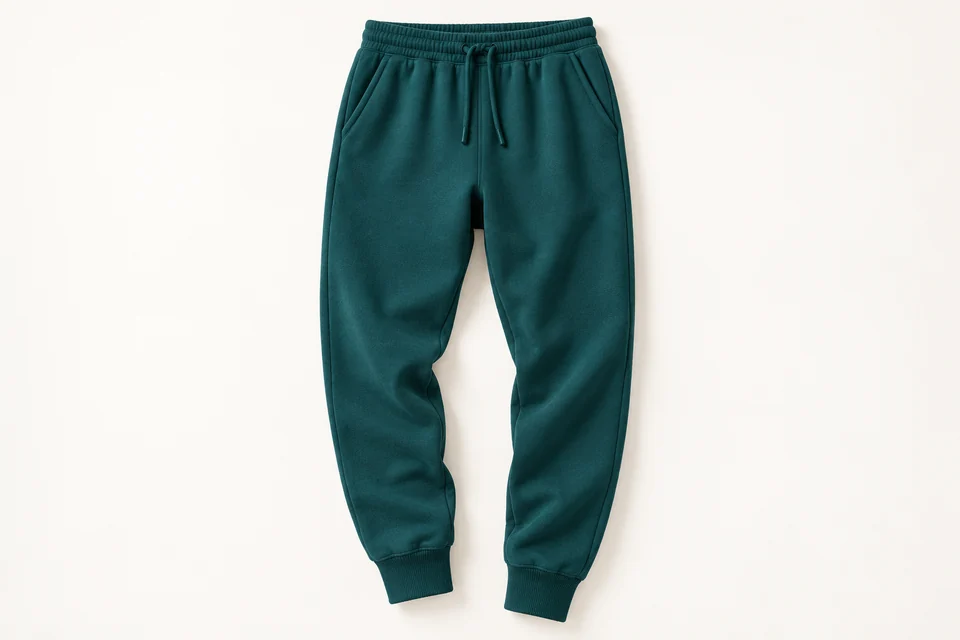
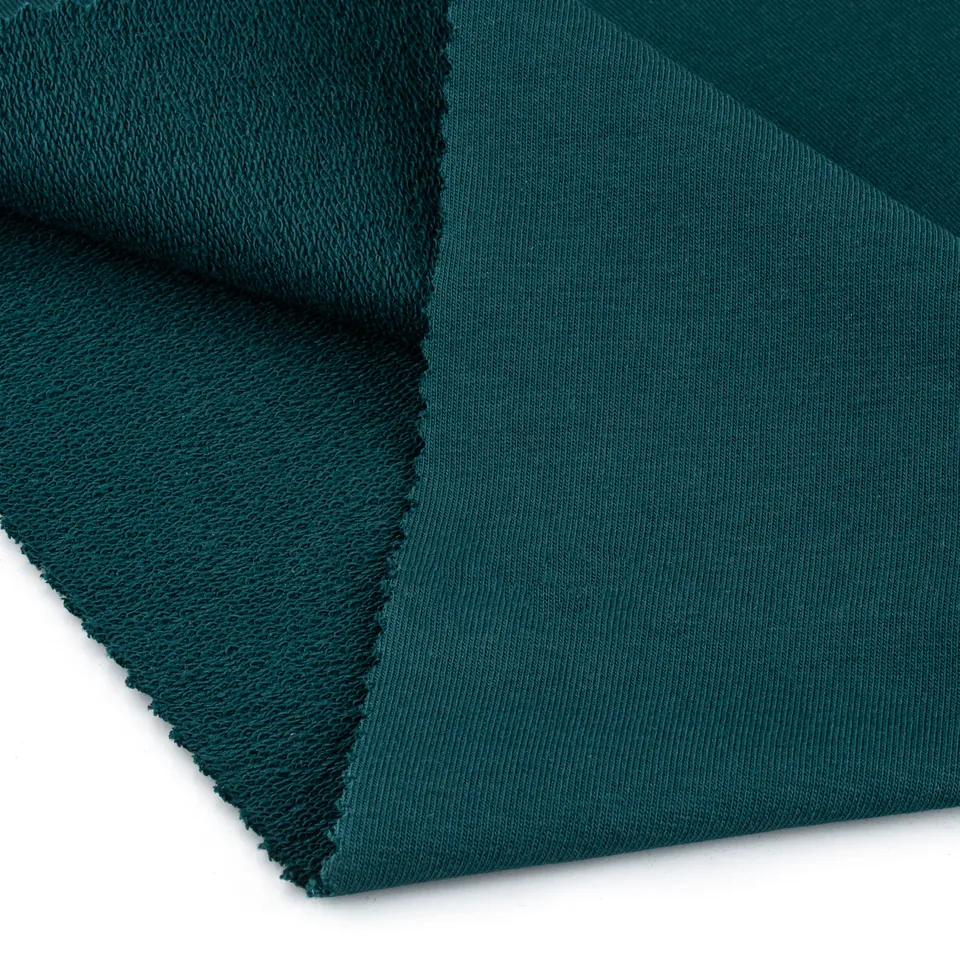
An adult jogger sample needs the actual cuff, waistband, drawcord route and pocket construction before its characteristic problems can be assessed. Record the body article and selected weight: FT-601 offers 240–320 g/m² and FT-602 offers 300–400 g/m², both at 70% cotton and 30% polyester. The records label FT-601 unbrushed with silicone and FT-602 unbrushed, compacted. These facts identify material routes, not tested durability levels. Use the current tapered pattern and mark any temporary component. A substitute cuff or unreinforced pocket must stay visible in the sample notes rather than disappearing from the approval decision.
Test foot passage without forcing the cuff
Ask representative adult wearers to put the joggers on and take them off normally. Observe both the cuff and its attachment seam; a fabric band may extend while a restrictive seam does not. Record whether the foot passes without excessive effort and whether the cuff returns to its intended position. If dressing requires a different technique from normal use, revisit the opening and construction. Do not solve the problem by pulling harder during a demonstration. The finished opening is a pattern-and-component result, not something the body GSM can predict.
Assess the pocket under a defined, relevant load
Agree the intended pocket use and make the comparison reproducible. For example, use the buyer’s specified phone model rather than an unspecified heavy object; this is a development scenario, not a universal load test. Photograph the empty and loaded jogger while standing and walking. Look at pocket mouth distortion, side-seam movement, bag position and the effect on the waist. Repeat after any reinforcement change. A result from a patch pocket does not approve an angled pocket bag or zipped version built differently.
Separate knee growth from poor leg balance
Mark the knee reference and inspect the sample before fitting, after an agreed sequence of sitting and stepping, and after a defined rest period. Record the positions and duration used so a later comparison has meaning. A protruding knee, twisted calf or drag line can lead to different investigations; avoid grouping them under a single complaint that the fabric is bad. Ask the pattern technician to review leg balance and ease, while the fabric team investigates any material question. No recovery percentage or pass limit is supplied by this visual trial.
Check channels and reinforced openings after care
Examine the drawcord openings, cord movement, waist channel and pocket reinforcement before and after the agreed care procedure. Look for local puckering or a support patch becoming visible. Coats explains that component dimensional differences and sewing conditions can contribute to puckering. Use that background to ask the sewing technician for a controlled correction: document the reinforcement, thread and settings rather than replacing several variables at once. An adult drawcord construction approved internally is not a claim of children’s-product compliance.
Coats: Eliminating Seam Puckering — Sewing conditions and differential component dimensional behaviour can contribute to puckering; no validated jogger operation is claimed.
Measure both legs rather than one overall length
CottonWorks describes dimensional change as influenced by several textile and manufacturing factors. For this garment, agree measurement points including inseam, outseam, knee position, relaxed cuff opening and relevant body widths. Record left and right separately and compare seam orientation after the intended care trial. If one leg rotates or sits higher, retain photographs and the pattern revision for investigation. A longer body pattern is not an automatic remedy for twisting. The test procedure and technical acceptance criteria should be defined for the actual programme, not borrowed from an unrelated sweatshirt.
CottonWorks: Shrinkage & Skewing — Construction, processing and garment care affect dimensional change; does not supply article-specific shrinkage or pass limits.
Approve the revised assembly with traceable decisions
Close each issue against a named change: wider cuff opening, altered pocket support, corrected leg balance or a revised channel operation. Reassess the affected function and check that the correction has not created another problem. CottonWorks treats garment quality as including fit and seam integrity as well as fabric characteristics. Keep both responsibilities in the release record with article, weight, components, pattern and care trial. Outstanding performance evidence must remain outstanding; neither an attractive sample nor a complete inspection sheet creates a certified technical-sportswear claim.
CottonWorks: Garment Quality Control — Fabric quality and finished-garment fit/seam integrity are distinct considerations. Jogger-specific workflow is original advisory content.
Technical background and scope
This is a structured editorial draft. Garment-specific development advice is paired with existing catalogue records; compatibility must be established by sampling. AL KUMAŞ supplies fabric. Cutting, sewing and finished-garment production are separate unless explicitly agreed.