




Choose the hoodie silhouette before the heaviest swatch
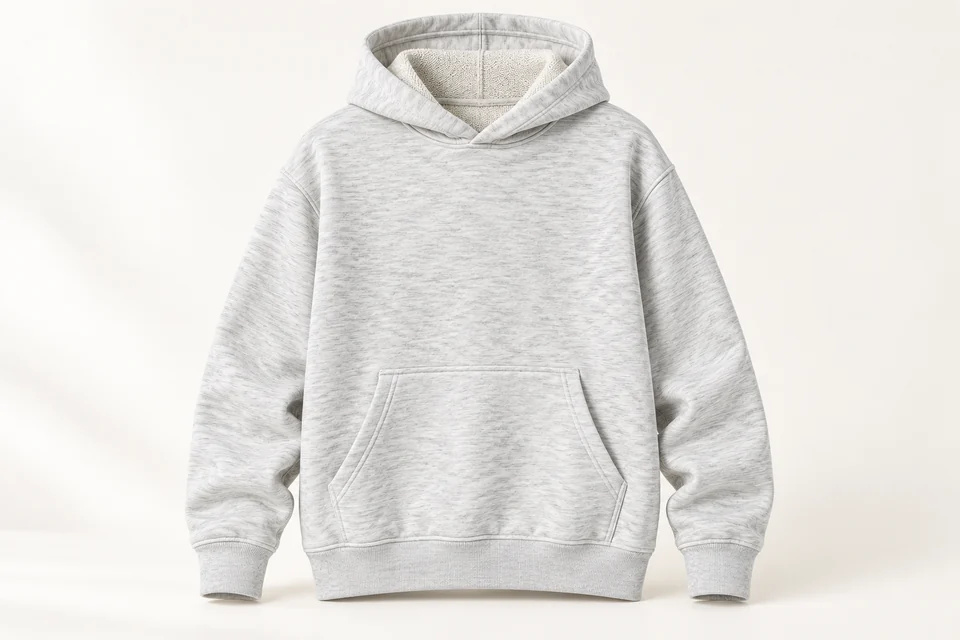
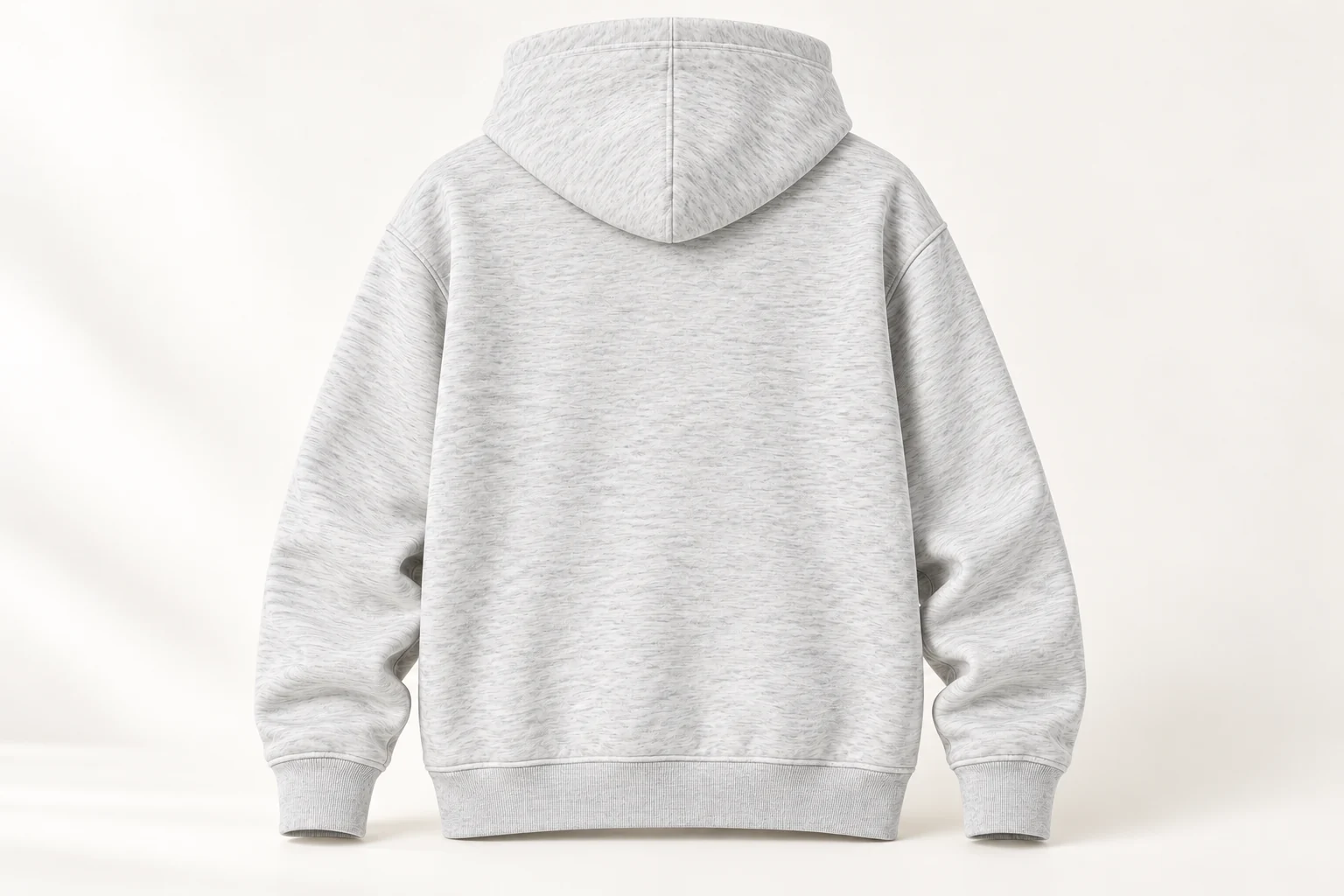
A pullover hoodie asks its fabric to do several jobs at once: support a hood, bend at the elbow, carry a pocket and meet a more elastic cuff or waistband. Begin with a side-view drawing showing the intended shoulder drop and body volume. Decide whether the hood should hold a sculpted outline or fall softly when down. Those two design directions can justify different sample routes even when both garments are described as heavyweight hoodies. A premium-sounding weight alone cannot resolve that choice.
Read the two catalogue options without inventing their finish
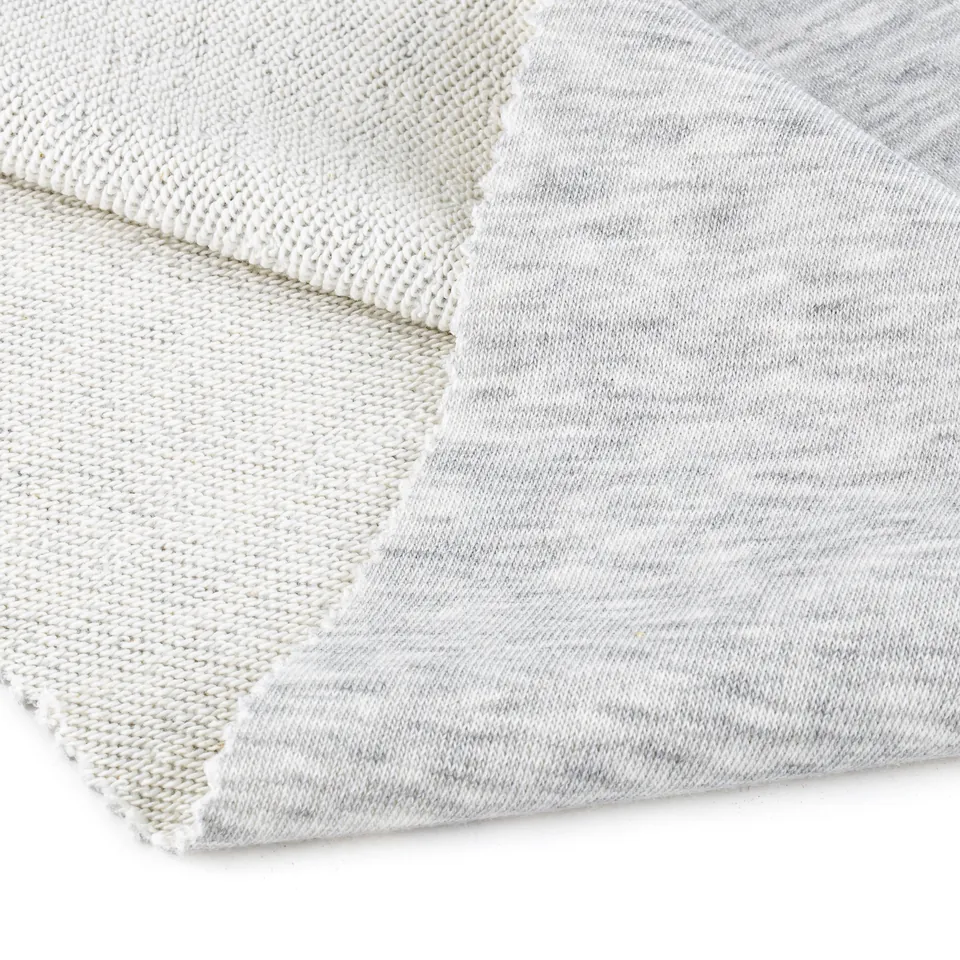
FT-602 is recorded as 70% cotton and 30% polyester with 300, 325, 350, 375 and 400 g/m² options. FT-601 lists the same composition at 240, 260, 280, 300 and 320 g/m². Their weight ranges overlap. Request the exact construction and finishing description for each proposed cutting; the codes do not prove a brushed back, a particular loop size or a measured thermal performance. Put the article code and offered weight on each sample rather than comparing two anonymous pieces.
Make the hood an early material trial
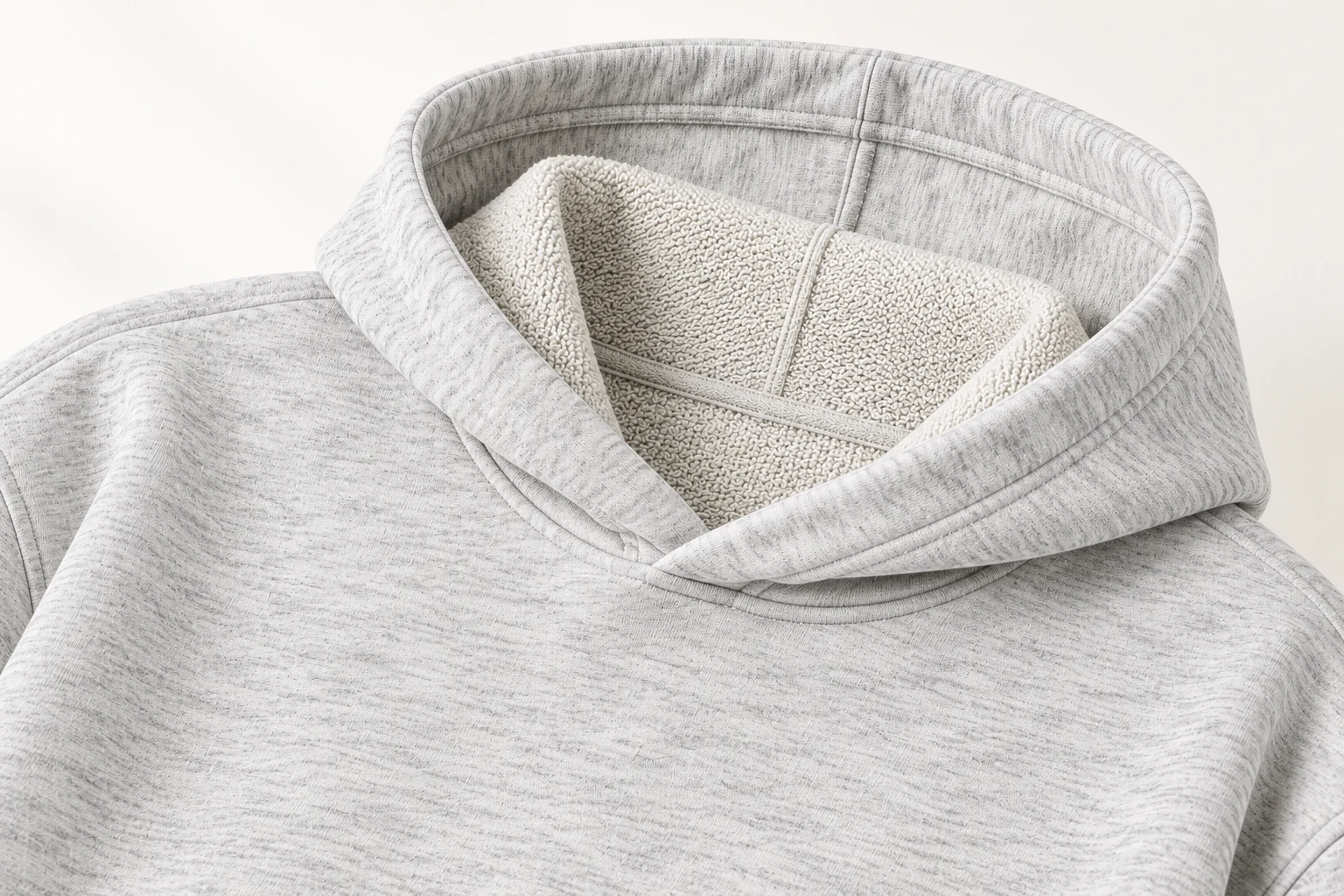
Cut a hood trial in the intended number of layers before committing to the body fabric. A doubled self-fabric hood uses two layers of the selected material; changing only the lining can therefore alter the assembly while preserving the outer appearance. Pin or sew the hood to a representative neckline and observe the garment with the hood raised and lowered. If it drags the front neck backwards or collapses differently from the drawing, investigate hood geometry, lining choice and support together instead of automatically increasing body weight.
Approve the pocket as a loaded component
The kangaroo pocket introduces another material layer across the front. Sample its opening, corner reinforcement and attachment in the chosen body fabric. Check the appearance empty and with the modest contents anticipated for the actual design; define those contents in the development notes instead of using an unspecified strength claim. Notice whether the lower front sags or the pocket corners distort. For a decorative pocket that is not intended to carry items, communicate that design intention to the garment team and avoid marketing it as a robust storage feature.
Separate cuff behaviour from body composition
Neither FT article records elastane in its listed blend. That does not establish how much either fabric stretches or recovers, and it does not specify a matching cuff. Ask the maker to propose cuff and hem-band materials separately, identifying their composition, construction, shade reference and attachment method. Evaluate the sleeve opening over the hand and the hem on the intended body shape. A band that looks flat on the table may still pull the body into unwanted gathering. Keep the accepted band length linked to the exact band material.
Compare two sewn routes using one controlled pattern
A useful comparison is the same hoodie pattern in one confirmed FT-601 option and one confirmed FT-602 option, with the same trims and seam plan. Photograph the side profile, hood position and pocket area under consistent conditions. Record which difference actually matters to the collection: sharper volume, easier layering or less bulk at a seam crossing. CottonWorks explains that knit development should start from end use; the proposed paired sample is an editorial application of that principle, not a reported AL KUMAŞ trial.
CottonWorks: Designing Knit Textiles — End use should inform knit development. The paired hoodie sample is clearly identified as original editorial application, not a source-reported experiment or company test.
Decide what would make you reject the route
Before approval, name the unacceptable outcomes: a hood that shifts the neckline, a pocket that visibly drags the front, or seams too bulky for the intended finish. The team should adjust the component, pattern or material and resample when one appears. A catalogue cutting cannot confirm whole-garment comfort or laundering behaviour. Request the relevant article evidence, then evaluate the completed hoodie through its intended care trial. Keep the rejected alternative and the reason in the development file so the next reorder does not reopen an already resolved material decision.
Technical background and scope
This is a structured editorial draft. Garment-specific development advice is paired with existing catalogue records; compatibility must be established by sampling. AL KUMAŞ supplies fabric. Cutting, sewing and finished-garment production are separate unless explicitly agreed.