




Review the exposed openings on the intended layer
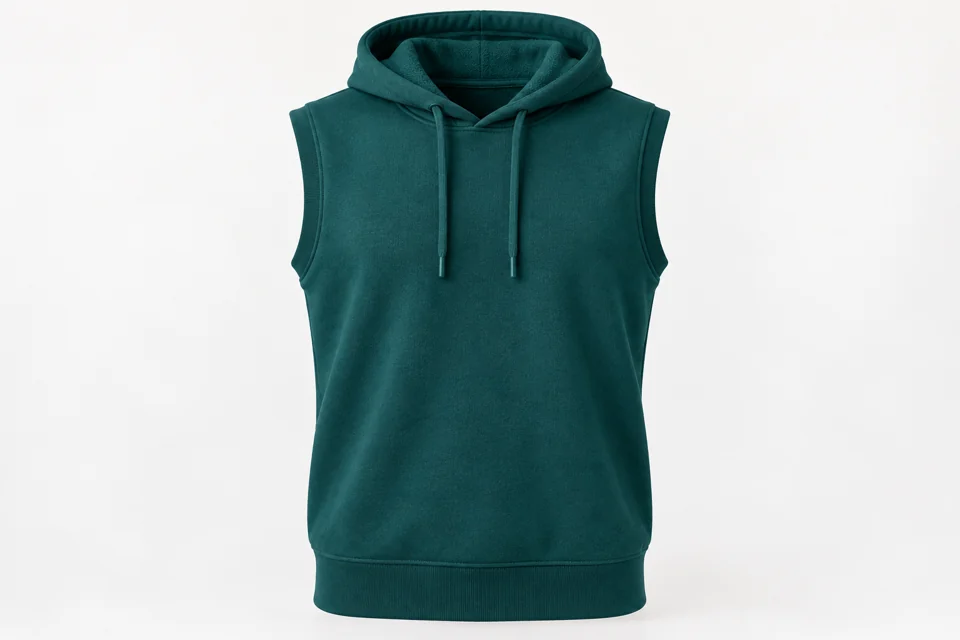
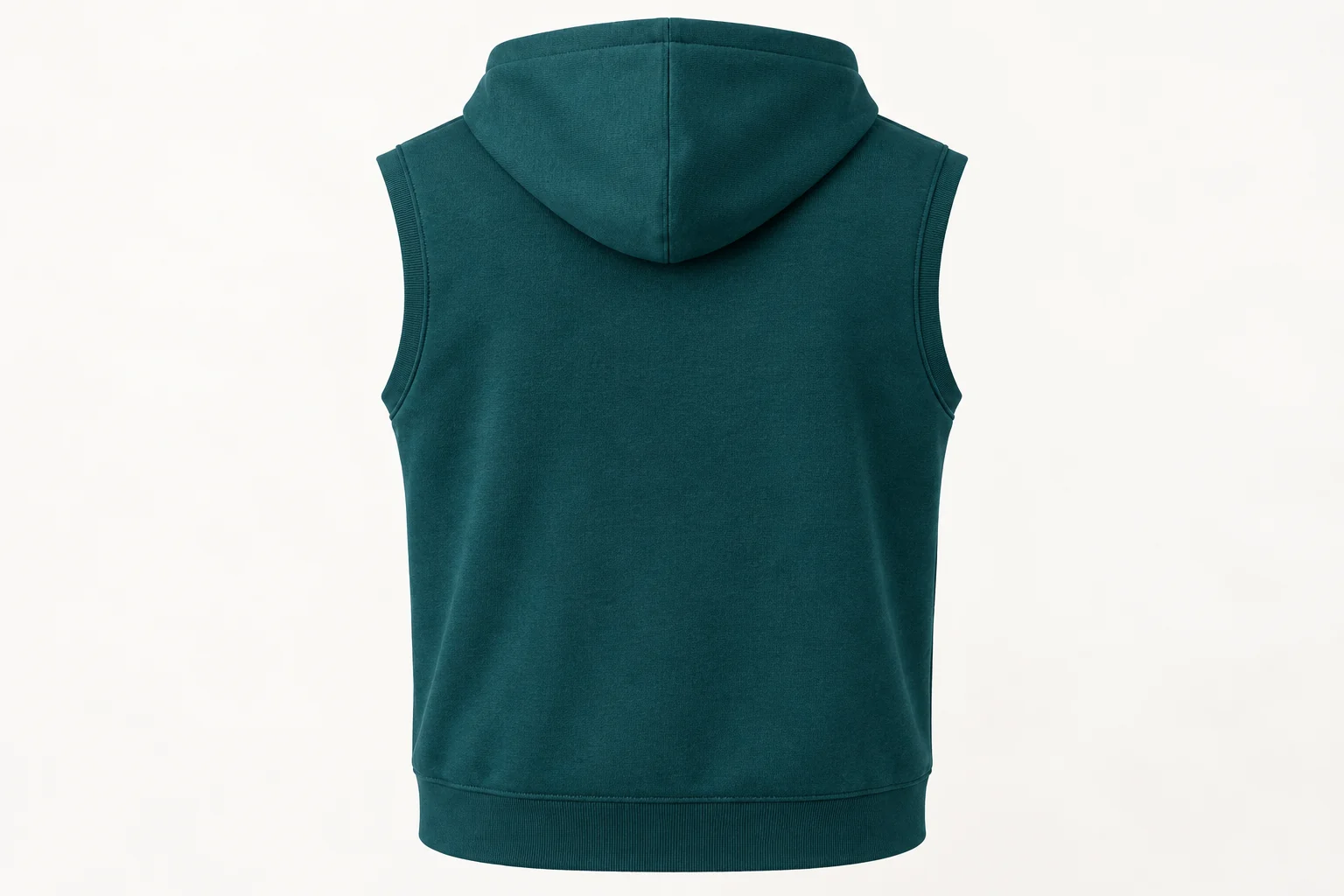
State the adult body fit, shoulder width and intended underlayer before evaluating the sleeveless hoodie. Record which areas of that layer should show through the front, side and back armhole views. The sample should have the actual hood, armhole finish and lower edge, not unfinished sleeve cuts from another prototype. A lack of sleeves does not automatically demonstrate improved movement or a particular use case. The review must compare the garment against its own design and identify the ordinary actions relevant to the intended layered product.
Record the offered body and edge assembly
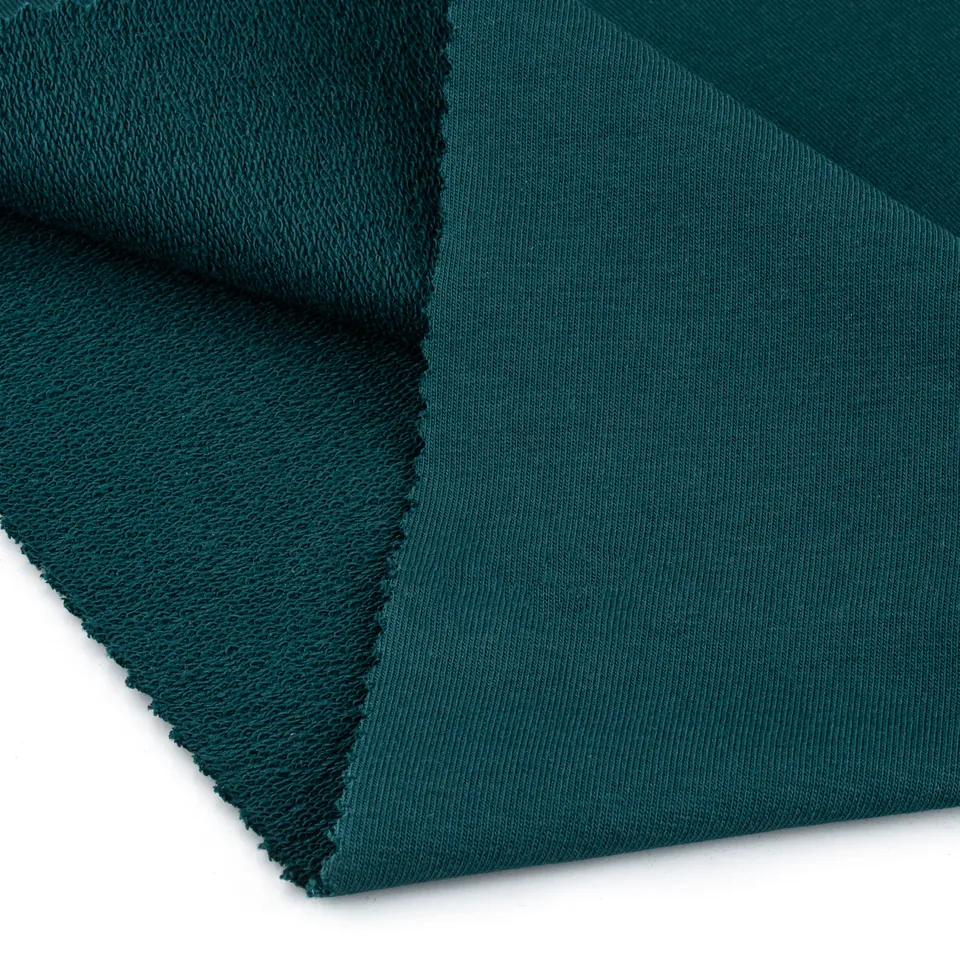
FT-601 is the seventy percent cotton and thirty percent polyester two-thread unbrushed silicone French terry route at 240, 260, 280, 300 or 320 grams per square metre. FT-602 uses the same blend in three-thread unbrushed compacted material at 300, 325, 350, 375 or 400 grams per square metre. Identify the offered option, binding or other finish, hood layers and shoulder construction. A temporary edging substitution should remain labelled. Neither body entry supplies a quantified armhole recovery, seam-performance result or approved coverage relationship for the assembled garment.
Observe the edge at rest and through ordinary arm movement
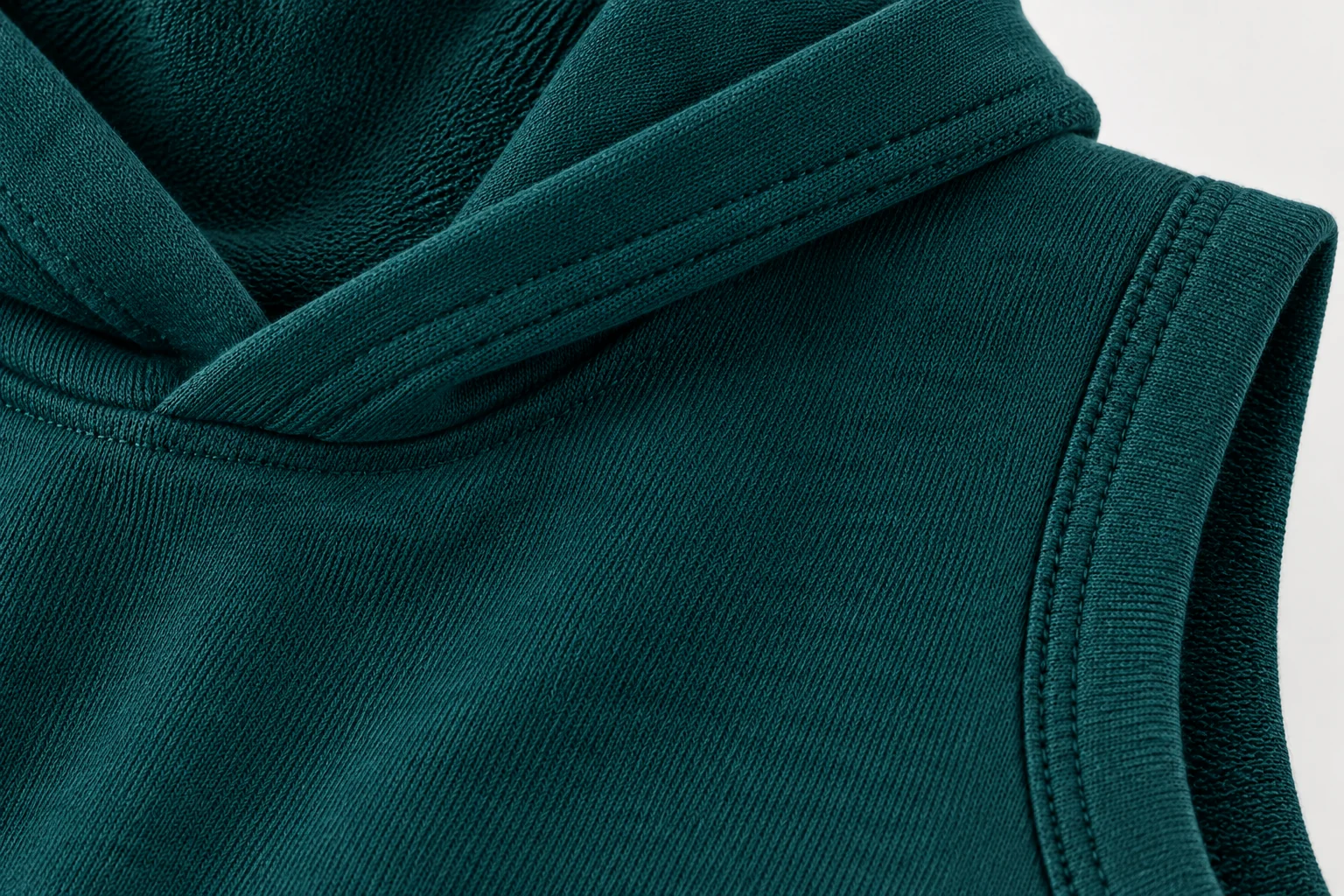
Assess the armholes with the wearer relaxed, reaching and raising the arms as agreed. Record rolling, rippling, local intrusion or unintended exposure against the actual design rather than assuming every deep opening is a fault. Check whether the finish moves differently at the front curve and underarm. If an issue appears, ask the maker to distinguish opening geometry, edge material and attachment. Do not tighten the binding automatically or prescribe a ratio borrowed from another knit; a change can affect both the visible shape and interaction with the underlayer.
Check the shoulder area while the hood changes position
Raise and lower the completed hood, observing neckline, shoulder and armhole shape before rearranging the body. Record whether the remaining shoulder area stays in the intended position or exposes a different part of the underlayer. The result should be observed, not inferred from the removal of sleeves. A proposed correction might concern hood geometry, inner layer, shoulder pattern or edge construction. Keep the selected change identifiable and repeat the affected view. A neckline approved on a sleeved version does not automatically approve this altered assembly.
Inspect binding joins and neighbouring layers
Look inside and outside the shoulder area, lower armhole and edging join on the actual offered weight. Coats describes bound seams as folded binding attached over an edge; that general construction still needs the maker's particular material and assembly reference. Assess any ridge against the intended layer and note the exact location. A neat straight trial does not prove the curve or joint will behave as required. If construction changes, inspect the complete sample again rather than approving the replacement from a flat trim cutting alone.
Coats: Seam Types — A bound seam can wrap and attach a binding strip over an edge. It does not prescribe the actual curved opening or validate its joint, bulk or layered comfort; those remain proposed sample observations.
Reassess edges and neckline after the defined care trial
Agree procedure, conditions, measurement points and acceptance criteria with the technical team. Retain the original armhole, shoulder and neck references, then repeat the relevant resting, movement and hood-position views. CottonWorks includes cleaning-related appearance evaluation, but gives no universal recovery percentage or allowable edge distortion for these materials. Keep dimensional change, surface change and component interaction as separate observations. The main body can retain an acceptable measurement while a binding or hood junction no longer matches the design, so the entire approved assembly needs the relevant review.
CottonWorks: Quality Testing — Cleaning-related appearance needs evaluation. It establishes no universal armhole recovery or distortion limit and no approval of the neck-and-edge combination.
Close the exposed-edge decision with stated evidence
Record accepted results for representative adult sizes and identify unresolved pattern, edging or technical questions. Keep the physical sample, offered body identity, edge specification, hood components and intended layer reference together. Ordinary fitting observations are not a tested promise of universal comfort, coverage or permanent opening shape. If a later trim source, body finish or shoulder pattern changes, identify the checks it affects before accepting it. The finished sleeveless hoodie needs an edge-and-hood approval, not independent approvals of a clean swatch and an attractive hood.
Technical background and scope
This is a structured editorial draft. Garment-specific development advice is paired with existing catalogue records; compatibility must be established by sampling. AL KUMAŞ supplies fabric. Cutting, sewing and finished-garment production are separate unless explicitly agreed.