




Replace the sleeve line with the actual edge requirement
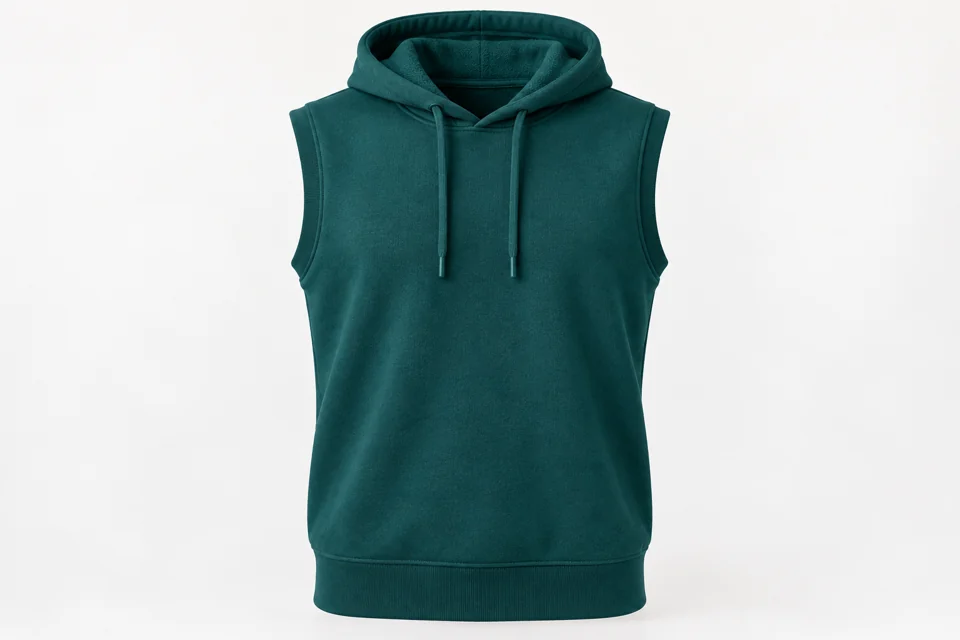
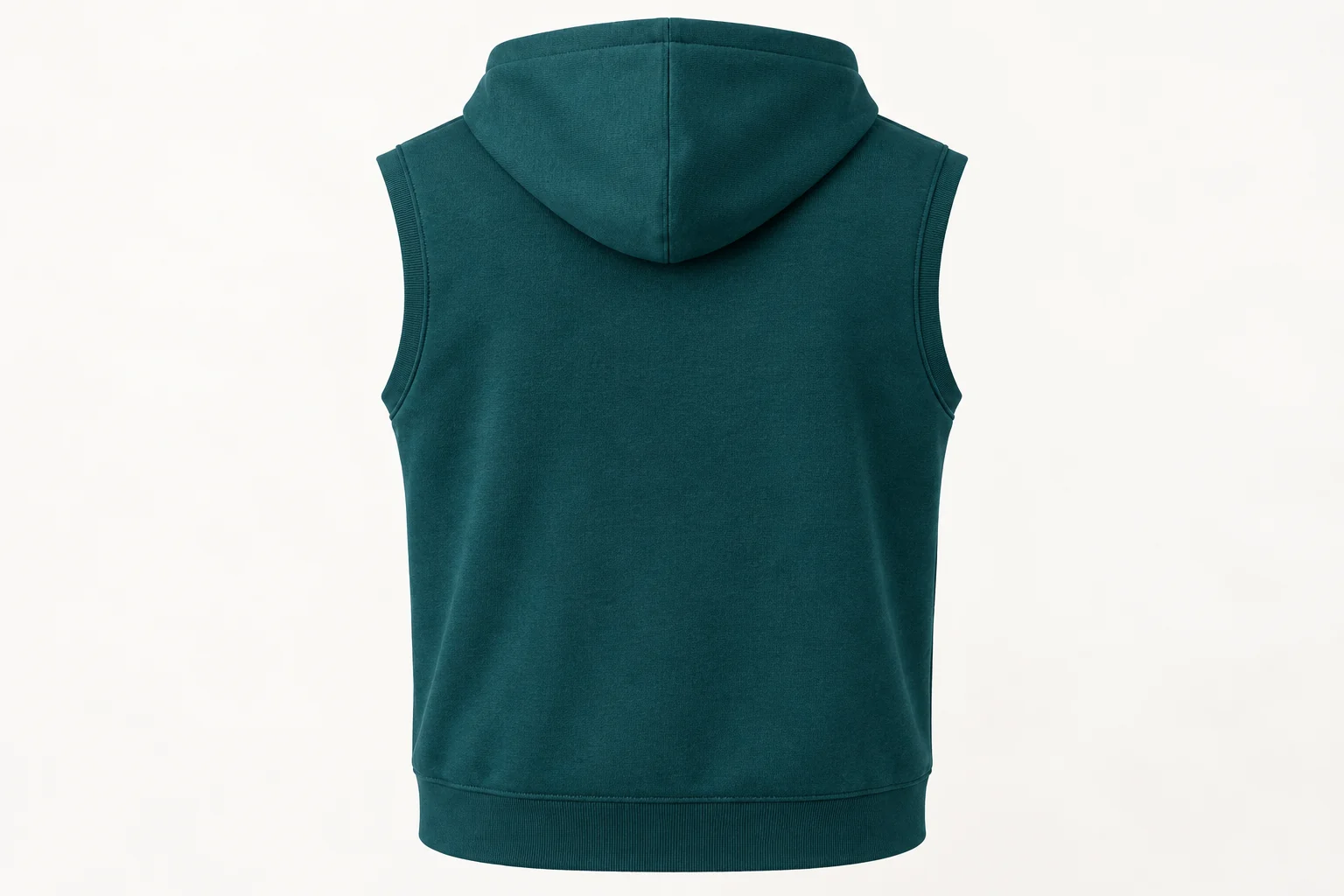
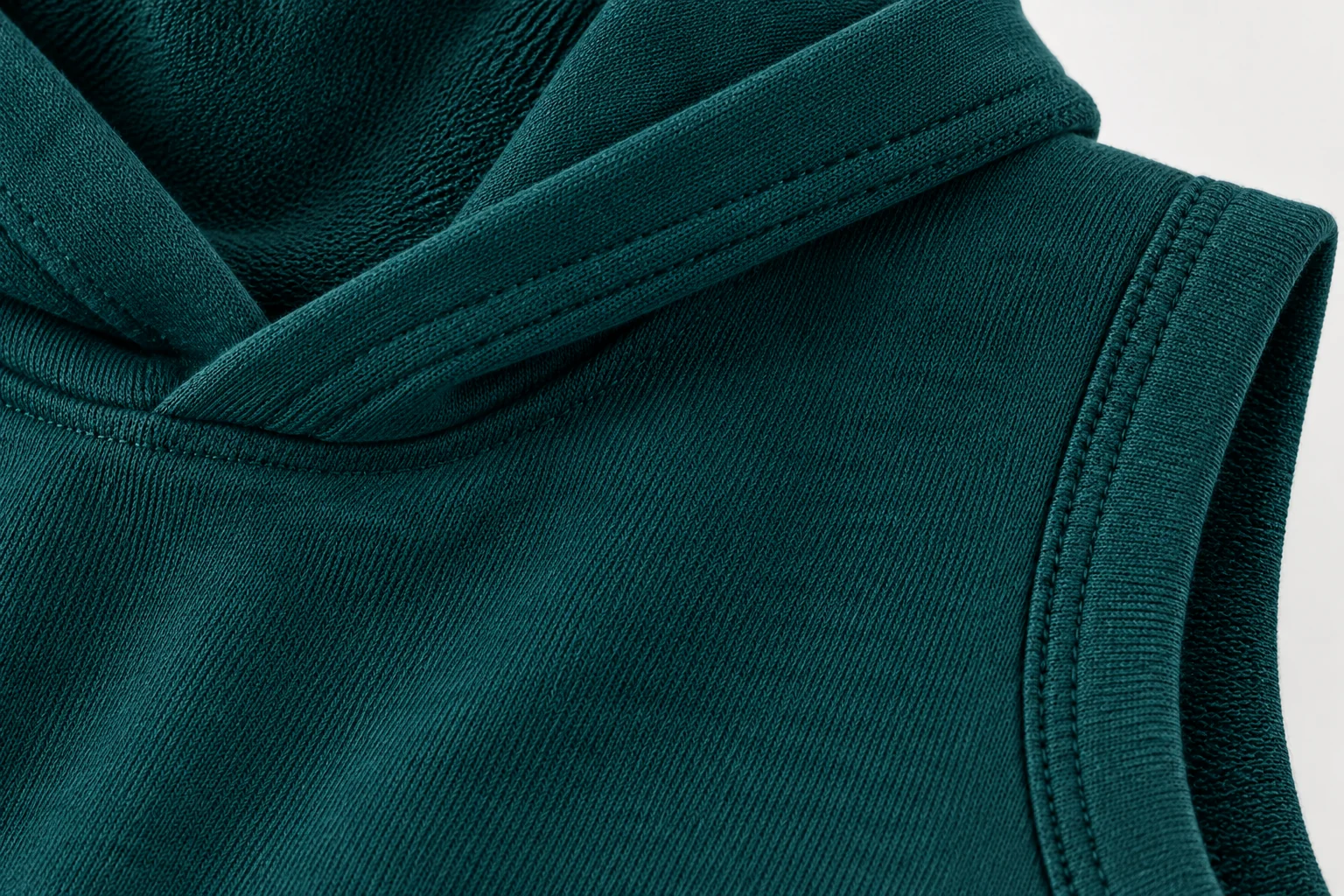
A sleeveless hoodie removes sleeve pieces but adds or changes exposed armhole finishing. Its purchasing requirement should therefore come from the actual new component map, not a sleeved hoodie total minus an estimated sleeve weight. Identify any revised shoulder and side-body shapes as well as the hood, pocket and lower edge. State whether binding is cut from the body roll, another material or a purchased trim. A seemingly small strip can have its own units, minimums and cutting restrictions that are invisible in a body-only comparison.
Use the selected offered weight for the body calculation
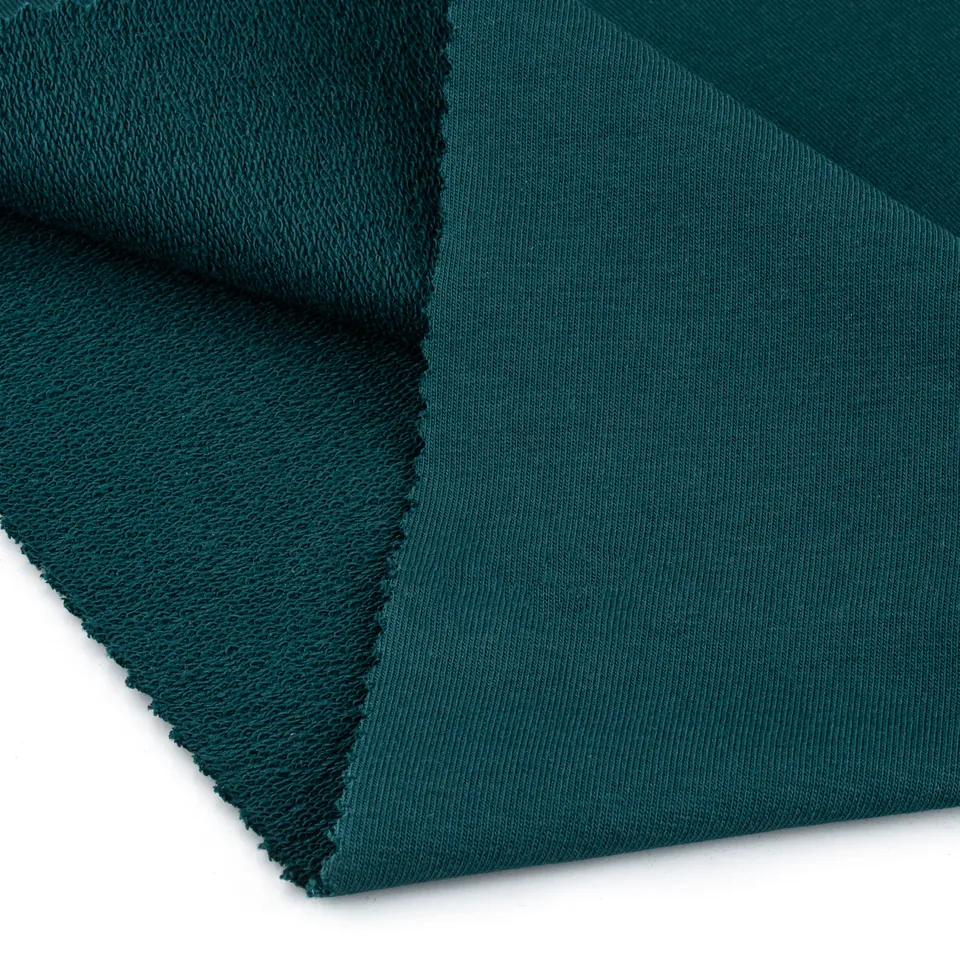
FT-601 is seventy percent cotton and thirty percent polyester, two-thread unbrushed silicone French terry, at 240, 260, 280, 300 and 320 grams per square metre. FT-602 records the same blend in three-thread unbrushed compacted material at 300, 325, 350, 375 and 400 grams per square metre. Confirm the actual finished option, tolerance, usable width and supply format. A common weight entry does not establish equivalent edge bulk or a matching trim offer. The local records do not provide a verified cutting width for either route.
Calculate a hypothetical strip requirement without prescribing a ratio
Suppose a fictional pattern needs two binding pieces, each 0.66 metres long and 0.04 metres wide when unfolded. Their combined net area is 0.0528 square metres. At an illustrative 300 grams per square metre, that area represents 15.84 grams before allowances or cutting losses. These invented dimensions are not a recommended armhole size, strip width, attachment ratio or AL KUMAŞ yield. The actual maker must specify the binding geometry and material. The example shows why a visible narrow edge still needs a complete component requirement rather than being treated as free material.
Keep strip-cutting demand distinct from net area
If binding comes from a roll, ask the cutting team how the approved direction, strip width, joins and usable width affect purchasing length. If it is a finished trim, obtain its supplier unit and the actual length requirement. Do not apply a body-fabric mass conversion to a trim whose width or construction differs. A net-area calculation cannot establish the yield of long narrow strips. Keep the accepted attachment and any joint arrangement visible, since a change introduced to improve cutting economy still requires assessment on the exposed armhole.
Request a complete sleeveless marker with the hood retained
CottonWorks describes marker planning as arranging actual pattern components for material utilisation. Give the planner the sleeveless body, full hood layers and pocket where included, using confirmed width and the intended size mix. If binding is counted elsewhere, make that exclusion explicit. Removing sleeves changes the available layout, but it does not prove a fixed proportional saving. Ask the planner to report the actual new requirement and identify any surface-direction constraint. An unchanged hood can remain a substantial material component even as the body assembly is simplified.
CottonWorks: Garment Construction — Marker planning arranges actual garment pattern components for material utilisation. It does not establish a proportional saving from sleeve removal or validate the fictional binding dimensions and mass example.
Cost the shoulder and armhole assembly actually approved
Ask the garment maker to identify edge folding, attachment, joining and any shoulder reinforcement in the quote. A different binding construction can change both trim demand and sewing, while a deeper armhole can change body area as well as edge length. Keep those effects separate. Do not double-count self-fabric strips in both the main marker and a separate trim estimate, or omit purchased edging because there are no sleeve cuffs. Pattern adjustments, documented dimensional allowances, marker losses and purchasing contingency should retain identifiable bases rather than an unexplained sleeveless allowance.
Compare the full supply scope rather than an absent sleeve
Review body material, hood layers, armhole finish, lower band and relevant assembly together at the same design stage. Request actual prices and terms for the chosen colours and units, including separately sourced edging. Identify outstanding edge or hood trials before calling an alternative a completed saving. Retain the accepted pattern, offered width and weight, strip specification and marker with the cost sheet. A repeat that changes shoulder width, armhole depth or trim supplier should reopen the affected demand calculation rather than reuse the old sleeved or sleeveless style name.
Technical background and scope
This is a structured editorial draft. Garment-specific development advice is paired with existing catalogue records; compatibility must be established by sampling. AL KUMAŞ supplies fabric. Cutting, sewing and finished-garment production are separate unless explicitly agreed.