




Request an armhole-to-neck assembly map
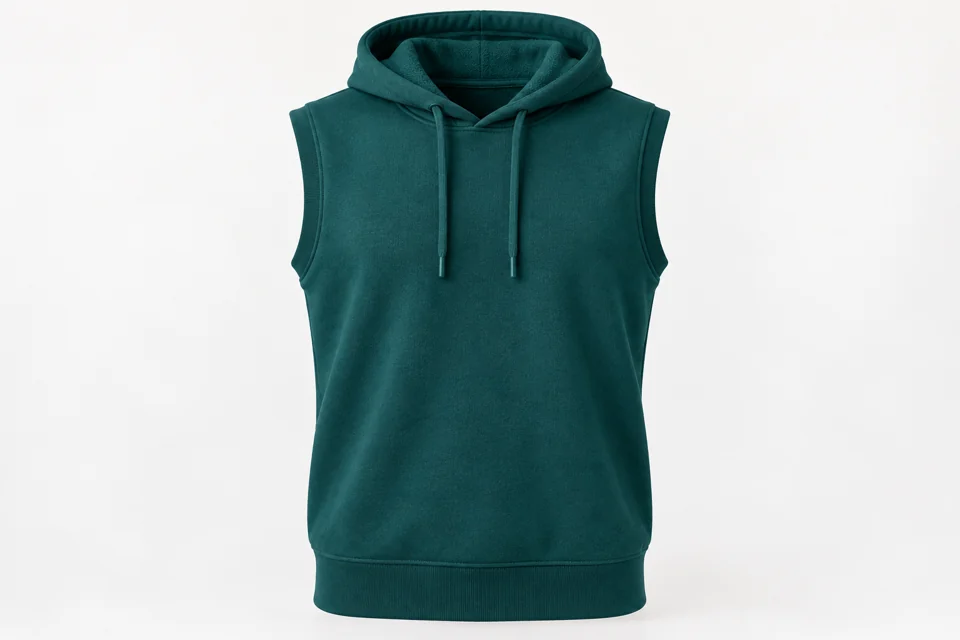
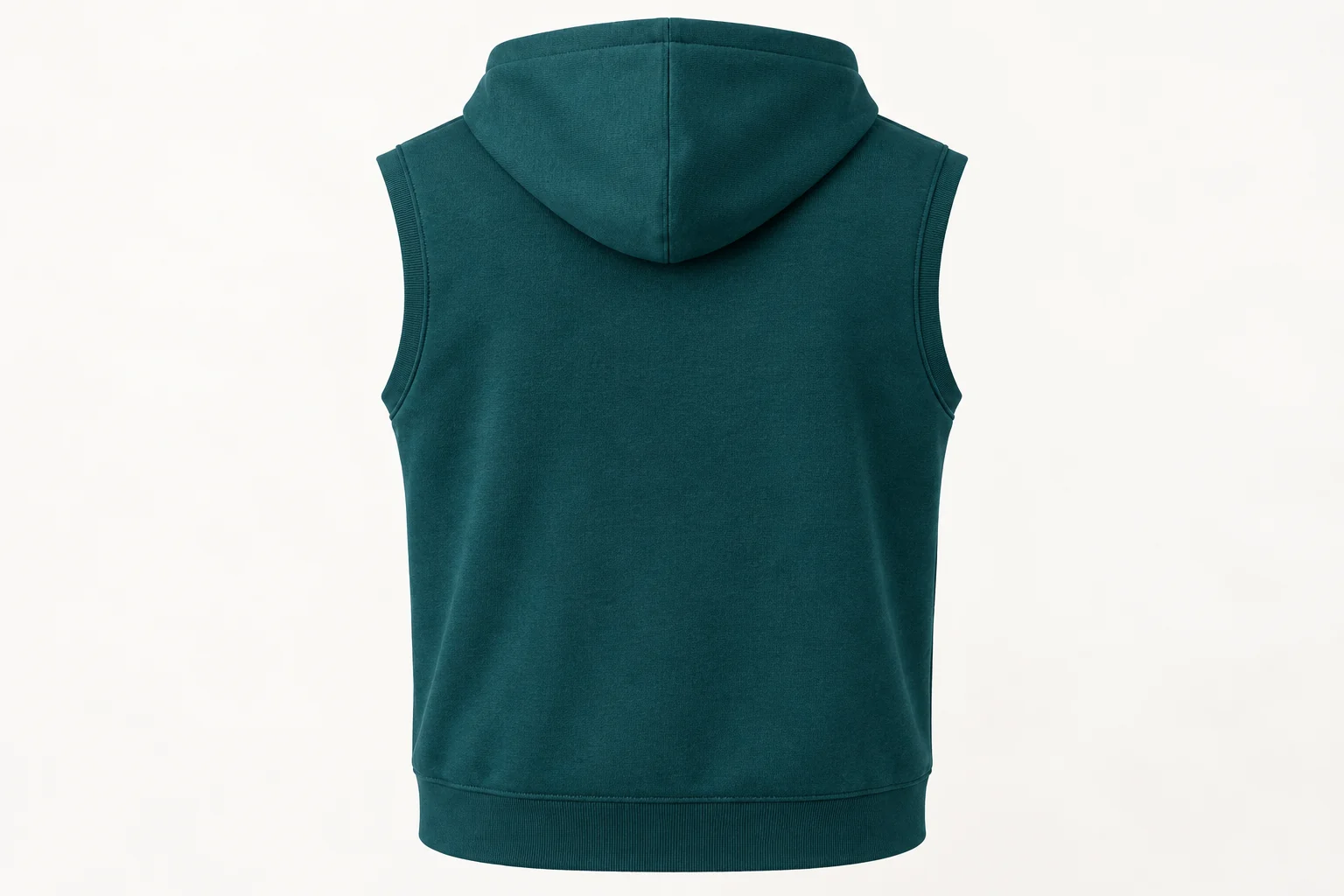
Ask the garment developer to provide a drawing that connects the exposed armhole finish, remaining shoulder area and hood attachment. Mark the actual opening shape and the intended adult underlayer view from front, side and back. This is the central handoff, rather than a generic sleeveless fabric request or a body pattern with sleeve pieces deleted. Identify the component and assembly decisions still missing. A fabric supplier can confirm its material offer, but should not be left to invent the exposed-edge construction or assume the maker has already reviewed the shoulder arrangement.
Locate every edge joint and material transition
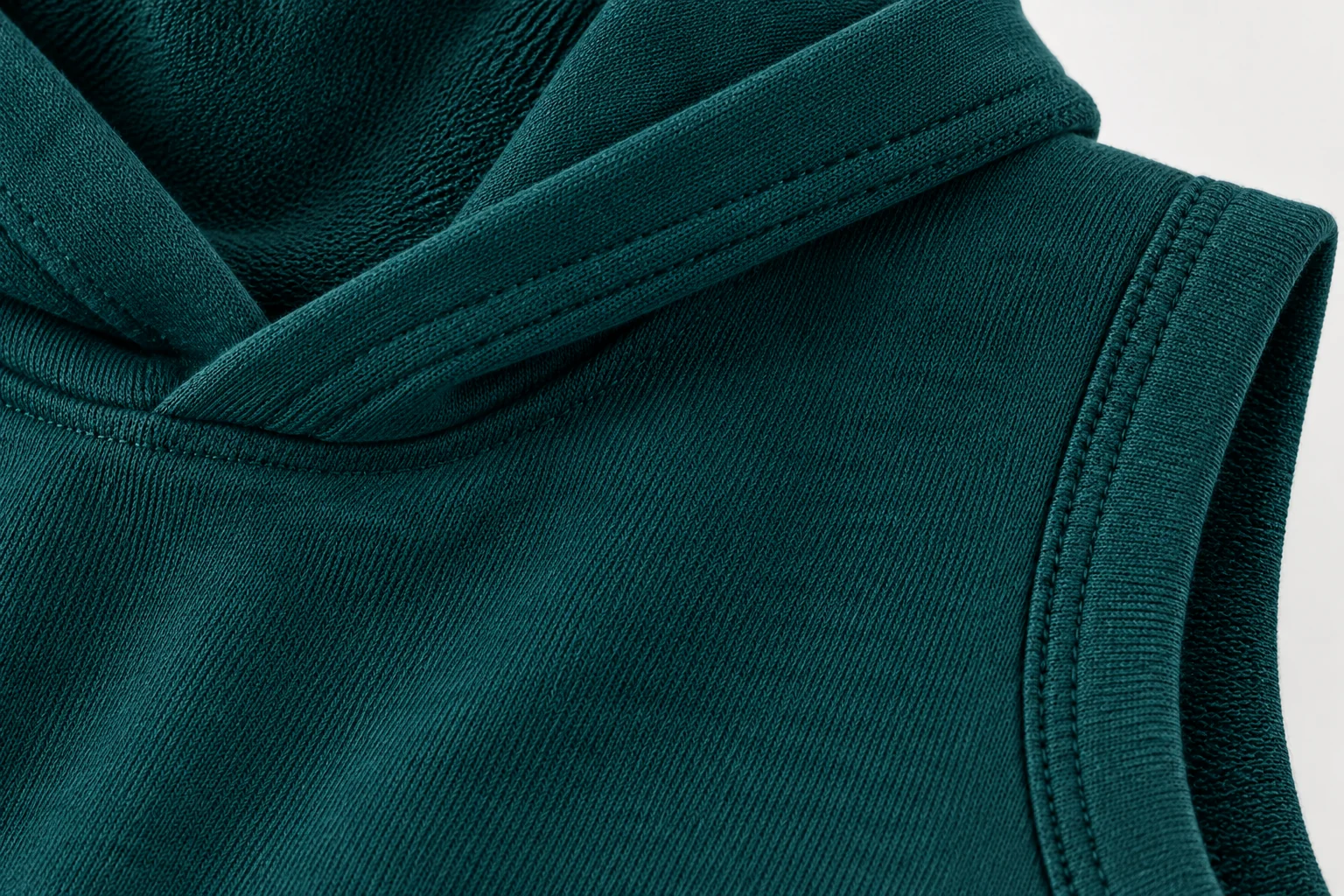
The map should identify whether the armhole uses binding, a facing, another finished treatment or an intentionally raw edge requiring its own review. Show where any strip joins, how the inside is presented and where neighbouring body or shoulder seams meet its layers. Coats describes binding as a folded strip attached over an edge; that general category is not a complete production instruction. Ask the maker for the actual section and materials, so the buyer can see which body, trim, thread and support items are required and who supplies them.
Coats: Seam Types — Binding can be a folded strip attached over an edge. The armhole-to-neck assembly map and its component requirements are original sourcing guidance, not a source-provided edge construction or supply schedule.
Attach the offered body to the mapped junctions
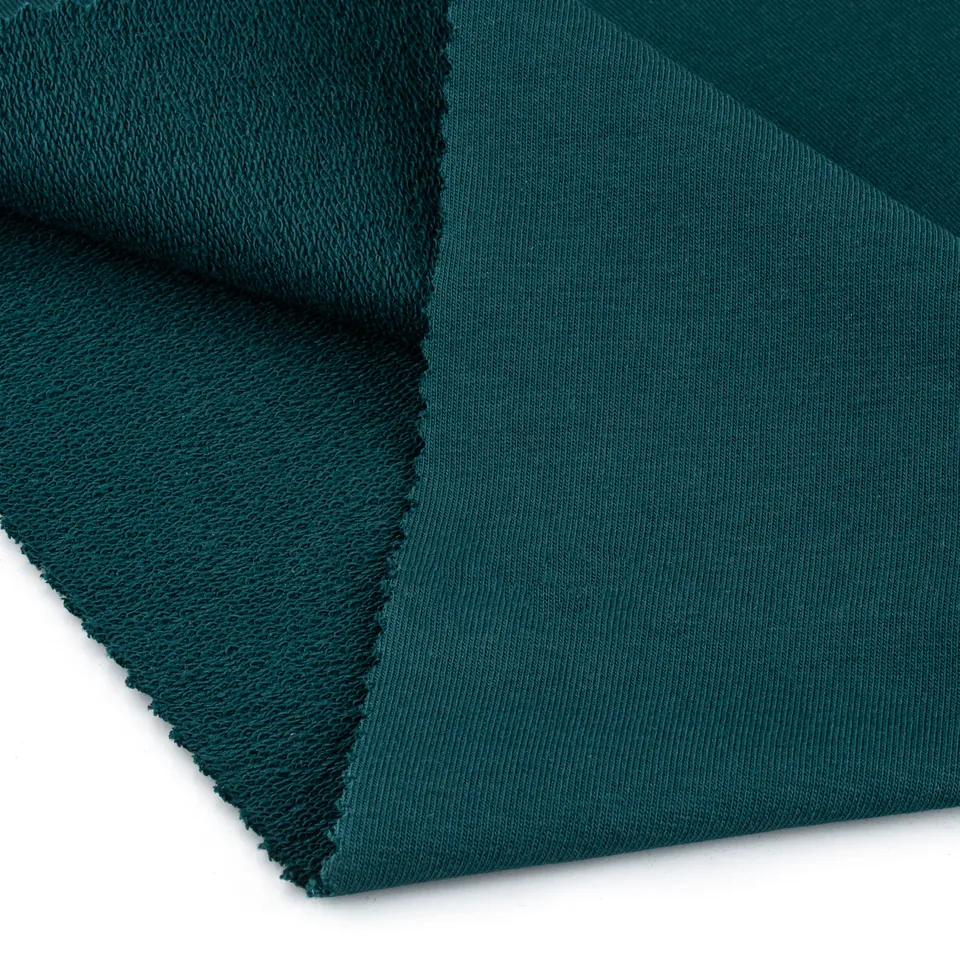
FT-601 is seventy percent cotton and thirty percent polyester, two-thread unbrushed silicone French terry, with 240, 260, 280, 300 and 320 grams per square metre options. FT-602 is the same blend in three-thread unbrushed compacted material at 300, 325, 350, 375 and 400 grams per square metre. Request the specific offered option and confirmation of current finish, usable width and supply format. Their common 300 gram entry does not prove identical bulk at the exposed edge or hood base. No matching binding or quantified recovery is established by either record.
Translate the mapped edge into purchasing units
Ask the maker to issue the complete unfolded strip or facing pattern and its approved direction, joins and attachment reference. If the edge material is a purchased trim, identify its actual width and sales unit instead. Build demand from the full size allocation, not a single convenient armhole circumference. Separate the two openings and any size-dependent difference. Keep main-roll strips distinct from another supplier's trim so the same requirement is neither omitted nor counted twice. Document trial and additional allowances on named lines rather than disguising them inside a rounded body quantity.
Send a junction sample with a defined layering task
Commission enough of the actual body, edging and hood materials for the maker to demonstrate the connected assembly on a complete representative garment. Ask the adult wearer to perform the selected arm movements and hood transitions on the intended underlayer. The output should show the edge at rest, the shoulder area with the hood raised and lowered, and the inside of the actual joint. Identify any temporary substitute beside that evidence. Do not treat an attractive detached armhole strip as proof of how the remaining shoulder and hood work together.
Return assembly changes to edge demand before commitment
If the review changes opening depth, shoulder width, edge construction or strip material, have the maker revise the map and component demand together. CottonWorks describes marker planning around actual pattern pieces; a changed sleeveless body or self-fabric facing needs its own accepted layout. Keep supplier units, marker references and the required new sample connected to the change. Ask what supplies are already committed before requesting replacement quantities. A construction alteration is not permission to assume another trim is available, compatible or commercially interchangeable with the accepted item.
CottonWorks: Garment Construction — Marker planning concerns actual pattern components. A revision to the sleeveless body or facing therefore needs an identified layout; no quantity, width or current commercial commitment is established by this general source.
Issue an accepted edge schedule with the body order
The final output is an identified armhole pattern and finish, component supply schedule, assembly reference and reviewed hood-to-shoulder relationship, with unresolved evidence left explicit. Reconcile main fabric, edging, hood layers and lower-edge quantities against that schedule before confirming the commercial scope. Obtain actual prices, minimums, currency, payment and delivery terms from the responsible suppliers. Keep coverage, recovery and comfort claims outside the product story unless appropriate evidence supports them. A later body or trim substitute should return to the affected mapped junction and sample observation rather than inherit a generic sleeveless-hoodie approval.
Technical background and scope
This is a structured editorial draft. Garment-specific development advice is paired with existing catalogue records; compatibility must be established by sampling. AL KUMAŞ supplies fabric. Cutting, sewing and finished-garment production are separate unless explicitly agreed.