





Make the lower span and corners part of the composition
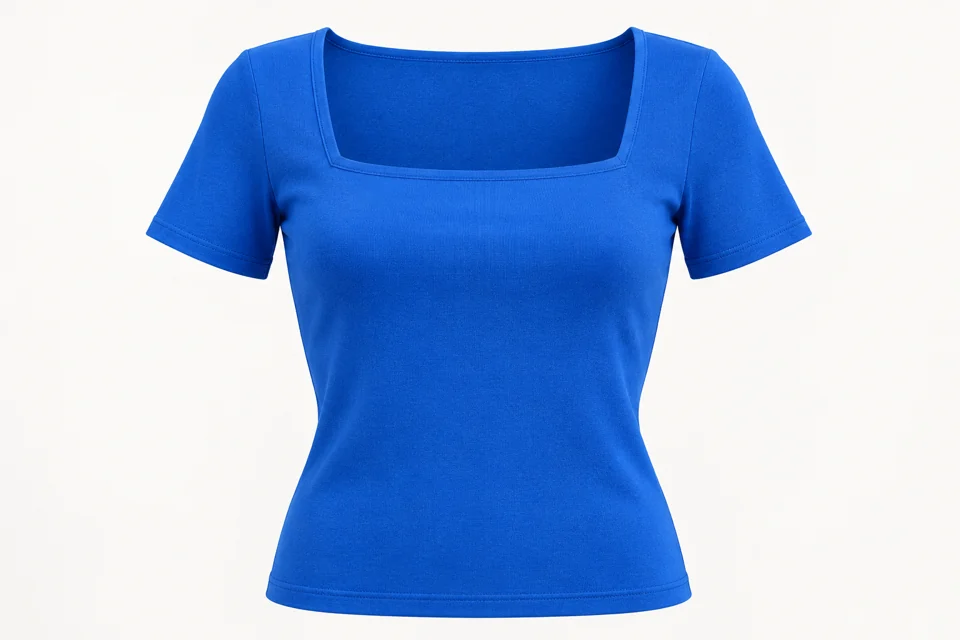
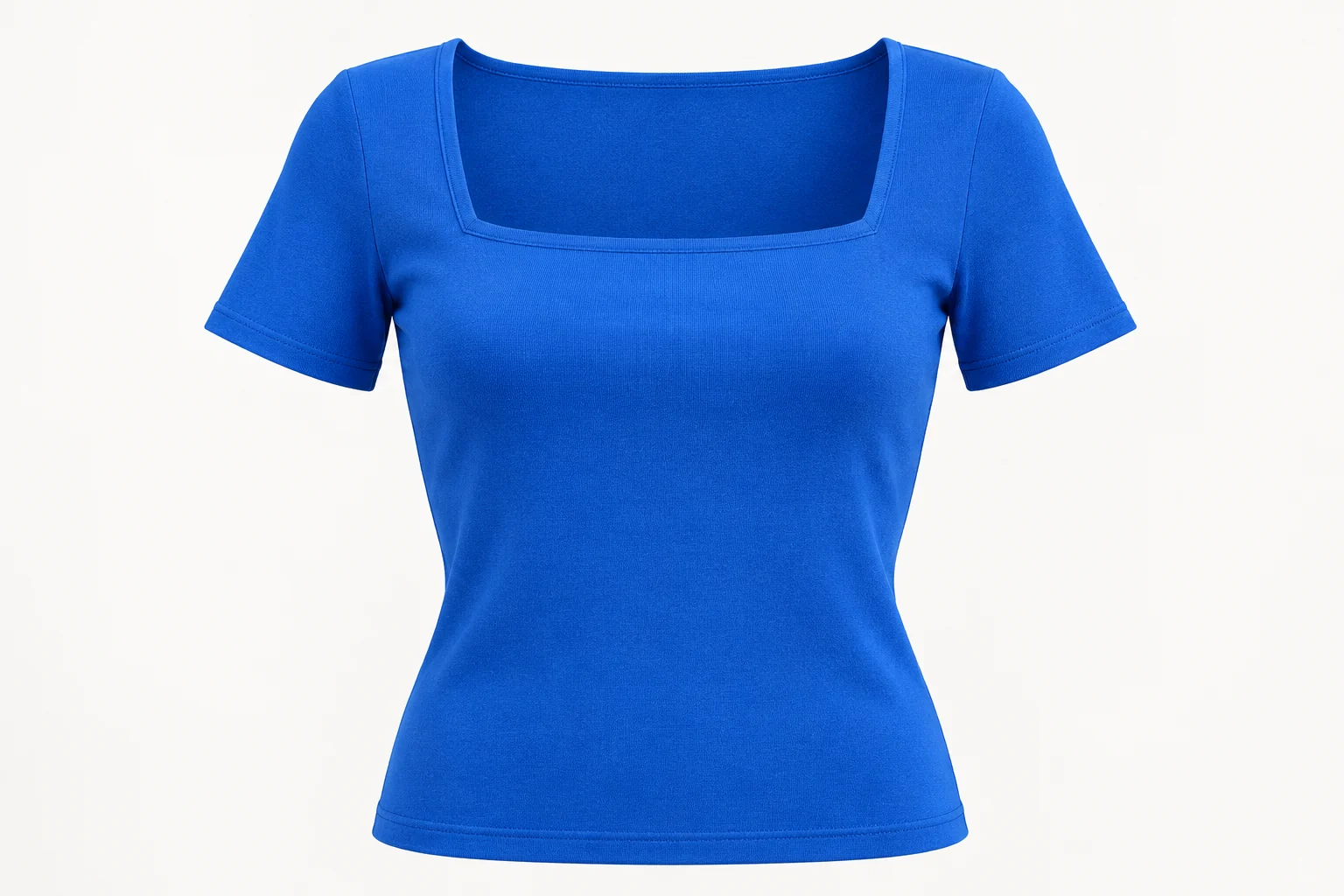
A square neckline creates a lower horizontal-looking boundary and side rises that can frame a graphic differently from a scoop or V. Show the actual opening and corner treatment on the design drawing before approving artwork. Decide whether the image echoes that geometry, stays away from it or intentionally crosses a proposed boundary. A standard rounded-neck mock-up cannot reveal those decisions. The buyer should approve the relationship on the intended square-neck top rather than assuming that a pleasing illustration transfers unchanged between neckline shapes.
Decide how a contrast edge should turn the corner
If the design outlines the opening with another colour, specify the desired visible width and how the two directions meet at each corner. Review the actual sewn edge from outside and inside, because a turned or joined construction can expose another region of the component. A digital colour line does not settle that result. Identify the governing physical references for body and edge, distinguishing close matching from deliberate contrast. If the maker changes the corner construction, reopen the affected visual review instead of assuming the same colour description preserves the accepted appearance.
Keep graphic placement clear of unresolved support and turnings
Mark the finished opening and the maker's relevant construction region on the artwork layout. For an editorial example, small lettering aligned just below the lower span may conflict with a newly proposed edge finish even when the opening depth stays the same. Ask the designer and decorator to assess the actual developed boundary. Do not prescribe one universal margin for every process or assume that a decorative motif can be applied across a corner without another trial. A final graphic approval needs the construction version that the maker intends to reproduce.
Review rib lines or repeats against both corners
Where FR-401's fine-rib appearance or another patterned design is visually important, show the intended direction and relationship with the lower span and side edges. Do not rotate a component for convenience without the design and technical teams assessing the actual result. If a repeat is involved, decide whether cut motifs at the corners are acceptable or need controlled positioning. The two sides should be reviewed together; an attractive single close-up can hide an unwanted imbalance. For a plain single-jersey design, omit pattern rules that the product does not need.
Approve decoration on the actual offered material
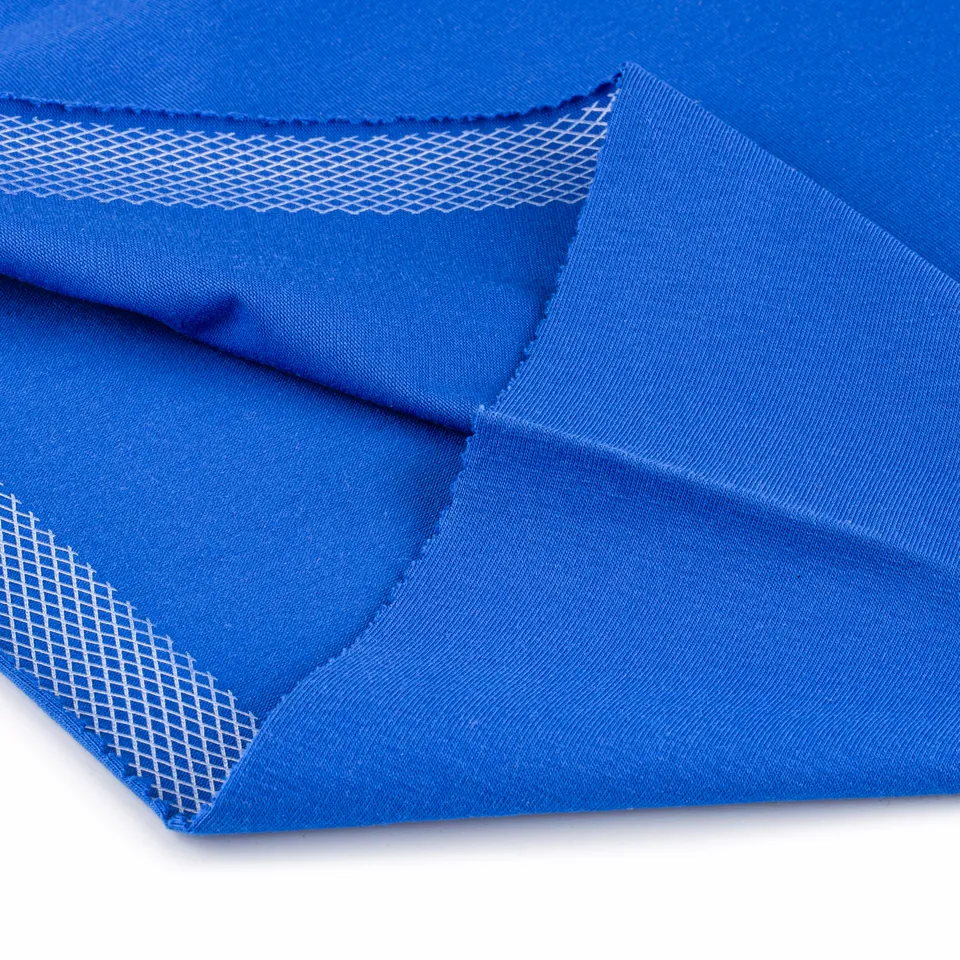
CottonWorks relates fibre, yarn and fabric characteristics to print choices and appearance. Request a suitable trial on the offered SJ-102 or FR-401 version, including its finish, rather than transferring a decoration approval because the compositions match. The catalogue does not confirm a printing service or a tested graphic near a square corner. Review the sewn and worn top alongside any colour cutting, separating visual acceptance from required care or fastness evidence. If material or edge construction changes, identify which appearance and technical decisions need another relevant review.
CottonWorks: Cotton Textile Printing Basics — Fibre, yarn and fabric characteristics affect print choices and appearance. No mill printing service, cross-corner application capability or tested decorated-garment result is inferred from the source or catalogue labels.
Catalogue starting points
SJ-102 is the recorded 95% cotton 5% elastane single jersey with 170, 180, 190, 200, 210 g/m² options and Enzyme + compacted. FR-401 is the recorded 95% cotton 5% elastane fine rib with 230, 250, 270, 290, 310 g/m² options and Silicone + compacted. These labels identify candidate bodies, not a finished corner shade or decorated-garment result. Record the actual offered versions sampled, with any separate edge material. Matching fibre percentages do not establish identical printed appearance, colour relationships or process suitability.
Release a corner-aware visual configuration
Keep accepted body and edge references, artwork revision, component direction and full neckline views together. Include the worn presentation and both corners, identifying representative sizes and any permitted visual variation. A later change in opening width, depth or corner treatment can alter the design relationship, so compare that version before retaining the earlier approval. State unresolved evidence without concealing the visual decisions already accepted. This gives production a coherent square-neck colourway whose graphic and edge instructions describe the same material-and-construction combination.
Technical background and scope
This is a structured editorial draft. Garment-specific development advice is paired with existing catalogue records; compatibility must be established by sampling. AL KUMAŞ supplies fabric. Cutting, sewing and finished-garment production are separate unless explicitly agreed.