





Use the intended corner appearance as the review baseline
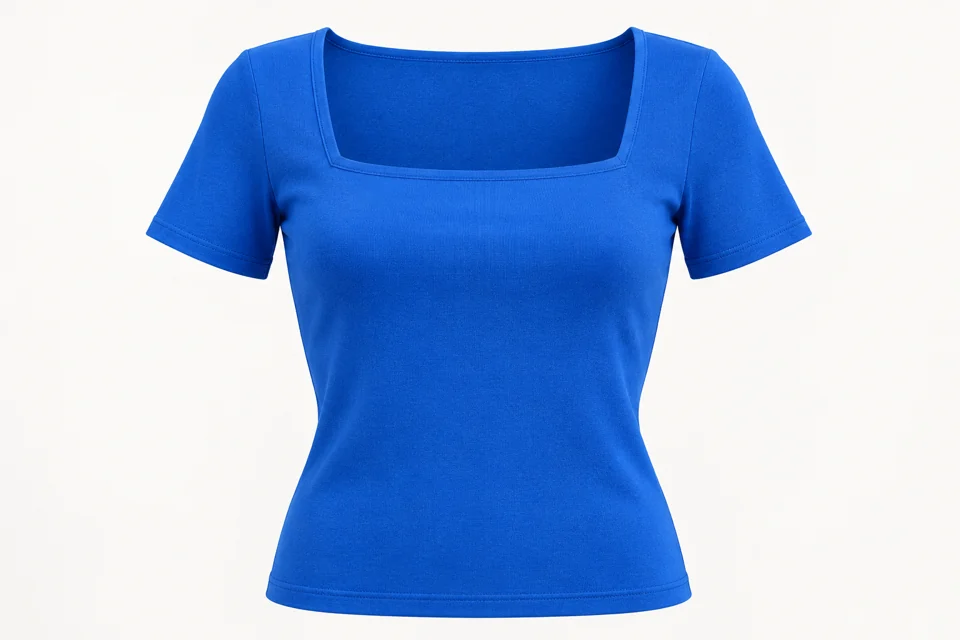
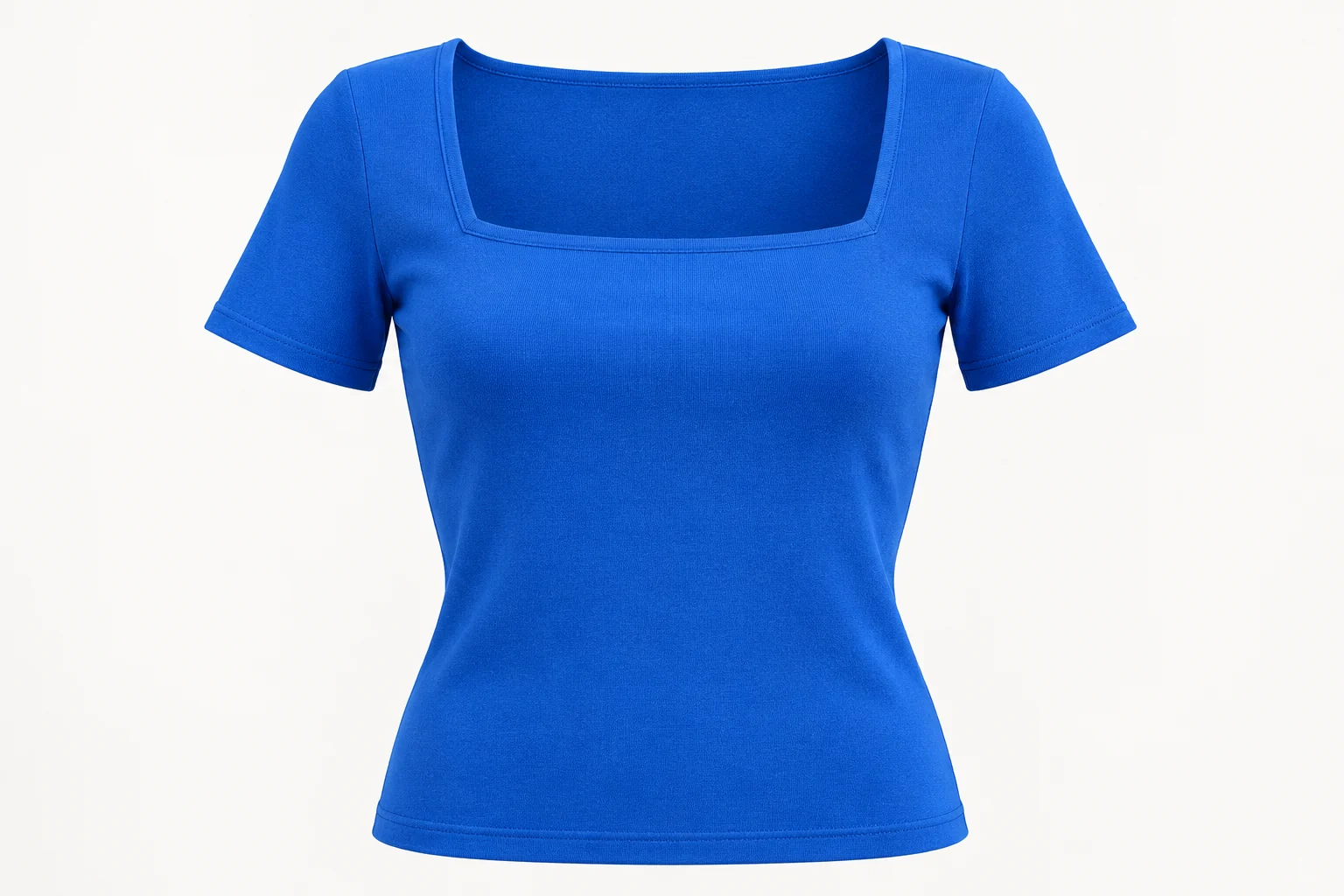
Identify the accepted square-neck drawing, including its width, depth and deliberate corner treatment, before assessing the sample. Record the actual body, edge material, support and operation version. A softened corner specified by the designer is not automatically a defect, while a distorted sharp-corner proposal should not be excused by the style name. Keep complete face and underside views of both corners. The review should show which actual assembly produced the opening rather than relying on a single polished close-up without pattern or material identity.
Inspect each turn before increasing tension or support
Look at the lower span, the two corners and the side rises in the agreed relaxed condition. Note where the appearance differs from the design and ask the maker to investigate the actual layers and sequence. Coats describes multiple contributors to puckering, supporting diagnosis rather than a universal instruction to tighten the seam. If another reinforcement or operation is proposed, identify that trial separately. A locally sharper turn is not a complete success if it creates another unwanted edge effect or changes the intended contact and handle in the finished top.
Coats: Eliminating Seam Puckering — Puckering can have multiple material and assembly contributors. The source does not diagnose the example corner, prescribe more reinforcement or supply a square-neck stitch setting.
Assess width and depth together on the wearer
Observe the top worn naturally and through a relevant movement, then return to the neutral pose. Review whether the lower span and side rises keep the intended relationship without manually pulling the opening into place. If a corner moves, distinguish a pattern-geometry question from assembly or material behaviour. CottonWorks includes final fabric assessment within garment fitting, supporting this combined review. The sequence is an internal development observation, not a certified neckline recovery test or a promise of coverage for every body and movement.
CottonWorks: Designing Knit Textiles — Fabric assessment includes actual garment fitting. The width/depth and movement observations are original development guidance, not a named corner-recovery test.
Compare construction stages when the cause is hidden
Ask the maker to retain or recreate relevant intermediate examples where a finished corner conceals the operation being discussed. A marked unassembled piece, the attached edge before turning and the finished result can help the technical team understand what changed, with the stages actually used identified. Do not treat this as a prescribed sewing recipe or authorise clipping and reinforcement from another pattern automatically. The buyer's role is to request intelligible evidence; the qualified maker develops the appropriate sequence and explains which material, construction or pattern correction needs another complete trial.
Review the corners after the agreed care procedure
Record the procedure and compare the same neckline landmarks, corner appearance and body relationship under consistent conditions. CottonWorks treats dimensional behaviour as influenced by construction, processing and the care applied to the finished product. Do not assume the body, edge and support change identically or that a compacted label supplies a universal pass percentage. Ask the appropriate provider to define formal assessment where required, keeping an internal wash observation distinct from a laboratory report. A corner that looks different after care deserves its own review even where overall body length remains near the target measurement.
CottonWorks: Shrinkage & Skewing — Construction, processing and garment care contribute to dimensions. No universal pass percentage or identical body/edge/support behaviour is claimed.
Catalogue starting points
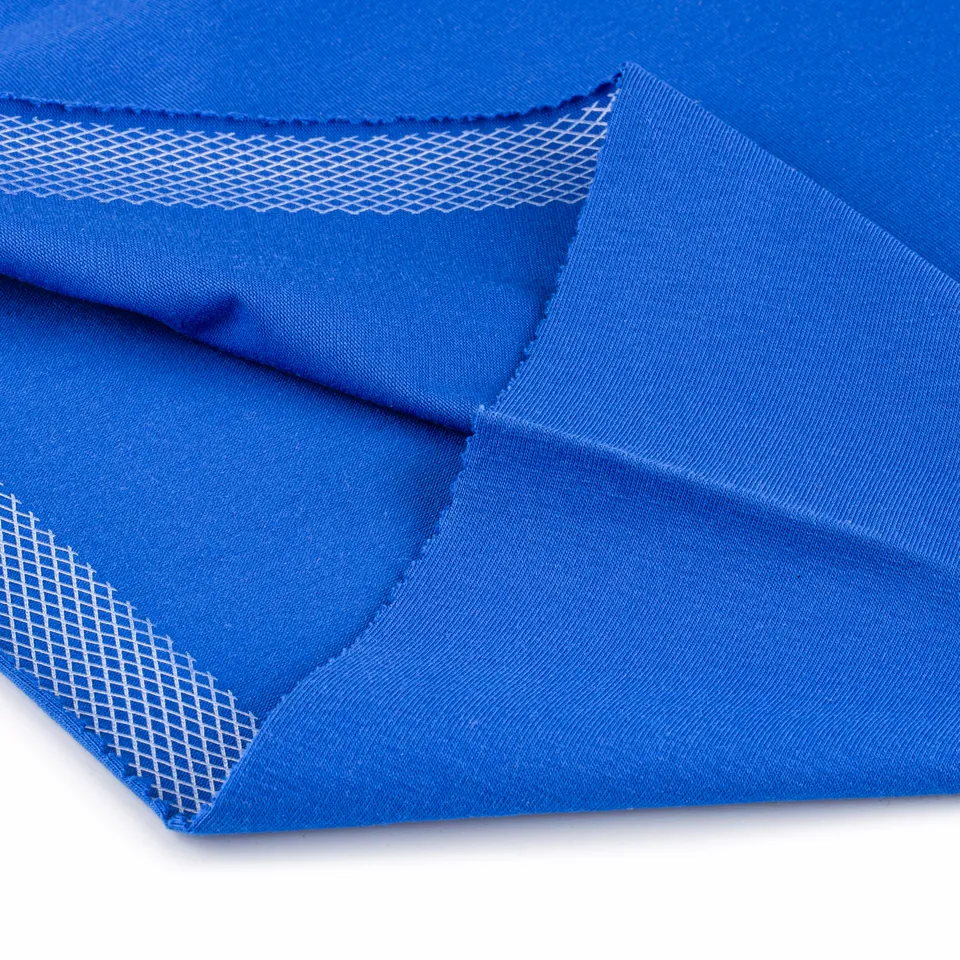
The SJ-102 record gives 95% cotton 5% elastane, 170, 180, 190, 200, 210 g/m² and Enzyme + compacted in single jersey. The FR-401 record gives 95% cotton 5% elastane, 230, 250, 270, 290, 310 g/m² and Silicone + compacted in fine rib. Neither contains a completed square-corner reinforcement, recovery or care report. Identify the offered versions and actual support in the sample record. A substituted cutting or operation should be disclosed before the result is used to approve a different proposed assembly.
Close the sample at the corner-and-body combination assessed
Record acceptance or required revision for both turns, lower span, side rises, contact, movement observations and care work. Keep intermediate evidence where it explains the accepted sequence, alongside the finished reference and material identities. A later support, edge or body change can require selected checks again even if the outer drawing remains similar. The release should tell production which actual combination achieved the intended top, with representative sizes and evidence limits stated, rather than implying that cotton-elastane composition alone guarantees defined square corners.
Technical background and scope
This is a structured editorial draft. Garment-specific development advice is paired with existing catalogue records; compatibility must be established by sampling. AL KUMAŞ supplies fabric. Cutting, sewing and finished-garment production are separate unless explicitly agreed.