



Define a safe adult sitting review rather than a journey claim
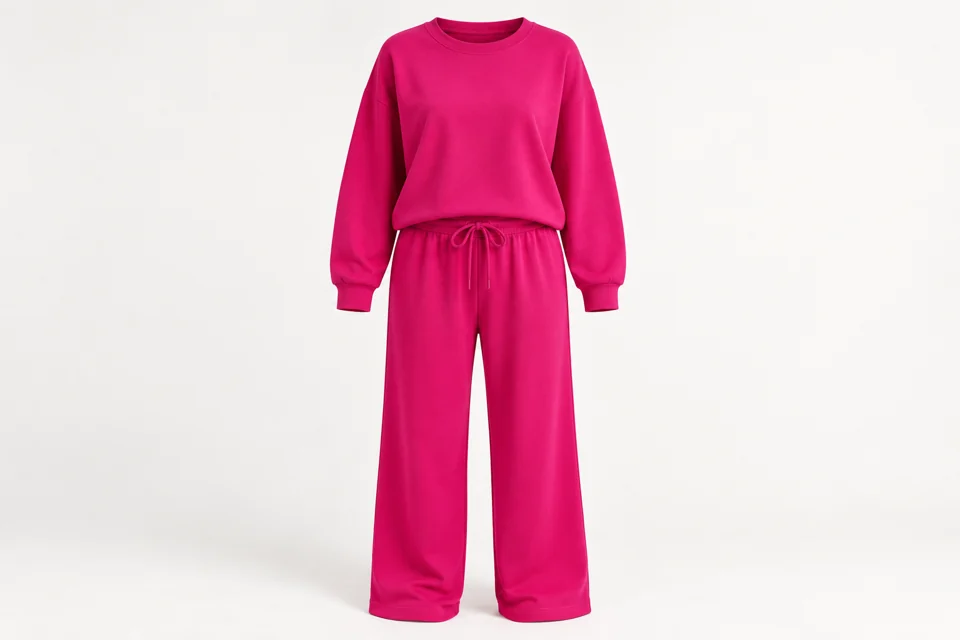
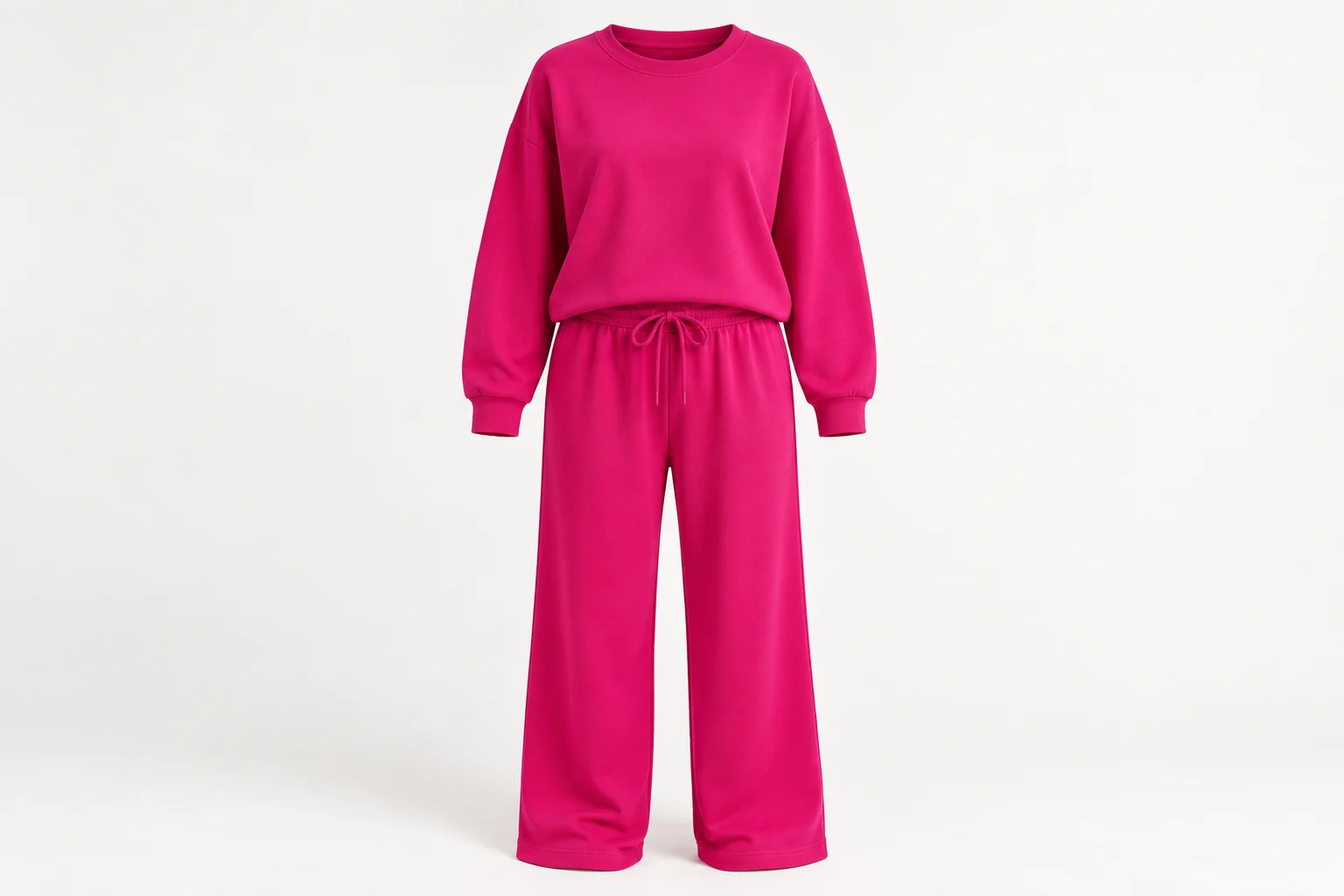
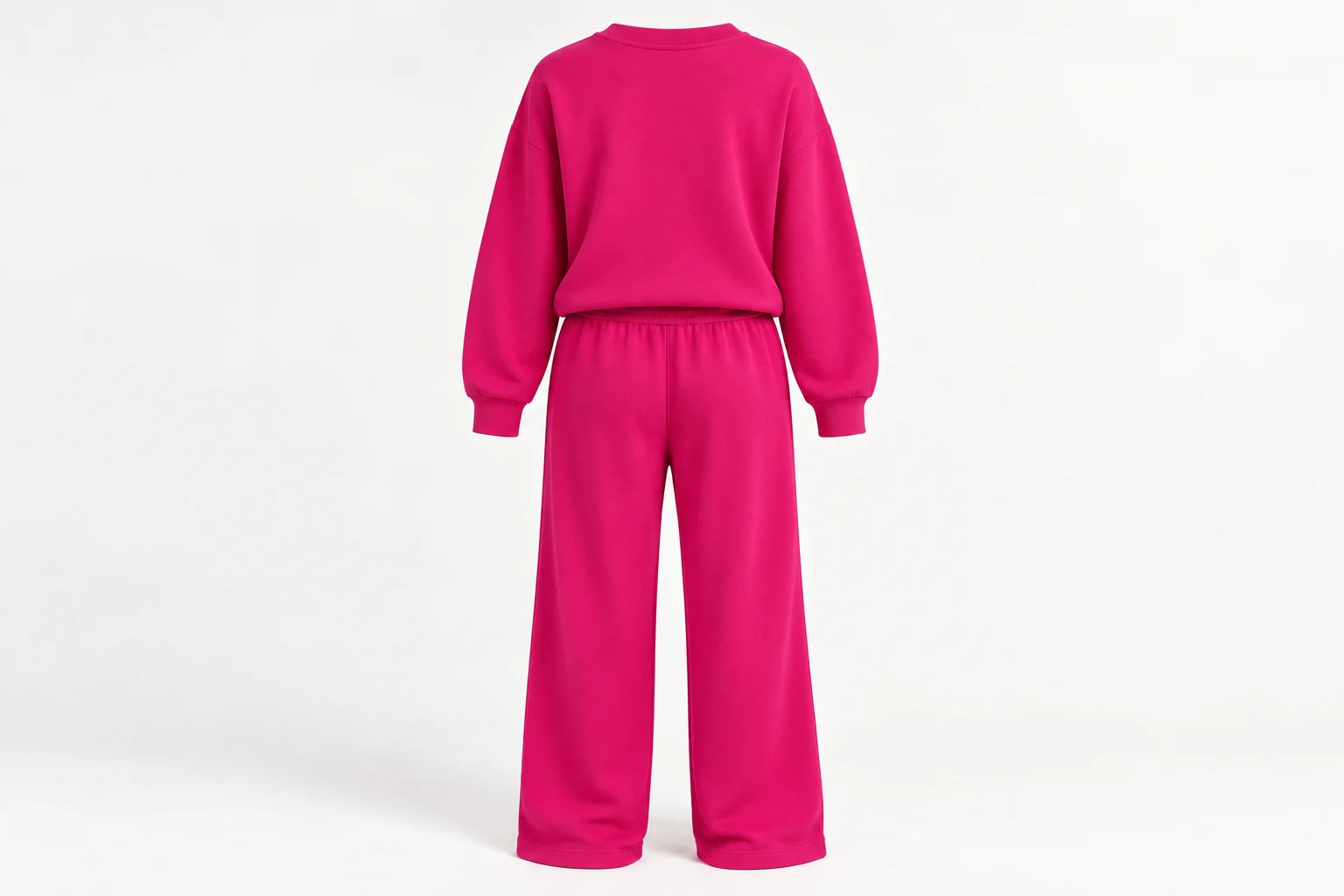
Identify the actual outfit, sizes, underlayers and seat used for the development review. Agree an appropriate observation period and ordinary sitting-to-standing changes with the responsible reviewer, allowing the adult wearer to stop rather than prescribing prolonged immobility. Record which body route is used: SJ-104 is 95% modal and 5% elastane single jersey, Bio-polish + soft hand, with 150, 160, 170, 180 and 190 g/m² options; FT-601 is 70% cotton and 30% polyester two-thread fabric, unbrushed + silicone, with 240, 260, 280, 300 and 320 g/m² options. Identify the actual offered weights and any mixed configuration. This is a garment sample review, not a simulation certified to predict every flight, drive or other travel experience.
Take a baseline that includes the seat and knee
Record the initial outfit appearance and relevant measurements using a consistent method, including waist, rise, knee reference and the top’s relationship to the lower garment. Keep pockets and closures in the specified condition and note any item the intended pocket use requires. Do not use a freshly arranged standing view as the only baseline for a seated garment. The technician needs to know what changed during the review, while the buyer needs to distinguish a deliberately relaxed outline from a problem that appears after sitting.
Observe seated seam and waistband contact specifically
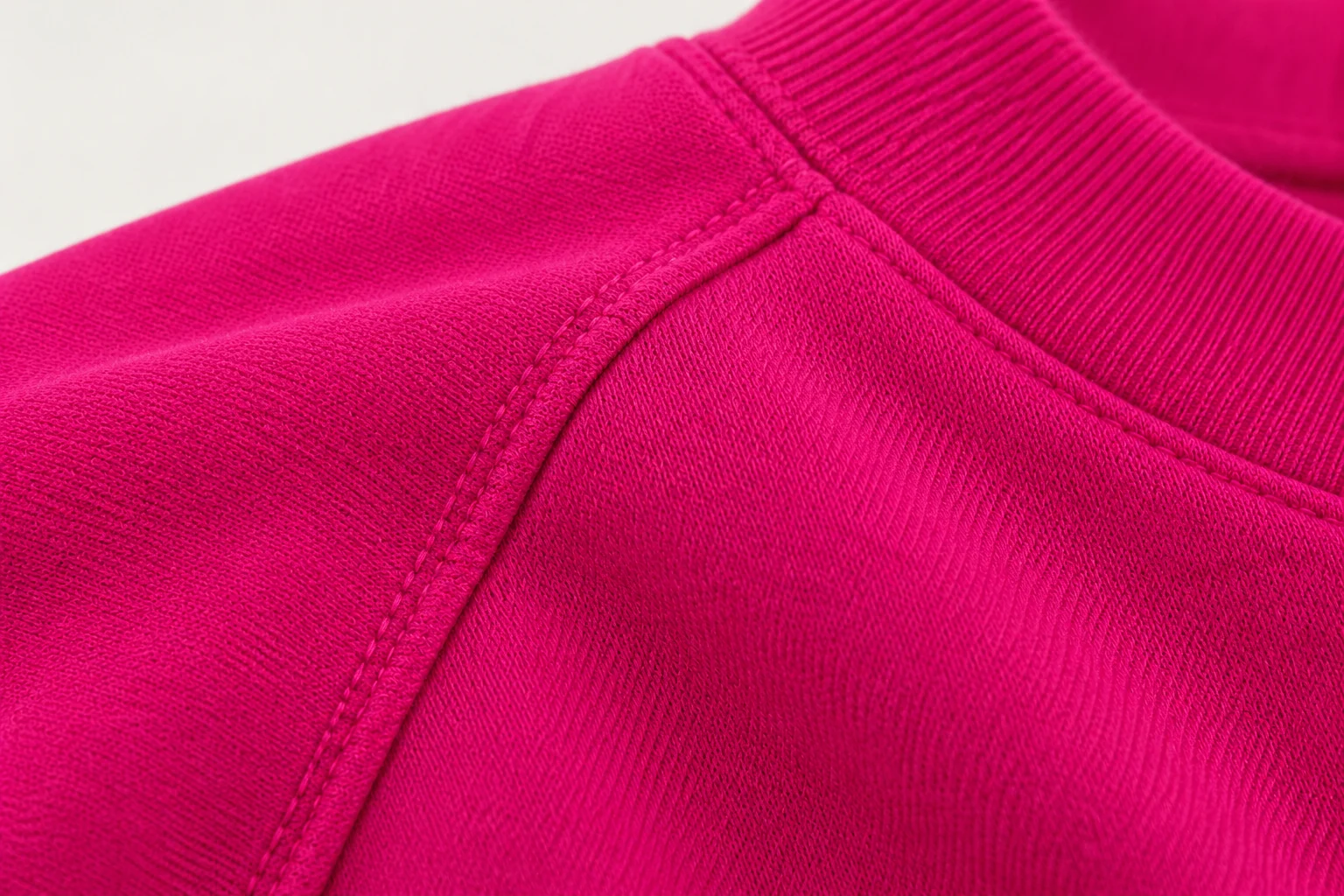
Ask the adult wearer to identify the location of any unacceptable contact at waist layers, crotch junction, pocket or top seam, without converting the feedback into a health claim. Note whether it appears seated, during standing or with an intended pocket item. A loose overall silhouette can still contain a bulky local assembly. Coats identifies tension, feed and component differences among possible puckering contributors, relevant when an operation is visibly distorted. Keep that sewing question separate from pattern balance or a broader fit concern rather than diagnosing every contact issue as a fabric failure.
Coats: Eliminating Seam Puckering — Tension, feed and component differences can contribute to puckering; does not validate sitting comfort or a travel-set seam configuration.
Compare knee shape and creases at stated observation points
Inspect the outfit immediately after the agreed sitting sequence and after a documented rest interval where relevant. Record which areas changed: knee outline, lap folds, top creases or seam orientation. These observations are not a standardised recovery or wrinkle assessment, and no universal pass interval is prescribed. The jersey’s elastane or the unbrushed two-thread construction supplies no automatic result. If a measurable appearance-retention claim is intended, obtain appropriate testing advice and evidence for the actual material and garment rather than label one attractive recovery photograph wrinkle-free.
Keep packing exposure separate from wear exposure
If the programme evaluates carrying or packing, use an identified sample and document its folding, container, duration and any restoration under the agreed plan. Do not silently pack the already-worn sample and compare it with an unworn pressed reference as though one variable changed. Use separate identified conditions or retain a clear sequence with its limitations. Assess the as-unpacked garment before any authorised pressing or steaming. The buyer should know whether an appearance improvement followed rest, a different fold, care or a restoration operation, not infer a material property from undocumented sample handling.
Revisit dimensions and outfit use after care
Use the agreed care and conditioning procedure with relevant body and component measurements, then repeat the selected seated and appearance observations where the programme requires them. CottonWorks identifies manufacturing, construction and care influences on dimensional behaviour, without supplying travel-set results for these articles. Request the needed evidence and keep both garment identities traceable. A changed top length or lower waist can alter sitting behaviour even if another measurement remains near target. Do not invent a shared care instruction for a mixed-material outfit without the appropriate technical decision.
CottonWorks: Shrinkage & Skewing — Construction, manufacturing and care influence dimensional behaviour; provides no article-specific travel-set allowance or care instruction.
Close design decisions without overstating the travel result
Retain the actual sample, pattern, material, offered weight, components, seat and handling references with accepted and unresolved observations. Name any specific correction and repeat the condition that exposed the issue. A passed seam review can coexist with an unresolved crease or knee question. The report supports the adult outfit assessed under defined conditions; it does not prove universal comfort, wrinkle-free performance, medical benefits, warmth or suitability for every journey. A changed pocket, waist, fabric route or handling proposition should reopen the relevant review instead of inheriting approval through the travel label.
Technical background and scope
This is a structured editorial draft. Garment-specific development advice is paired with existing catalogue records; compatibility must be established by sampling. AL KUMAŞ supplies fabric. Cutting, sewing and finished-garment production are separate unless explicitly agreed.