



Specify the arrival-state sample the buyer needs to see
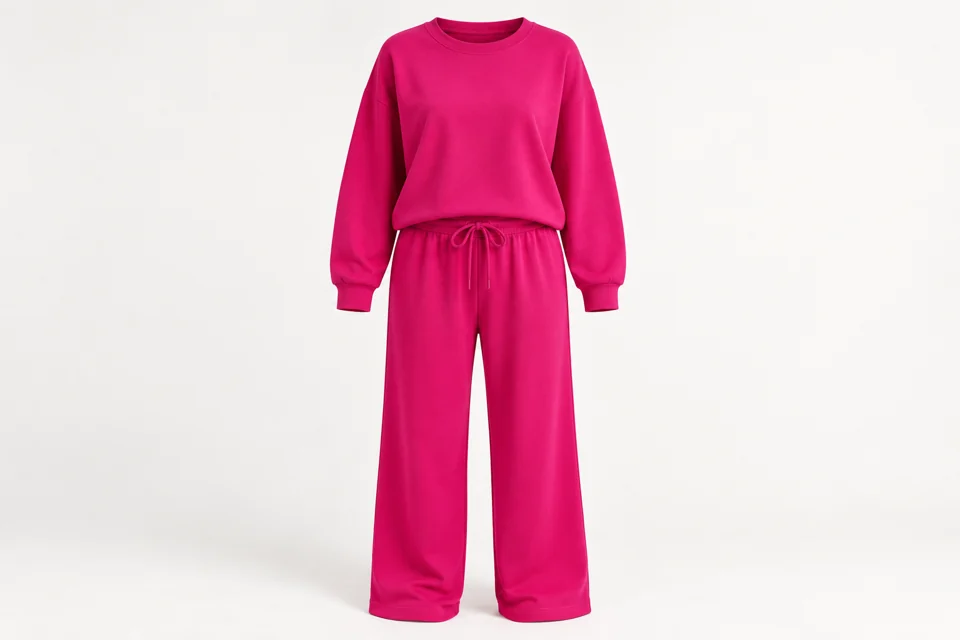
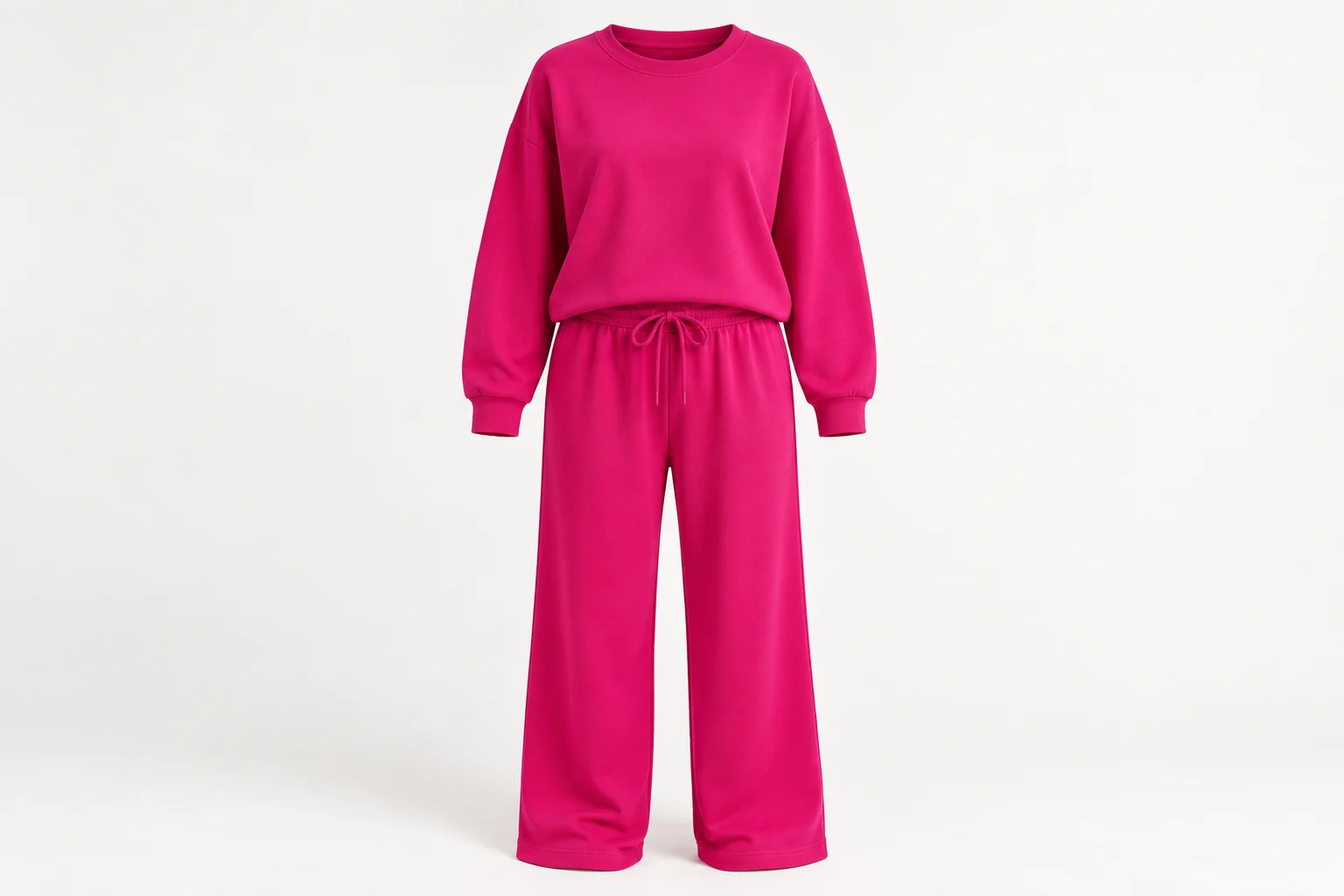
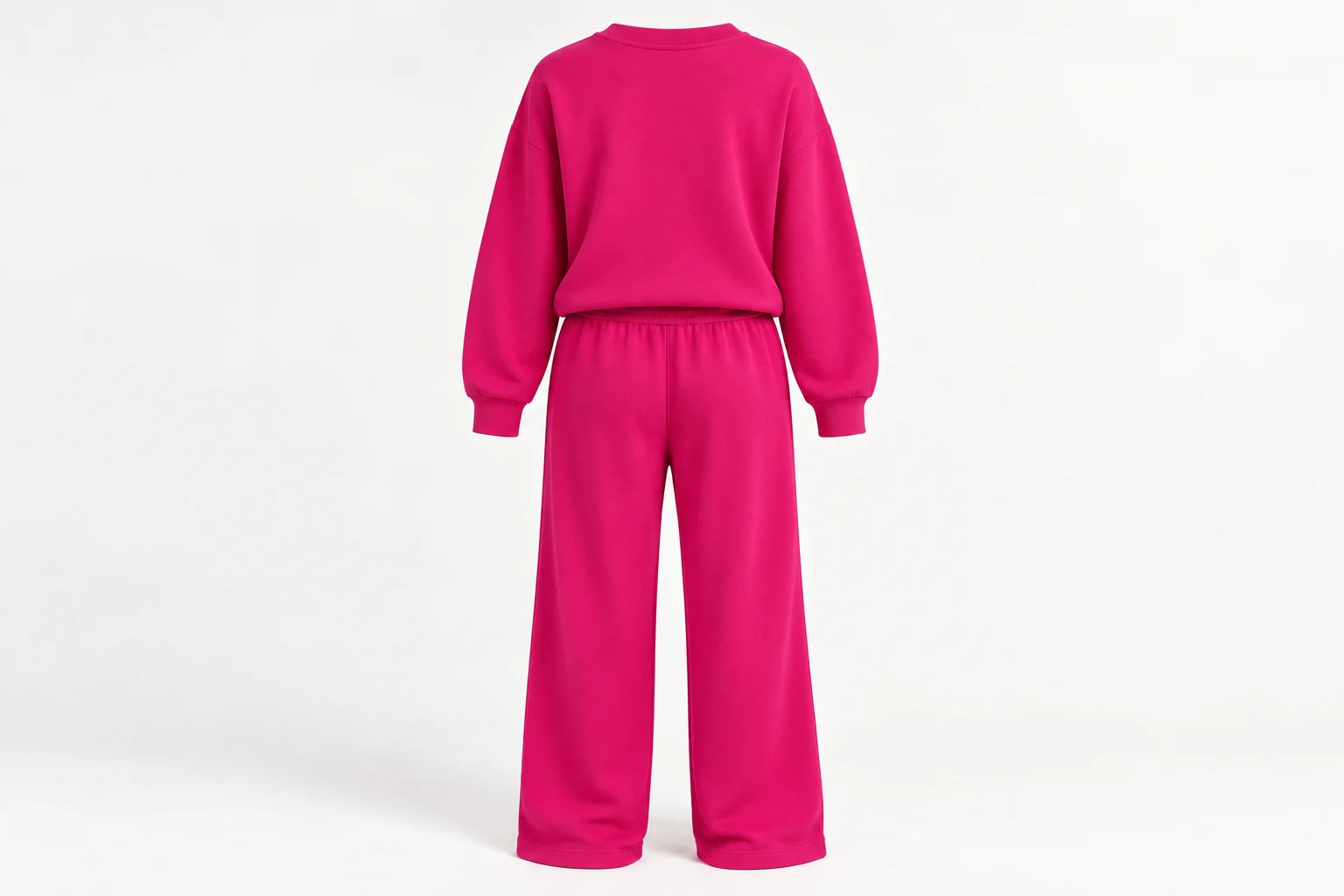
For a travel lounge set, request an arrival-state sample brief whose output distinguishes the garment as received from the same garment after any declared restoration. The buyer needs to decide what handling and appearance the product proposition can honestly support, not only receive a freshly pressed coordinated outfit. This is not a lot-allocation card, replacement programme or thermal-layer compatibility file. Identify whether the sample question concerns packing marks, seated knee shape or both, and keep those exposures separately traceable. A travel label supplies no promise of crease-free arrival or effortless restoration.
Name the real material and configuration for that question
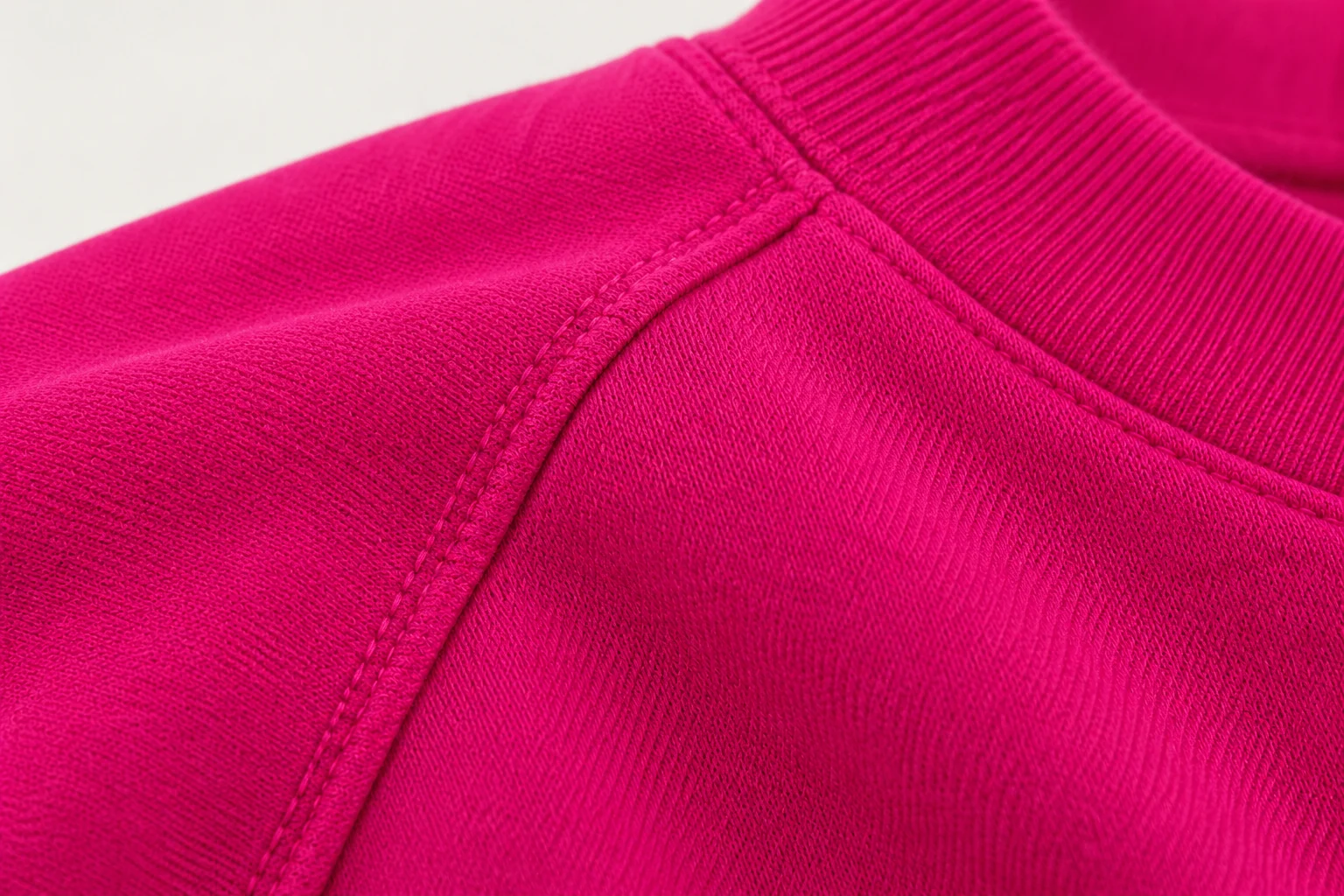
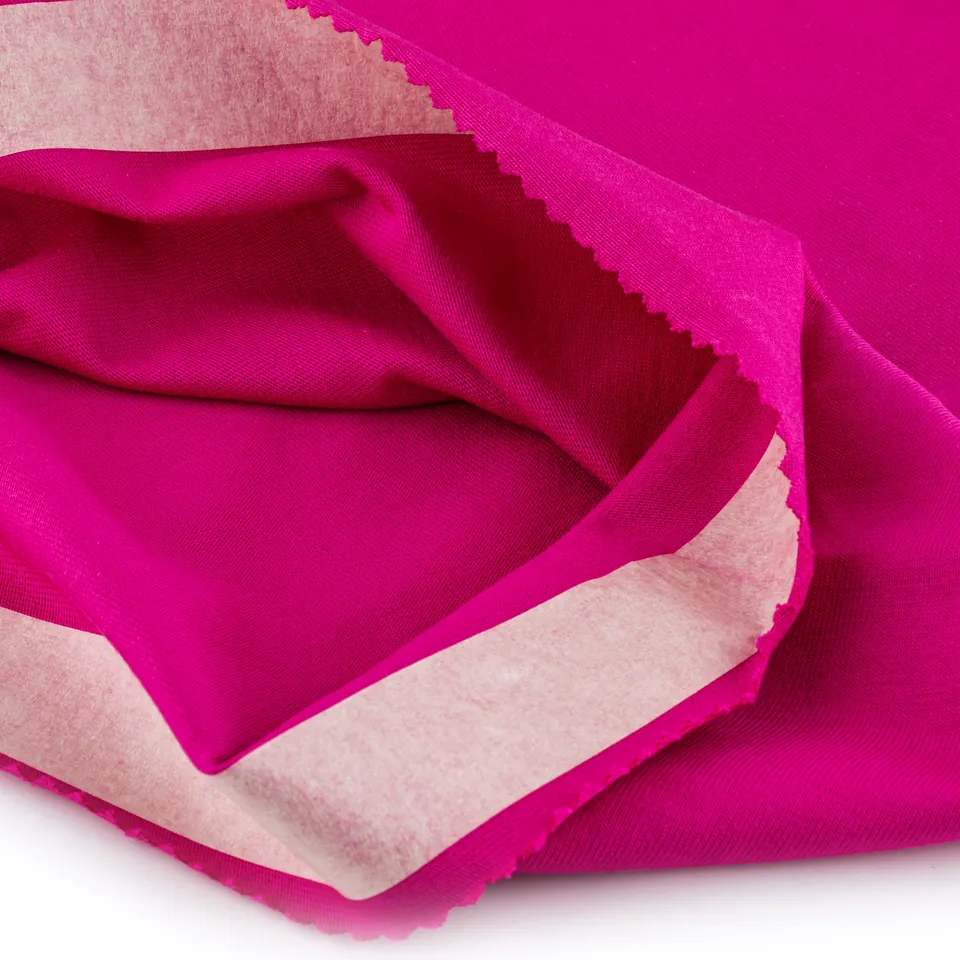
Identify the arrival-state jersey sample as SJ-104: 95% modal and 5% elastane single jersey, Bio-polish + soft hand, with recorded weights of 150, 160, 170, 180 and 190 g/m². The alternative FT-601 sample is two-thread fabric in 70% cotton and 30% polyester with unbrushed + silicone and 240, 260, 280, 300 and 320 g/m² options. Their ranges do not overlap. Identify the offered weights and whether the outfit uses one route or an expressly mixed construction. Neither description establishes creasing, packed bulk or knee return, so the sample brief should seek observations and necessary evidence rather than insert those outcomes as material guarantees.
Choose the packing exposure before the sample is prepared
Ask the responsible team to define the folding or carrying arrangement, container and assessment interval appropriate to the intended proposition, with the actual values written down. These are programme choices, not universal travel-test conditions supplied here. Mark the sample identity and initial condition, and retain an unexposed comparison where useful. If one proposed packing method avoids a crease by changing presentation, record that as a handling decision rather than proof of an improved fabric. Do not request secret sample preparation that the customer’s normal product use or presentation would not reflect.
Require an as-unpacked view before restoration
Have the sample reviewer record the garment immediately under the agreed unpacking conditions before steaming, pressing, laundering or manually smoothing away the concern. Then, only where technically appropriate and authorised, document the proposed restoration method and the subsequent appearance separately. Do not invent care or pressing settings from a fibre name. The buyer can choose to accept the visible handling characteristic, revise the presentation or ask for further material development. A supplier should not close the question by sending only the restored photograph while the actual arrival state remains unknown.
Keep the seated-use sample route distinct
Where the brief also concerns sitting, use an identified outfit with the approved pattern, waist and pocket condition and an appropriate adult review sequence. Record knee outline, seam observations and the transition back to standing without prescribing prolonged immobility. CottonWorks includes garment fitting beyond fabric-level approval, supporting the complete-outfit review. Do not merge an already packed-and-restored sample with this route without disclosing the sequence and its limits. The buyer should be able to tell which observation arose from wearing, which from packing and which followed a deliberate restoration.
CottonWorks: Designing Knit Textiles — Developed knit material is assessed in garment fitting beyond fabric-level approval. Arrival-state and separate sitting/packing sample routes are original buyer guidance, not a standard travel or wrinkle-recovery method.
Convert the observed tradeoff into a concrete design request
If the arrival appearance is accepted but the seated waist is not, request the specific waist or pattern proposal rather than a whole new travel fabric by default. If the outfit fits but the unpacked marks are unacceptable, choose explicitly among a revised handling presentation, a new material or finish proposal requiring evidence, or a changed product claim. Ask the maker for the affected component, operation or marker cost only after the change is defined. These branches are buyer decisions, not diagnoses of crease cause and not a guarantee that any proposed change will eliminate it.
Quote the selected handling and construction proposition honestly
Attach the actual sample configuration, offered material and weight, patterns, component changes and arrival-state decision to the request for the real commercial offer. Confirm any presentation or restoration responsibility expressly, without treating it as an undisclosed service included in fabric supply. Record which appearance evidence is accepted and which needs further assessment before the marketing language is settled. A later packing method, body route or waist change should return to the relevant observation. The resulting sourcing output is a declared product-and-handling proposition, not a promise of wrinkle-free travel, universal comfort or untested performance.
Technical background and scope
This is a structured editorial draft. Garment-specific development advice is paired with existing catalogue records; compatibility must be established by sampling. AL KUMAŞ supplies fabric. Cutting, sewing and finished-garment production are separate unless explicitly agreed.