





Select the tunic over the lower layer it is meant to accompany
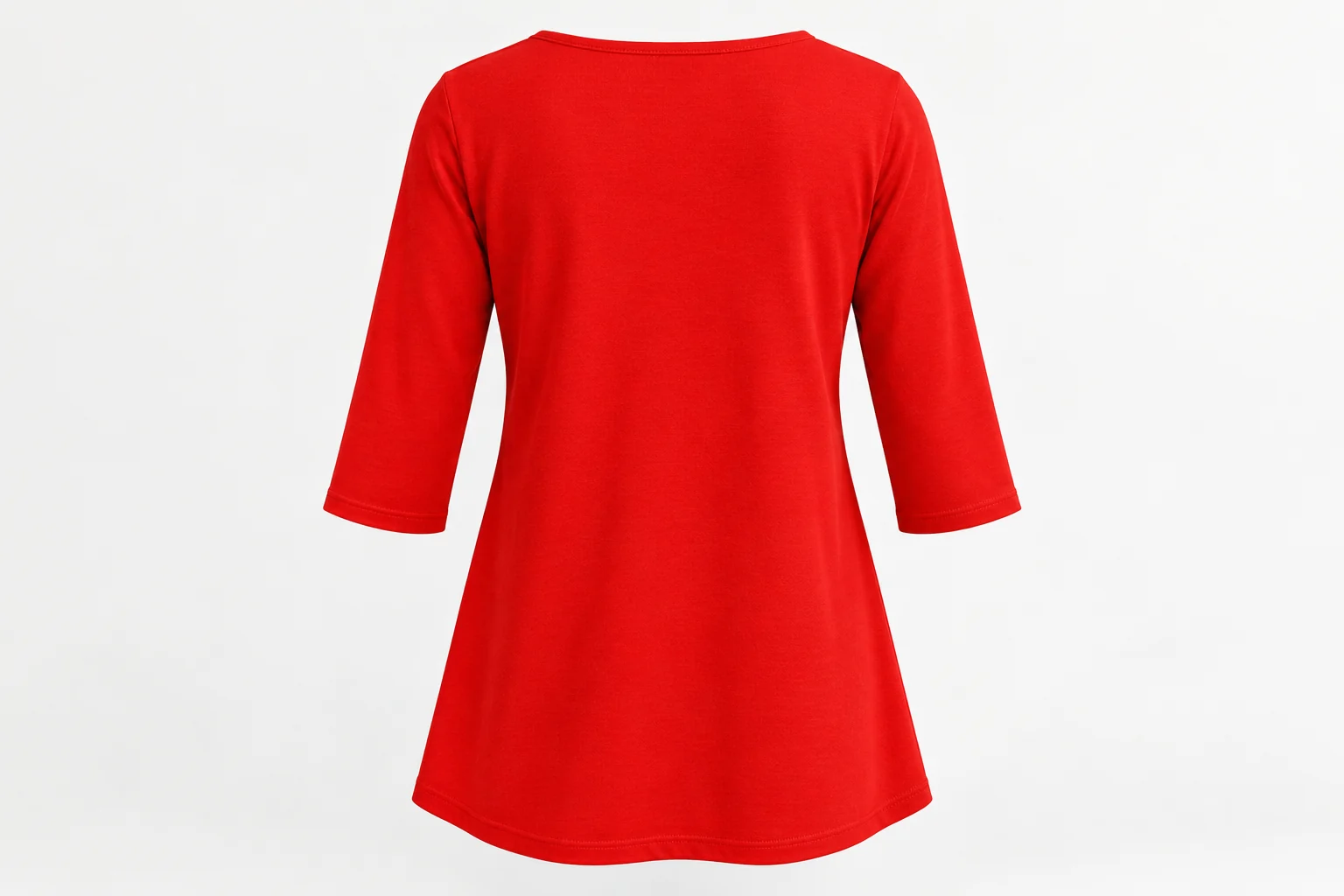
A tunic top needs enough length and ease to create its intended silhouette over a stated lower layer. Show the hip-level outline, finished length and side-opening proposal on the design drawing, identifying the actual trousers, leggings or other reference used for development. Do not assume that extending a basic T-shirt establishes the fit. A long front can still catch or pull around the hip, and a side opening changes what becomes visible in use. The material comparison should address that whole layered top rather than a dress-length hem or an oversized chest alone.
Assess both offered jerseys without predicting vertical fall from fibre
SJ-103 and SJ-101 differ in composition, weight choices and finishing route. Request actual offered versions and ask the maker to record any pattern or construction changes between their samples. Do not guarantee a flowing tunic from viscose or a stable outline from cotton. CottonWorks includes final fabric properties within garment fitting, supporting the sewn comparison. The buyer needs to see whether each complete proposal produces the intended vertical line over the hip and lower layer, with any difference in ease or slit construction identified rather than silently attributed to fibre content.
CottonWorks: Designing Knit Textiles — Final material properties are evaluated in garment fitting. The tunic-over-lower-layer comparison is original development guidance, not measured drape, friction, recovery or a qualification of either offered jersey.
Separate hip ease from side-opening height
Decide the intended body outline across the hip and how the side opening participates in movement and appearance. A higher slit and a wider body are not interchangeable corrections: they can expose different parts of the lower layer and create different lines. Ask the technical team to assess the actual pattern before using one to compensate for an unresolved issue in the other. Include the full front and back around the opening in the trial. A small hem corner sample can demonstrate an operation, but cannot establish how the tunic hangs on the wearer.
Develop the slit top with the surrounding lightweight body
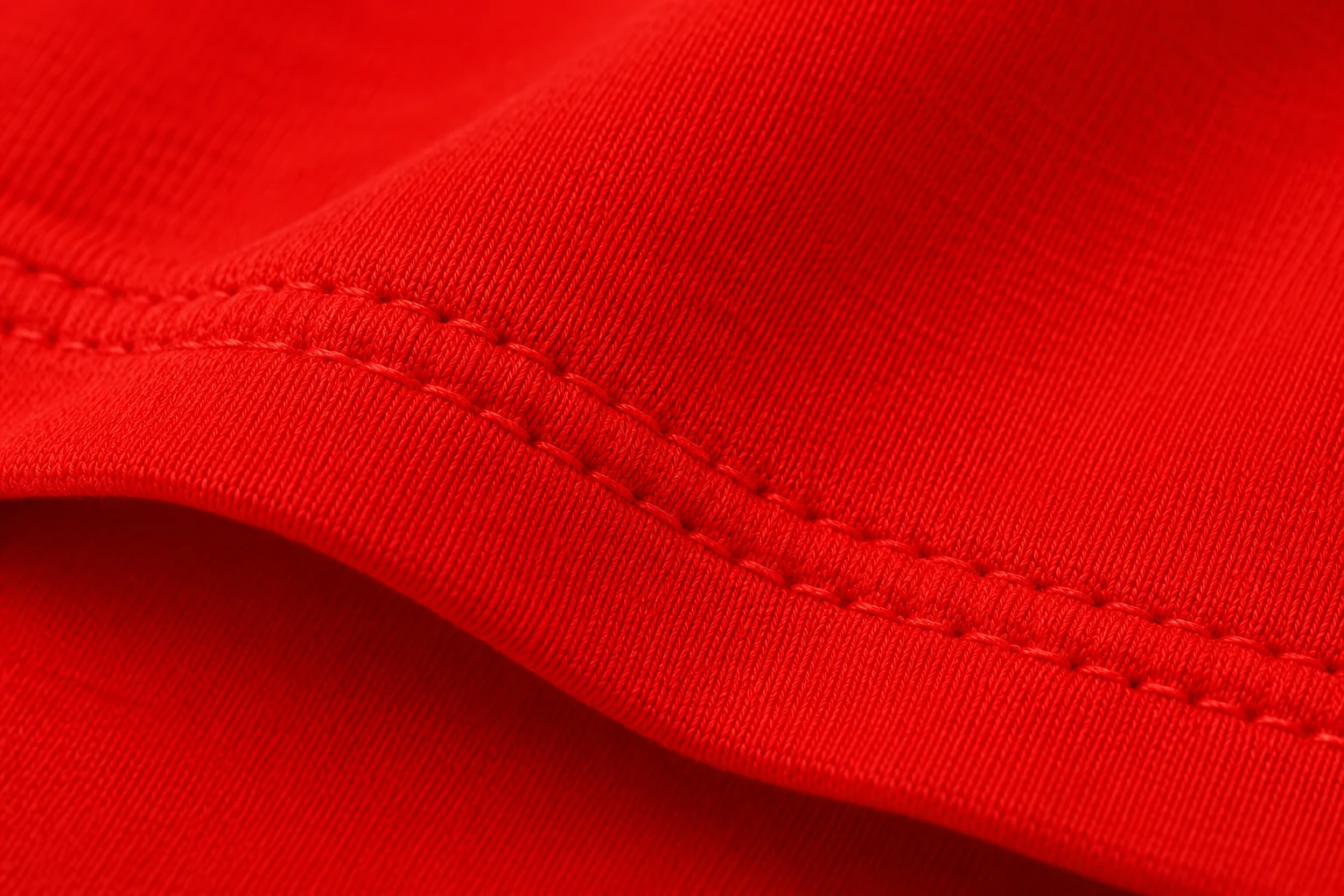
Ask the maker to identify the finished edges, termination and any proposed support on the actual offered material. Inspect the face and underside, including the surrounding panel rather than only the neatest reinforcement detail. If the area ripples or pulls, Coats describes multiple material and assembly contributors to puckering, supporting investigation rather than an automatic demand for another fabric or stronger stitch. The construction should be appropriate to the intended tunic use and appearance. Neither finish name supplies a tested opening-strength or long-term distortion guarantee.
Coats: Eliminating Seam Puckering — Puckering can involve several material and assembly factors. The source does not diagnose a tunic slit or prescribe a stronger stitch, reinforcement or universal opening-strength limit.
Review vertical hang through standing and sitting
Observe the complete tunic standing naturally, seated and after returning to rest over the reference lower layer. Note where the front, back and open sides settle, without manually smoothing every panel into the desired position. If the lower area catches or shifts, ask whether pattern ease, garment balance, edge construction or the actual layer interaction needs a controlled trial. These are internal design observations, not laboratory drape or friction results. Keep the wearer's context identified rather than promising that one tunic material will hang consistently over every waistband and pocket arrangement.
Catalogue starting points
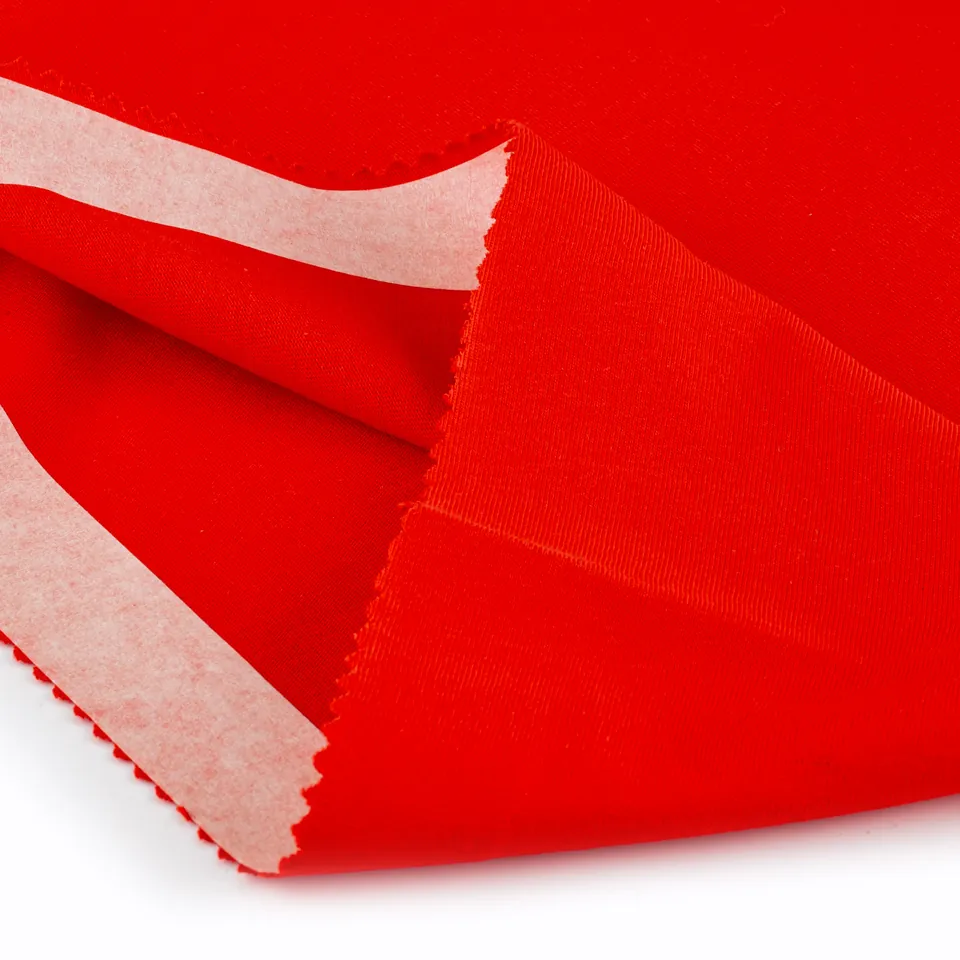
SJ-103 identifies 95% viscose 5% elastane single jersey with 160, 170, 180, 190, 200 g/m² options and Bio-polish + silicone. For the cotton tunic comparison, SJ-101 specifies 100% compact combed cotton single jersey, Enzyme + silicone and 130, 140, 150, 160, 170 g/m² options. Confirm the actual offered finished versions and usable widths. These records contain no completed tunic hip-fit, slit or vertical-hang assessment. Their fibre and finish descriptions identify sample candidates without establishing compatibility with the chosen lower layer or the appearance of a specific side-opening design.
Choose the layered silhouette and construction together
Retain the selected body, hip-level pattern, length, side-opening position and developed finish with the complete sample. Include the lower-layer reference and relevant standing and seated views. State which sizes and observations were accepted and what evidence remains open. If the buyer changes the slit height, body width or material later, identify the affected comparisons again instead of treating the tunic label as a repeat specification. This keeps the actual over-layer silhouette reproducible while avoiding a universal promise that a viscose or cotton jersey creates the intended vertical fall.
Technical background and scope
This is a structured editorial draft. Garment-specific development advice is paired with existing catalogue records; compatibility must be established by sampling. AL KUMAŞ supplies fabric. Cutting, sewing and finished-garment production are separate unless explicitly agreed.