





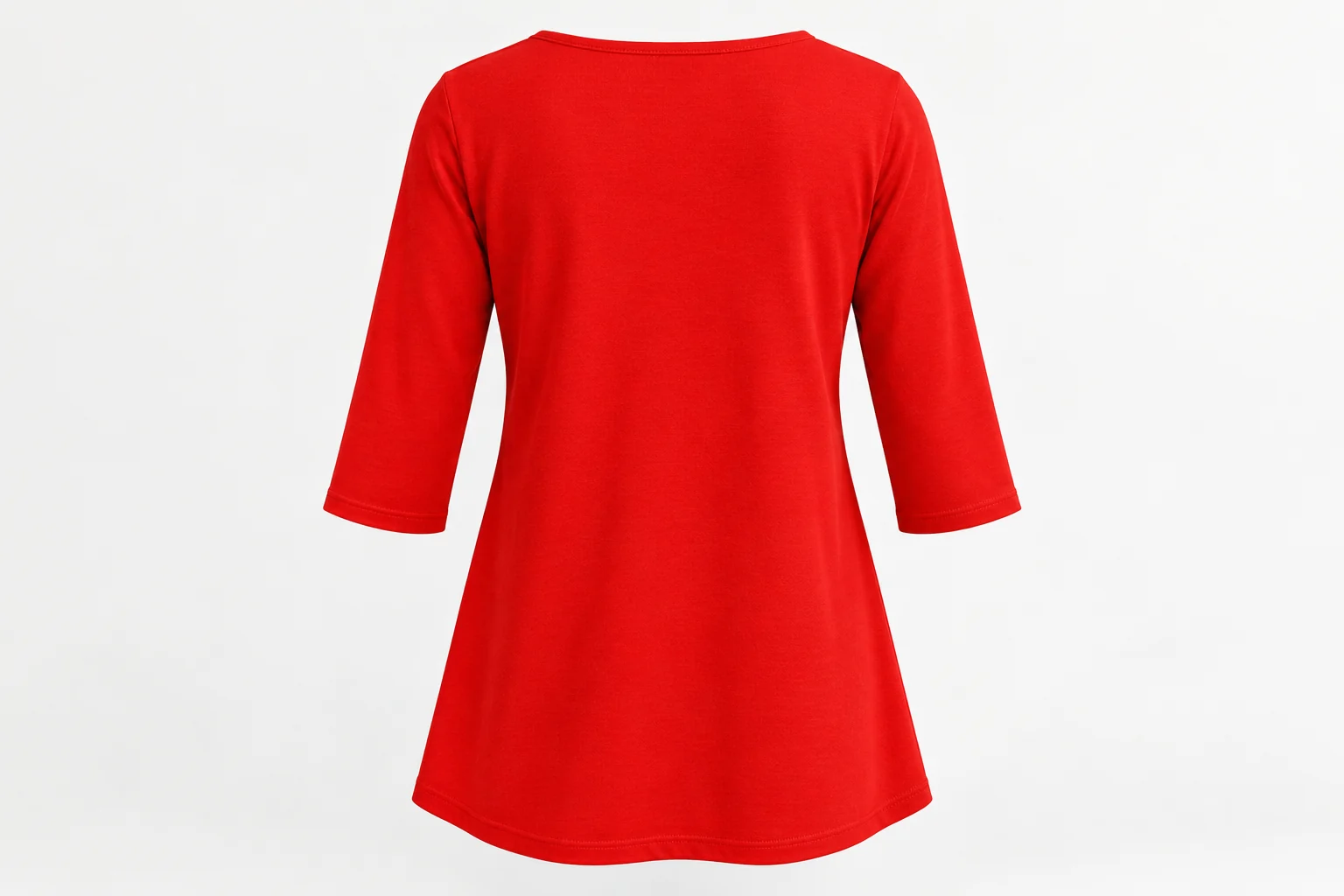
Cost the hip-level pattern rather than an extended standard block
A tunic's material plan should follow the accepted lower-body width, length and side construction, not merely add centimetres to a standard top estimate. Ask the cutter to use the actual front, back and other specified components at the confirmed usable width. Keep the size ratio and any direction restrictions attached. Two garments with similar lengths can have different hip outlines or slit finishes and therefore need different calculations. A cheap kilogram price cannot establish the cost of the layered tunic until its actual pattern and construction assumptions are visible.
Compare increased ease with a changed opening as different proposals
If fitting suggests another lower-body configuration, obtain a defined revised pattern rather than an unexplained extra allowance. Increasing width over the hip and raising a slit can have different effects on coverage, material and assembly. Neither should be treated as a universally cheaper or better solution. Ask the designer and maker to identify the accepted version first, then send that version to costing. An estimate for a narrow body with a high opening does not price a wider tunic that retains a lower opening, even if both are described casually as the same style.
Use a width-area example only to understand one change
For invented arithmetic, suppose the combined added width across front and back is eight centimetres over a simplified lower-panel height of 35 centimetres. The additional rectangular area is 280 square centimetres, or 0.028 square metres. At a hypothetical 180 g/m² it represents about 5.04 grams before marker losses and other changes. These are explanatory dimensions, not a tunic pattern or AL KUMAŞ offer. The complete layout may change differently. The example helps separate a net-area effect from the cutter's actual consumption estimate, without choosing the garment's ease by raw material mass alone.
Identify whether side returns are already in the body pieces
Ask the maker and cutter to show which allowances and components create the finished side openings. Where returns are incorporated in the body outline, do not buy them again as an unexplained separate strip. Where another material is proposed, identify its actual pattern and supply unit. Simply leaving part of a seam open does not establish a material saving or eliminate finishing work. Keep the full opening and lower corner construction with the estimate so a quote based on an unfinished edge is not compared with a fully developed tunic assembly.
Reconcile lower-panel changes with marker and operation scope
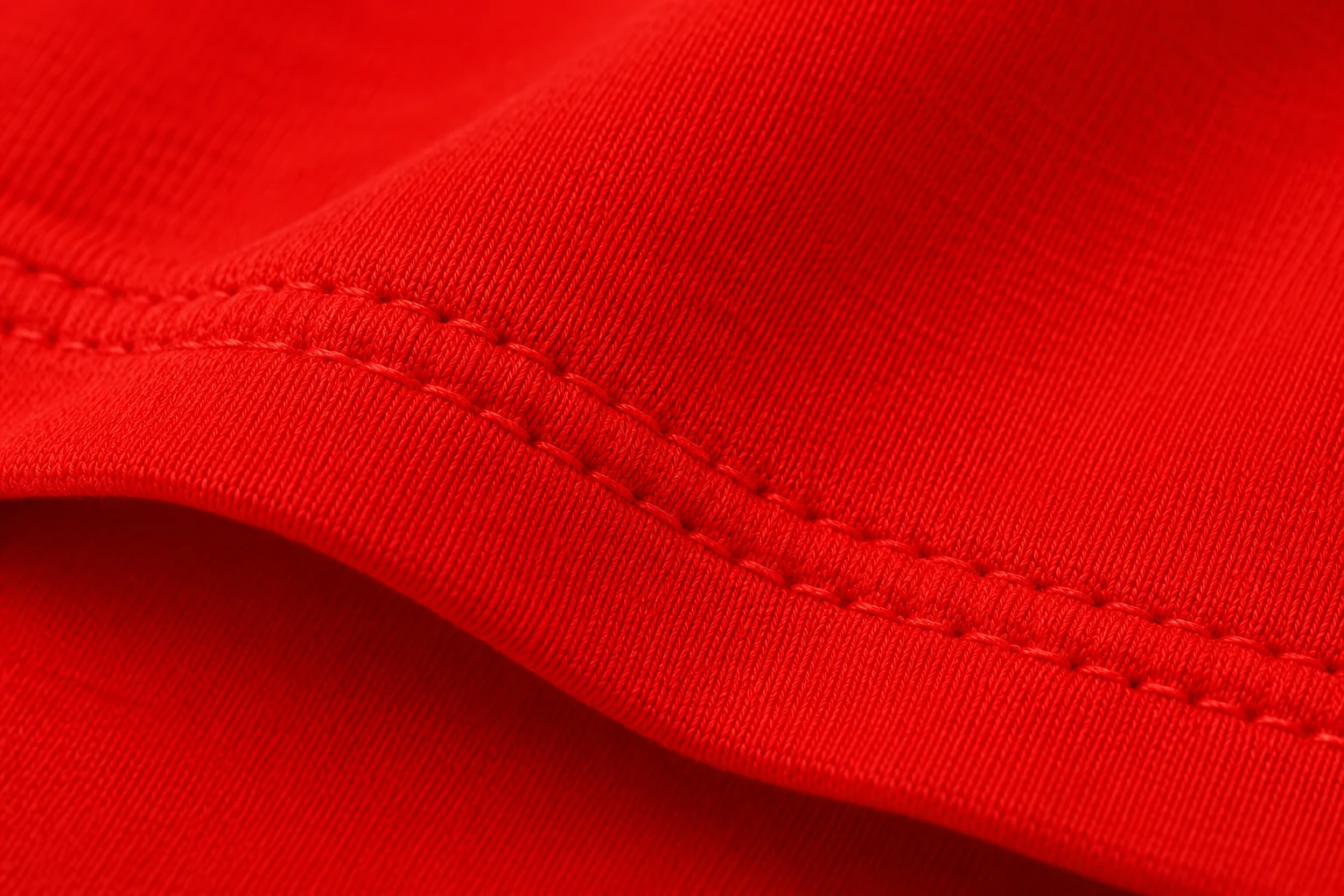
Request an updated marker if the accepted hip width, length or opening-related pattern changes, preserving approved component direction. Ask the maker which finishing operations the new version contains. American & Efird describes using seam drawings and stitch specifications to communicate assembly, supporting a concrete scope instead of deriving labour from slit height alone. Its guidance does not supply a universal tunic-operation price. A quantity estimate and assembly quote should identify the same actual version, so another apparently minor lower-edge correction does not leave the buyer comparing incompatible proposals.
American & Efird: Stitches and Seams — Seam drawings and stitch specifications can communicate actual assembly scope. The hip-width area and mass example is original hypothetical arithmetic, not a pattern, marker yield or supplier operation price.
Catalogue starting points
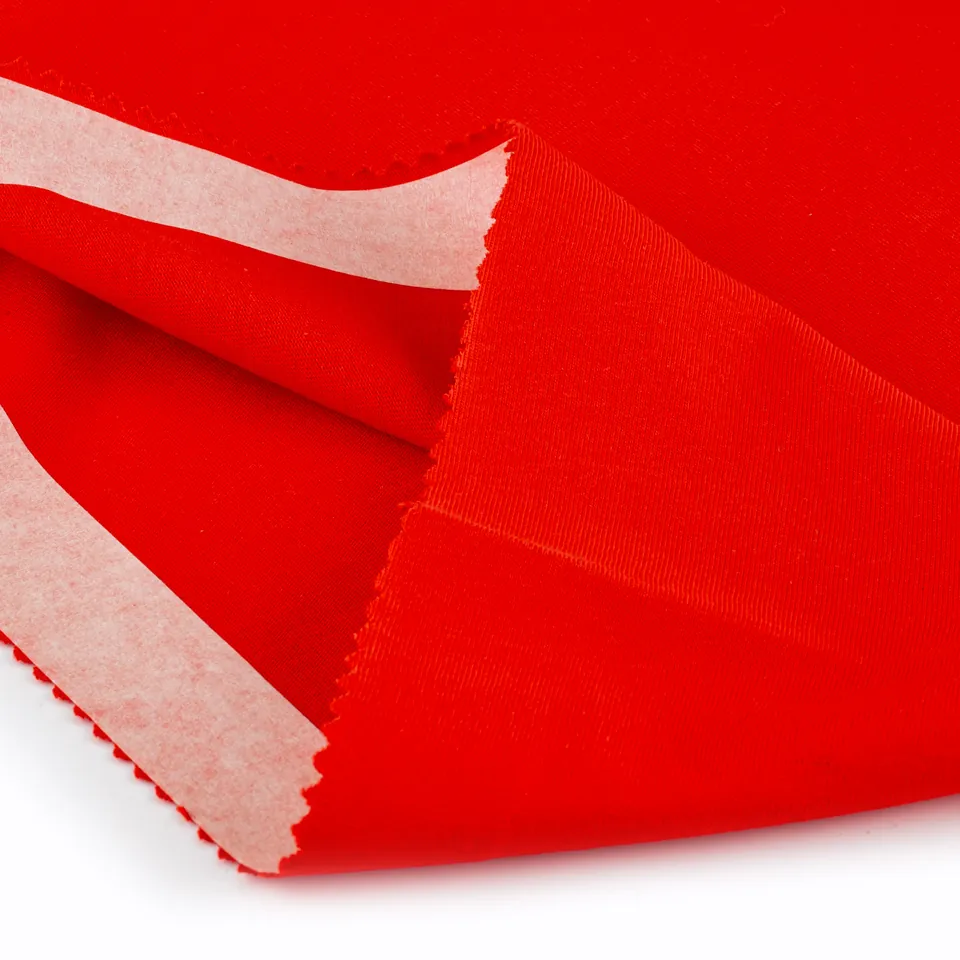
For SJ-103, use the recorded 95% viscose 5% elastane, 160, 170, 180, 190, 200 g/m² and Bio-polish + silicone. For SJ-101, use 100% compact combed cotton, 130, 140, 150, 160, 170 g/m² and Enzyme + silicone. Both are single jerseys, but neither record supplies usable width, a tunic marker or approved lower-panel consumption. Request the exact offered finished versions before costing. A common listed mass at 160 or 170 g/m² cannot establish equal cutting layout, layered fit or completed side-opening cost.
Keep the economic decision attached to the accepted layered top
Show hip-level outline, full length, opening construction, offered material, marker and size ratio with each estimate. Identify included smaller components, separate materials and any agreed allowances without inventing standard loss percentages. Ask the commercial team to state its actual quotation basis for the planned quantities. If the designer changes the lower-layer reference and subsequently revises the tunic, update the affected pattern and cost information. This gives the buyer a comparable material-and-assembly proposal rather than an inexpensive extended-body figure that never represented the product accepted in fitting.
Technical background and scope
This is a structured editorial draft. Garment-specific development advice is paired with existing catalogue records; compatibility must be established by sampling. AL KUMAŞ supplies fabric. Cutting, sewing and finished-garment production are separate unless explicitly agreed.